
The Data That Feeds EPDs

EPDs are only as good as the data behind them. This topic explores the databases and datasets that power EPDs—LCI libraries, electricity grid factors, transport routes and modes, manufacturing assumptions, and end-of-life scenarios—and how those inputs shape results, comparability, and confidence in the numbers.

38 articles

Half of the image shows circuitry, the other half a gloved engineer’s hand, meeting in the middle over a detailed blueprint of a product.
The Data That Feeds EPDs

How Artificial Intelligence Can Support First Pass LCA Bill of Materials (BOM) Mapping

Manual life-cycle inventory mapping once meant staring at spreadsheets for days. Today, advanced reasoning models can co...

Toby Urff5 min read
Blueprint with penalty stamp
The Data That Feeds EPDs

Primary Data: The EPD Accuracy Multiplier

Specifiers no longer settle for industry-average footprints. Miss too much primary data and your environmental product d...

Toby Urff5 min read
List with three types of waste
The Data That Feeds EPDs

Non-Hazardous Waste: The Sleeper Metric in Your LCA

Carbon steals the spotlight, yet every EPD still prints a boldfaced line for “non-hazardous waste disposed.” Mess up tha...

Walker Ryan5 min read
MCP and GPT chatbot helping with the creation of LCAs and EPDs.
The Data That Feeds EPDs

GPT-Powered BOM Data and MCP Are Next for EPDs

Bill of materials spreadsheets still suck hours out of every EPD project. Imagine an AI that hoovers up plant data, maps...
Toby Urff5 min read
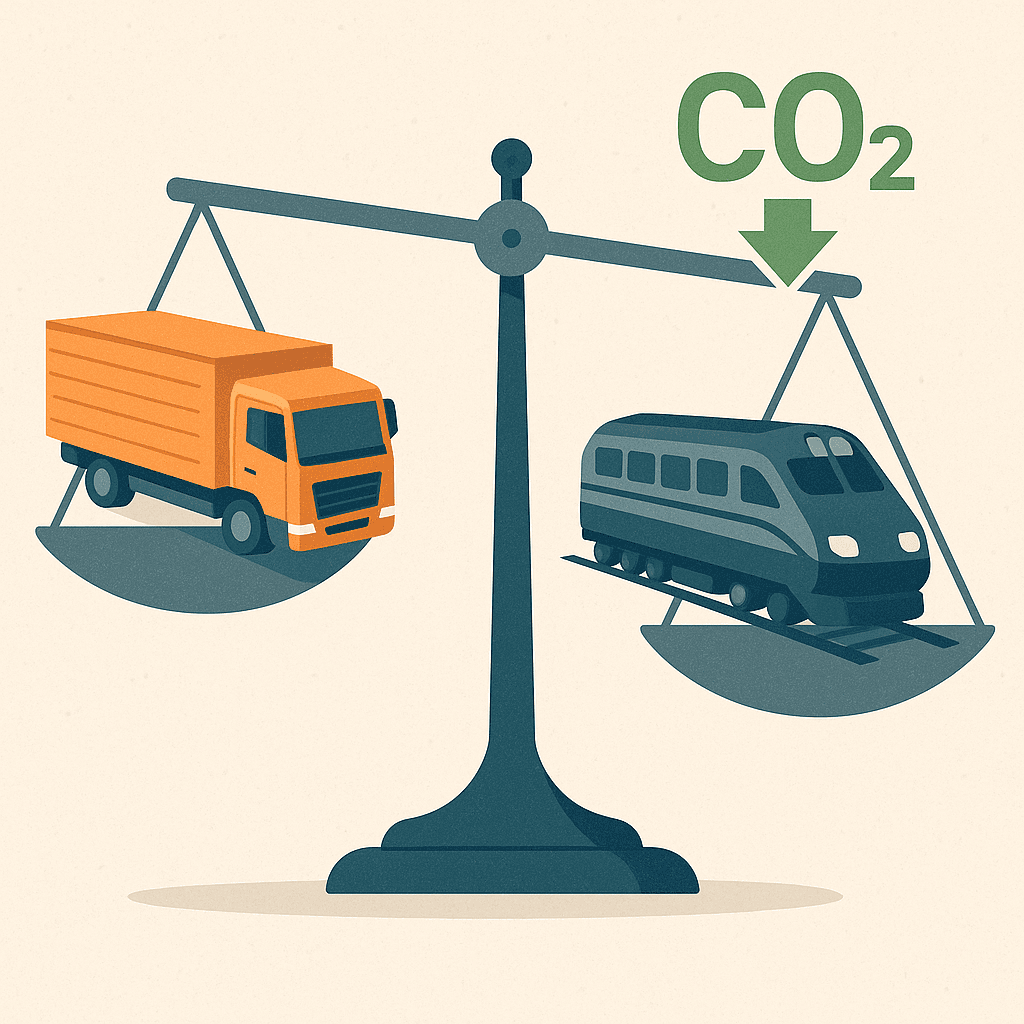
Fraight via Lory vs. Rail
The Data That Feeds EPDs

Transport Data: Trucks, Trains, Reality

If your EPD feels stuck at the border between factory gate and construction site, nine times out of ten the holdup is tr...
John Johnson5 min read
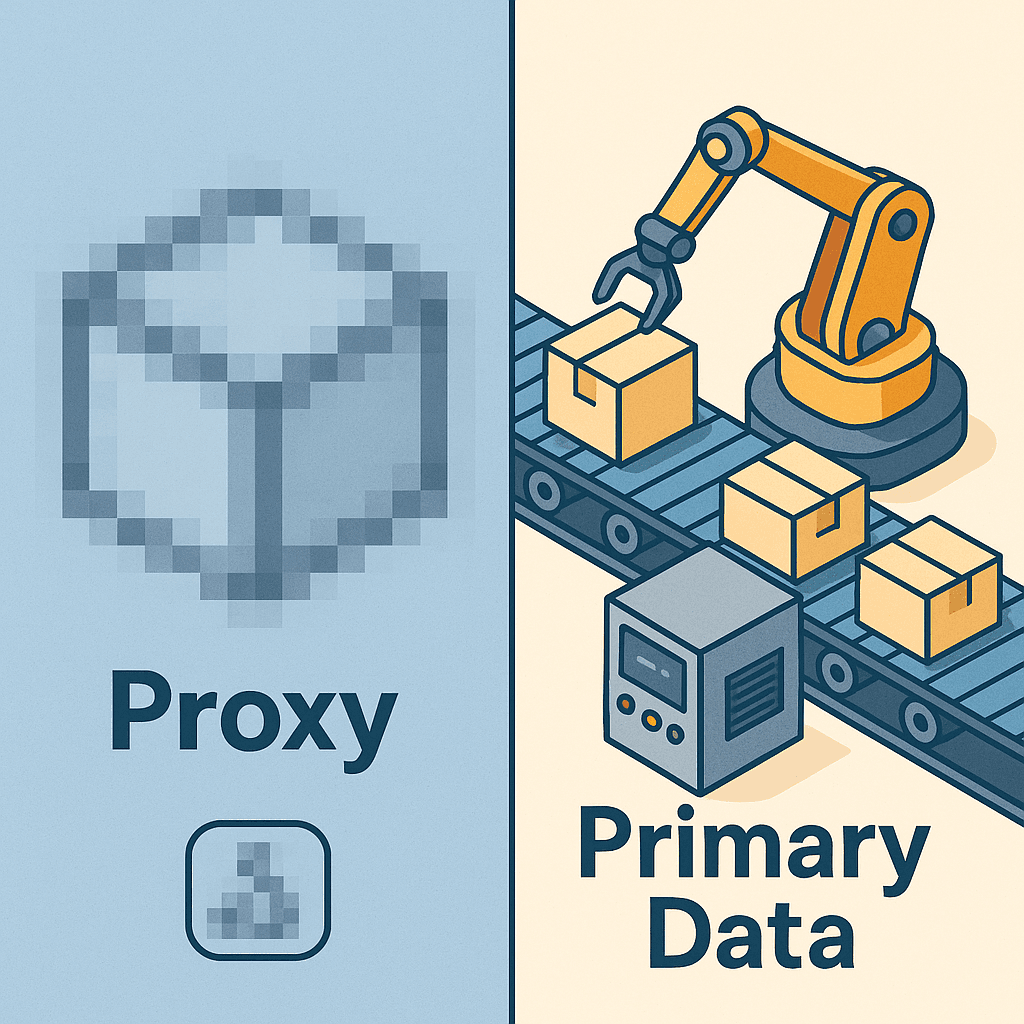
LCI Proxy vs. Primary Data in EPDs
The Data That Feeds EPDs

Secondary Data: Hidden Risk in EPD Projects

Life-cycle databases are fantastic for idea-stage modeling, but stake your final EPD on generic proxies and you invite c...
Walker Ryan5 min read
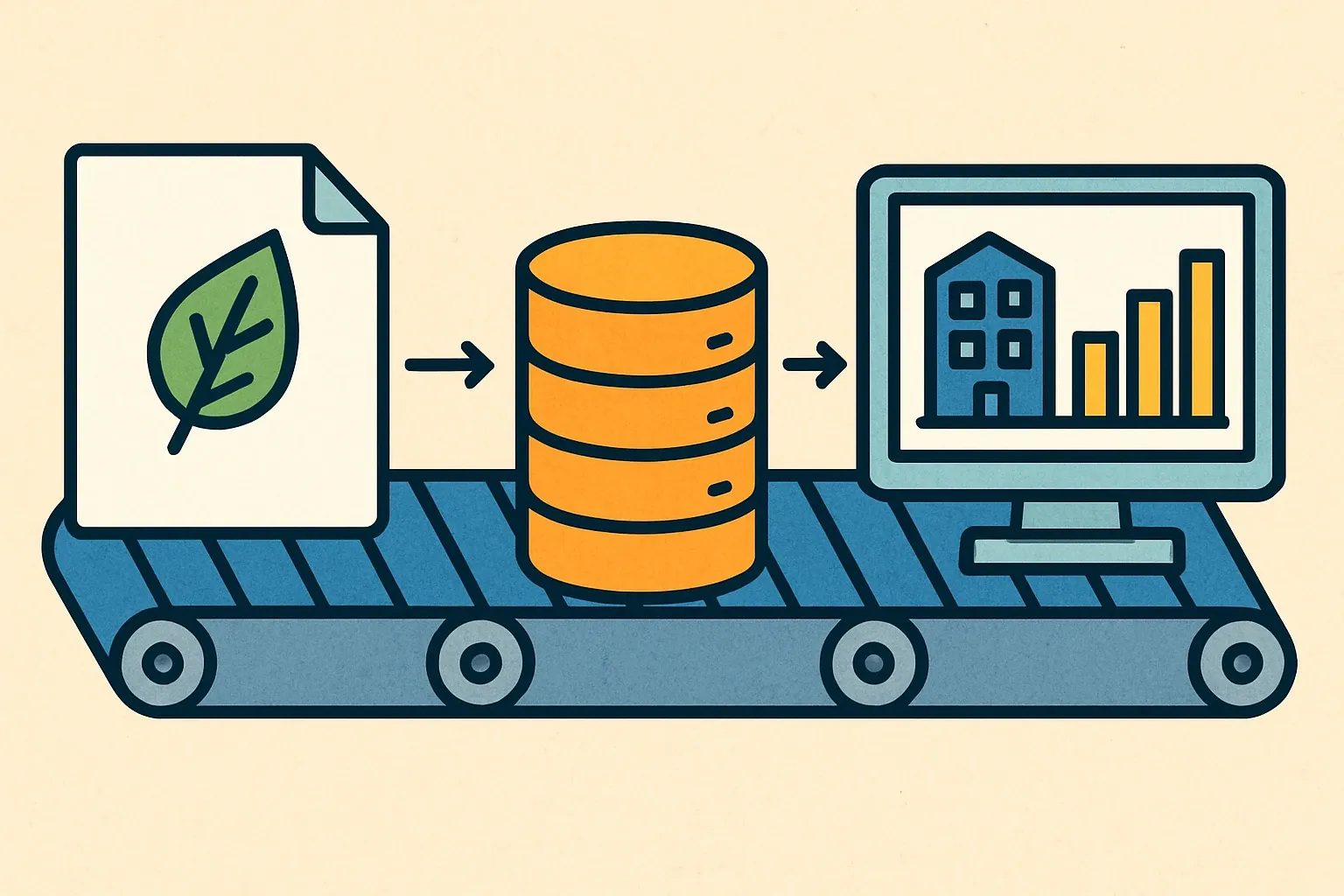
A simple conveyor-belt graphic showing an EPD file feeding into databases, then into LCA software, culminating in a building carbon bar chart.
The Data That Feeds EPDs

From EPD Sheet to Whole-Building Scorecard

Architects and LCA consultants rarely read your EPD the way you do. Instead, they scrape the underlying numbers—impact p...
Toby Urff5 min read
Generate an illustration for an article following this concept:

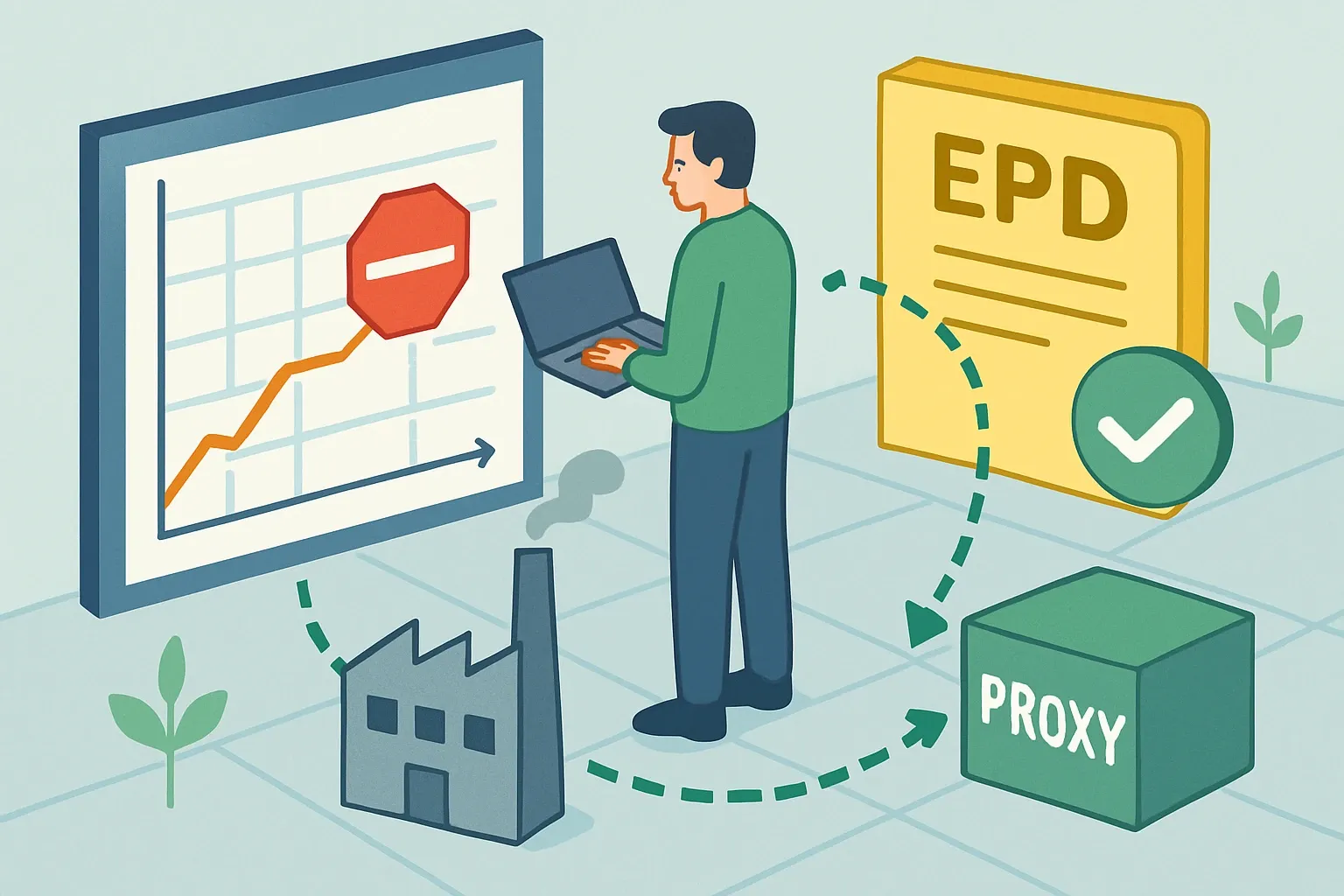
When Data Stalls, Proxies Keep EPDs Moving
Supplier silence happens. Chinese New Year, line maintenance, contract handovers, even ERP cutovers can pause the energy, waste, or logistics data your life‑cycle model needs. Smart proxy data keeps modeling on schedule without corroding trust. The trick is knowing what can be safely approximated for now and what must be exact from day one, then documenting choices so reviewers nod and sales teams keep bids alive.

Ensure that you use no text, as this illustration will be used on international translations of the article..

Use an illustrative style (e.g. isometic) and don't generate in a photorealistic style.
The Data That Feeds EPDs

When Data Stalls, Proxies Keep EPDs Moving

Supplier silence happens. Chinese New Year, line maintenance, contract handovers, even ERP cutovers can pause the energy...
Toby Urff5 min read
Generate an illustration for an article following this concept:

Global EPDs, local data, zero drag
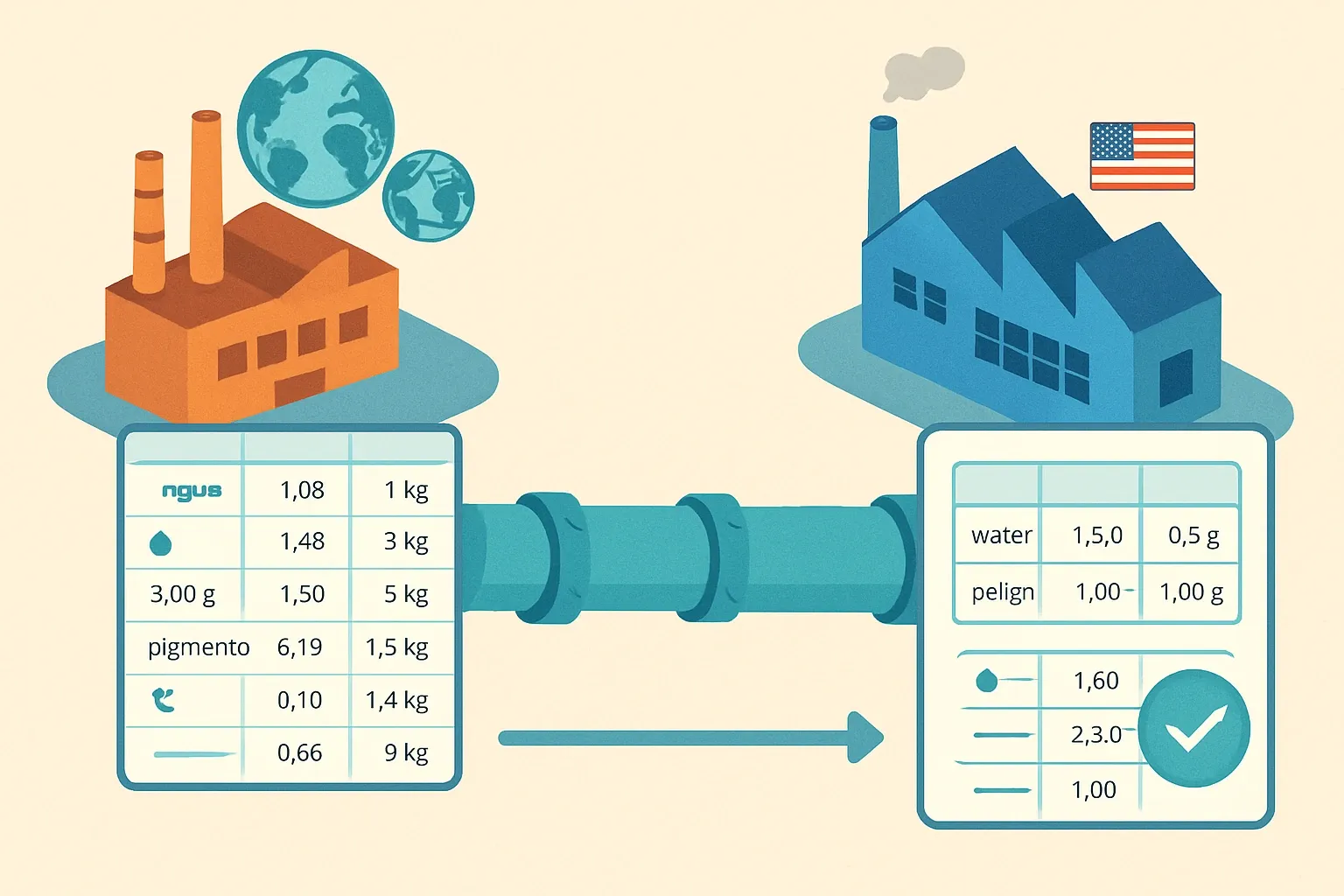
Plant bills of materials rarely speak the same language. A tile line in Valencia logs pigments in Spanish with decimal commas. A sister plant in Tennessee writes the same inputs in English with periods. Both feed different ERPs. Verification teams do not have time to babysit spreadsheets. The fix is a pipeline that ingests multilingual, plant‑level data, normalizes units and formats, and outputs verifier‑ready datasets without slowing the schedule. That is how global EPD programs move at the speed commercial teams need.

Ensure that you use no text, as this illustration will be used on international translations of the article..

Use an illustrative style (e.g. isometic) and don't generate in a photorealistic style.
The Data That Feeds EPDs

Global EPDs, local data, zero drag

Plant bills of materials rarely speak the same language. A tile line in Valencia logs pigments in Spanish with decimal c...
Toby Urff5 min read
Generate an illustration for an article following this concept:

End‑of‑life assumptions, harmonized for credible EPDs
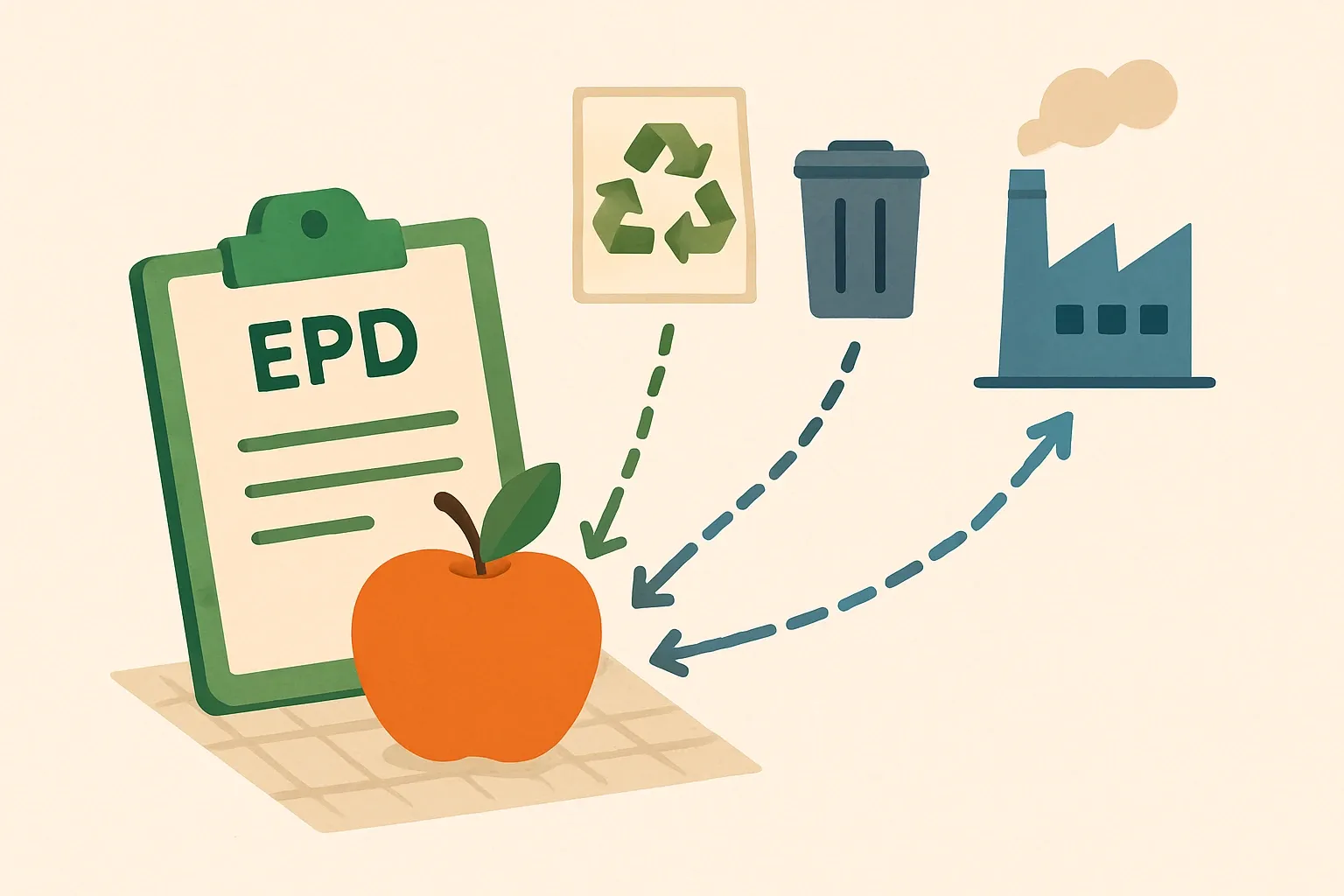
End‑of‑life choices in EPDs are not side notes. They set the boundary for what happens when a product’s useful life ends, and they can swing results between versions even when the product itself hasn’t changed. The fix is simple but disciplined. Pick clear rules, document them, and keep them consistent across similar products so buyers can compare apples with apples.

Ensure that you use no text, as this illustration will be used on international translations of the article..

Use an illustrative style (e.g. isometic) and don't generate in a photorealistic style.
The Data That Feeds EPDs

End‑of‑life assumptions, harmonized for credible EPDs

End‑of‑life choices in EPDs are not side notes. They set the boundary for what happens when a product’s useful life ends...

Eric Hansen5 min read
Generate an illustration for an article following this concept:

Transport in EPDs: Get Cities, Modes, Distances Right
Chasing exact miles for every shipment is a time sink with little upside. Model transport once, well, and your A4 results become both realistic and verifier‑proof. The trick is to lock a consistent set of origin cities, choose defensible modes, and set representative distances you can reuse across product lines without getting lost in dispatch logs.

Ensure that you use no text, as this illustration will be used on international translations of the article..

Use an illustrative style (e.g. isometic) and don't generate in a photorealistic style.
The Data That Feeds EPDs

Transport in EPDs: Get Cities, Modes, Distances Right

Chasing exact miles for every shipment is a time sink with little upside. Model transport once, well, and your A4 result...
Walker Ryan5 min read
Generate an illustration for an article following this concept:

EPD vs HPD data templates that actually work
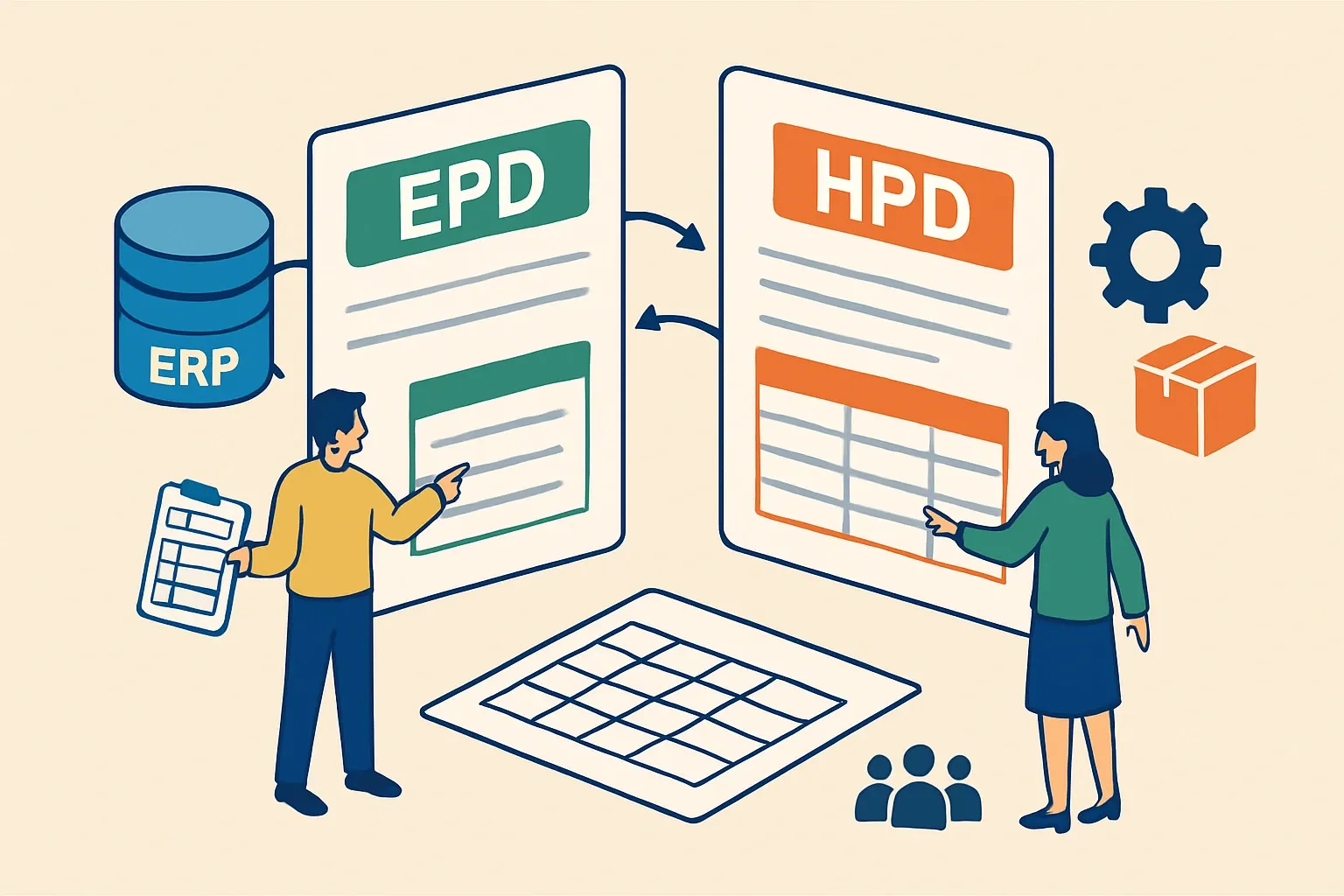
Your ERP says you have the data. Your LCA model and HPD form disagree. The fix is not more spreadsheets, it is the right columns, owners, and supplier asks. Here is the fast path to structure inputs for Environmental Product Declarations versus Health Product Declarations so projects move, not stall.

Ensure that you use no text, as this illustration will be used on international translations of the article..

Use an illustrative style (e.g. isometic) and don't generate in a photorealistic style.
The Data That Feeds EPDs

EPD vs HPD data templates that actually work

Your ERP says you have the data. Your LCA model and HPD form disagree. The fix is not more spreadsheets, it is the right...
Eric Hansen5 min read
Generate an illustration for an article following this concept:

ISO 14040 LCAs for the EU Battery Regulation
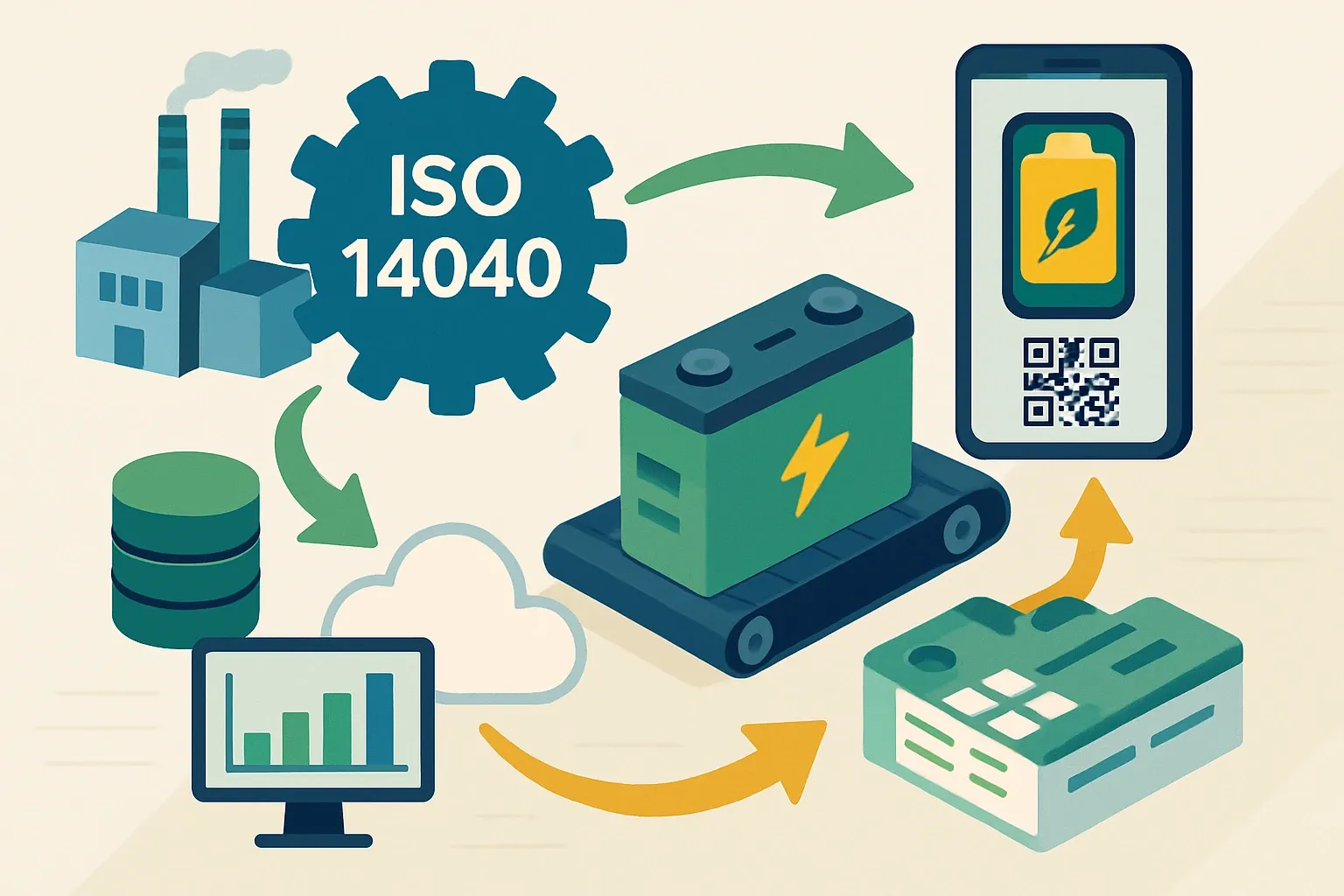
Battery carbon footprints now gate EU market access. The twist is that the required numbers are model‑ and plant‑specific, verified, and destined for a digital passport. Most manufacturers already hold 80% of what’s needed in ERPs, MES, EMS, and spreadsheets. The gap is structure, not existence. Build an LCA data pipeline that ingests messy factory reality and outputs ISO‑consistent results that can be refreshed without redoing the whole study. Here’s how to make your data work for you, not the other way around.

Ensure that you use no text, as this illustration will be used on international translations of the article..

Use an illustrative style (e.g. isometic) and don't generate in a photorealistic style.
The Data That Feeds EPDs

ISO 14040 LCAs for the EU Battery Regulation

Battery carbon footprints now gate EU market access. The twist is that the required numbers are model‑ and plant‑specifi...

Eric Hansen5 min read
Generate an illustration for an article following this concept:

EPD and PCF models for customer controlled supply chains
When customers dictate suppliers, materials, and logistics, manufacturers carry the reporting burden without full control of the inputs. The trick is not to promise x‑ray vision. It is to design an EPD and product carbon footprint model that sets defendable boundaries, absorbs customer data cleanly, and fills gaps with credible proxies while protecting IP.

Ensure that you use no text, as this illustration will be used on international translations of the article..

Use an illustrative style (e.g. isometic) and don't generate in a photorealistic style.
The Data That Feeds EPDs

EPD and PCF models for customer controlled supply chains

When customers dictate suppliers, materials, and logistics, manufacturers carry the reporting burden without full contro...

Walker Ryan5 min read
Generate an illustration for an article following this concept:

Turn Freight Exports Into A2/A4 Gold
Logistics data hides in five different places and six file formats. Yet it powers two of the most visible EPD modules: A2 for inbound and A4 for outbound. Pull one clean export with the right fields, and a messy web of shipments becomes a defensible model and a roadmap for carbon cuts. Better still, the same dataset supports the first declaration and future optimization without rework.

Ensure that you use no text, as this illustration will be used on international translations of the article..

Use an illustrative style (e.g. isometic) and don't generate in a photorealistic style.
The Data That Feeds EPDs

Turn Freight Exports Into A2/A4 Gold

Logistics data hides in five different places and six file formats. Yet it powers two of the most visible EPD modules: A...

Walker Ryan5 min read
Generate an illustration for an article following this concept:

Primary vs Secondary LCA Data, Without the Headache
Supplier data can feel like a locked door when the clock is ticking. Good news. EN 15804 does not insist on perfection for day one, it insists on clarity. If you lean on high quality secondary datasets, document assumptions, and show progress, you can publish a credible EPD fast enough to matter commercially while building a path to fuller primary coverage next release.

Ensure that you use no text, as this illustration will be used on international translations of the article..

Use an illustrative style (e.g. isometic) and don't generate in a photorealistic style.
The Data That Feeds EPDs

Primary vs Secondary LCA Data, Without the Headache

Supplier data can feel like a locked door when the clock is ticking. Good news. EN 15804 does not insist on perfection f...

Walker Ryan5 min read
Generate an illustration for an article following this concept:

Battery passports, DPPs, and EPDs in one playbook
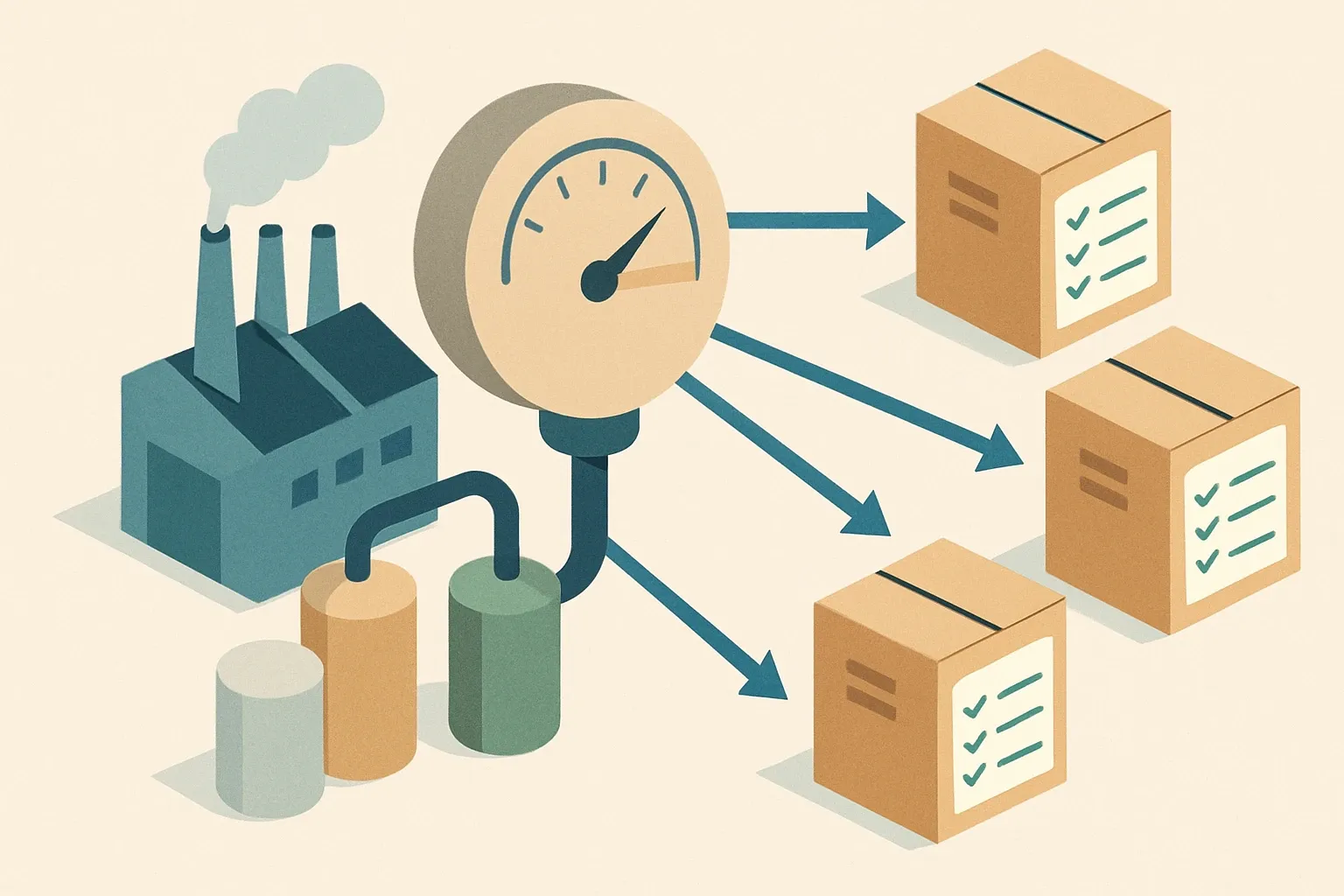
Battery manufacturers planning new plants while selling into the EU juggle three asks that sound similar but are not: EPDs for embodied carbon disclosure, battery passports for each physical battery, and broader Digital Product Passport rules coming through ecodesign. The trick is building one data spine at plant level that feeds all three so teams avoid duplicate work and last‑minute scrambles.

Ensure that you use no text, as this illustration will be used on international translations of the article..

Use an illustrative style (e.g. isometic) and don't generate in a photorealistic style.
The Data That Feeds EPDs

Battery passports, DPPs, and EPDs in one playbook

Battery manufacturers planning new plants while selling into the EU juggle three asks that sound similar but are not: EP...
Walker Ryan5 min read
Generate an illustration for an article following this concept:

Allocate Plant Data To SKUs For EPDs
One meter, many SKUs. That’s the headache. Shared lines and shared utilities blur the trail from plant invoices to product footprints. Clean, transparent allocation rules turn that blur into a crisp picture verifiers can follow and that product teams can keep current without heroics.

Ensure that you use no text, as this illustration will be used on international translations of the article..

Use an illustrative style (e.g. isometic) and don't generate in a photorealistic style.
The Data That Feeds EPDs

Allocate Plant Data To SKUs For EPDs

One meter, many SKUs. That’s the headache. Shared lines and shared utilities blur the trail from plant invoices to produ...

Eric Hansen5 min read
Generate an illustration for an article following this concept:

Turn HPDs into EPD fuel, fast
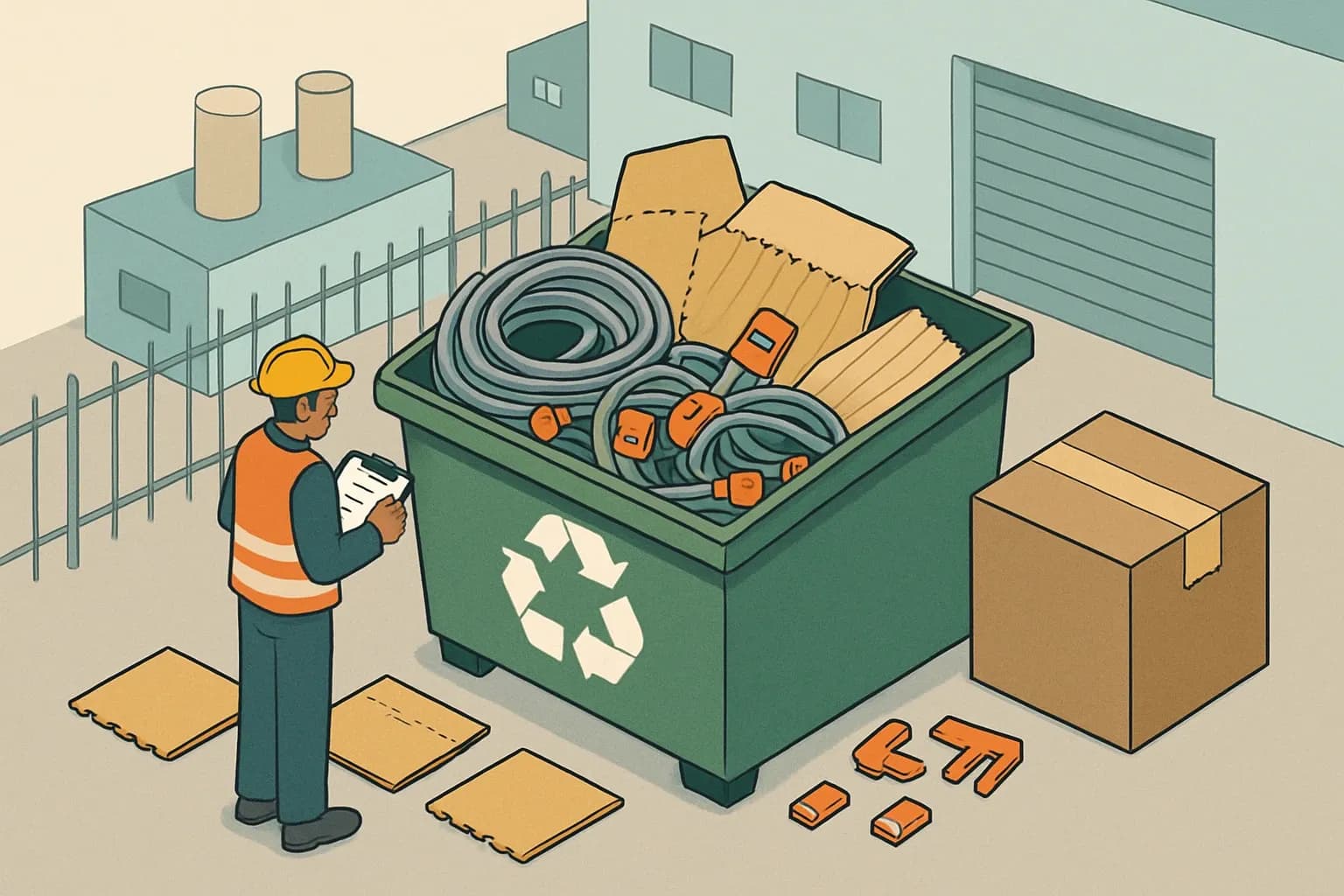
If product teams have already built HPDs or supplied dossiers to labeling programs, they are sitting on a goldmine of formulation data. The trick is knowing what carries over to an LCA and what must be refreshed so a third‑party verifier signs off without rework. Treat those records like a structured dataset, not a PDF pile, and EPD schedules start to move like a well‑oiled assembly line.

Ensure that you use no text, as this illustration will be used on international translations of the article..

Use an illustrative style (e.g. isometic) and don't generate in a photorealistic style.
The Data That Feeds EPDs

Turn HPDs into EPD fuel, fast

If product teams have already built HPDs or supplied dossiers to labeling programs, they are sitting on a goldmine of fo...
Eric Hansen5 min read
Generate an illustration for an article following this concept:

Get factory waste EPD‑ready: scrap, cut‑offs, exclusions
Most plants track hazardous waste like a hawk, then lose the thread on non‑hazardous scrap. EPDs do not. Verifiers expect a consistent picture of all significant streams by material and fate, including trimmed cable lengths, rejected connectors, and packaging offcuts that never leave the gate. Here’s a fast, verifier‑friendly way to make that waste EPD‑ready without bogging engineers down in crumbs.

Ensure that you use no text, as this illustration will be used on international translations of the article..

Use an illustrative style (e.g. isometic) and don't generate in a photorealistic style.
The Data That Feeds EPDs

Get factory waste EPD‑ready: scrap, cut‑offs, exclusions

Most plants track hazardous waste like a hawk, then lose the thread on non‑hazardous scrap. EPDs do not. Verifiers expec...

Toby Urff5 min read
Generate an illustration for an article following this concept:

Taming messy supplier and logistics data for EPDs
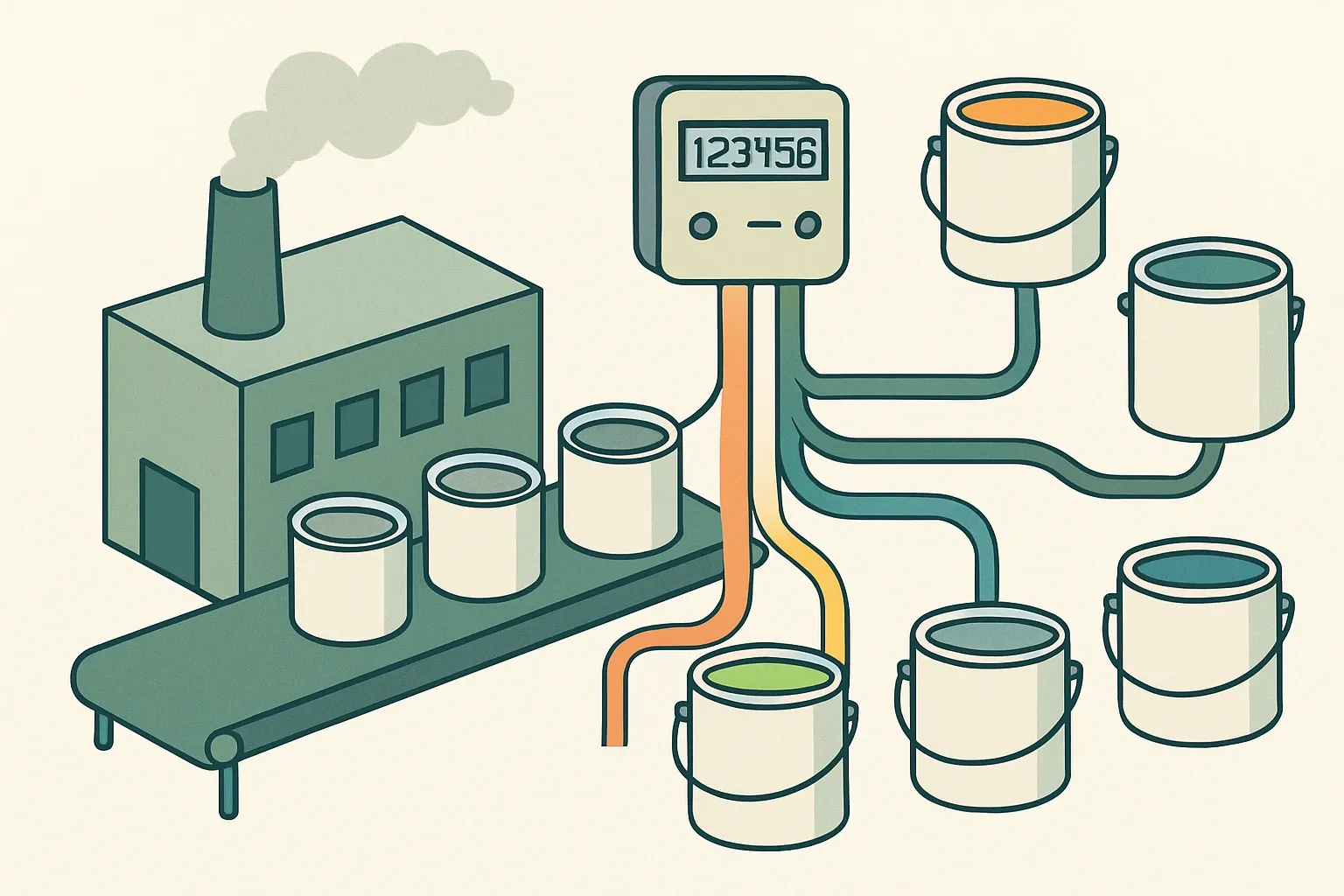
ERP exports and shipping logs rarely map neatly to a single SKU. The good news is that LCA models do not require every truck stop or pallet scan. With the right structure, high‑level supplier locations, typical transport modes, and a few sensible allocations will produce credible, auditor‑ready EPDs without months of detective work.

Ensure that you use no text, as this illustration will be used on international translations of the article..

Use an illustrative style (e.g. isometic) and don't generate in a photorealistic style.
The Data That Feeds EPDs

Taming messy supplier and logistics data for EPDs

ERP exports and shipping logs rarely map neatly to a single SKU. The good news is that LCA models do not require every t...
Toby Urff5 min read
Generate an illustration for an article following this concept:

Allocating shared plant emissions to products in EPDs
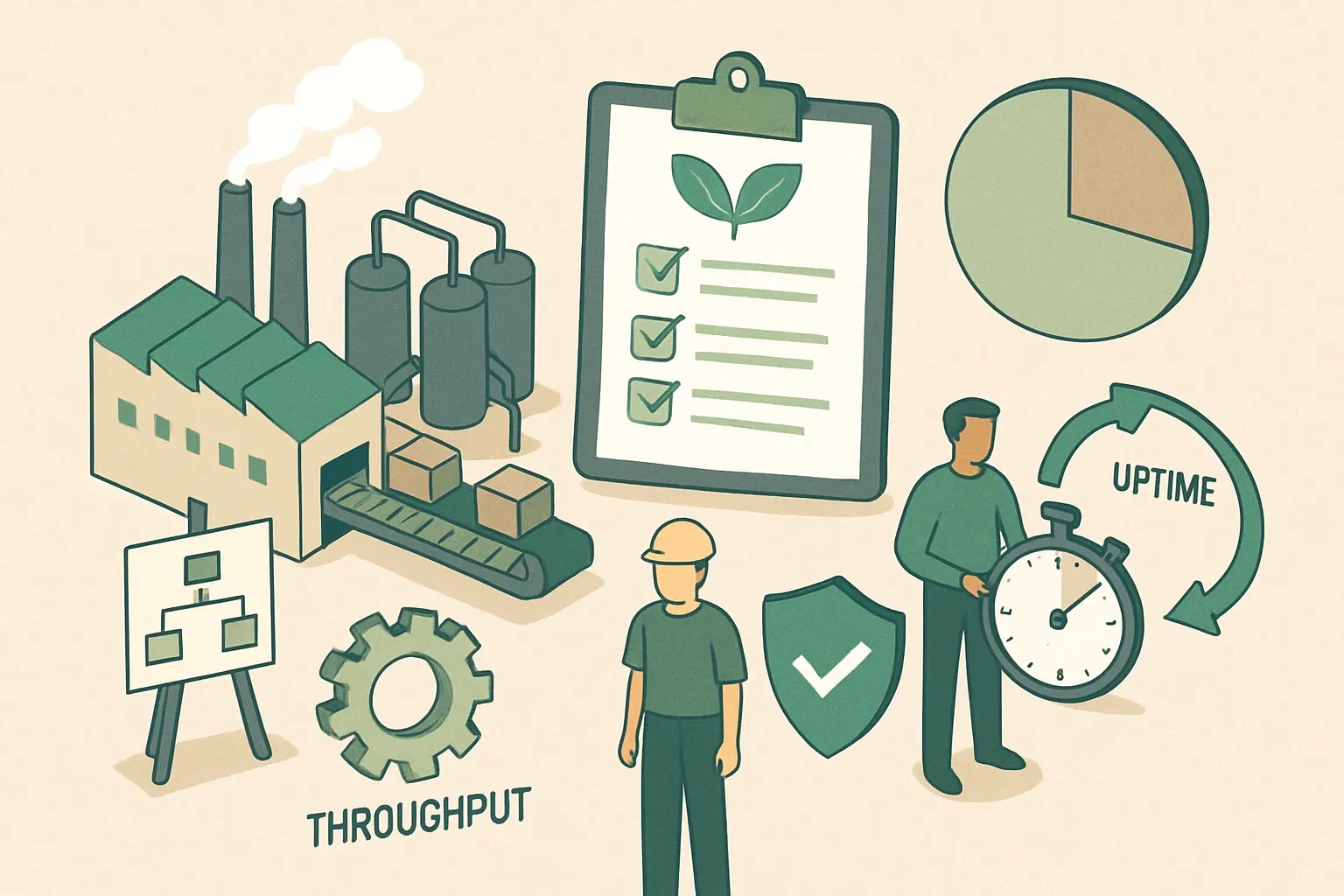
One paint line. Five product families. One utility meter. The math feels unfair until allocation rules turn that tangle into an auditable story buyers can trust. Here is how to carve plant‑level energy and VOCs into product‑level numbers without rebuilding your entire metering setup.

Ensure that you use no text, as this illustration will be used on international translations of the article..

Use an illustrative style (e.g. isometic) and don't generate in a photorealistic style.
The Data That Feeds EPDs

Allocating shared plant emissions to products in EPDs

One paint line. Five product families. One utility meter. The math feels unfair until allocation rules turn that tangle ...
Toby Urff5 min read
Generate an illustration for an article following this concept:

The plant data LCA teams actually need
Plants juggle throughput, uptime, and safety. Then a request for “primary data for the EPD” lands and everything slows. Here’s the short, practical list LCA practitioners truly need from manufacturing sites, plus which teams usually hold it and when a small, PCR‑acceptable assumption is fine so projects dont stall.

Ensure that you use no text, as this illustration will be used on international translations of the article..

Use an illustrative style (e.g. isometic) and don't generate in a photorealistic style.
The Data That Feeds EPDs

The plant data LCA teams actually need

Plants juggle throughput, uptime, and safety. Then a request for “primary data for the EPD” lands and everything slows. ...

John Johnson5 min read
Generate an illustration for an article following this concept:

Supplier data triage for component‑heavy EPDs
Hundreds of screws, rivets, clips, and fittings can stall an LCA before it starts. The trick is not chasing every bolt, it is structuring supplier data so a verifier sees logic, coverage, and consistency without turning procuremnt into a scavenger hunt.

Ensure that you use no text, as this illustration will be used on international translations of the article..

Use an illustrative style (e.g. isometic) and don't generate in a photorealistic style.
The Data That Feeds EPDs

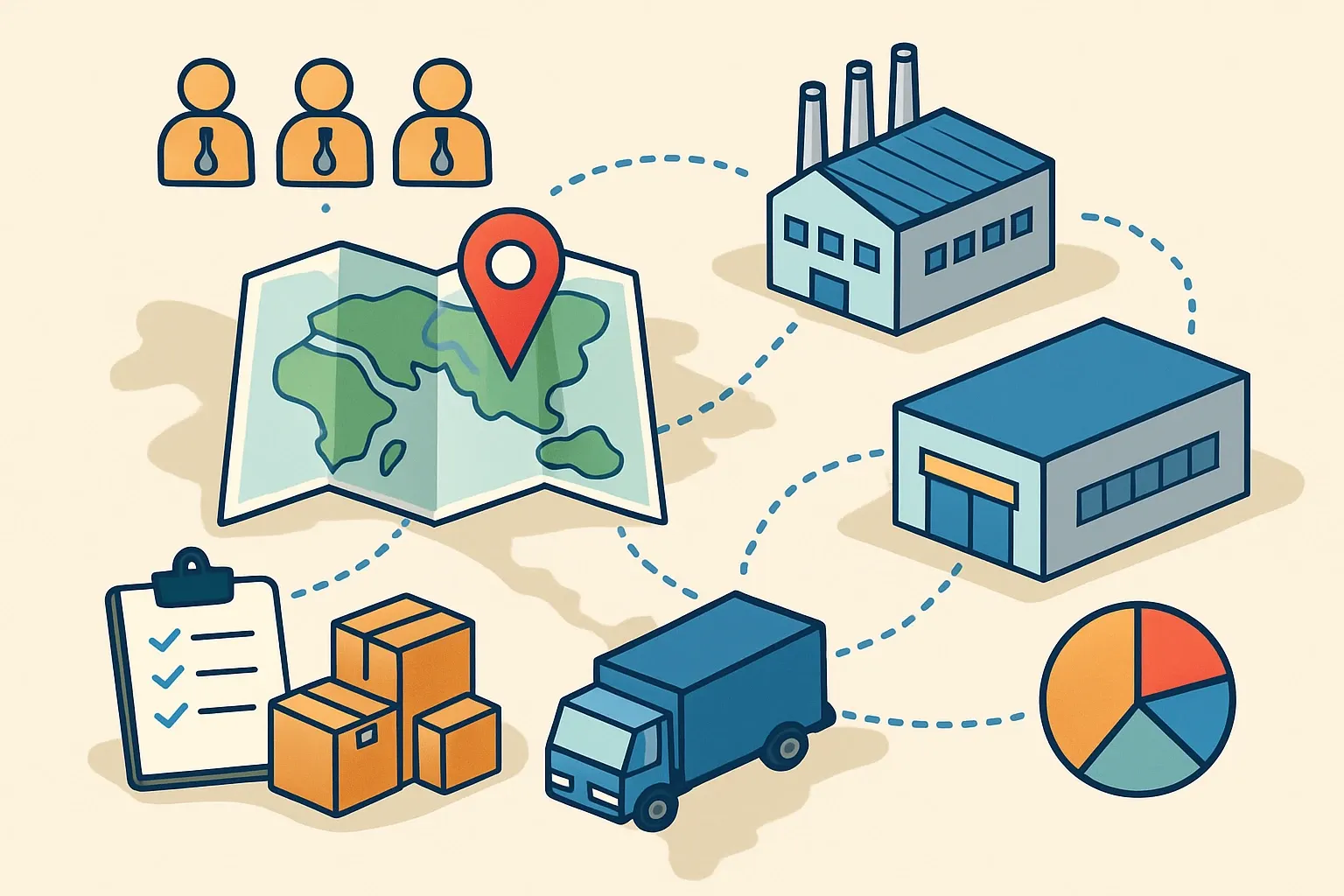
Supplier data triage for component‑heavy EPDs

Hundreds of screws, rivets, clips, and fittings can stall an LCA before it starts. The trick is not chasing every bolt, ...
Eric Hansen5 min read
Generate an illustration for an article following this concept:

Model supplier and logistics data without plant maps
Missing exact factory coordinates should not freeze an EPD. Capture what is known with discipline, then model the rest. A practical recipe is to log supplier names, packaging specs, and the distribution centers products typically ship through. Use routing models to infer likely manufacturing locations and the shortest credible legs between nodes. When materials come from multiple suppliers, assign purchase fractions so LCA software can weight impacts correctly. You move fast, keep transparency, and validate fine points during review instead of guessing for weeks.

Ensure that you use no text, as this illustration will be used on international translations of the article..

Use an illustrative style (e.g. isometic) and don't generate in a photorealistic style.
The Data That Feeds EPDs

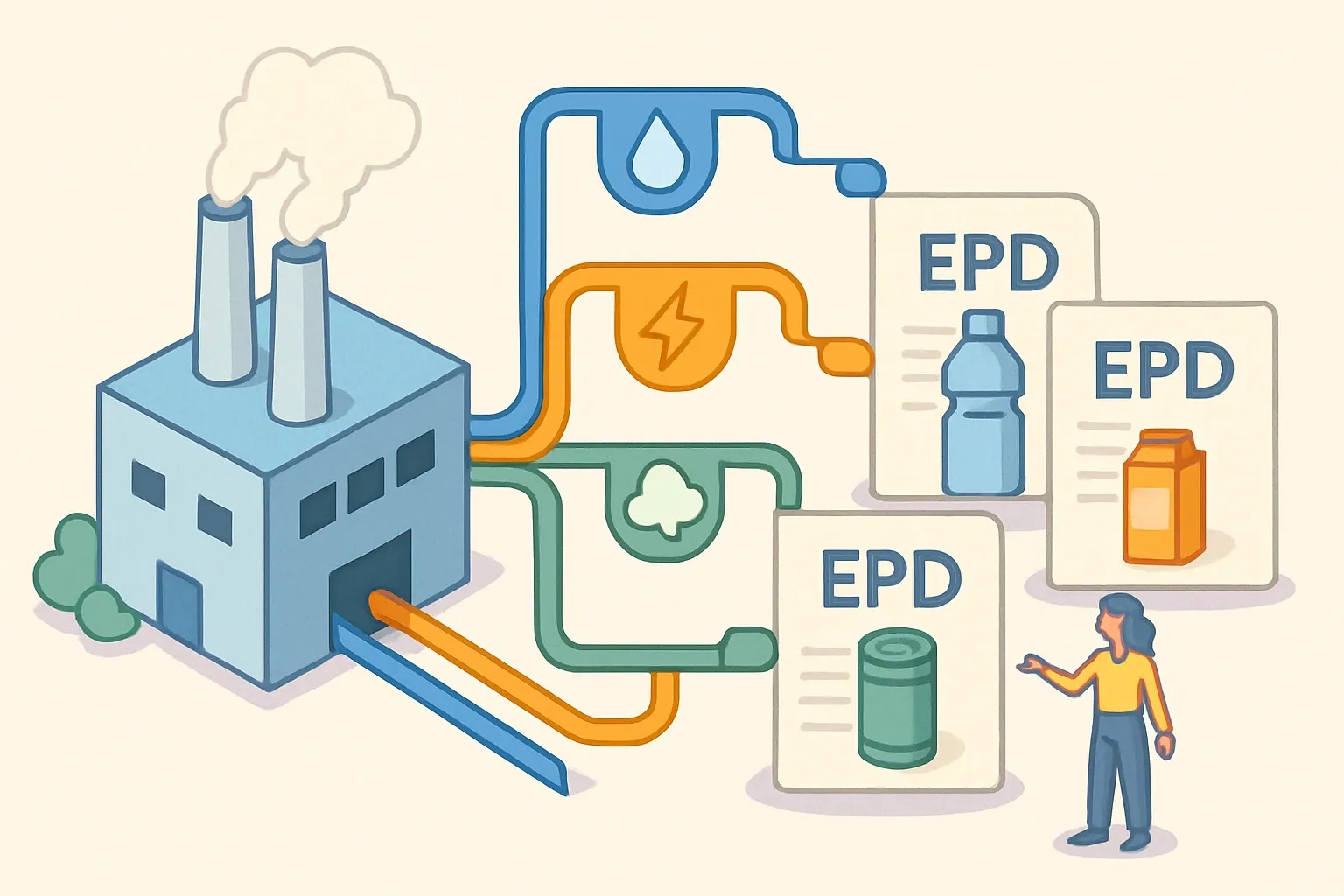
Model supplier and logistics data without plant maps

Missing exact factory coordinates should not freeze an EPD. Capture what is known with discipline, then model the rest. ...
Toby Urff5 min read
Generate an illustration for an article following this concept:

Allocating plant utilities to product EPDs, without drama
Multi‑product plants rarely meter every line. Utility and wastewater totals live at the plant level, which stalls LCAs when teams chase SKU‑level data that does not exist. The pragmatic path is to allocate from annual facility totals using a clear driver, then tighten where it matters most. It is fast, defensable, and aligns with common PCR expectations when documented and sensitivity checked.

Ensure that you use no text, as this illustration will be used on international translations of the article..

Use an illustrative style (e.g. isometic) and don't generate in a photorealistic style.
The Data That Feeds EPDs

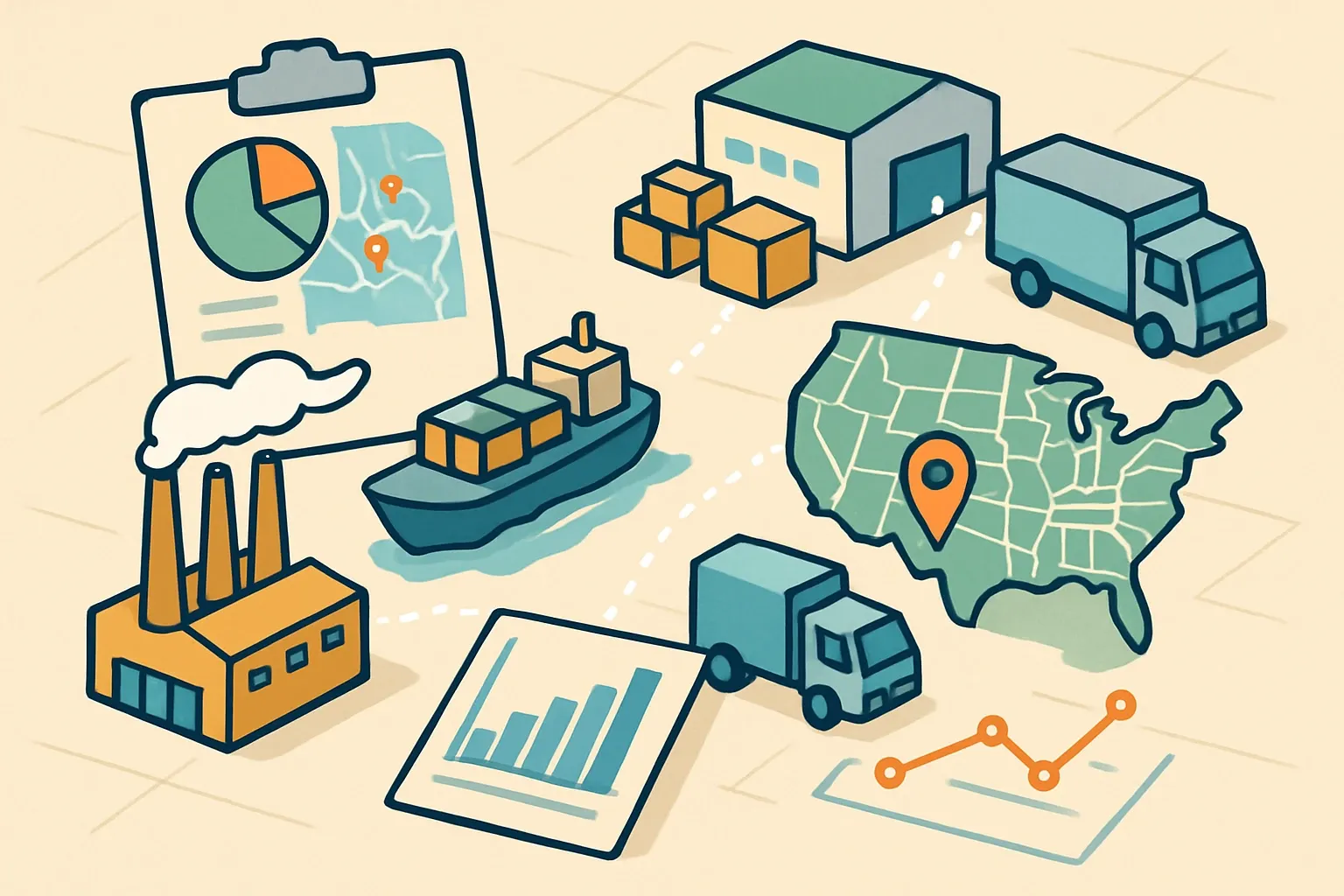
Allocating plant utilities to product EPDs, without drama

Multi‑product plants rarely meter every line. Utility and wastewater totals live at the plant level, which stalls LCAs w...
Walker Ryan5 min read
Generate an illustration for an article following this concept:

Distribution data that’s good enough for EPDs
Distribution modeling trips up even seasoned teams. The good news is you don’t need to model every order. A lean, defensbile approach that combines mode-and-distance for the factory to port to regional DC legs plus outbound patterns to customer zip codes will usually satisfy PCRs, speed verification, and sharpen the A4 and C2 results that specifiers scrutinize.

Ensure that you use no text, as this illustration will be used on international translations of the article..

Use an illustrative style (e.g. isometic) and don't generate in a photorealistic style.
The Data That Feeds EPDs

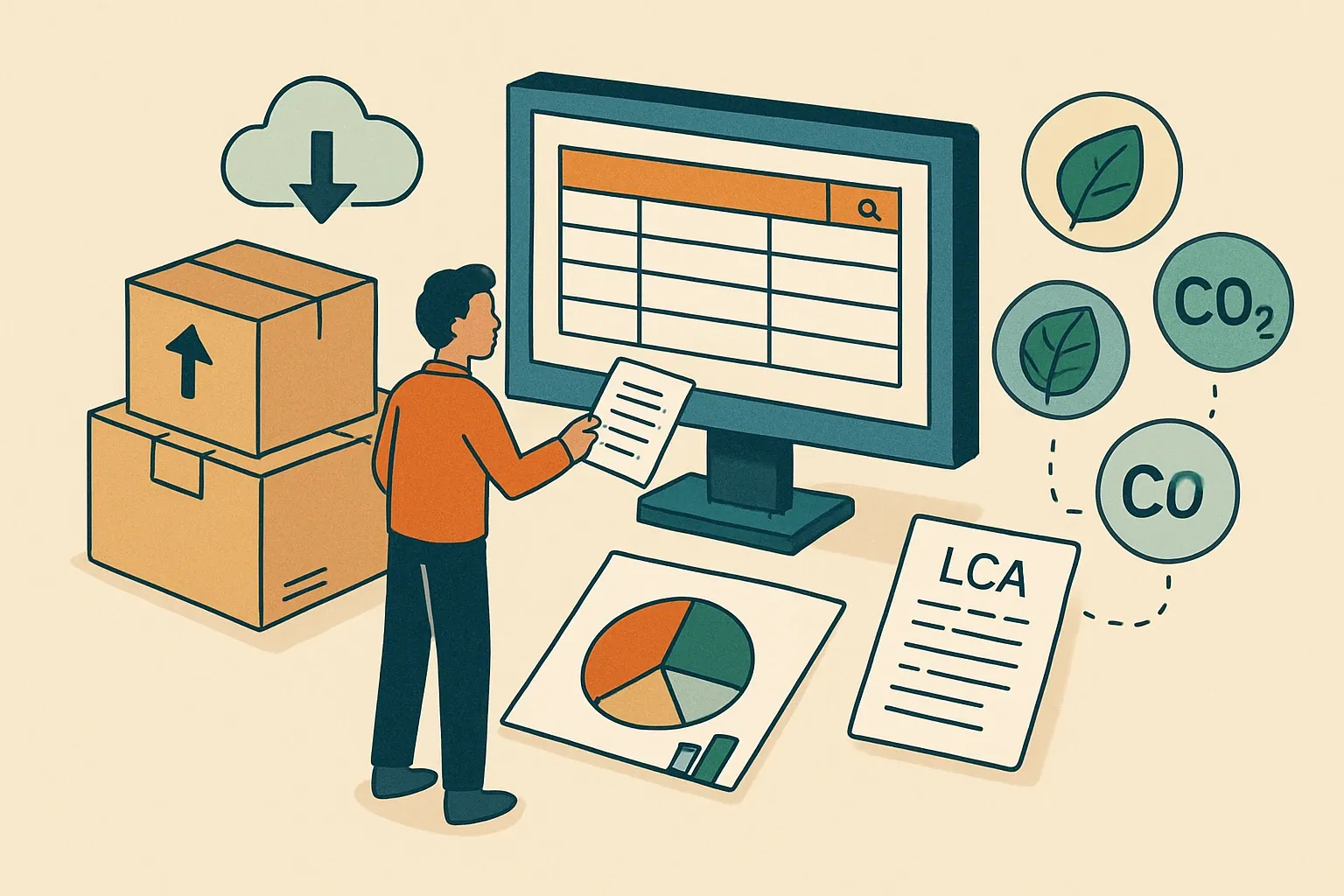
Distribution data that’s good enough for EPDs

Distribution modeling trips up even seasoned teams. The good news is you don’t need to model every order. A lean, defens...
Walker Ryan5 min read
Generate an illustration for an article following this concept:

How to collect Scope 3 Purchased Goods data
Category 1 drives the bulk of many manufacturers’ footprints, yet it is the messiest data to wrangle. Nail this once and your LCAs, EPDs, and customer answers flow faster, with fewer fire drills when specs land.

Ensure that you use no text, as this illustration will be used on international translations of the article..

Use an illustrative style (e.g. isometic) and don't generate in a photorealistic style.
The Data That Feeds EPDs

How to collect Scope 3 Purchased Goods data

Category 1 drives the bulk of many manufacturers’ footprints, yet it is the messiest data to wrangle. Nail this once and...

John Johnson5 min read
Generate an illustration for an article following this concept:

KBOB LCA Data for Swiss Construction, Explained
Winning Swiss specs gets easier when teams speak the same data language. The KBOB life cycle assessment dataset is that lingua franca. It guides public buyers and design teams, and it can guide manufacturers too. Here’s how to use it to sharpen LCAs, align with SIA’s climate path, and decide when a product‑specific EPD gives you the commercial edge. Yes, you can do both without drowning in spreadsheets.

Ensure that you use no text, as this illustration will be used on international translations of the article..

Use an illustrative style (e.g. isometic) and don't generate in a photorealistic style.
The Data That Feeds EPDs

KBOB LCA Data for Swiss Construction, Explained

Winning Swiss specs gets easier when teams speak the same data language. The KBOB life cycle assessment dataset is that ...
Eric Hansen5 min read
Generate an illustration for an article following this concept:

EPA eGRID, decoded for manufacturer EPDs
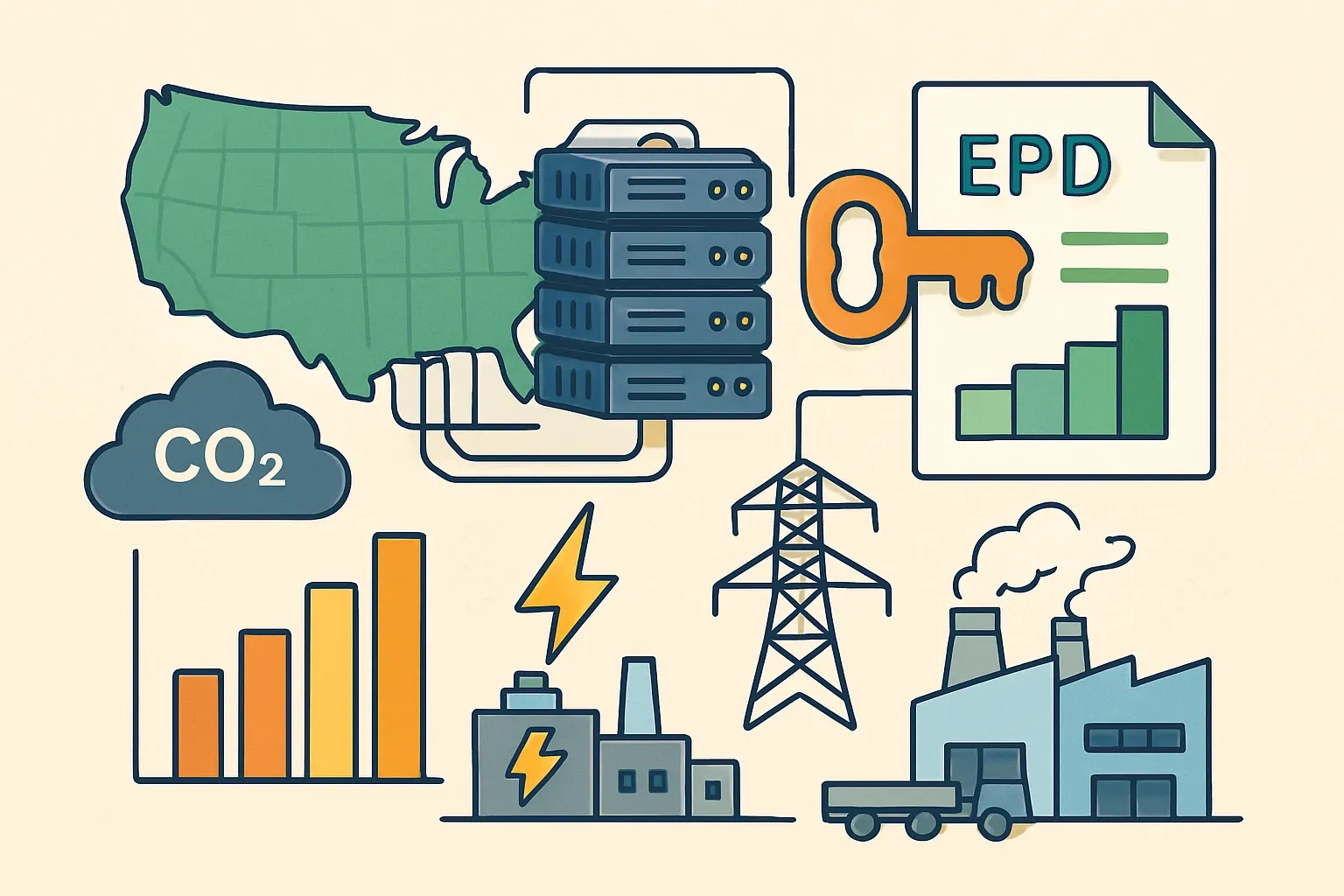
Electricity is the silent heavyweight in many LCAs. EPA’s eGRID dataset decides how carbon intensive that electricity is for your plants, which then shapes A1 to A3 results and the story your EPD tells. Use the right region and year and your numbers sing. Miss it and you leave accuracy and specs on the table.

Ensure that you use no text, as this illustration will be used on international translations of the article..

Use an illustrative style (e.g. isometic) and don't generate in a photorealistic style.
The Data That Feeds EPDs

EPA eGRID, decoded for manufacturer EPDs

Electricity is the silent heavyweight in many LCAs. EPA’s eGRID dataset decides how carbon intensive that electricity is...
John Johnson5 min read
Generate an illustration for an article following this concept:

Energy mix: the hidden EPD multiplier
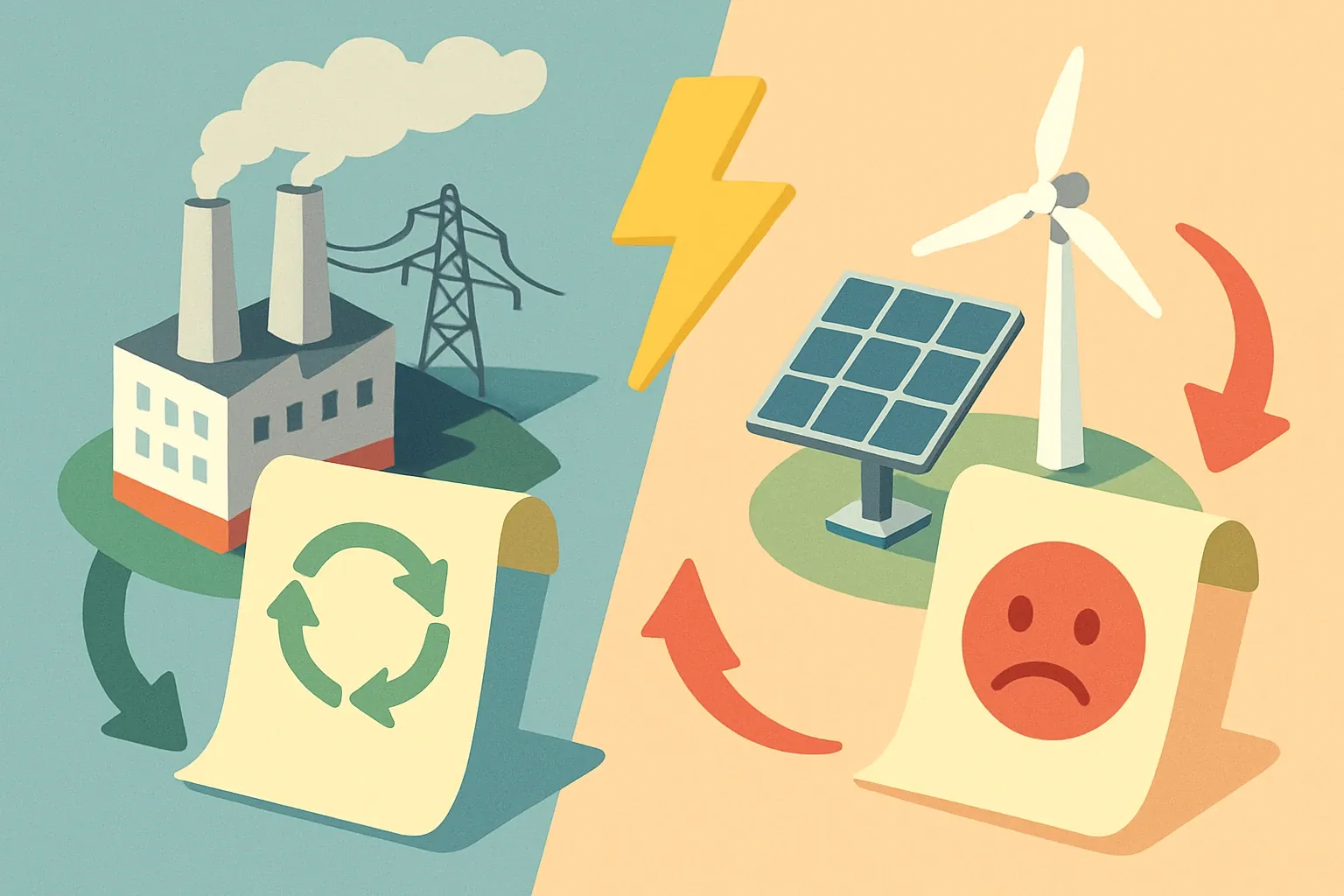
Energy data is the plot twist in many LCAs. The same plant, same recipe, two different grids and your EPD swings from competitive to forgettable. If utility bills are scattered or REC paperwork is fuzzy, timelines slip and credibility takes a hit.

Ensure that you use no text, as this illustration will be used on international translations of the article..

Use an illustrative style (e.g. isometic) and don't generate in a photorealistic style.
The Data That Feeds EPDs

Energy mix: the hidden EPD multiplier

Energy data is the plot twist in many LCAs. The same plant, same recipe, two different grids and your EPD swings from co...

Eric Hansen5 min read
Generate an illustration for an article following this concept:

VOC emissions vs content: use the right test
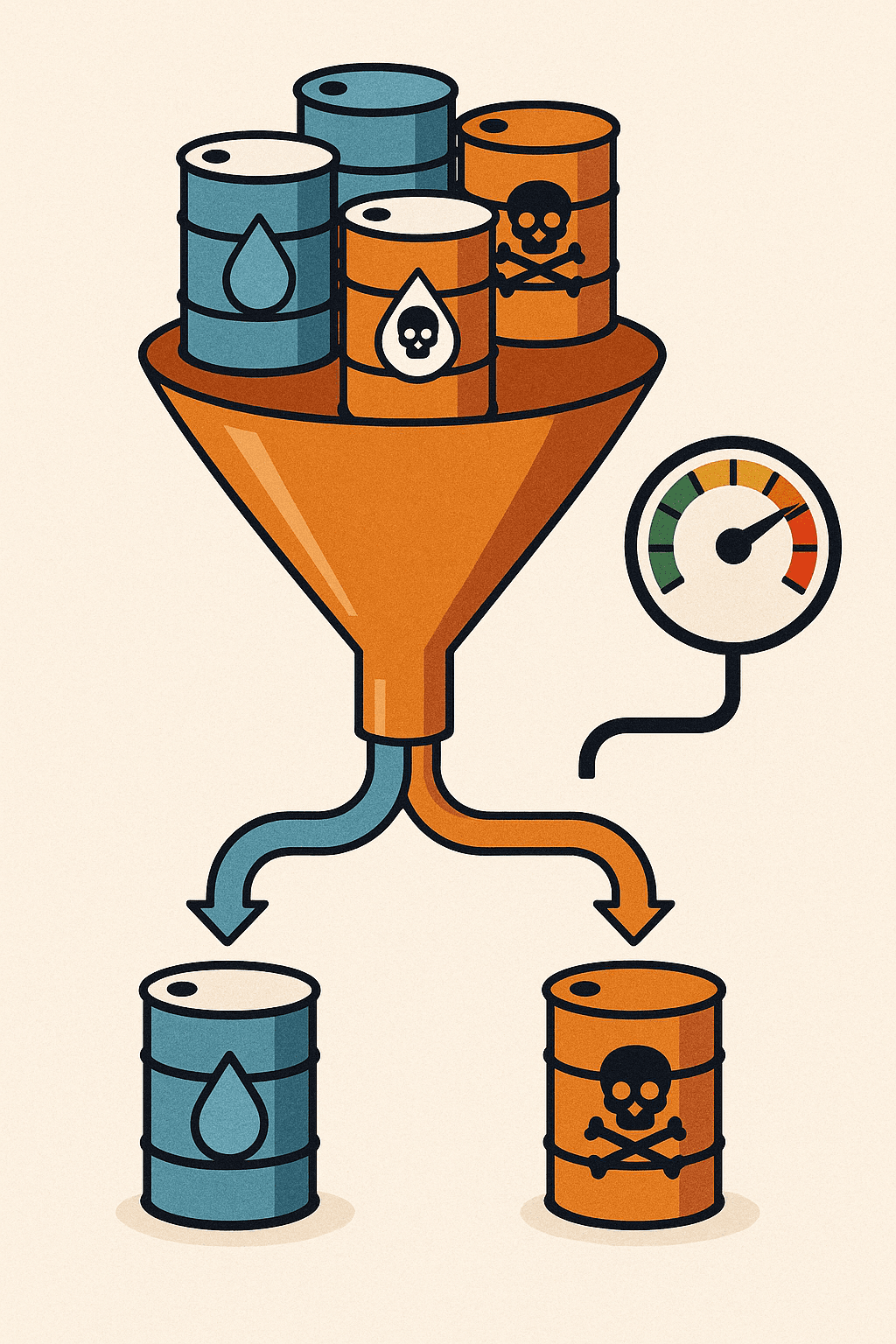
Submittals get bounced for one reason more than most: someone claimed “low VOC” without the test method the spec actually asked for. Interior products live or die on this detail. Here is how to line up emissions and content claims so reviewers say yes, fast.

Ensure that you use no text, as this illustration will be used on international translations of the article..

Use an illustrative style (e.g. isometic) and don't generate in a photorealistic style.
The Data That Feeds EPDs

VOC emissions vs content: use the right test

Submittals get bounced for one reason more than most: someone claimed “low VOC” without the test method the spec actuall...
Toby Urff5 min read
Generate an illustration for an article following this concept:

The EPD Bill of Materials, Simplified
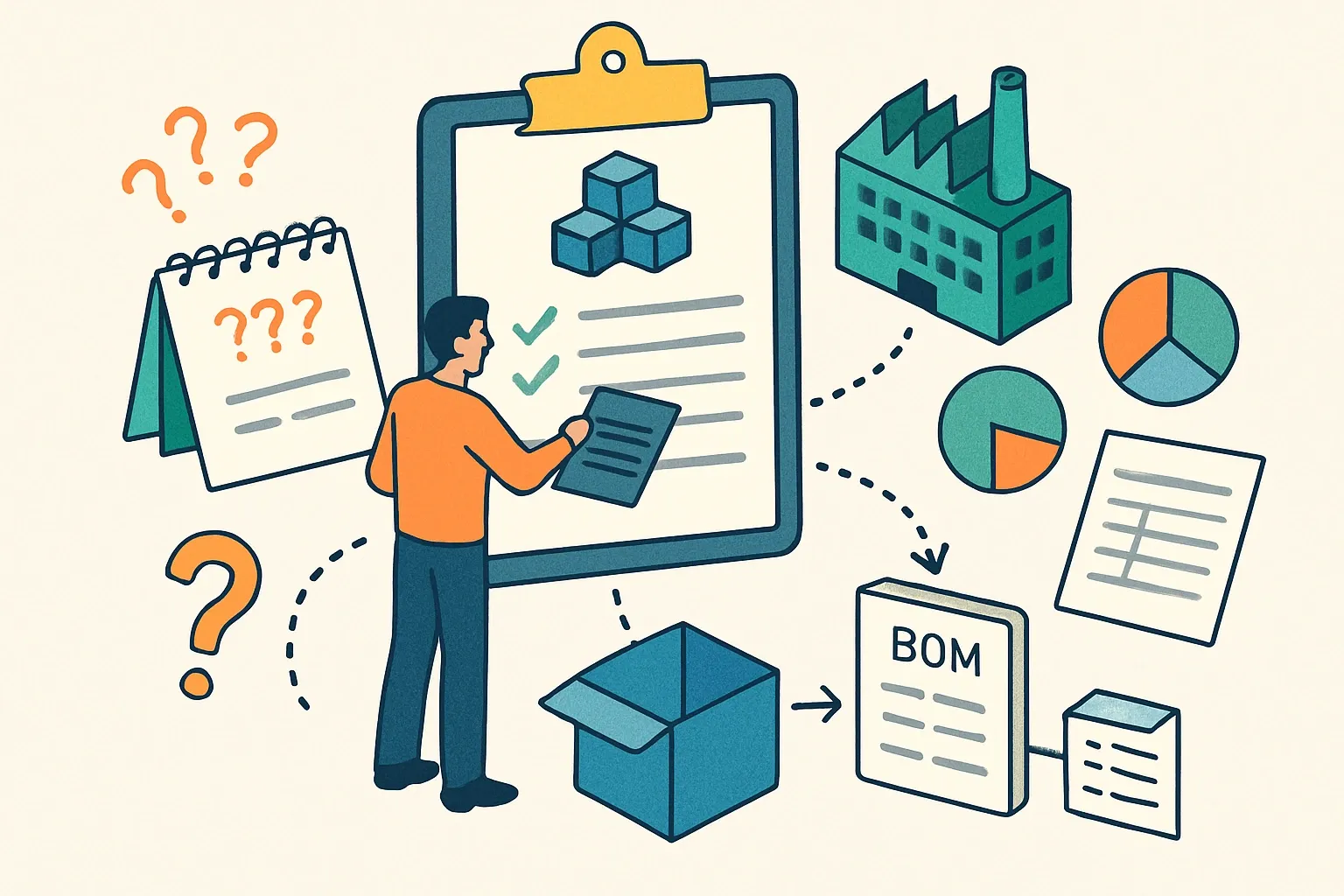
Missing materials, fuzzy units, and guessy supplier data slow EPDs to a crawl. A crisp Bill of Materials is the spine of your declaration, turning plant knowledge into publishable facts and faster specs. Build it right once, then reuse it across product lines without the back‑and‑forth that eats calendar time and margin.

Ensure that you use no text, as this illustration will be used on international translations of the article..

Use an illustrative style (e.g. isometic) and don't generate in a photorealistic style.
The Data That Feeds EPDs

The EPD Bill of Materials, Simplified

Missing materials, fuzzy units, and guessy supplier data slow EPDs to a crawl. A crisp Bill of Materials is the spine of...

Toby Urff5 min read
Generate an illustration for an article following this concept:

EPD data requirements for 2026, clarified
If 2024 felt like alphabet soup, 2026 looks like a tidy pantry. The rulebooks are stable, procurement still favors product‑specific EPDs, and teams that line up data early publish faster with fewer rewrites. Here is the no‑nonsense view of what to collect, how clean it needs to be, and the few shifts to keep an eye on so bids stay eligible and specs stick.

Ensure that you use no text, as this illustration will be used on international translations of the article..

Use an illustrative style (e.g. isometic) and don't generate in a photorealistic style.
The Data That Feeds EPDs

EPD data requirements for 2026, clarified

If 2024 felt like alphabet soup, 2026 looks like a tidy pantry. The rulebooks are stable, procurement still favors produ...

John Johnson5 min read
Generate an illustration for an article following this concept:

What Data You Need To Prepare For An EPD
An EPD moves as fast as your data is ready. Pull the right files early and the path from kickoff to a third‑party verified, spec‑ready declaration gets a lot smoother. Miss a few essentials and the project stalls while teams chase spreadsheets, utility bills, and supplier confirmations. Here is the practical checklist and context to make your first EPD feel like a tidy pit stop, not a teardown.

Ensure that you use no text, as this illustration will be used on international translations of the article..

Use an illustrative style (e.g. isometic) and don't generate in a photorealistic style.
The Data That Feeds EPDs

What Data You Need To Prepare For An EPD

An EPD moves as fast as your data is ready. Pull the right files early and the path from kickoff to a third‑party verifi...

Walker Ryan5 min read
A factory dashboard with a gauge showing data age from 0 to 10 years, highlighting under 5 years in green for primary data and up to 10 years in yellow for background.
The Data That Feeds EPDs

LCA Data Age And Accuracy, Explained For Builders

Old numbers sink trust. Fresh ones win specs. If you sell into projects that score carbon, the age and accuracy of your ...
Toby Urff5 min read
Haz vs. Non-Haz Waste
The Data That Feeds EPDs

Hazardous Waste Data: The EPD Wildcard

No product manager brags about their hazardous-waste line item, yet the kilograms you generate, recycle, or landfill can...
Toby Urff5 min read
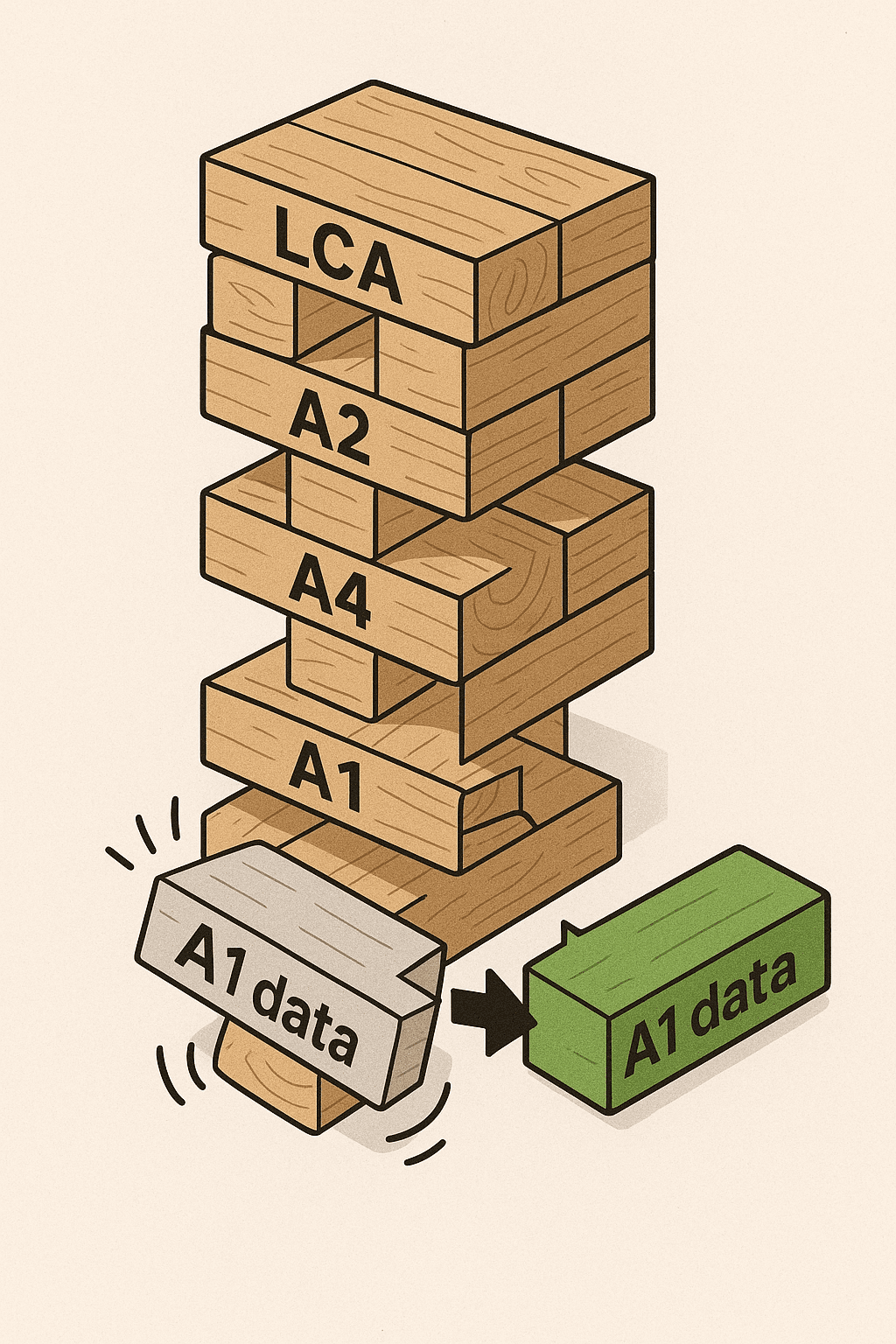
Jenga tower of upstream data being swapped out against proxies
The Data That Feeds EPDs

Upstream Data: The Hidden Fuel of Reliable EPDs

Module A1, the upstream slice of an Environmental Product Declaration, often carries three-quarters of a building produc...

Eric Hansen5 min read