Primary data vs secondary data, in plain terms
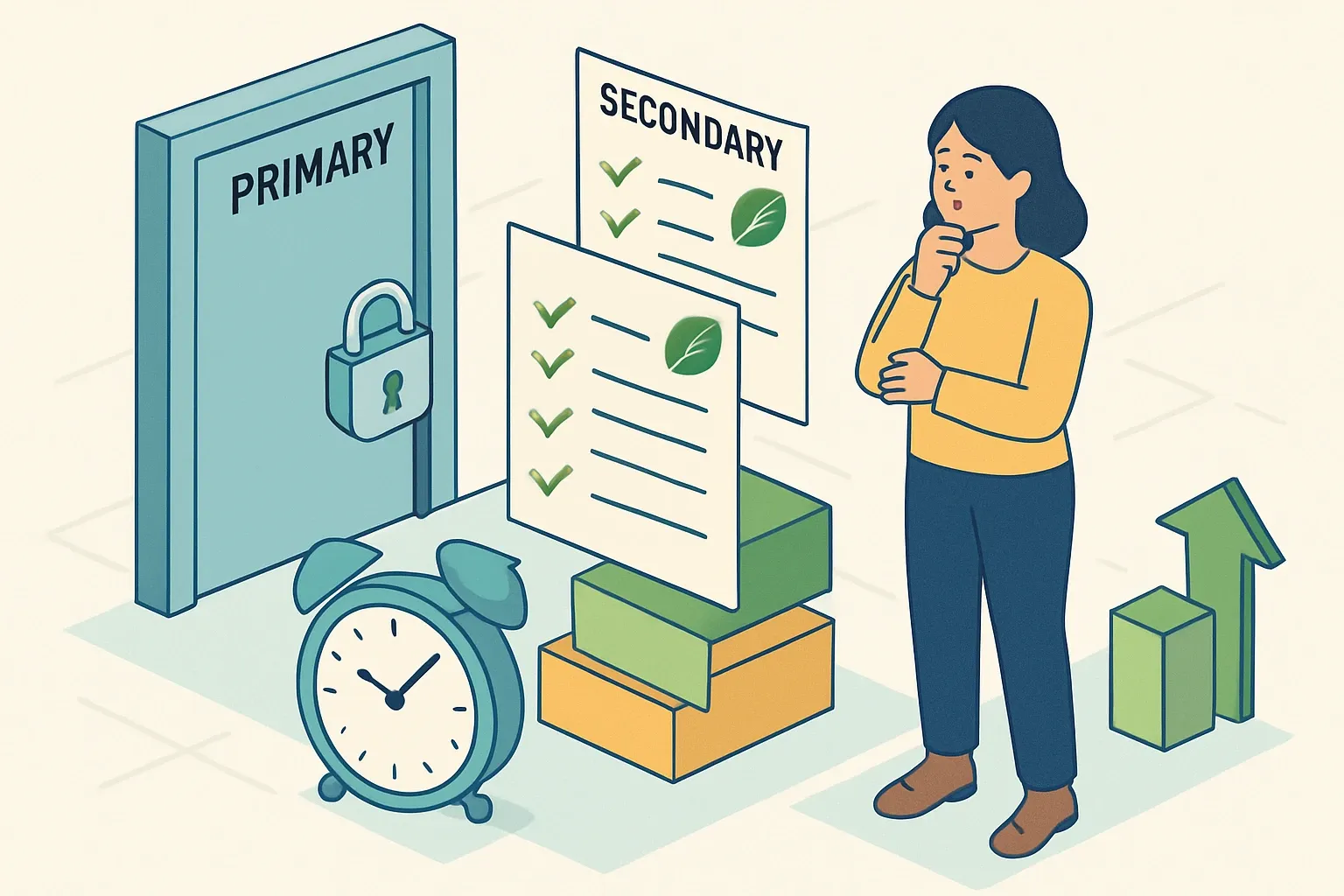
Primary data comes from your own operations or your direct suppliers. Think meter reads, purchase records, ERP exports, on site measurements. Secondary data comes from reputable background libraries or published studies, such as national inventories or ecoinvent style datasets.
Both belong in a serious LCA. The rule of thumb is simple. Use primary where you control the process, then fill upstream gaps with the best available secondary data and document everything.
When secondary data is acceptable under EN 15804
EN 15804 requires specific data for processes under the manufacturer’s control. It allows high quality generic data for background processes if representativeness, completeness, and age are shown. Background datasets older than ten years are generally not acceptable unless justified by the PCR or verifier (EN 15804, 2019).
Program operators expect consistency with the governing PCR and transparent data quality assessment. They look for temporal, geographical, and technological representativeness notes that match the product system.
What verifiers actually check
Verifiers look for a clean system model, evidence that facility processes use primary data, and a traceable audit trail for every secondary dataset. They test sensitivity for key hotspots, confirm transport modeling, and review allocation choices. Most issues arise from missing documentation rather than from the use of secondary data itself.
A pragmatic data hierarchy that works
Picture your LCA like a layered sandwich. The core layer is your plant utilities, process yields, scrap, and packaging. That must use primary data. The next layer is tier one materials where feasible. The outer layer is upstream chemicals, fuels, and capital items that usually begin with secondary data and get upgraded over time.
This hierarchy mirrors verifier expectations. It also mirrors how your team can work without blocking production.
Want to unlock project specifications with credible EPDs?
Follow us on LinkedIn for insights on leveraging primary and secondary data to enhance your EPDs and improve your competitive edge.
Common roadblocks, and how to move past them
Suppliers worry about confidentiality. Teams worry about time. Data sits in different systems with different owners. None of this is unusual.
Practical fixes that speed things up:
- Use a short, repeatable request template that asks for only what is needed for LCA, not everything under the sun. Include a non disclosure option that protects price and proprietary recipes.
- Accept metered or invoice based proxies when precise sub process data is not available. Replace later once better reads exist.
- Align on units and reference year upfront to avoid rework. One calendar year is typical for stable products.
- Offer a privacy preserving route. Mass and energy totals can be shared without revealing exact formulations.
How secondary data affects results and risk
Secondary data introduces uncertainty. That is not a deal breaker. Make it visible. Add data quality scores and run a simple sensitivity test on the top three contributors. If results are stable across plausible ranges, you have decision ready numbers for bids and specs.
Supply chain often drives the majority of a product’s footprint, so upstream visibility matters commercially. Across companies, supply chain emissions are on average more than ten times direct operational emissions, which explains why supplier data pays back once captured (CDP, 2024).
Building a credible first EPD
A first release can be credible and fast if it meets four tests. Primary data for on site processes. Secondary data from recognized inventories for the rest. Clear documentation of representativeness and age. A short memo of known gaps and the plan to close them. That is good enough to unlock project specifications that penalize products without product specific EPDs.
EPDs are typically valid for five years under most program rules, so a planned update cadence matters for competitiveness over the cycle (EPD International GPI, 2024).
The upgrade plan that keeps paying off
Think of data quality as a product roadmap. Start with what you own. Add tier one supplier primary data for the two or three heaviest inputs next. Integrate utility meters and automated data pulls so updates take hours, not weeks. Each release reduces uncertainty and makes internal change management easier.
Do not wait for perfect coverage. Perfect is the enemy of speed and, oddly, trust.
Automation that actually helps people
Automation works best when it removes keystrokes for the people who hold the data. Supplier portals with clear fields, file ingestion from ERP and energy systems, version control, and built in verification checklists are the boring superpowers. They cut cycle time and raise confidence without asking engineers to become LCA experts.
We prefer tools that show who entered what, when, and why. Auditors do too. That trace is gold.
What to track between releases
Keep a short scoreboard. New primary data sources captured. Datasets updated to a newer vintage. Sensitivity reduced for the top impact driver. Supplier response time improved. These small wins compound. They also make the next verification smoother and cheaper to run.
One more tip. Note any regulatory shifts that alter buyer expectations. If LEED v5 adoption in a target market accelerates, prioritize product specific EPD coverage for that portfolio segment.
The quiet advantage of transparency
Transparency beats perfection. A product with a verified EPD that declares its data sources, limits, and improvement plan will often outcompete a product with no declaration at all. Teams that publish early learn faster. Teams that learn faster win more bids. That is the whole game, really. And it is definately achievable with steady, well documented steps.