Why allocation changes verification and sales
Allocation is not academic. Reviewers want to see a consistent, PCR‑aligned rule that prevents over‑ or under‑stating impacts. Specifiers want product‑level numbers they can compare. Clean allocation unlocks both, which shortens review cycles and keeps bids moving instead of looping in endless clarifications.
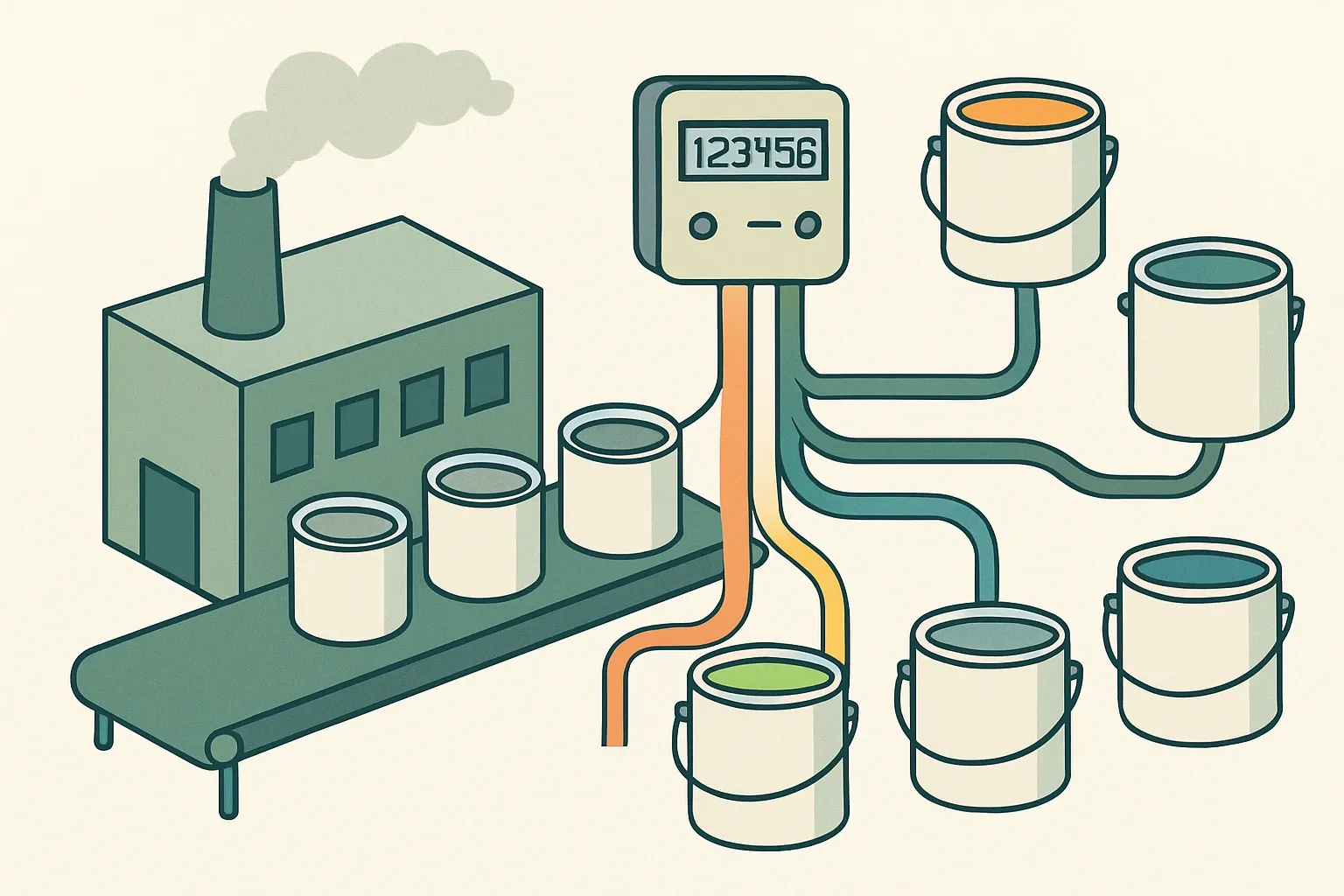
Think of it like splitting a bar tab based on what each person actually ordered. The numbers looks clean on paper when the rule matches reality.
Start from the rulebook (PCR alignment first)
Read the product’s PCR before picking any math. Many PCRs require production‑based allocation and discourage sales‑based approaches unless production data is unavailable. If the PCR permits multiple bases, pick one and apply it uniformly across the reference year.
Document exceptions in plain words. Reviewers reward clarity over cleverness.
Choose a defensibile allocation base
Use the driver that best explains the load:
- Production volume or mass when outputs are comparable.
- Process time or throughput when the bottleneck is machine occupancy.
- Energy meters or sub‑meters when processes differ in intensity.
- Direct emissions drivers for VOCs (solids content, solvent use, capture tests).
- Sales volume only when production data truly cannot be obtained.
Switching bases mid‑year invites doubt. If you must change, note why and show the impact.
VOCs: capture, control, and counts
VOCs from surface coating lines hinge on what evaporates, what gets captured, and what control devices destroy. Use purchase and inventory records to estimate solvent use, solids content from formulations, and stack tests or permit limits for capture and destruction efficiency. When stack data is missing, use conservative permit values and flag the uncertainty.
Keep scrap and rework in scope. They consume coating and create VOCs even if no sale occurs.
Want to streamline your EPDs for better specs?
Follow us on LinkedIn for insights on allocation best practices that enhance clarity and competitiveness in your product offerings.
Electricity and heat: from meters to models
When a single meter feeds many products, allocate electricity by the process time or units processed on that line during the reference year. If you have a line‑level sub‑meter, allocate that sub‑total by product, then spread the shared plant remainder by headcount, floor area, or operating hours as the PCR allows.
To translate kWh into greenhouse gases, apply a current grid factor. The U.S. average emission rate in EPA eGRID 2022 is roughly 0.39 kg CO2 per kWh for 2022 data (EPA eGRID, 2024) (EPA eGRID, 2024).
Practical formulas you can audit
Use formulas a reviewer can replicate without special software.
Production‑based energy allocation:
Product kWh = (Line kWh in year) × (Product units processed ÷ Total units on line)
VOC mass balance:
VOC emitted = Solvent purchased + Solvent in coatings − Solvent in inventory − Solvent in waste − Solvent captured × Destruction efficiency
If multiple lines feed one product, sum per line. If one line feeds multiple products, stick to the same driver across all.
Handling co‑products, scrap, and rework
Co‑products that have value may need economic or mass allocation per the PCR. If scrap is recycled internally, keep the processing energy with the product that caused it unless the PCR says otherwise. Rework belongs to the product that triggered it, not the unit that finally shipped.
Write this logic down once and reuse it every year to avoid relitigating choices.
Evidence beats estimates (and saves weeks)
Good evidence includes batch logs, line‑time reports, coating make‑up sheets, oxidizer logs, maintenance sheets, and permit records. Photograph nameplates on critical equipment and save them to your EPD working folder. We prefer short, well‑organized exhibits over massive data dumps.
If a metric is missing, say so and pick a conservative proxy. Promise the reviewer a plan to improve the data next cycle.
When data is thin: smart proxies and guardrails
If you cannot meter by line, time studies for two representative weeks can anchor an annual allocation factor, then scale by production volume. If VOC stack testing is unavailable, use the control device’s permitted efficiency and add a sensitivity range in your internal file. If the PCR allows, show that your proxy shifts results less than your declared uncertainty. Where trustworthy numbers are missing, say so plainly.
Team habits that cut friction
Close the month with a one‑page allocation memo. It should list the chosen bases, any exceptions, and the year’s production totals. Lock a change‑control note when operators or recipes change. Small habits are boring, and they are gold in third‑party review.
The payoff most teams miss
Robust allocation turns plant noise into product clarity. That clarity reduces review cycles, speeds publication, and keeps products competitive in specs that prefer product‑specific EPDs under LEED v5 criteria. The commercial lift is real even if it is hard to average publicly, and the effort mainly comes from organizing what you already measure.