Why allocation beats chasing perfect meters
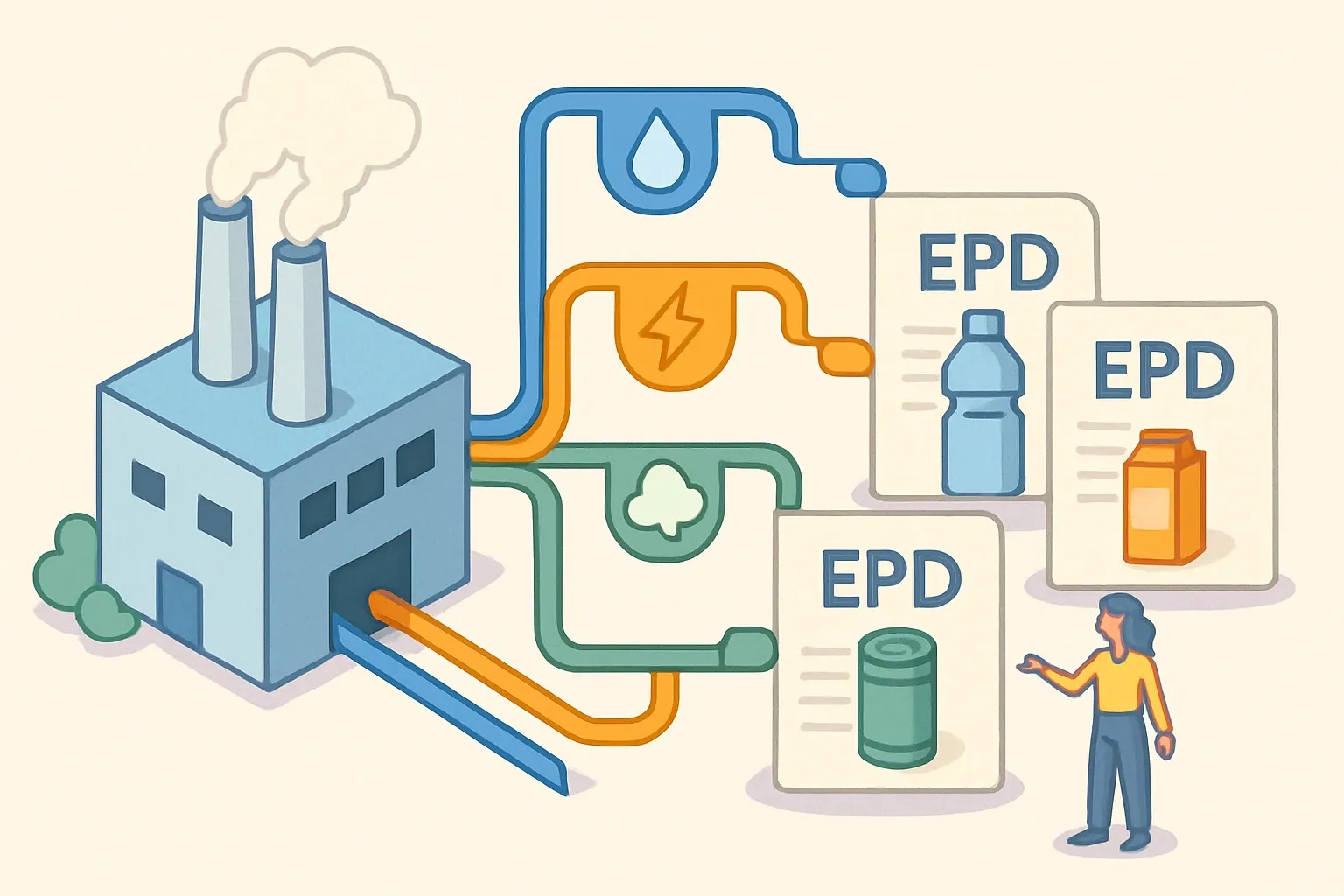
Most facilities record electricity, fuels, water, and wastewater at the plant level. That is normal, not a failure. PCRs and ISO standards expect transparent allocation when direct measurement is not feasible, provided the logic is explained and consistent with the product category rules.
Think of it like a team pizza bill. If the receipt covers the whole table, you split it by fair rules everyone can follow. You do not halt dinner until the waiter reprints a receipt per slice.
Pick a reference year that ties to operations
Choose a recent, representative 12‑month period that matches financial closes and maintenance cycles. Lock the calendar, then reconcile utility totals to invoices and meter reads. Production volumes should tie to the same period and the same plant boundaries used in the LCA system model.
If a product is new, use a prospective period that is representative of normal operation, then plan to refresh once a full year is available.
Choose a defensible driver
Start simple. Production volume or mass is the most common, because it links directly to throughput. Machine hours can work for lines with clear runtime logs. Avoid revenue as a driver, since price says little about energy or water intensity.
If one process dominates electricity or water use, consider a hybrid approach that allocates a base share by volume and a targeted share by process runtime. Write the rule once, apply it everywhere, and keep it stable until the next annual update.
Do the math in three tidy steps
- Gather annual plant totals for electricity, fuels, water, and wastewater along with total production volume for all products inside scope.
- Compute each product’s share of total volume. Multiply that share by each plant total to allocate to the product.
- Cross‑check the allocated amounts across all products. They should roll up exactly to the plant totals. If they do not, find the gap before moving on.
Example only for illustration, not a benchmark. If the plant used 12,000 MWh and Product A was 25 percent of volume, allocate 3,000 MWh to Product A. Repeat for fuels, water, and wastewater using the same driver unless a documented exception applies.
Want to optimize your EPDs and win more specs?
Follow us on LinkedIn for insights on data allocation strategies that enhance your project compliance and bottom line.
Sensitivity checks reviewers actually read
Test at least one alternate driver such as mass vs count of units. If the results meaningfully shift, note it and explain which driver better reflects physics of production. Flag any product that looks unusually intense for a deeper data pull in the next cycle.
A quick smoke test helps. If a low‑run specialty SKU appears to carry more electricity than the main line, your driver may be masking a runtime or scrap effect.
When exceptions are the smarter move
Some processes are step changes, not smooth curves. A kiln, autoclave, or curing oven can skew electricity and gas. In those cases, carve out that equipment’s annual energy, allocate it by actual batches or hours, then allocate the remaining plant energy by the standard driver. Keep exceptions few and well explained.
Wastewater can also deserve an exception if a specific wet process or washdown is tied to a subset of products. If lab data shows a distinct load profile, use it to allocate that portion accordingly.
Documentation that passes the eyebrow test
Write the rule in one paragraph for each flow. Name the driver, the formula, the period, and any exceptions. Add a short table that lists plant totals, product shares, and allocated results. Save the source files and the reconciliation notes.
Verification goes smoother when the narrative matches the numbers. If a driver changed from last year, state why and show the sensitivity notes that support the change.
Keep it simple now, sharpen it over time
Launch with plant‑level allocation so product EPDs can enter bids and specs quickly. Then target submetering or richer runtime data for the few unit operations that shape most of the footprint. Start where the power draw spikes or where water is visibly used.
Think of it like leveling up in Tetris. Clear the easy rows to unlock space, then drop a precise piece where it removes the biggest stack.
What auditors and program operators look for
They look for consistency with the chosen PCR, transparency on allocation logic, evidence that plant totals reconcile, and a short sensitivity check. They do not require batch‑level metering when it is impractical. They do expect that exceptions are rare, justified, and reproducible by a third party.
Publishing under a reputable program operator is straightforward when the allocation story is crisp. The result is a compliant, verifiable EPD that helps teams compete where product‑specific declarations are preferred in specs.
Make it shippable, then make it sharper
Get the allocation logic written, checked, and applied once across the portfolio. Ship the EPDs that matter for near‑term specs. Revisit the model on a set cadence and upgrade drivers or submetering where the data will pay back in confidence and win rates.