What the regulation actually asks for
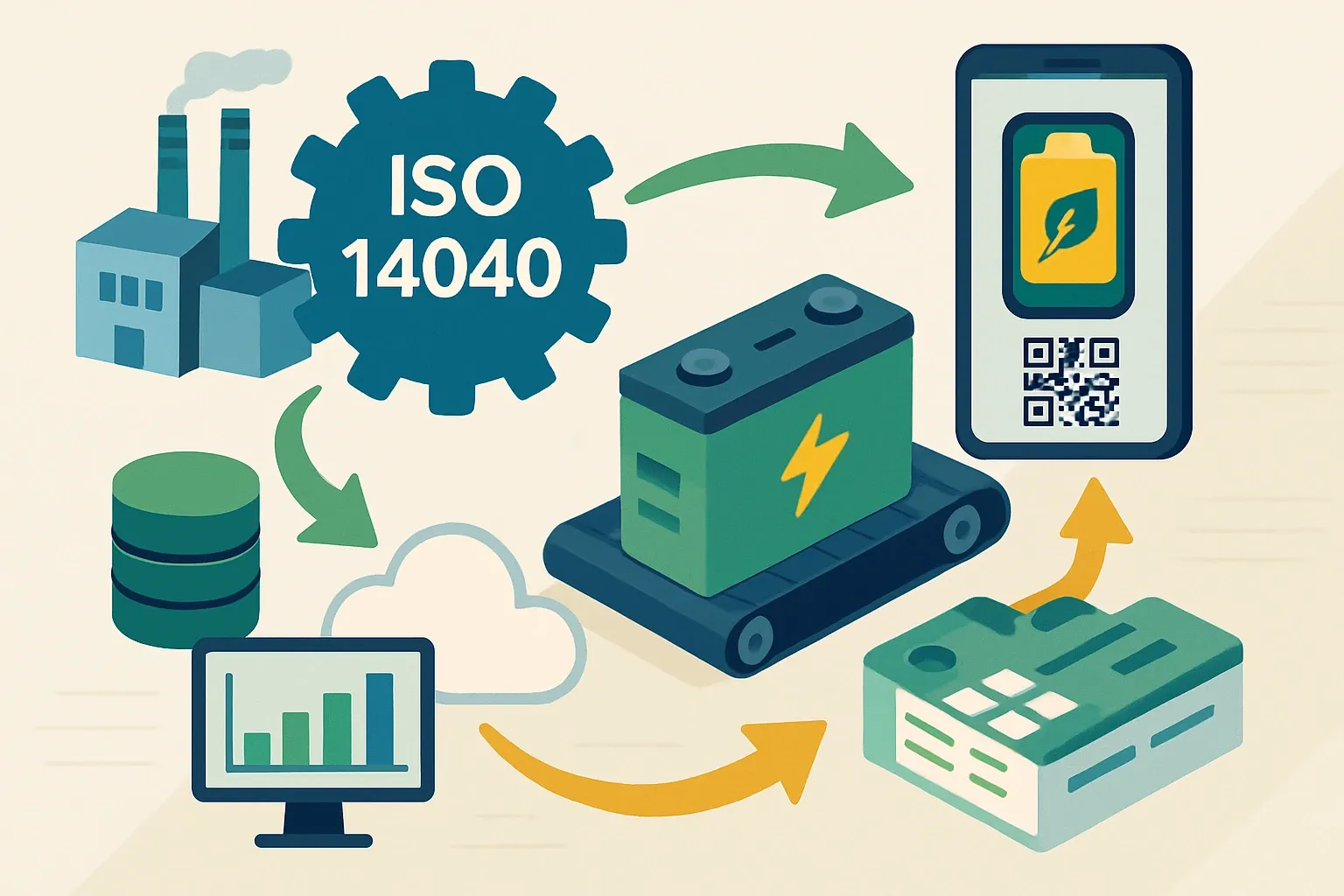
The EU Battery Regulation requires a life cycle carbon footprint for each battery model per manufacturing plant, calculated with an ISO 14040/44‑consistent method that follows the EU PEF approach and verified for conformity. Timelines matter. Carbon‑footprint declarations start with EV batteries from February 18, 2025 and rechargeable industrial batteries from February 18, 2026, with performance classes following in 2026–2027 and maximum thresholds beginning in 2028–2029. Battery passports accessible by QR code apply from February 18, 2027. The text ties dates to final delegated and implementing acts, so teams should track those entries into force (EUR‑Lex, 2024) (EUR‑Lex, 2024).
Why data systems are the bottleneck
The inputs exist across bills of materials, supplier specs, energy meters, maintenance logs, SCADA tags, and shipping records. They rarely match the unit, time window, or hierarchy that an LCA model expects. Think of it like remixing a track where every instrument was recorded at a different tempo. Sequencing is critical becasue it prevents rework when verification begins.
A practical ISO 14040/44 workflow for batteries
- Define scope and granularity upfront. Map each battery model to its specific plant, lines, and time window. Lock reference year rules so monthly and annual meters reconcile.
- Build a raw‑to‑model schema. Create tables for materials, energy, auxiliaries, transport, yield loss, and waste that align to foreground processes. Store units, sources, and uncertainty per field.
- Separate foreground from background. Foreground is your measured data. Background is the consistent library you choose once for all studies (for example, a fixed PEF‑compatible dataset release).
- Normalize and validate. Standardize units, convert LHV/HHV where relevant, and reconcile meter totals to production output. Add automated checks for mass and energy balance.
- Version and freeze. Tag every run with dataset versions, supplier declarations, and meter extracts. Freeze what the verifier will see while allowing a branch for improvements.
- Generate plant‑ and model‑specific results plus a machine‑readable export that your regulatory files and passport backend can consume.
Ready for the EU Battery Regulation changes?
Follow us on LinkedIn for insights on how structured LCA data can help you unlock market access and win more projects.
Normalize once, update often
Electricity matters most for many chemistries, and grid intensity shifts by country and year. In 2023 the EU average was 224 g CO2/kWh, but Sweden came in at 27 and Poland at 636, a spread that can swing a battery footprint class on its own (SDES, 2025) (SDES, 2025). The Commission’s datasets for country electricity factors are maintained by the JRC, so design your model to swap those factors without touching plant data (JRC, 2024) (JRC, 2024).
Choose background data with intent
Pick one vetted background library and pin its release. Mixing versions makes comparisons noisy and audits painful. Document every proxy you use for supplier gaps, and set reminders to replace proxies with primary data during contract renewals.
Plant and model granularity without the pain
Give every model‑plant combo a stable ID. Structure energy and material flows by line or process block so you can reuse building blocks across models. It’s like LEGO rather than glue. When a line upgrades a dryer or adds heat recovery, you only update that block and re‑run.
Auditable by design
Verifiers need to trace numbers. Keep a field‑level lineage from LCA inputs back to ERP, BMS exports, meters, or invoices. Record who changed what, when, and why. Store parameter ranges and acceptance tests next to the data, not in someone’s email.
Ready for the digital battery passport
Your LCA outputs will feed multiple artifacts over time: the label, the carbon‑footprint declaration, and the passport payload. Build exports that mirror the Regulation’s data model so the QR‑linked record can pull the latest verified numbers without manual copy‑paste. Dates for declarations, labels, thresholds, and passports are staggered, but they draw from the same data spine (EUR‑Lex, 2024) (EUR‑Lex, 2024).
What to ask any LCA partner or tool
- Will they handle data wrangling from meters, ERPs, and supplier docs or do they hand you templates and walk away?
- Can they lock background datasets and re‑run with updated country factors without rebuilding the study?
- Do they version every input and produce verifier‑ready audit trails?
- Can they output passport‑ready, machine‑readable files mapped to the Regulation’s fields?
The commercial takeaway
Battery LCAs are not a one‑off PDF. They are a living asset that underpins EU market entry, future performance classes, and customer‑facing claims. Structure the data once, make it verifiable, and keep it refreshable. That’s how sustainability paperwork stops blocking deals and starts winning them.