The quick split
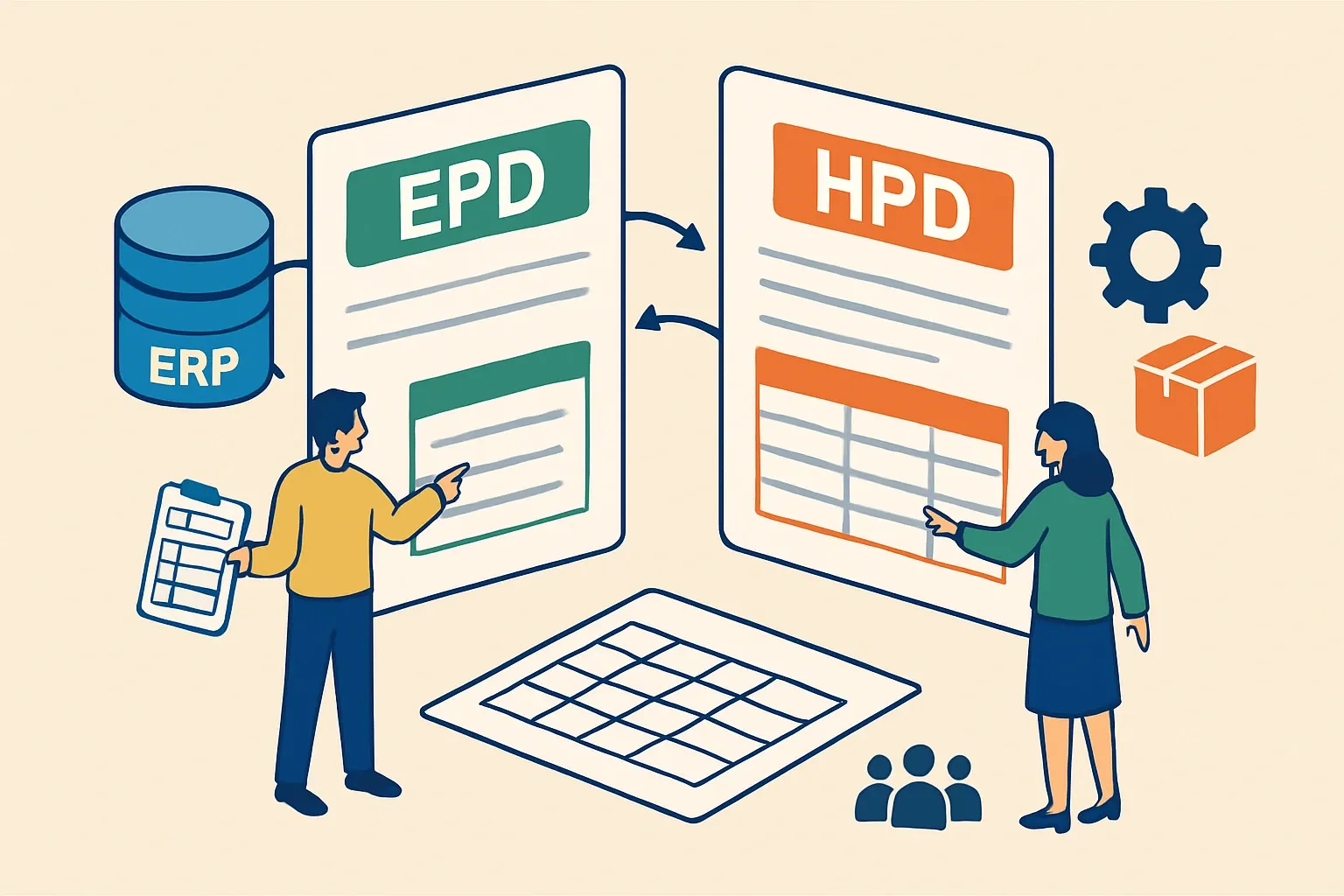
EPDs quantify processes, HPDs disclose ingredients. Think of an EPD as the movie of how a product is made, transported, used, and handled at end of life. An HPD is the cast list, with every actor’s hazards noted. Different questions, different inputs, different templates.
The EPD template, column by column
EPD inputs center on operations and flows. A lean template usually covers:
- Site, line, and product variant identifiers
- Production volumes for the reference year, declared unit mapping
- Purchased materials by supplier and mass, recycled content and origin
- Energy use by type and meter, plus onsite generation
- Water withdrawal and discharge by source
- Waste by stream and treatment, internal scrap loops
- Inbound and outbound transport modes, distances, and loads
- Maintenance, packaging, and auxiliary materials
- Allocation rules, cutoffs, and data quality periods
Why it matters commercially. Solid EPD data shortens back‑and‑forth with verifiers, gets your product into specs faster, and avoids the penalty of conservative carbon assumptions when no product specific data exists.
Want to accelerate your EPD process?
Follow us on LinkedIn for insights that help streamline data management and enhance your project specifications.
The HPD template, column by column
HPDs require ingredient level detail with hazard screening. A practical template includes:
- Ingredient name, CAS RN, role or function
- Content range, percent by weight, and disclosure threshold
- Residuals and impurities, with plausible presence notes
- Hazards from required lists, assessment method, and data confidence
- Proprietary flags with generic naming logic
- Accessory materials and process aids where relevant
One numeric checkpoint. The HPD Open Standard allows inventory to 1000 ppm, with an option to 100 ppm when a project or credit requires it (HPD Open Standard, 2024) (HPDC, 2024).
Where ERPs help, and where they do not
ERPs usually hold part numbers, supplier IDs, standard costs, and BOM percentages. They rarely track recycled content by supplier lot, fuel mix behind a kWh, or impurity profiles. Treat ERP as a starting map, not the territory. For HPDs, ingredient CAS numbers and residuals almost never live in ERP without a dedicated compliance module.
Owner map, who gathers what
Give each column a named owner so nothing floats.
- Operations gathers metered energy, water, waste, and maintenance inputs.
- Procurement confirms supplier specific recycled content, locations, and transport modes.
- R&D provides formulation, accessory materials, and process aids.
- EHS or compliance screens ingredients, CAS numbers, and hazard lists.
- Logistics estimates average outbound loads and distances by customer region.
Common gaps that stall projects
Three gaps cause most delays. First, missing meter granularity, like one electricity total for an entire campus when the product line is only a slice. Second, supplier recycled content stated as a corporate average without evidence. Third, HPD residuals, where no one owns impurity research. Decide early who will chase each gap, and set a response SLA that is actually written down. Someone should own the imput template.
Supplier briefing that lands
Suppliers respond faster when the request is short, clear, and time boxed. Ask for specific years, units, and evidence types. Offer acceptable ranges for transport distances and packaging weights. For HPDs, share your tentative disclosure threshold and how you will handle proprietary names so they feel protected while still providing CAS numbers to the assessor.
Align with rulebooks without rework
Map your columns to the rulebooks once, then reuse. For EPDs, tie fields to the relevant PCR and to EN 15804 or ISO 14025 result tables. For HPDs, align to the latest HPD Open Standard field names, including residuals and screening requirements. Program operators may ask for extra metadata like plant address formats or verifier IDs, so keep a small addendum sheet ready.
A note on accuracy and audits
Be clear where data is measured, modeled, or assumed. Metered, utility billed, or lab tested beats estimates. When you must estimate, document the method and person responsible. This makes third party review smoother and avoids late stage surprises.
Keep momentum
Start with the templates above, assign owners in writing, and brief suppliers with the exact fields you need. The payoff is real, fewer clarifications, faster verification, and products that show up as credible choices in carbon minded specs. Teams that do this once usually keep it rolling because it makes the next credential feel almost routine.