Why incomplete origins stall EPD projects
Procurement teams rarely know every upstream plant location, and logistics turns dynamic. That uncertainty often slows EPDs because people try to chase perfect data. Aim for representative and reviewable instead. Auditors want a traceable method as much as exact coordinates.
The minimum upstream data that unlocks modeling
You can progress with a compact set of fields. Focus on what is reliable and retrievable in days, not months.
- Supplier legal name and country for each input
- Typical distribution centers or ports used by finished goods
- Packaging bill of materials with weights and formats
- Annual purchase volumes and estimated purchase fractions per supplier
Want to accelerate your EPD process?
Follow us on LinkedIn for insights that help you unlock opportunities, improve your ROI, and win more projects.
Turn distribution points into credible origin estimates
If you know the distribution node, you can infer a likely origin. Map candidate factory clusters for each supplier, then calculate the shortest practical path from a probable plant to the known distribution point. Use standard road, rail, or sea segments. Document assumptions in plain language so reviewers can verify later. We favor this approach because it is fast and leaves a clean audit trail.
Purchase fractions make multi supplier reality transparent
When a resin comes 40 percent from Supplier A and 60 percent from Supplier B, record that split. LCA tools will weight the transport, packaging, and upstream data accordingly. If the mix shifts next year, update the fractions and the model refreshes without rework. Simple, traceable, no heroics.
Packaging is the quiet variable you can measure today
Packaging often hides in plain sight. It is also material you can weigh without supplier negotiations. In the most recent detailed EPA accounting, containers and packaging were 28.1 percent of U.S. municipal solid waste by weight in 2018, which is still the latest full breakdown available for this category (EPA, 2018) (EPA, 2018). If newer national splits exist, they have not been published as the same series. Say so in your EPD plan rather than inventing numbers.
Transport modes change the math quickly
Mode choice matters. Recent UK government methods put heavy goods vehicle road freight at about 0.07 kilograms of CO2 per tonne kilometre under a representative setup (UK ETS, 2025) (UK ETS, 2025). Official rail statistics show roughly 26 grams CO2e per net tonne kilometre for freight rail in 2024 to 2025, or 0.026 kilograms (ORR, 2025) (ORR, 2025). Where operations allow, modeling long distance legs by rail and short final legs by truck can cut transport impacts for A2 or A4 by more than half. Numbers will vary by country, fuel, and load factor, so keep the calculation notes with your model.
Build a routing model that auditors can follow
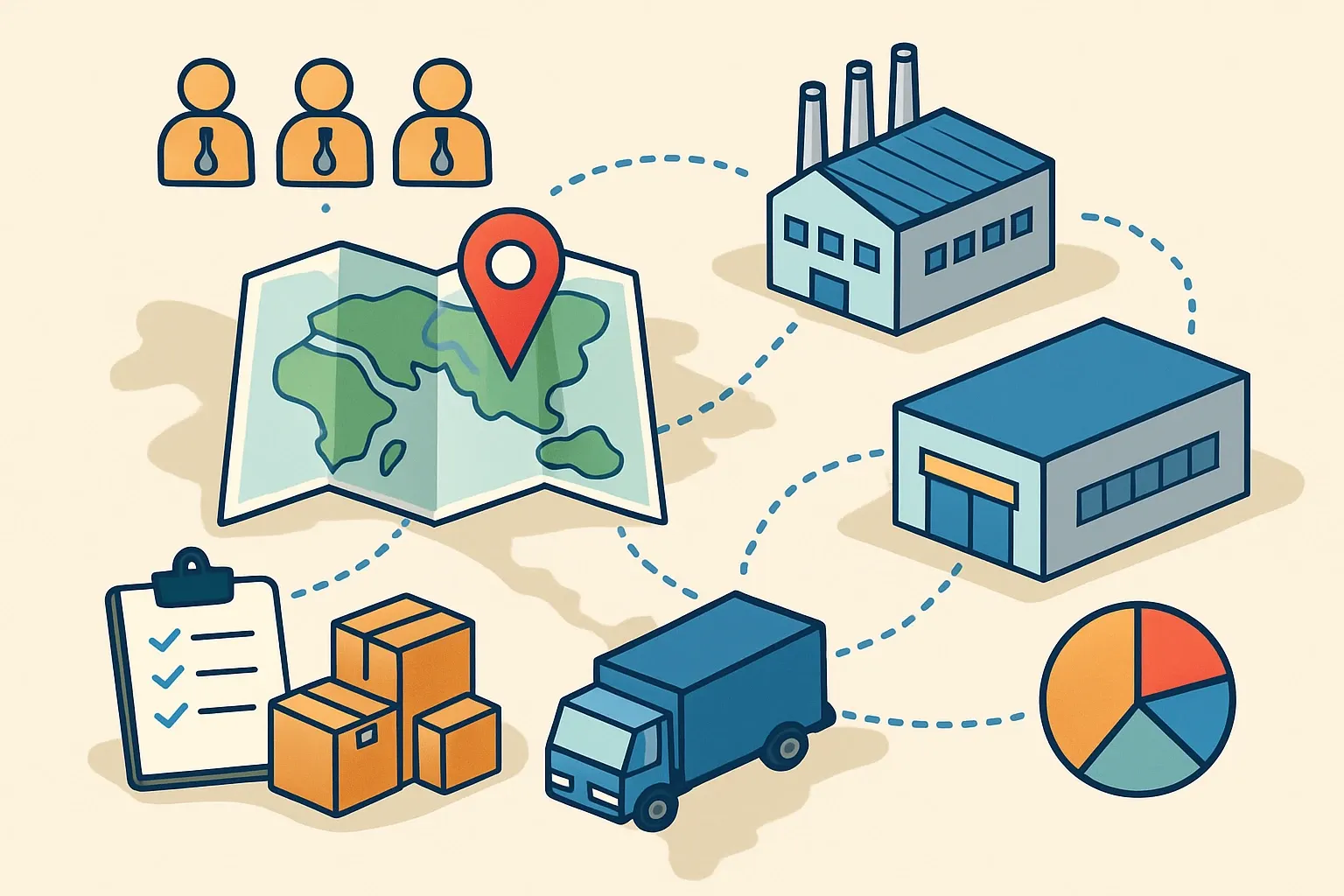
Start with nodes and edges, not guesswork. Nodes are suppliers, candidate plants, ports, and distribution centers. Edges are the lanes with distance and mode. Assign distances from public route planners and port to rail interfaces. Save screenshots or exports. If you swap a node later, the model updates the total with no drama.
Data hygiene that saves weeks at verification
Write down every assumption in one page. Note why a plant was selected as the likely origin, where a distance came from, and how purchase fractions were derived. Add the packaging bill of materials as a small table with units. Do not bury this in emails that no one can find. Reviewers reward clarity.
Move now, refine later, win more specs
Do not wait to know everything. A structured model with clear purchase fractions and documented routes is acceptable for third party review, and it gets products into bids that penalize missing EPDs. Teams regain time, and marketing stops losing specs to competitors that only looked more ready on paper. That is the real ROI of getting an EPD live fast, then tightening assumptions with suppliers over time. Dont let unknowns be the reason you sit out another cycle.