What the regulation really asks your LCA to do
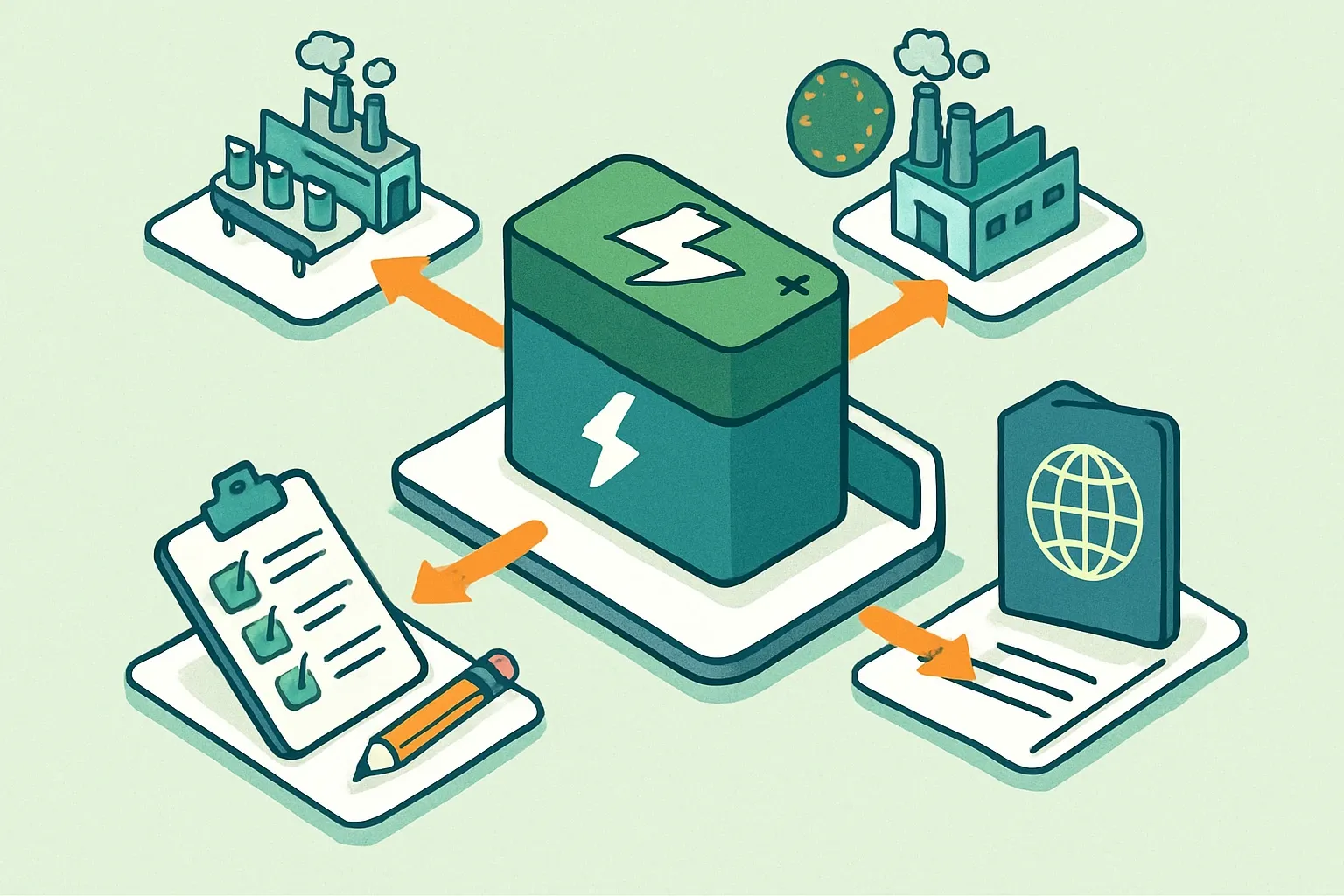
EU rules require a carbon footprint declaration for each battery model and each manufacturing plant, with start dates by type, for example 18 February 2025 for EV batteries and 18 February 2026 for industrial batteries over 2 kWh. Light means of transport begins 18 August 2028. Declarations must follow the PEF method, and sampling across plants is not allowed (EUR‑Lex, 2024) (EUR‑Lex, 2024).
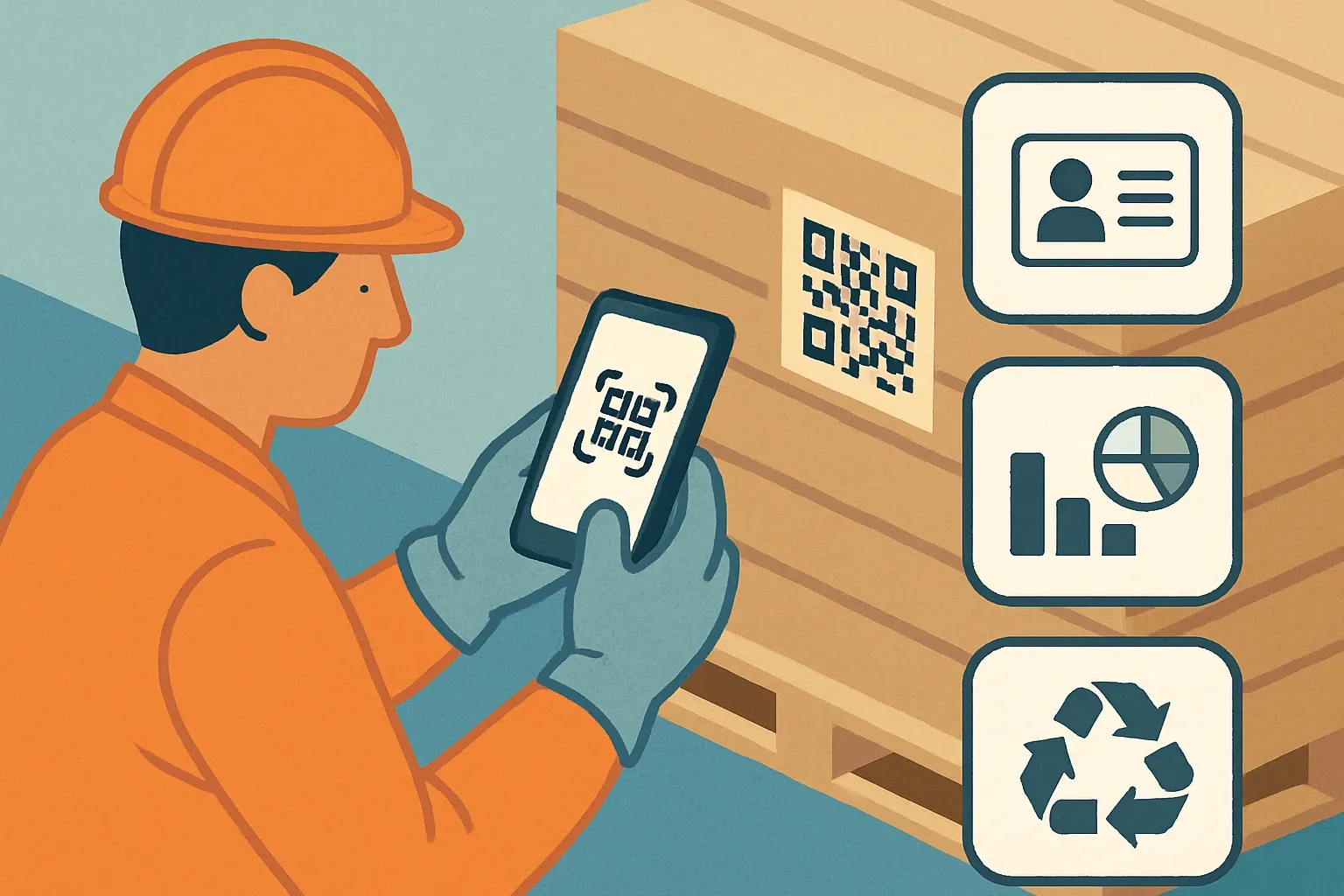
From 18 February 2027, a digital battery passport is mandatory for EV batteries, LMT batteries, and industrial batteries above 2 kWh, accessed via a QR code. Performance classes and later maximum thresholds follow on fixed schedules, so footprints must be generated consistently and kept current (EUR‑Lex, 2024) (EUR‑Lex, 2024).
Why configurable beats project‑by‑project
Treat the LCA like a video‑game engine, not a cutscene. One engine renders many levels. A configurable tool ingests structured BOMs, assigns parameters for chemistry, form factor, capacity, module architecture, recycled content, and plant energy mixes, then outputs model‑ and site‑specific results on demand. No more cloning spreadsheets for every small option.
Find the right granularity
The hardest call is what counts as a distinct model. A new cathode chemistry is a new model. A color change on a casing is a parameter. Capacity bins that affect cell count or module layout should be discrete models. Document the defintion once, wire it into the tool, and hold the line. Regulators will ask how and why variants were grouped.
Map plants and energy with precision
Annex II expects company‑specific activity data for battery parts like anode, cathode, electrolyte, separator, and casing. If the BOM or the energy mix changes, the footprint must be recalculated. Copying data across plants is not permitted. This is where configuration shines, because the engine can swap grid factors, onsite renewables, scrap rates, and yields without rebuilding the entire model set (EUR‑Lex, 2024) (EUR‑Lex, 2024).
Want to stay compliant with EU battery regulations?
Follow us on LinkedIn for insights that help you win tenders and improve your product specifications.
Align with PEF and verification from day one
The methodology references the EU Product Environmental Footprint and ISO 14040/44. That means consistent system boundaries, primary data priorities, and PEF‑compliant secondary datasets. Build validation into the tool. Every run should log data sources, cut‑offs, allocation choices, and data quality scores so a notified body can follow the breadcrumb trail without side emails.
Wire the tool to the battery passport
Article 77 turns footprints into living product data. The same engine that outputs a verified footprint should also populate the passport fields and publish model‑ and battery‑specific elements to the right access tiers. Think of it as your API to compliance, with QR‑linked records that sync when a plant switches to a new cathode supplier or a higher‑REC electricity contract (EUR‑Lex, 2024).
Keep an eye on due diligence timing
Raw material due diligence obligations were postponed by two years to 18 August 2027, which gives teams time to tighten supplier disclosures and audit trails that also feed LCA models (Council of the EU, 2025) (Council of the EU, 2025). It is smart to structure supplier metadata now so it flows straight into both LCA documentation and passport entries later.
Guardrails for scalable accuracy
Small changes should be parameters. Big changes should be models. Use a decision tree, not gut feel. For example, chemistry shift, production route, or module architecture equals new model. Pack housing thickness or fastener type equals parameter. Version every dataset and keep an audit table that links each footprint to its BOM hash and energy profile.
A short build plan you can start this quarter
- Extract a canonical BOM schema and map it to LCA parameters and datasets.
- Create plant profiles with electricity mixes, fuels, yields, scrap, and transport lanes.
- Implement PEF‑aligned modules that cover raw materials, production, distribution, own electricity, and end of life.
- Add verification views that show data lineage, uncertainty, and model decisions.
- Connect outputs to conformity documents and a battery‑passport payload.
Why this matters to revenue
Procurement teams are asking for footprints at quote time, not months later. A configurable tool turns compliance into response speed. That helps win tenders where product‑specific declarations avoid conservative penalties in project accounting and keep products in the spec rather than swapped for a competitor with ready data. The operational benefit is real. Engineers go back to engineering while the engine handles footprints.
The finish line to aim for
Success looks like this. New option introduced, BOM updated, plant energy mix refreshed, tool reruns, passport fields update, verification package is one click away. Same engine supports current declarations and future updates without starting from zero. That is how portfolio‑scale compliance stays credible and fast.