The short answer
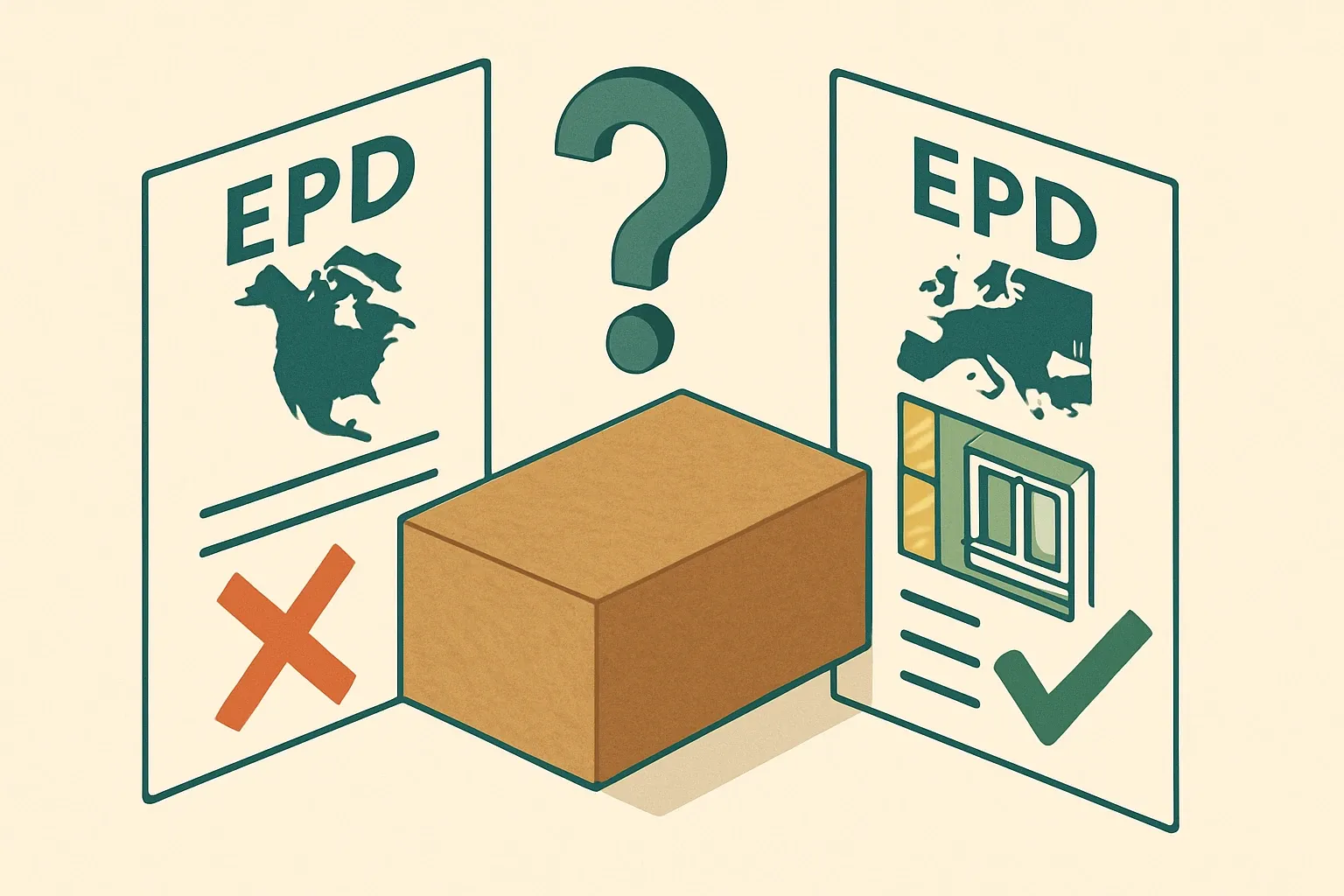
There is no single, widely recognized industry‑wide EPD for standalone wood fiber insulation as of December 11, 2025. In the United States and Canada, none of the national insulation trade groups publish a sector average EPD for this material. In Europe, Germany’s VDPM released three model EPDs for ETICS that include a wood fiber variant, yet those declarations cover the whole wall system rather than only the insulation layer (VDPM press release, 2025, valid to Jan 8, 2030: https://www.vdpm.info/2025/vdpm-praesentiert-drei-neue-epds-fuer-wdvs/).
What does exist today
Manufacturers in Europe and the Nordics publish product‑specific EPDs for wood fiber insulation with reputable program operators.
- Germany: Holzwerk Gebr. Schneider’s “best wood” line has current IBU EPDs for wood fibre insulation boards and blown‑in wood fibre insulation, covering typical roof and wall applications (IBU program overview: https://ibu-epd.com/veroeffentlichte-epds/).
- France: GUTEX and STEICO publish FDES entries through the INIES program for multiple wood fibre formats used in ETICS and timber construction (INIES overview: https://www.inies.fr/inies-et-ses-donnees/fdes-produits-de-construction/).
- Nordics: Hunton’s Nativo Wood Fibre Blown‑In Insulation has a current EPD at EPD Norge, valid 2025‑06‑03 to 2030‑06‑03 (EPD‑Norge listing: https://www.epd-norge.no/epder/byggevarer/isolasjon/hunton-nativo-trefiberisolasjon-innblast).
These are product‑specific declarations that reflect the producer’s own supply chain, energy mix, and plant data. That matters in carbon‑counted projects.
North America snapshot
Wood fiber insulation is scaling fast, led by manufacturers like TimberHP that have launched board and batt products and publicly stated plans to publish environmental declarations as production matures (company update, 2024–2025: https://www.timberhp.com/). An industry‑wide EPD for wood fiber insulation has not been announced in the U.S. or Canada. Teams pursuing LEED v5 draft pathways still gain credit differentiation with product‑specific EPDs for envelope components, so early movers can stand out without waiting for a sector average.
Curious about EPDs for wood fiber insulation?
Follow us on LinkedIn for insights that help you navigate specifications and boost your competitive edge.
Europe snapshot
If a project team asks for an “industry EPD for wood fibre insulation,” point them to two things. First, system‑level model EPDs for ETICS that include wood fibre are available from VDPM and are valid for members’ systems. Second, numerous product‑specific EPDs exist from mid‑sized producers across Germany, France, and the Nordics via IBU, INIES, and EPD Norge. Those are accepted in national building LCA tools and databases and generally travel well across EU markets because they follow EN 15804.
Why sector‑average EPDs can be conservative
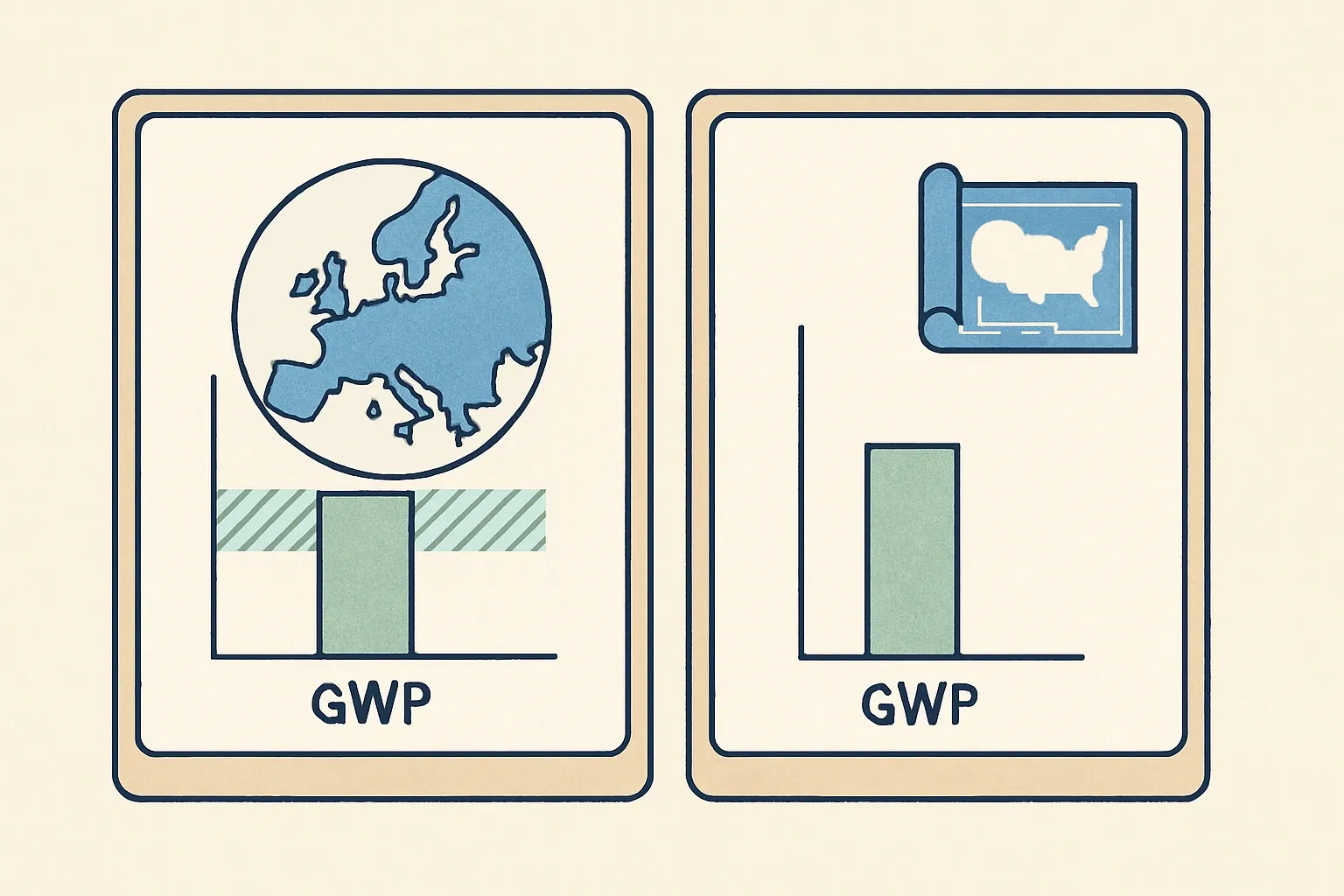
Sector averages blend many facilities, fuels, and logistics profiles into a single result. That composite number rarely captures investments like biomass heat, short raw‑material hauls, or recycled process water. If your plant runs cleaner than the average, an industry‑wide EPD can make you look heavier than reality. Whole‑building LCA software often treats sector averages as conservative defaults, so a competitor with a verified product EPD can look better at model‑stage without changing the spec.
Commercial takeaway for manufacturers
A product‑specific EPD is a sales asset. It lets design teams model your actual footprint instead of a padded proxy, which can preserve your place in the spec when carbon targets are tight. The ROI is typically manyfold because even one mid‑sized project can offset the effort, especially in markets where digital EPDs are being pulled directly into procurement and permitting. The hidden cost is delay. Every month without a declaration leaves revenue on the table.
Practical next steps
- Pick the right rulebook. For blown‑in wood fibre, IBU’s Part B rules for blown‑in cellulose and wood fibre insulation have been used across multiple current EPDs. For boards and flexible mats, programs use EN 15804 Part A with relevant Part B wood‑based material rules. A good LCA partner will benchmark which PCRs your competitors used and advise accordingly.
- Choose a program operator that fits your market. IBU is common in DACH and supplies datasets to ÖKOBAUDAT. INIES governs FDES in France. EPD‑Norge is broadly recognized across the Nordics. The International EPD System is a common route for exports.
- Line up plant data early. Pull a full reference year of energy, fiber mix, transport, waste, and volumes. If you are ramping a new line, a prospective EPD is possible in many programs with partial‑year data, then refreshed once a full year is available.
Who already moved
- Holzwerk Gebr. Schneider GmbH, Germany: product‑specific EPDs for wood fibre boards and blown‑in insulation via IBU.
- Hunton, Norway: product‑specific EPDs for wood fibre products via EPD‑Norge, including blown‑in insulation valid to 2030.
- GUTEX and STEICO, Europe: multiple current FDES or EPDs across formats through INIES and IBU. If your portfolio can beat sector averages, a product‑specific EPD is the straightest path to proving it. Waiting for a pan‑regional “industry‑wide wood fibre insulation EPD” will probably take longer than your sales cycle, and the result may still understate your performance.
Bottom line
If you need an “industry‑wide EPD for wood fiber insulation,” you will find system‑level model declarations for ETICS that include wood fibre in Germany, not a universal stand‑alone insulation average. The fastest commercial win is to publish a product‑specific EPD that showcases your real data. That keeps your specability high when whole‑building LCAs are run and avoids conservative penalties that generic averages can trigger. Get your data house in order now, then publish with the operator your customers already trust. It is definately the move that pays off sooner than you think.