The short answer
Yes for some plastics and regions, not universally. In North America there is a current industry‑wide EPD covering PVC water and sewer pipe. For premise plumbing, a new set of industry‑averaged EPDs covers common PVC, PE, PEX and CPVC formats. In Europe, sector EPDs published by the plastic pipe association exist historically, but the association now steers the market toward company‑specific EPDs.
North America: what exists today
PVC water and sewer pipe has a verified industry‑wide EPD from the Uni‑Bell PVC Pipe Association. It was updated in 2023 and verified by NSF. Uni‑Bell publishes both the 2023 and 2015 versions and explains scope, declared units, and the underlying LCA rulebook on its site. You can download the 2023 industry‑wide EPD directly from Uni‑Bell.
For premise plumbing, the Plastic Pipe and Fittings Association announced new industry‑averaged EPDs verified by ICC‑ES covering typical PVC DWV, water‑service PE, electrical conduit, and hot‑and‑cold distribution families. The ICC‑ES EPD directory lists these verified declarations.
Europe and UK: where sector EPDs stand
TEPPFA, the European Plastic Pipes and Fittings Association, long provided industry average EPDs across many applications for PVC‑U, PVC‑O, PE, PP, PEX, and PB. TEPPFA now keeps the expired sector EPDs online as documentation and encourages manufacturers to publish company‑specific EPDs that reflect current energy mixes and recycled content. Its EPD Calculator and LCA archives remain public for orientation.
Helpful links to the actual EPDs
- PVC water and sewer pipe industry‑wide EPD, North America: Uni‑Bell PVC Pipe Association site.
- ICC‑ES EPD Directory: browse “Environmental Product Declarations” and filter by plastic piping to find the PPFA portfolio.
- TEPPFA EPD archive and EPD Calculator: overview of historic sector averages and methodology.
Want to win more projects with your piping systems?
Follow us on LinkedIn for insights on EPDs that can unlock new markets and improve your bid success.
What about PE and PP specifically
- Polyethylene. In North America, an industry‑averaged EPD for water‑service PE piping is part of the PPFA set verified by ICC‑ES. For municipal HDPE pressure pipe used in water or sewer mains, no current, single industry‑wide EPD is publicly confirmed across all producers. Manufacturers commonly rely on product‑specific declarations.
- Polypropylene. We do not see a current North American industry‑wide EPD for PP‑R or PP‑H plumbing systems spanning the whole market. Europe leans company‑specific here as well. Several firms publish verified EPDs for PP systems under EN 15804 that you can reference in specs.
Why sector averages help…and where they fall short
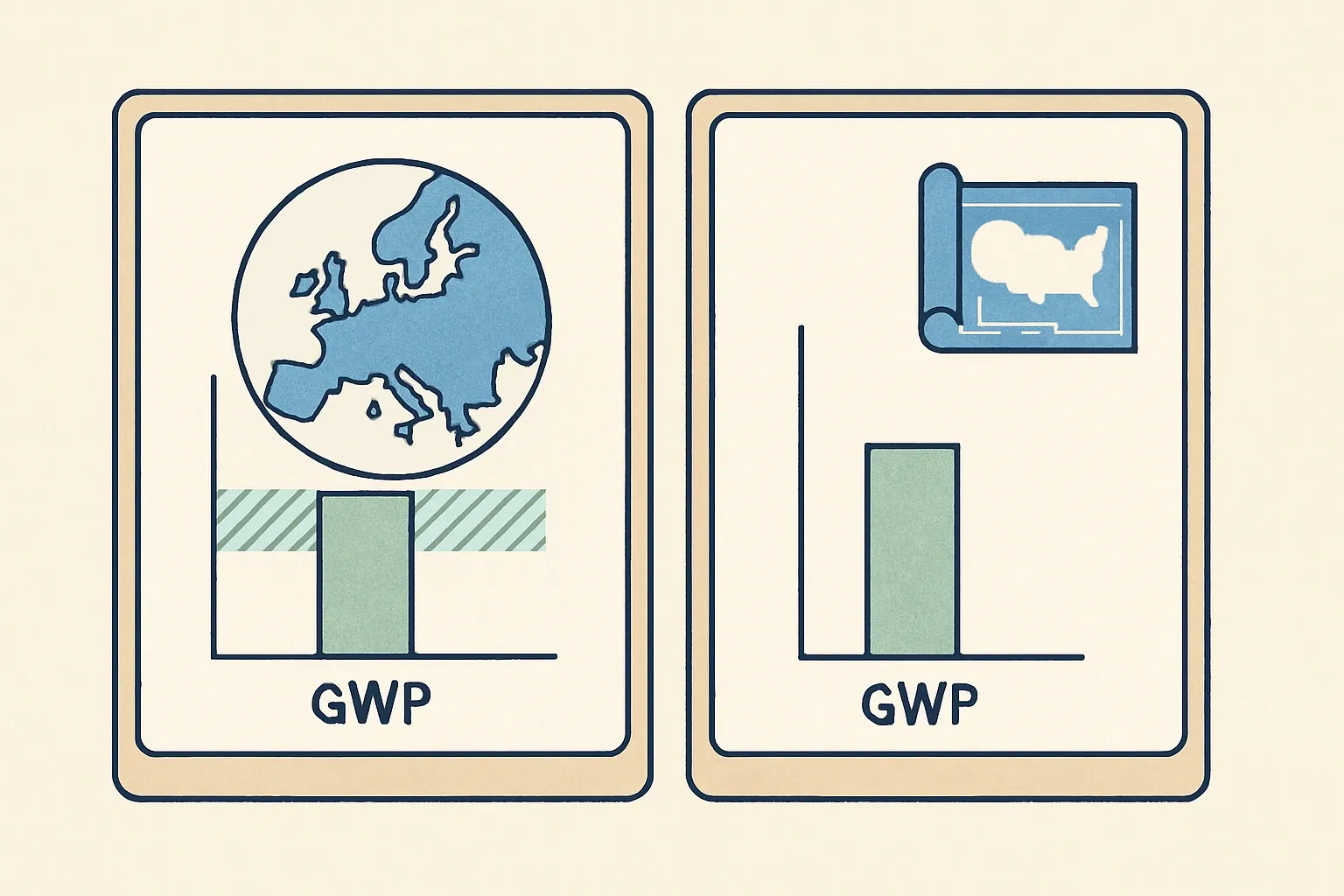
Industry‑wide or sector average EPDs are built from aggregated data under a shared PCR. They are credible baselines and unlock documentation quickly when a project asks for “an EPD on file.” The tradeoff is conservatism. Averages smooth out efficient plants, low‑carbon energy, recycled content and high‑yield extrusion. Whole‑building LCAs that default to an average can assign a higher footprint than your actual product, which quietly hurts win rates.
Two quick proof points on the rules of the road. The widely used PCR for construction products was updated to version 2.0.0 in April 2025 and is valid until 2030, which tightens comparability and makes newer product‑specific EPDs even more decision‑ready (EPD Australasia, 2025) (EPD Australasia, 2025). Program operators in Europe and North America continue to verify declarations under EN 15804 or ISO 21930 so specifiers can trust the math.
Competitors already publishing product‑specific EPDs
- Europe. Pipelife Norge publishes product‑specific PVC‑U pipe EPDs through EPD‑Norway that reflect Norwegian renewable electricity at the plant, which can materially lower reported GWP vs generic European averages. See the 2025 EPD page on EPD‑Norway.
- Europe and global. ABN Pipe Systems has a verified EPD for multilayer polypropylene pipes under the International EPD System, valid to 2030. Grupo Rotoplas publishes a PP‑R pipe EPD with global scope, also valid to 2030 (International EPD System, 2025) (International EPD System, 2025).
- Australia and New Zealand. Iplex has product‑specific PVC EPDs registered with EPD Australasia that are recognized for Green Star documentation.
These examples show that peers are already banking the upside of plant‑level data and modern grids. A sector average might get you in the game. A product‑specific EPD can help you win it.
Commercial takeaway for piping teams
If an industry‑wide EPD exists for your material and geography, use it as a fast baseline. Then commission a product‑specific EPD for your top sellers. You remove the conservative padding in whole‑building LCAs, give estimators a cleaner comparison, and reduce the risk of being swapped late in design. Teams that move quickly here dont just check a box. They create a durable edge in bids where documentation decides the shortlist.
How to choose the right path
- If you produce PVC water and sewer pipe in North America, download the Uni‑Bell industry‑wide EPD and map it to your catalog. In parallel, scope a product‑specific EPD for your highest‑volume SKUs.
- If you sell PE or PP systems, check whether an ICC‑ES verified industry‑average fits your exact application. If not, go product‑specific to avoid unfavorable defaults.
- If you operate in Europe or the UK, plan on company‑specific EPDs. TEPPFA’s archive is useful context, but buyers increasingly expect plant‑reflective data.
One last note on timing. The main construction PCR update in 2025 means newer EPDs align with current comparability rules. That pays off when projects reconcile mixed EPD vintages in a model and when your sales team needs a simple, defensible story about your true footprint (EPD Australasia, 2025) (EPD Australasia, 2025).