What exists today for double glazing units
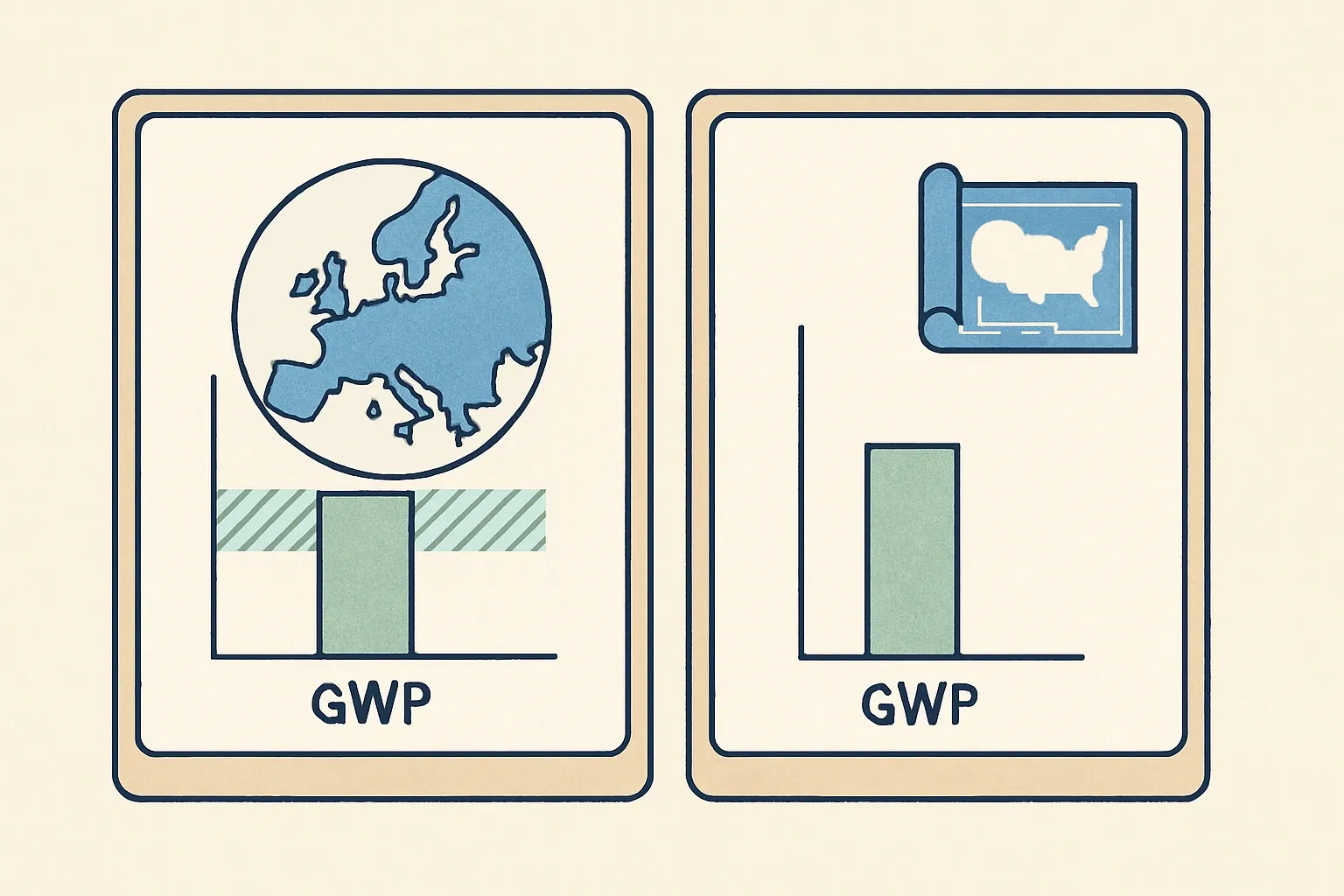
In Europe there is a sector average EPD for insulating glazing. The Bundesverband Flachglas and ift Rosenheim offer a transferable industry EPD that covers Verbundsicherheitsglas und Mehrscheibenisolierglas, including two pane and three pane IGUs. It is based on pooled industry data and can be transferred to individual manufacturers through ift Rosenheim’s program. See ift’s overview and order page for the BF Muster‑EPD for VSG and MIG 2‑fach and 3‑fach.
In North America there is no single industry‑wide EPD dedicated only to IGUs. The market does have an industry average EPD for flat glass by the National Glass Association, which was valid through December 20, 2024 (NGA, 2019). In 2024 the industry released a new Fenestration Systems PCR that enables EPDs for complete window and curtain wall assemblies that include framing and glazing, but this is a rulebook, not a ready‑made IGU sector EPD.
How the European sector EPD works
The ift Rosenheim sector program uses a common dataset and a worst‑case plus safety margin approach to produce a conservative, transferable declaration for insulating glass. That makes it fast to adopt as a baseline and acceptable for building certifications across Europe. Because it is conservative by design, a product‑specific EPD that reflects your own recipes, yields, fuels and cullet rates typically scores better.
Region roundup you can act on
- Europe: Transferable sector EPD for IGUs via ift Rosenheim and BF, covering double and triple glazing. Many manufacturers also publish product‑specific IGU EPDs in the International EPD System, for example Pilkington UK double IGUs issued in 2023, THERMOPLASTIKI double and triple IGUs in 2024, and BODESA double IGUs in 2025.
- United Kingdom and EU examples: Pilkington lists multiple IGU EPDs by configuration in the International EPD System. AGC Glass Europe also published a vacuum insulating glass EPD for FINEO with low reported cradle‑to‑gate values.
- North America: No current industry‑wide IGU EPD. You will find product‑specific EPDs for flat and processed glass from major float producers and fabricators. Guardian’s 2024 North America flat‑glass EPD reports about 1102 kg CO2e per metric ton for A1–A3, which shows how individual producers are driving down impacts within their own boundaries (Guardian Glass, 2024). The U.S. General Services Administration reported only 27 flat‑glass EPDs across its tracked category as of May 2024, underscoring the opportunity to stand out with a product‑specific declaration in bids (GSA, 2024).
Looking for an edge in double glazing tenders?
Follow us on LinkedIn to discover how product-specific EPDs can boost your bids and open new markets.
Why a sector average helps and where it falls short
An industry‑wide or sector EPD is a great on‑ramp when buyers merely require any verified EPD. It proves compliance and removes guesswork for early sales conversations. Yet these EPDs are intentionally conservative. They represent pooled practice, not your optimized line. If your furnace energy mix, cullet rate, or spacer and sealant selection are better than the pooled average, a product‑specific EPD lets that advantage show up in whole‑building LCAs, where default or sector numbers can penalize teams.
Competitive signals from product‑specific IGU EPDs
Several fabricators already publish product‑specific IGU EPDs in Europe. Pilkington UK lists multiple double IGU configurations in the International EPD System. BODESA in Lithuania and THERMOPLASTIKI in Greece have current IGU EPDs. AGC’s FINEO vacuum insulating glass carries a third‑party verified EPD and markets a low cradle‑to‑gate figure. These are strong commercial tells that the market is moving toward product specificity.
A note on U.S. rules and timing
The 2024 Fenestration Systems PCR from NGA, FGIA and WDMA standardizes how to create EPDs for complete fenestration assemblies. It defines a 1 m² declared unit and reports results for the assembly and subcomponents, which helps glass‑only and frame‑only manufacturers participate. This is the practical pathway U.S. IGU makers use today to produce EPDs that buyers can compare apples to apples. If you plan to publish in Europe with IBU, budget time for verification. IBU’s current guidance flags about six months for verification due to high demand (IBU, 2025).
What this means for ROI on double glazing EPDs
If a sector average IGU EPD exists in your region, it will get you on the board quickly. If you compete on performance, a product‑specific IGU EPD usually models lower impacts than the sector worst‑case, which avoids hidden penalties in whole‑building LCA studies and strengthens specifications. Where no sector EPD exists, the upside is bigger. You become the easy pick because design teams can document impacts without resorting to conservative defaults. That wins real projects. It’s definitly the difference between being considered and being chosen.
Quick next steps
- Decide your scope. If you sell IGUs only, plan for an IGU EPD. If you sell glazed units within frames, consider the Fenestration Systems PCR in the U.S. or the relevant EN 17074 route in Europe.
- Pick a program operator where your customers look first. Examples include ift Rosenheim or IBU in Europe and the International EPD System for global reach.
- Prepare your data once, publish where it matters. A focused data pull on fuels, cullet, coatings, spacers, sealants, and transport usually unlocks a credible EPD on a short calendar. Program operators publish quickly once verification clears.
Bottom line for double glazing EPDs
- Europe has an industry‑wide EPD for insulating glass units that you can transfer to your company. Use it as a baseline but plan a product‑specific EPD for competitive advantage.
- North America has no IGU‑only industry average at this time. The fastest path is a product‑specific IGU EPD under the 2024 Fenestration Systems PCR, which positions you to win specs where others rely on conservative assumptions.
References for key metrics mentioned: Guardian NA flat‑glass EPD value 1102 kg CO2e per ton (A1–A3) (Guardian Glass, 2024). GSA count of flat‑glass EPDs rising from 19 to 27 between May 2023 and May 2024 (GSA, 2024). IBU verification timeline of about six months due to high demand (IBU, 2025).