What an “EPD Bosnia” really means in 2025
For construction products, credibility rests on EN 15804 and its companion documents. Bosnia and Herzegovina’s standards body has adopted supporting standards such as EN 15941 on data quality in 2025 and EN 17672 on business‑to‑consumer communication in 2024, and has published c‑PCRs for concrete that explicitly reference EN 15804. That tells specifiers your declaration can speak the same language as EU buyers. [ISBIH, 2025] [ISBIH, 2024]
Where manufacturers publish from Bosnia
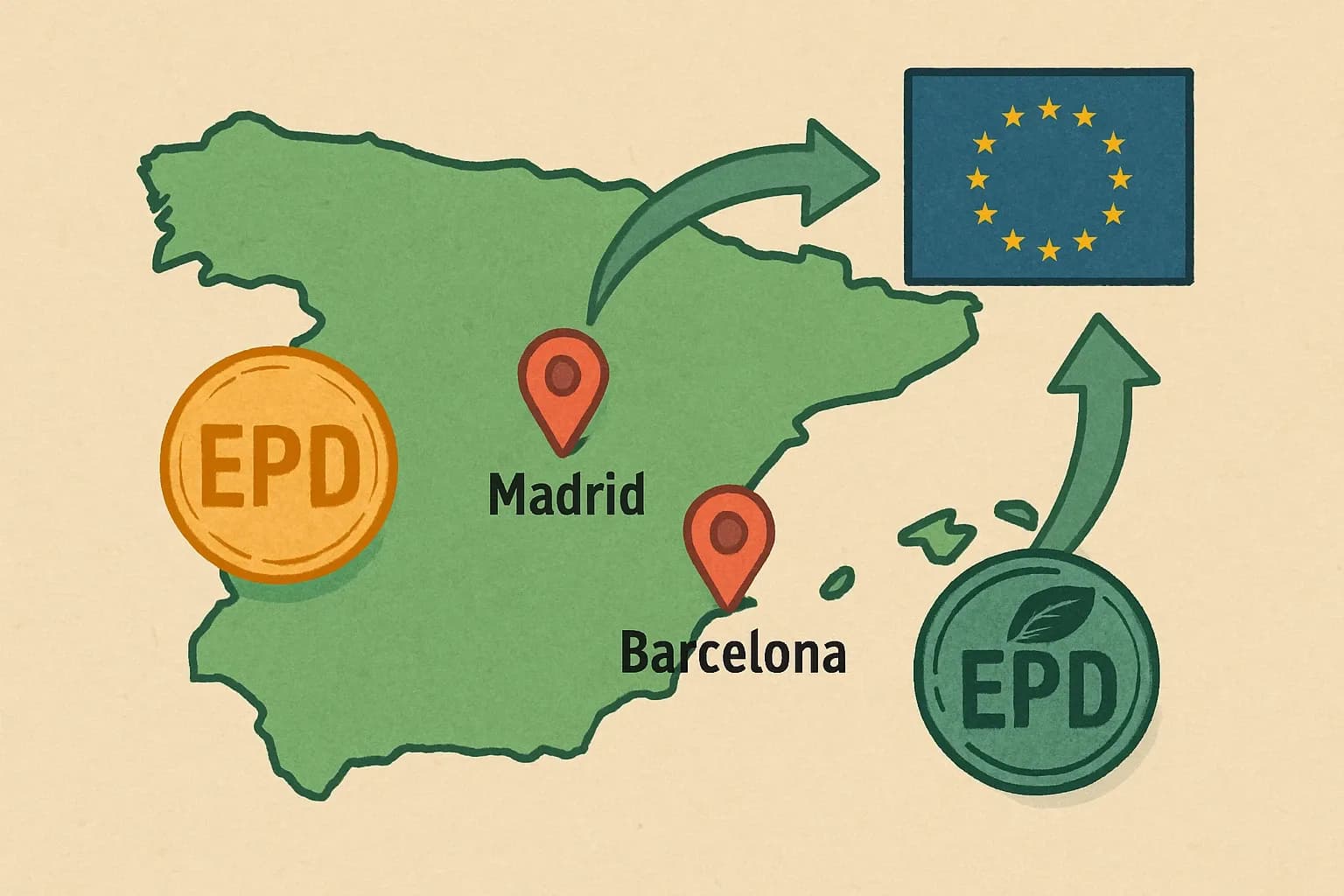
There is no national program operator, so manufacturers typically publish with European schemes recognized across the single market. The International EPD System listed 12,749 EPDs and IBU listed 2,565 as of July 1, 2025, with EPD‑Global and PEP ecopassport also operating at scale. These footprints matter when your PDF lands in a buyer’s library. (ECO Platform, 2025)
EU pull factors you can bank on
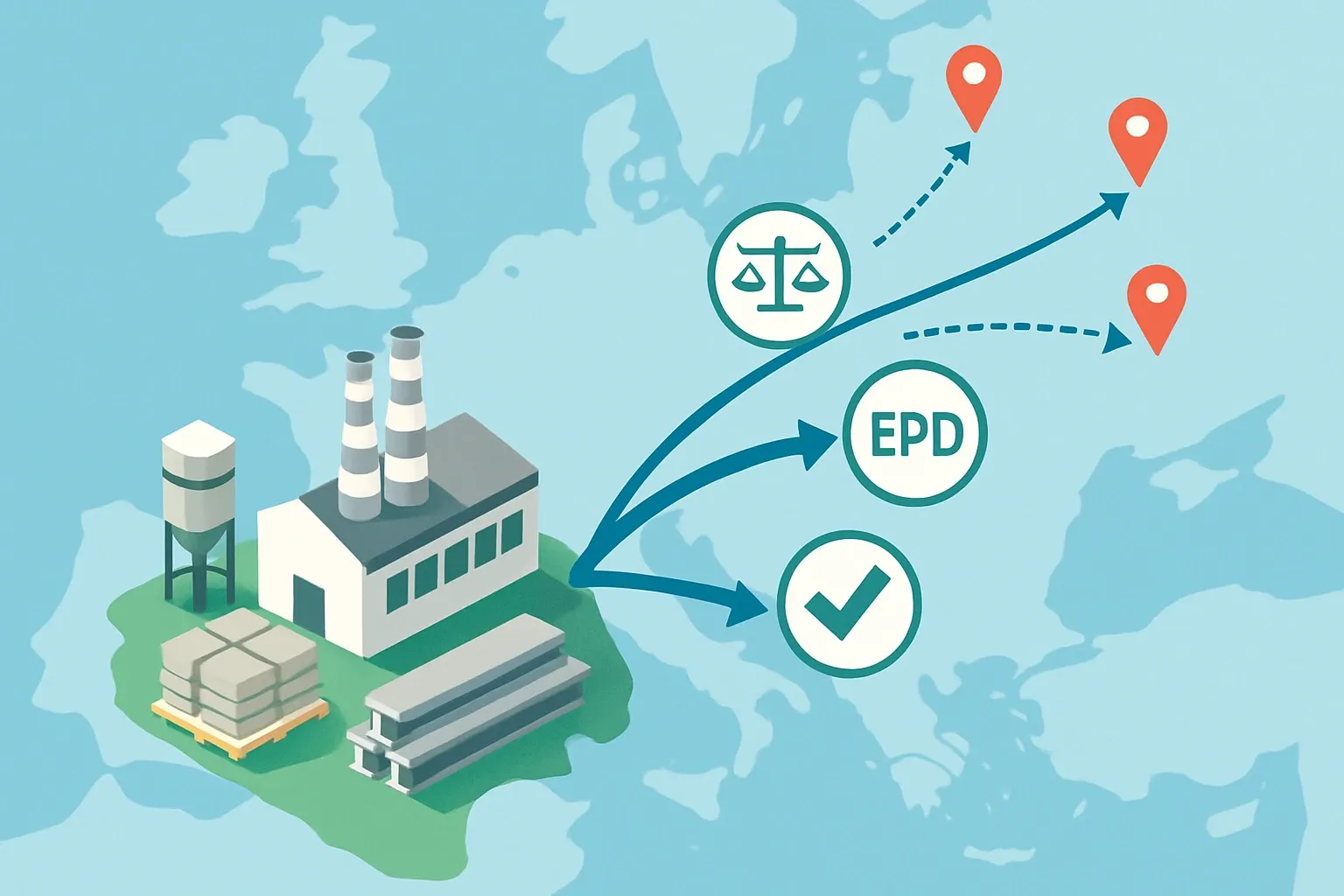
CBAM moves from reporting to paid certificates on January 1, 2026. A new 50‑tonne annual de minimis per importer simplifies admin while still covering about 99 percent of embedded emissions in scope. Well built EPDs make supplier emissions data verifiable and reusable across clients. (Consilium, 2025) [Taxation and Customs Union, 2023]
LEED v5 was ratified on March 28, 2025 and certification tooling opened in Arc in November 2025. For projects that chase North American green building points, product‑specific EPDs remain a straightforward way to lift embodied‑carbon credit potential. (USGBC, 2025)
What domestic buyers in BiH are starting to ask
Public procurement reform for 2024–2028 names green procurement as a strategic priority. That does not auto‑mandate EPDs on day one, yet it signals that environmental criteria will be written into more tenders, beginning with energy, infrastructure, and standardized materials. [UNDP, 2025] [Council of Ministers of BiH, 2024]
Want to win EU tenders with EPDs in Bosnia and Herzegovina?
Follow us on LinkedIn for insights that help you navigate new regulations and unlock business opportunities.
Standards to reference on your cover page
Keep the title block simple and consistent with EU practice. Anchor to EN 15804:2012+A2, cite EN 15941 for data quality and use any applicable c‑PCRs such as concrete, ceramic tiles, or others adopted by ISBIH. This reduces reviewer back‑and‑forth and speeds verification. [ISBIH, 2025] [ISBIH, 2024]
Picking a program operator, pragmatically
Choose an operator your target specifiers already search. IBU is common on German‑speaking tenders and the International EPD System travels well across Europe. Both are ECO Platform members, which eases recognition across databases. If your sales team focuses on Nordics or Italy, check EPD‑Global or EPD Italy for fit. (ECO Platform, 2025)
The data Bosnia plants struggle with most
Electricity mix varies by entity and site. Document the actual supplier contracts and meter data for the reference year rather than assuming a national average. Cross‑border transport to EU customers also dominates some A4 results. Small corrections here can shift GWP by meaningful percentage points.
Fast, low‑friction workflow that actually gets published
- Scope and PCR check. Confirm competitors’ PCRs and expiry to avoid repainting mid‑project.
- One clean reference year. Pull utilities, volumes, waste, fuels, inbound and outbound transport, plus packaging. For new lines, a prospective EPD can start with three months and be updated later.
- Verification and publish. Align on operator templates early so your verifier is not asking for format fixes at the finish line. It sounds basic, but it saves weeks.
CBAM‑exposed categories to prioritize now
If you make cement or clinker, steel or aluminum products, you already feel EU scrutiny. Even though CBAM reporting is not the same as an EPD, using EPD‑grade datasets and site‑specific modeling will make your importer’s filings easier and your price discussions calmer. [Taxation and Customs Union, 2025]
Cost signals and ROI
Reliable Bosnia‑only cost averages are scarce and vary by product complexity and verification route. The commercial logic is clearer. For EU‑facing SKUs, a single mid‑sized tender win usually outweighs development effort. Sales cycles shorten when buyers can compare apples to apples instead of applying conservative defaults that penalize non‑EPD products. That is the real margin play.
Avoidable mistakes we still see
Referencing outdated A1 rules, mixing site and industry‑average datasets, or forgetting to lock transport assumptions with Sales until the last week. Fix those and you look instantly more mature to reviewers. Also, do not bury language info. Provide both English and BCS PDFs to accomodate local contracting authorities.
Tie it together without drama
If your team is typing “EPD Bosnia” into a browser, you likely sell into EU markets or face greener local tenders. Publish to a widely recognized operator, align to EN 15804 with the ISBIH‑adopted companions, and make data collection the hero so verification flies. The companies that treat this like a product launch, not a paperwork chore, get specified more often and move pricing conversations away from pure cost. It’s definately worth doing right.