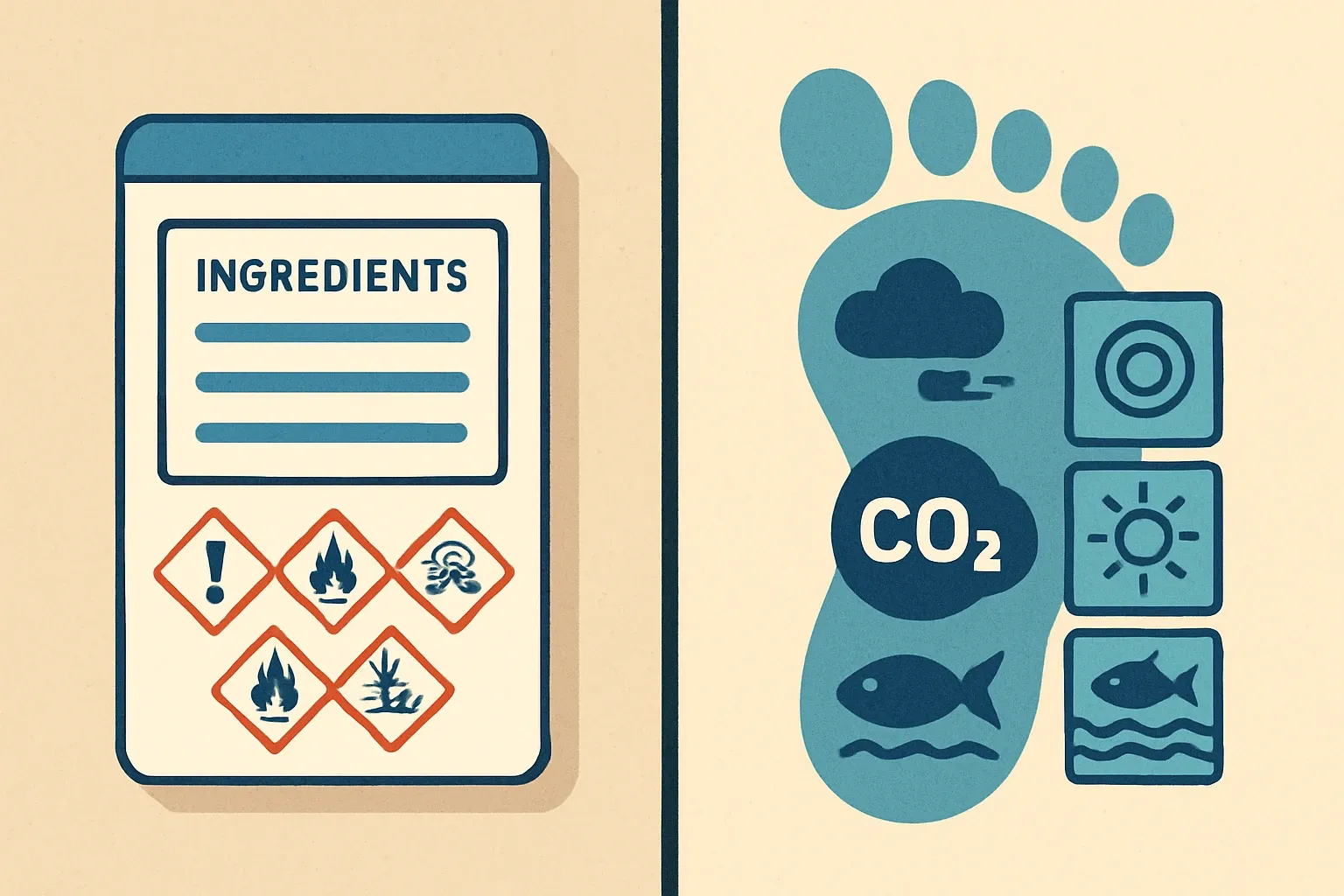
Three types, three jobs
Type I, II, and III declarations are not rungs on a ladder. They solve different problems for buyers and regulators. Picture them as a sticker, a statement, and a balance sheet.
Type I: independent ecolabels
These are multi‑criteria labels run by an outside body under ISO 14024. They compare products in a category against set criteria and award a license to use the label. Great for retail‑style recognition and quick trust, less useful when a project team needs actual numbers for carbon accounting.
Analogy: the Energy Star of material claims. Clear badge, limited detail.
Type II: self‑declared environmental claims
This is the manufacturer speaking directly under ISO 14021. Claims must follow strict rules on wording and evidence, yet verification is not required before market. Useful for narrow attributes like recycled content. Risky in construction specs where third‑party proof is expected and greenwash alarms go off fast.
Analogy: a product monologue that can be smart or sloppy. The audience decides.
Want to unlock more bids with EPDs?
Follow us on LinkedIn for insights on how to effectively use Type III EPDs to win specifications and improve your ROI.
Type III: EPDs built on LCAs
Type III declarations are Environmental Product Declarations created from a cradle‑to‑gate or cradle‑to‑grave life cycle assessment under ISO 14025 and, for construction, EN 15804. They use Product Category Rules so results are apples to apples. They are third‑party verified and published by a program operator, which makes them credible in procurement and rating systems.
Analogy: the audited financials of your product’s impacts. Numbers first, adjectives second.
Where specs and sales meet
Most project teams need quantifiable data to run comparisons and hit carbon targets. A verified, product‑specific EPD removes the penalties that come with generic estimates, so your product is considered on merit rather than pushed aside on a technicality. Teams that treat EPDs as sales assets see faster yeses in complex bids.
Compliance details that actually matter
Program operators set validity periods for EPDs and require periodic updates. In many programs, an EPD is valid for five years, after which it must be reviewed and renewed to stay current (EPD International GPI, 2024) (EPD International GPI, 2024). Choosing the right PCR and operator up front avoids rework and keeps your portfolio consistent across regions.
Choosing the path and the partner
If you sell to construction, Type III is the workhorse because it delivers comparable, verified numbers. Type I can complement it for brand signaling. Type II should be used carefully and supported with evidence. When selecting an LCA partner, prioritize teams that take on data collection across plants, normalize utility periods, and run the operator submission end to end. In the US common operators include Smart EPD. In Europe many publish with IBU. Operator‑agnostic support keeps you flexible.
Quick compare
- Type I: third‑party ecolabel, yes/no pass against criteria, strong for broad marketing, light on numeric depth.
- Type II: self‑declared claim, evidence on file, limited spec value unless backed by verification.
- Type III: third‑party verified EPD from an LCA under PCR rules, built for procurement and design tools.
Make it work commercially
Start with the SKUs that drive margin or show up most in bids. Gather a clean reference year of production data, then build repeatable pipelines so updates take weeks, not months. The ROI shows up quietly when your product stays in the schedule instead of being swapped for one with better paperwork. It’s not flashy, it’s decisive.