What ERFMI’s calculator actually does
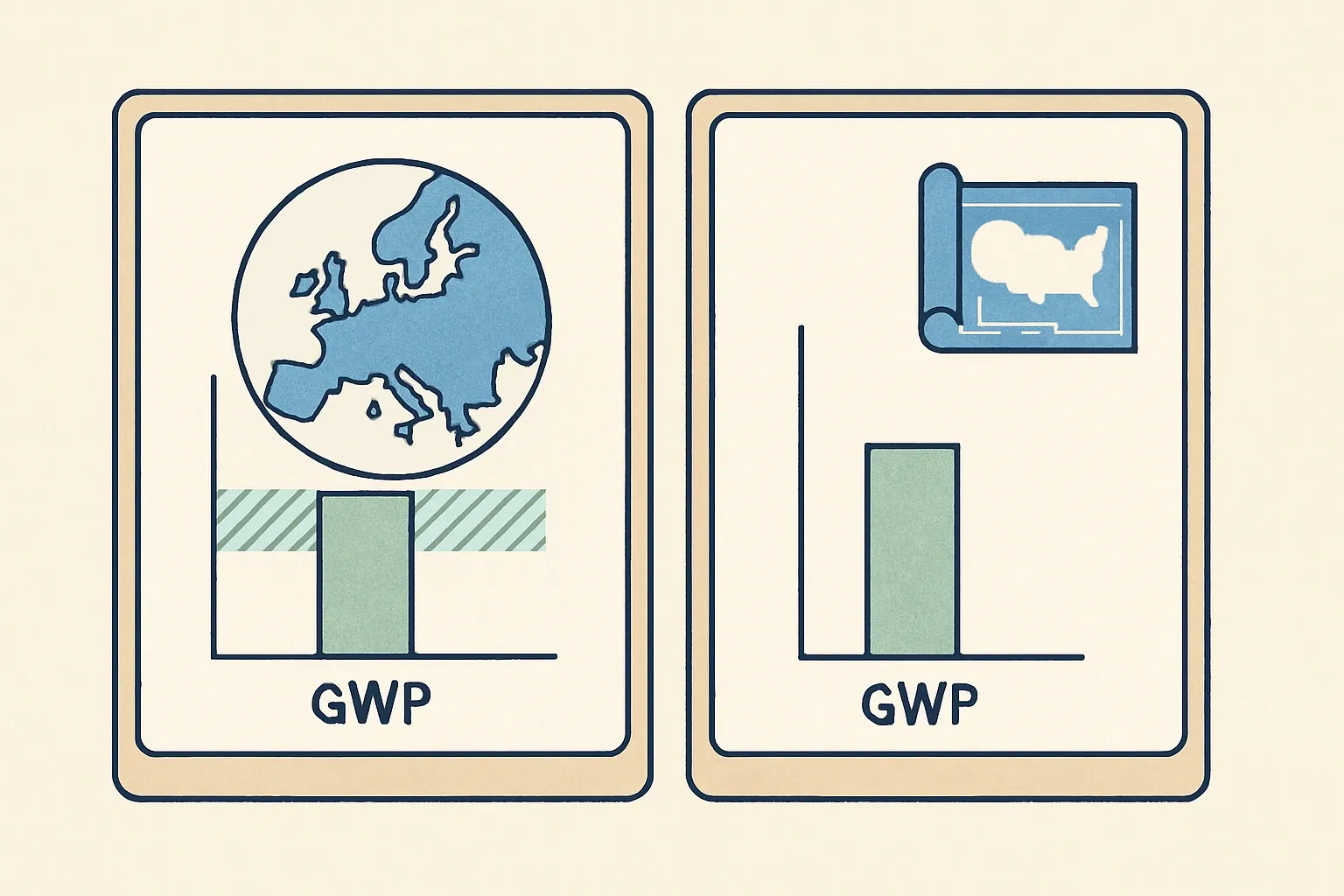
ERFMI’s online tool is built from a study of nine resilient flooring types modeled with weighted average data across members, using GaBi datasets and EN 15804 as the ruleset. That means the number you get reflects a sector blend, not your plant or recipe. The calculator emphasizes that maintenance and replacement cycles often dominate lifetime impacts, which is true, but the declared cradle to gate profile still anchors spec decisions when budgets are tight (ERFMI, 2024) (ERFMI, 2024).
Why averages overstate many strong performers
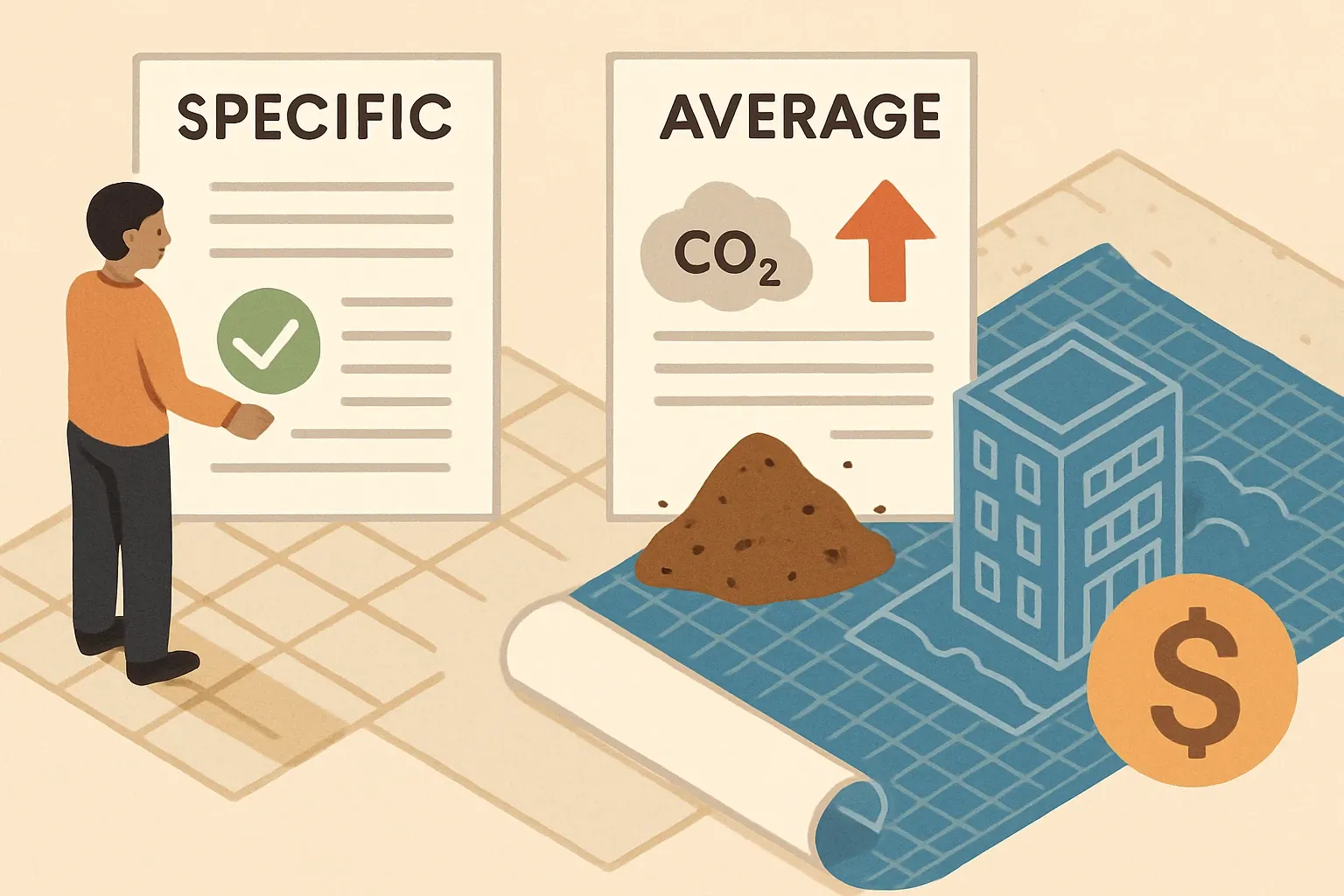
If your lines run lower energy, cleaner fuels, or higher recycled content than peers, an industry‑average EPD bakes in everyone else’s overhead. Some markets even add explicit uplifts to generic data. The Netherlands’ National Environmental Database applies a 30 percent surcharge to category 3 generic datasets used in building assessments, a policy intended to push projects toward product specific data (Duurzaam Gebouwd, 2024) (Duurzaam Gebouwd, 2024). That kind of multiplier can flip a pass into a fail, even when your actual product would have cleared the bar.
Denmark’s tightening limits raise the stakes
Denmark required whole building LCA for all new construction as of January 1, 2023, with a 12 kg CO2e per square meter per year cap applied to buildings over 1,000 square meters. From July 1, 2025 the cap expands and tightens, with differentiated limits by building type and an independent cap of 1.5 kg CO2e per square meter per year on the construction process modules A4 and A5 (Social og Boligstyrelsen, 2025) (Social‑ og Boligstyrelsen, 2025). For example, apartment buildings and offices must hit 7.5 in 2025, single family and row houses 6.7, with further tightening signaled for 2027 and 2029 on the same schedule (Social og Boligstyrelsen, 2025).
Is your resilient flooring losing tender opportunities?
Follow us on LinkedIn to learn how product-specific EPDs can boost your competitive edge.
How a sector average handicaps a bid
Whole building LCA is a carbon budget. Designers allocate that budget across structure, envelope, and interiors. When resilient flooring enters with a sector average that is even modestly inflated versus your real process, the project has less headroom for higher impact elements. Teams protect the total by swapping to a product with a product specific EPD and a lower declared number. You never see the short list, only the lost spec.
The early math that quietly decides winners
Most design teams compare options inside national tools and databases before calling a rep. If there is no current product specific EPD, they pull a generic or a sector average. In markets that penalize generics, the math is stacked. Even where there is no formal uplift, the average still reflects others’ fuel mix, scrap rates, and transport that may not be yours. It is definately the slower lane in a carbon constrained bid.
When an industry average still helps
Sector averages are useful for early education and rough order of magnitude benchmarking. They can also inform maintenance assumptions in building LCAs. They are not a substitute for your own declaration when specification is on the line, especially as more jurisdictions adopt caps by typology and tighten them on a set schedule (OECD, 2024) (OECD, 2024).
What to do instead if you make resilient flooring
Publish a product specific, third party verified EPD aligned to EN 15804 plus A2. Model your actual energy, raw materials, scrap, transport, and plant locations for modules A1 to A3. Document realistic installation and maintenance scenarios so building teams can reflect them accurately in B modules. Pick a recognized program operator in your target markets and keep the declaration current so buyers never fall back to a generic.
Bottom line for commercial teams
In carbon capped markets like Denmark, an industry‑average EPD from a calculator can make a good product look average. A product specific EPD usually restores the true performance and preserves headroom in the whole building LCA. That keeps your flooring in play on merit instead of forcing a last minute price fight you did not need to have.