The fast answer
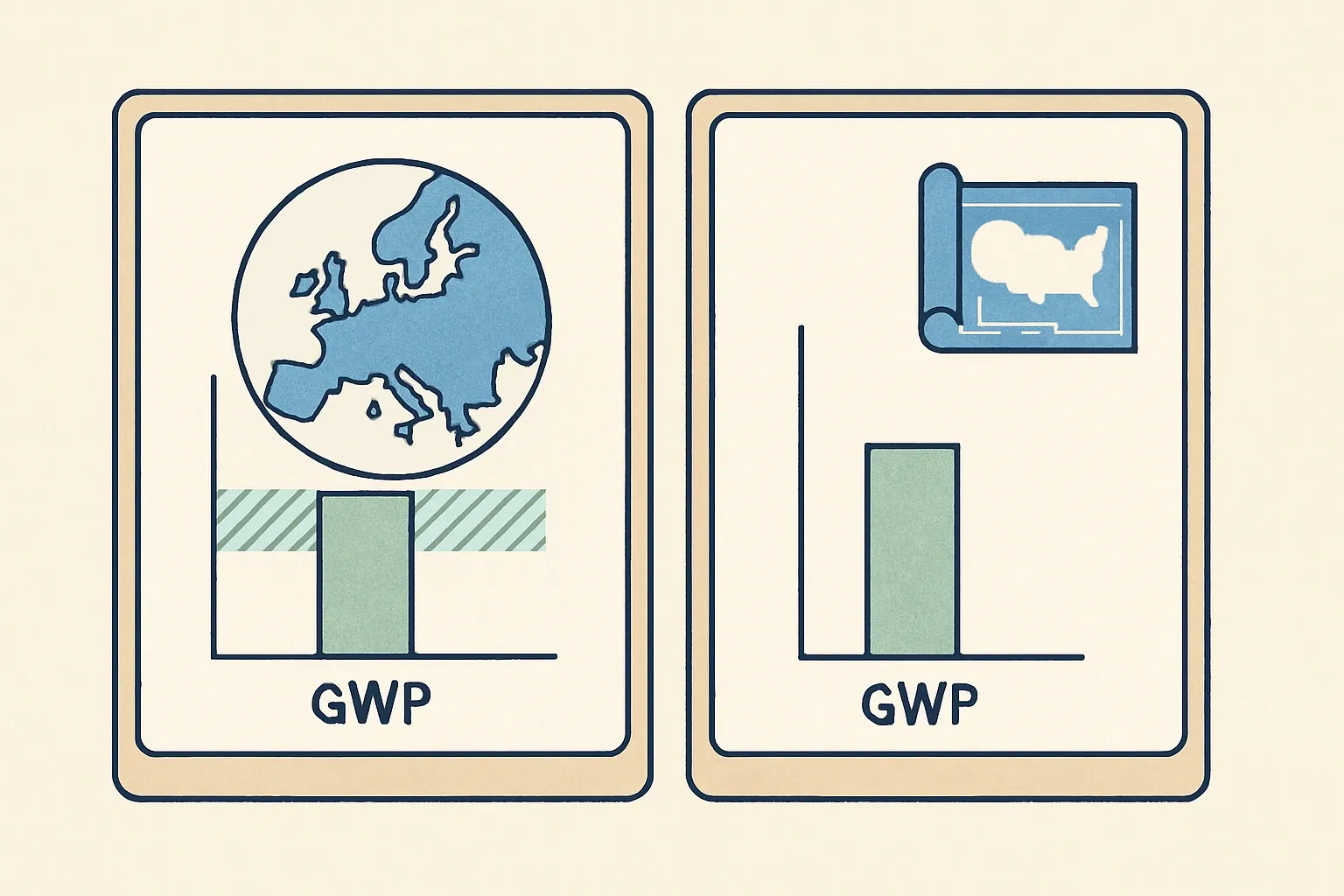
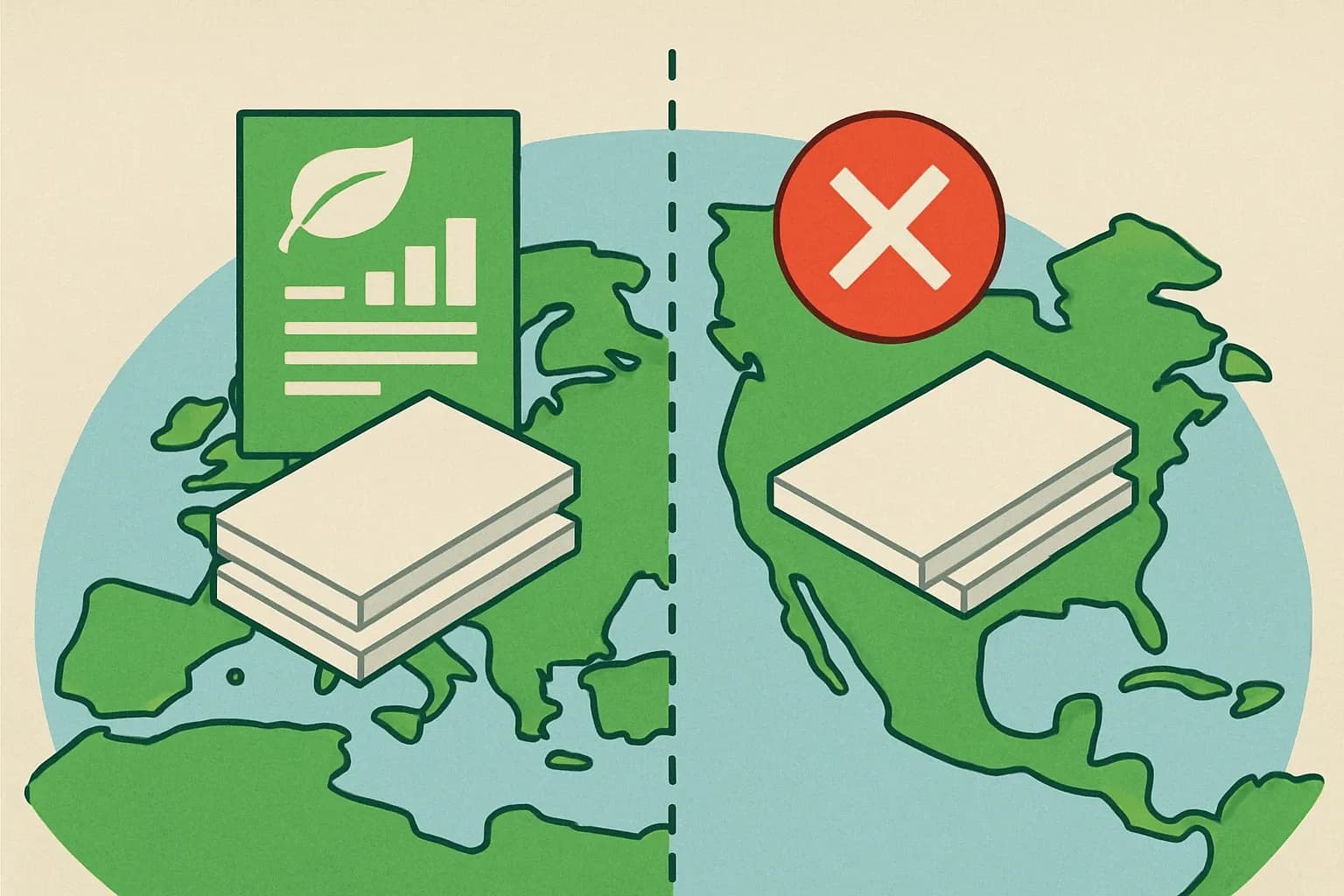
- Europe: Yes. EXIBA, the European XPS Association, publishes an industry‑wide EPD for XPS insulation with IBU as the program operator. You can find it via EXIBA’s site and the IBU registry (see EXIBA’s note and IBU link on its Key Topics page).
- United States and Canada: No current industry‑wide EPD from the Extruded Polystyrene Foam Association. Buyers and whole‑building LCA tools rely on either product‑specific XPS EPDs or conservative generic datasets.
Where to find the European sector‑average EPD
EXIBA confirms that an Environmental Product Declaration for XPS foam insulation is available on the IBU website; EXIBA points readers to search for “Exiba” on IBU to download the document. Start here: EXIBA’s page that references the IBU‑hosted EPD and how to access it (EXIBA Key Topics).
Think of this as the class average. It is credible, third‑party verified, and useful for early stage benchmarks. It cannot showcase the top student’s actual score.
Why industry‑wide EPDs are conservative by design
Sector‑wide studies pool multiple plants, blowing agents, fuel mixes, and scrap rates. That averaging tends to bury recent process upgrades, recycled content boosts, or HFO transitions that your lines may already have. Program operators also allow “industry solutions” like worst‑case or model EPDs when appropriate, which further skews results toward caution if used for design inputs (IBU, 2024).
The result on a bid is simple. If the modeler grabs a conservative average for XPS, your product’s real footprint may look higher than it truly is. A product‑specific, plant‑anchored EPD fixes that on paper and in the LCA model that decides who gets specified.
At URSA, JACKON, or competing in XPS insulation?
Follow us for product-by-product EPD insights to see which XPS lines win specs and how you can leverage your product-specific advantages.
North America reality check
There is no active industry‑wide EPD for XPS insulation from XPSA. Project teams therefore default to product‑specific EPDs or generic datasets. At the same time, new federal rules are changing the profile of XPS in the market. Beginning January 1, 2025, EPA’s Technology Transitions program restricts high‑GWP HFCs in foams. For XPS, manufacturing and import of product with a 100‑year GWP above 150 is prohibited, with sell‑through limits following on a defined timeline (US EPA, 2024) (US EPA, 2024). If your plant has already transitioned blowing agents, a product‑specific EPD is the clearest way to get credit.
Who already publishes product‑specific XPS EPDs
Not a comprehensive list, just proof that peers are moving.
- URSA Insulation has multiple XPS EPDs registered in Europe under the International EPD System.
- Ravago Building Solutions publishes RAVATHERM XPS EPDs in France via INIES.
- JACKON Insulation (BEWI) lists JACKOFOAM and JACKODUR XPS EPDs in EPD Norway and IBU.
- Soprema publishes SOPRA‑XPS for Canada under ASTM’s EPD program and has XPS EPDs in Europe via the International EPD System.
These are mid‑sized or diversified players in XPS, not just the household‑name giants. The signal is clear. Your competitors are already walking into bids with product‑specific declarations in hand.
Commercial takeaway for manufacturers
An industry‑wide EPD is fine for education. It is rarely how you win specs. A product‑specific EPD lets the LCA reflect your real resin mix, energy, and blowing agent. That lowers modeled embodied carbon in A1–A3 and removes the conservative “penalty” that keeps teams from shortlisting you.
In many public and private frameworks, a verified EPD also unlocks points or procurement thresholds. That puts you in the door more often and cuts last‑mile friction with sustainability reviewers. The cost of producing the EPD is usually dwarfed by even one mid‑sized project you would otherwise miss.
What to do next if you make XPS
- Confirm your reference PCR and operator. In the US, many publish through Smart EPD or ASTM. In Europe, IBU and EPD International are common. Pick where your buyers look.
- Align on a recent reference year that reflects current blowing agent and energy profiles. You want today’s performance on the record, not last decade’s average.
- Plan for verification lead times. Program operators report that verifier capacity has stretched typical checks to about six months in some cases, so start early (IBU FAQ, 2024) (IBU FAQ, 2024).
Bottom line
- Yes, an industry‑wide EPD for XPS exists in Europe through EXIBA and IBU.
- No, there isn’t one for North America today.
- A product‑specific EPD is the surest way to replace conservative averages with your actual numbers, reduce enviromental LCA penalties, and make your XPS line the easy pick for specifiers.