The quick answer
Yes. For ceramic floor tiles, also called porcelain stoneware or ceramic coverings, multiple sector average EPDs exist. These are typically published by national trade associations through recognized program operators, and they sit alongside many product‑specific tile EPDs.
Where to find an industry‑wide EPD today
- Italy. Confindustria Ceramica’s sector EPD for “Italian ceramic tiles” is registered with EPDItaly, issued January 4, 2023, updated June 19, 2024, and valid until January 3, 2028 (EPDItaly, 2024).
- Spain. ASCER’s “Spanish Ceramic Tiles” sector EPD is registered with AENOR GlobalEPD and valid from September 16, 2024 to September 16, 2029 (AENOR GlobalEPD, 2024).
- Germany. The German industry association confirms a sector EPD for ceramic tiles that was updated to an EN 15804+A2 version in July 2022 and verified under IBU, which is the German EPD program operator (BKF, 2022).
- North America. The Tile Council of North America announced an industry‑wide EPD certified by UL on April 21, 2020, with five‑year validity (TCNA, 2020). If you need a current document for a U.S. project, check the operator’s database or your spec’s acceptable alternatives.
Who is behind these sector EPDs
Sector EPDs for ceramic tiles are usually commissioned by national associations. Examples include Confindustria Ceramica in Italy, ASCER in Spain, and the Bundesverband Keramische Fliesen in Germany. Program operators then register and host the documents, for example EPDItaly, AENOR GlobalEPD, or IBU. The technical backbone is a common rulebook called a PCR. For tiles in Europe, many recent EPDs reference EN 17160 for ceramic tiles within the EN 15804 framework.
How a sector EPD is built
Think of the PCR as the rulebook of Monopoly, ignore it and the game falls apart. The association collects production data from many plants, models a cradle‑to‑grave LCA, and publishes an average that members can cite. Italy’s sector study credits participation from a very broad set of factories, then publishes one average that is representative for the category (EPDItaly, 2024).
The strategic catch with “industry‑wide” numbers
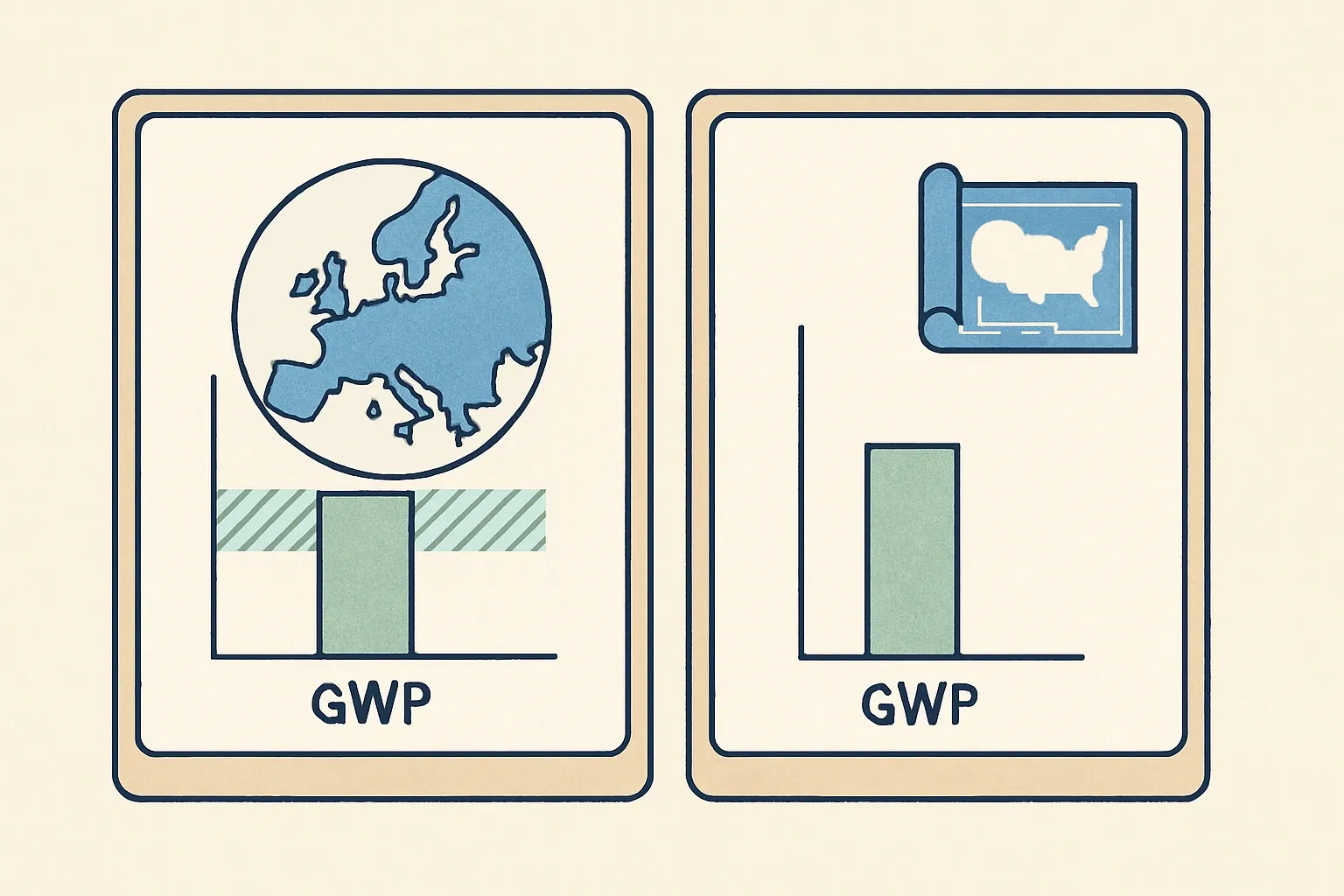
An industry average is designed to be representative, not flattering. It uses conservative assumptions when specific process data is missing, and it smooths out best‑in‑class improvements. That can introduce a gap between your actual impacts and the value a project team is forced to use when they rely on sector data in a whole‑building LCA. The result feels like running a race with ankle weights, you are faster in reality, but the scorecard will not show it.
Curious about EPDs for ceramic tiles?
Follow us on LinkedIn for insights that help you win more specs and navigate compliance.
Why a product‑specific EPD helps you win specs
A product‑specific, third‑party verified EPD captures your kiln fuel mix, recycled inputs, electricity contracts, packaging, and yields. It lets project teams model your product as it is made, not as an average. Many procurement frameworks and building rating systems prefer product‑specific EPDs over industry‑wide declarations for crediting or documentation. That preference often shifts borderline projects into compliance and keeps your tile in the schedule of values instead of a substitute. The ROI is typically manyfold because one mid‑sized project can repay the documentation effort, then the EPD keeps working for future bids.
Current product‑specific examples across regions
The sector is rich with product‑specific tile EPDs, including in the United States and Europe. A few recent examples that are live and verifiable today include:
- Ceramiche Caesar, Caesar USA porcelain stoneware, multiple thicknesses, EPDs valid to December 22, 2029, program operator EPD Hub.
- Atlas Concorde USA, porcelain stoneware ranges including 20 mm, EPDs valid to December 22, 2029, program operator EPD Hub.
- Ceramiche Keope, porcelain stoneware 12 mm, EPD valid to December 22, 2029, program operator EPD Hub.
- Novoceram, porcelain stoneware 9 mm, EPD valid to July 31, 2030, program operator EPD Hub.
- Iris Ceramica Group, ceramic tiles 8 to 10 mm, EPD valid to March 20, 2030, program operator INIES. These examples show peers already investing in product‑specific declarations. If your portfolio leans greener than the industry average, an individual EPD lets the numbers shine rather than get averaged away.
When a sector EPD still helps
- Early documentation. When a project team only needs to confirm that ceramic floor tile has a verifiable EPD, a sector average can satisfy the checkbox while you prepare product‑specific documents.
- Portfolio coverage. If you have many SKUs and one plant, a sector EPD can be a stopgap for ranges with low volumes while you prioritize hero products for product‑specific EPDs.
- Cross‑border specs. Italian, Spanish, and German sector EPDs are recognized by major European databases, which can ease compliance for EU projects (EPDItaly, 2024, AENOR GlobalEPD listing, 2024).
A note on North America in 2025
The 2020 UL‑certified industry‑wide EPD covered North American ceramic tile for five years (TCNA, 2020). As of December 11, 2025, check the program operator’s database for any renewal before relying on it for submittals. If the sector EPD is not current, commissioning a product‑specific EPD becomes even more advantageous because otherwise models revert to conservative generics that rarely reflect your real process.
Make the lower number work for you
If your plant has efficient kilns, recycled content, or a cleaner power mix, your cradle‑to‑gate impacts can land well below a sector average. A product‑specific EPD turns those process decisions into project wins. It also streamlines future renewals because the data model is already in place. The work should feel methodical and clearly scoped, not messy. A good partner will own the heavy data wrangling inside your org so R&D and operations stay focused. It is definately possible to go from kickoff to a published EPD in a tight, predictable timeline.
Bottom line for ceramic tile manufacturers
- An industry‑wide EPD for ceramic floor tiles exists in Italy, Spain and Germany, with program operator records current into 2028 to 2030 for those regions. North America’s last sector EPD ran 2020 through 2025.
- Sector averages are useful, yet conservative. They rarely showcase your real performance.
- Product‑specific EPDs win more specs, especially when whole‑building LCAs penalize generic or average data. If beating the average is realistic for your line, let the EPD say so.