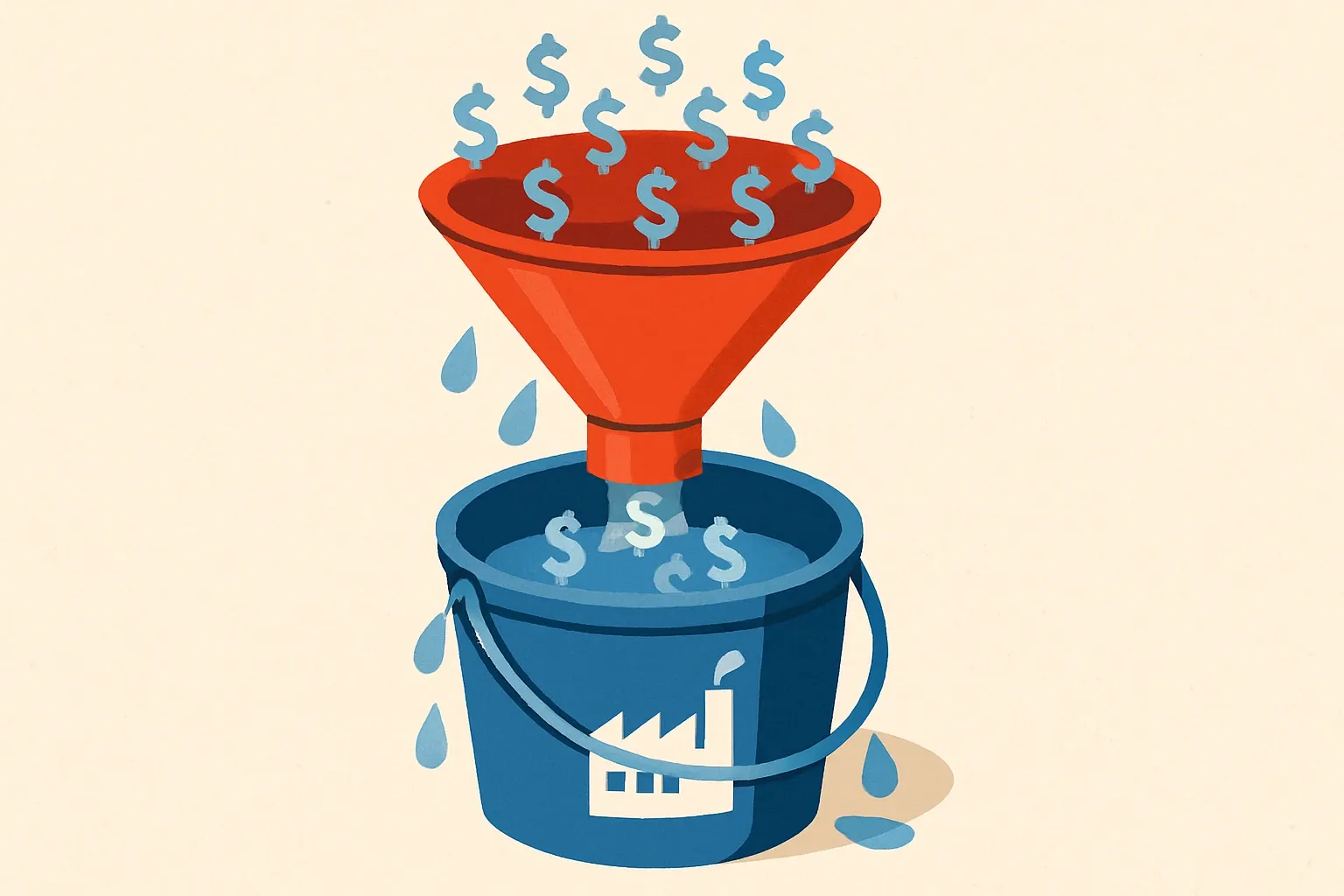
The silent revenue leak hiding in plain sight
Technical Spec‑Out happens during rapid design selection when a rep cannot instantly supply proof for carbon or health questions. The product vanishes from contention and the team often never learns why. It is not a loss to a better widget. It is a loss to missing documentation.
Hard‑filtering is now the default
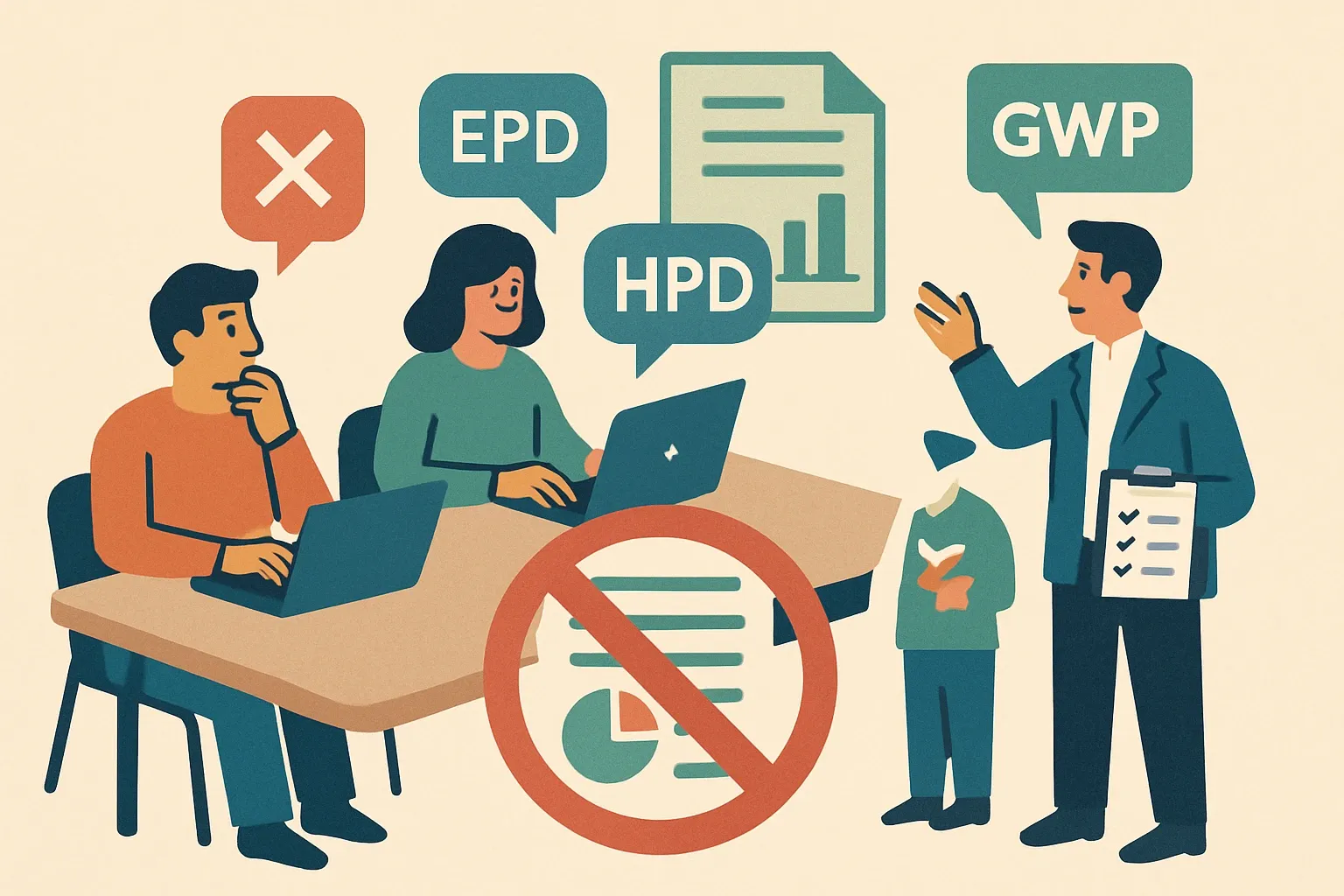
Specifiers are screening materials with simple yes or no gates for product‑specific EPDs, HPDs, and acceptable GWP ranges. Adoption is accelerating. AIA reports 3,818 projects submitting embodied‑carbon data from 124 firms in one cycle, roughly triple the project count since 2021 (AIA, 2024) (AIA, 2024). On the health side, HPD Collaborative notes over 14,000 published HPDs from almost 1,000 manufacturers, covering 40,000 products, with thousands of project teams using disclosures in LEED credits (HPDC, 2025) (HPDC, 2025).
LEED v5 raises the documentation stakes
LEED v5’s materials scoring rewards fast, defensible paperwork. A product‑specific Type III EPD earns a climate‑health score of 1. Show a greater than 20 percent GWP reduction and the score rises to 2 plus 1 in ecosystem health. Third‑party verified HPDs at 100 ppm inventory score 2 in human health. These levels stack across criteria to lift product totals in the new calculator (USGBC, 2025) (USGBC, 2025). If your team cannot surface the right document on the spot, someone else’s will.
Where the seconds are lost
Requests arrive by text at 6:42 a.m. The EPD is on a laptop that is on a desk that is in a plant three states away. The HPD lives in a PDF with the wrong file name. The previous EPD updated its PCR reference and the rep is not sure if that matters. None of this is about science. It is about findability.
Join Parq Pulse!
Our weekly newsletter for manufacturers mobilizing product and environmental insights to remain competitive and win more projects.
The fix is an instant‑answers engine
Treat EPDs and HPDs as live product data, not static brochures. Centralize declarations, verifications, and change logs in a single source of truth that maps each SKU to program operator, PCR, scope, and current GWP. Add machine‑readable tags for LEED v5 criteria areas so an assistant can respond in sub‑second time. When a designer asks “Do you have a product‑specific Type III EPD and what’s the GWP for A1‑A3,” the answer returns before the meeting window closes.
Sub‑second speed, commercial payback
Spec windows are short. Teams often shortlist during the call. Instant responses keep you in the comparison set and avoid pessimistic defaults that penalize products without declarations. We see this as margin defense. Faster documentation does not squeeze price. It preserves it by keeping value signals visible when decisions are made.
What to operationalize this quarter
- Normalize your evidence. Store current EPDs and HPDs with SKU binding, validity, scope, and declared unit. Include a quick note on which PCR version each one references.
- Pre‑compute answers to common asks. For every top seller, cache the GWP for A1‑A3 and any comparative reduction vs the last generation so reps can quote it safely against LEED v5 language.
- Wire a front‑end that speaks human. Give sales and tech services a simple box to type “Tile X HPD ppm?” and get the exact sentence needed for a submittal.
Avoid the easy traps that trigger Spec‑Out
Do not rely on local folders or email chains. Do not ship an industry‑wide EPD when the project requests product‑specific proof. Do not assume a buyer will wait while a declaration is hunted down. Speed is a feature. Completeness is trust. Both together win the room.
Proof beats promises
LEED v5’s scoring table turns documentation into measurable points. HPD adoption data shows the market is already checking. Embodied‑carbon reporting growth shows the carbon math is moving from “nice to have” to “must show.” If instant, accurate answers feel hard today, they are definately harder for a rival who waits to modernize.
From scramble to signal
The fastest way to stop Technical Spec‑Out is to make environmental evidence as queryable as pricing and lead time. When documentation is structured, verified, and one click away, hard filters stop being a wall and start being a spotlight on your product’s readiness.