The value test we forget
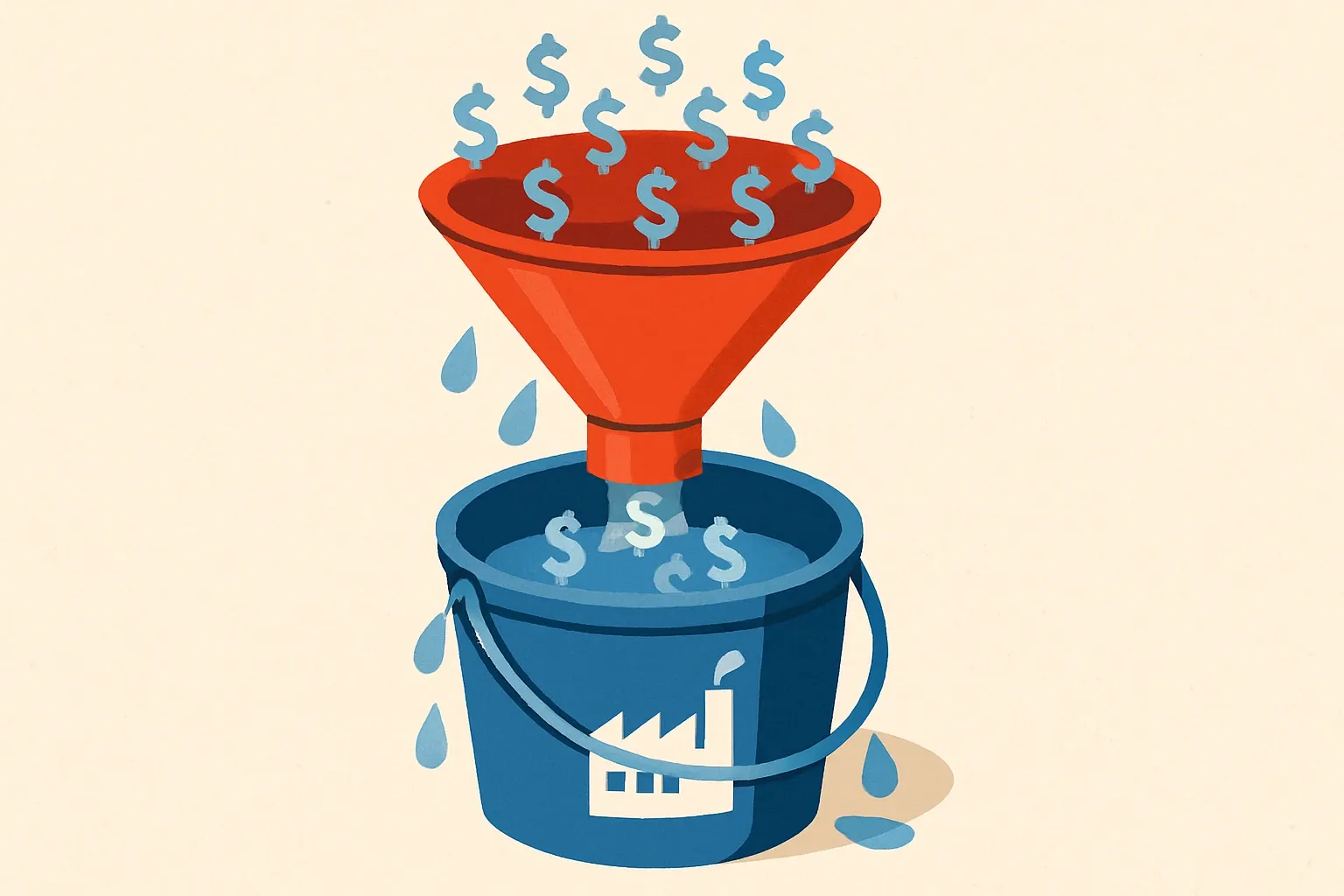
Most circularity scorecards track waste diverted or kilograms of CO₂. Useful, yes, but incomplete. A sharper question is who keeps the value when products reach second life. If recovery dollars stay in the same ZIP codes where projects happen, circularity starts looking like local economic development, not just cleaner dumpsters.
Secondary markets are local by default
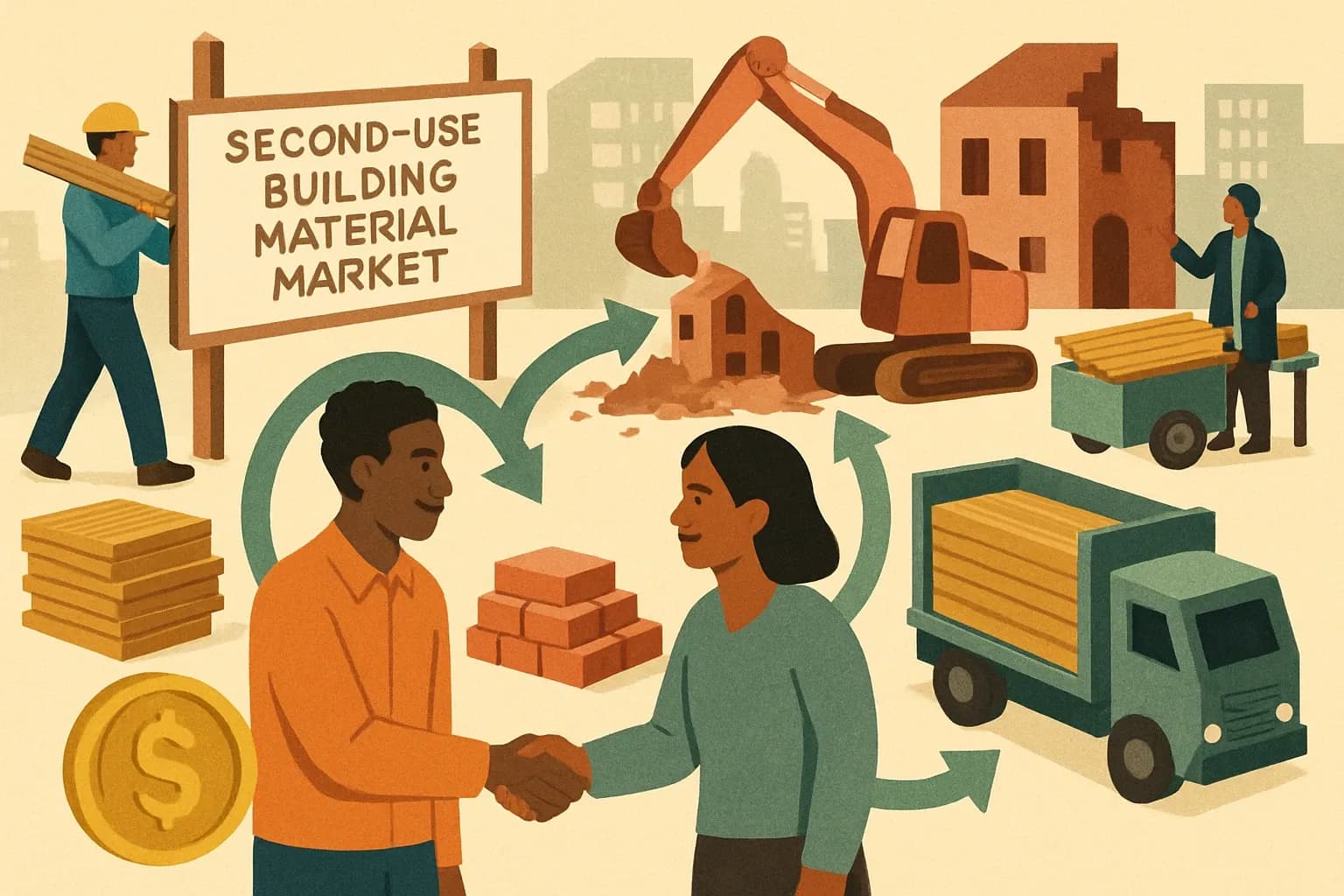
Think of salvage yards, takeback depots, and re-manufacturers as the construction world’s farmers’ markets. They sell to nearby contractors on tight timelines. Sixty percent of small firms say a significant share of customers are within 50 miles, which mirrors how reuse really moves (Federal Reserve Small Business Credit Survey, 2025). If products are hard to deinstall or ship, they simply won’t recirculate locally.
Equity upside, not side quest
When secondary markets are viable, they create storefronts, yards, and service routes that local BIPOC entrepreneurs can own. That is wealth built on recovery rather than extraction. Financing gaps are real, yet hyper‑local demand and predictable material flows lower barriers to entry for small operators, which makes equity outcomes more durable over time.
What manufacturers can design for local recovery
The fastest way to grow secondary markets is to feed them with products built for a clean second chapter. Prioritize a few moves that make reuse the default rather than the exception.
- Reuse existing building stock by offering retrofit‑friendly components that align to legacy dimensions and connection points.
- Salvage‑ready parts through reversible fasteners, clear disassembly sequences, and QR codes that show tools and steps.
- Modular products sized for standard pallets and doorways so local yards can handle them without special gear.
- Same‑material construction where possible to avoid fused laminates that no one can seperate.
- Product takeback with prepaid reverse logistics that a small yard can trigger in minutes.
- Leasing programs that include obligations to inspect, refurbish, and re‑deploy units nearby.
Make reuse practical, not theoretical
A claim is circular only if someone within driving distance can execute it on a Tuesday. Field‑test deinstallation with a two‑person crew. Confirm spare parts availability. Publish torque specs and replacement part SKUs. If installers cannot recieve the right instructions in under five minutes, the secondary market will stall.
Document end‑of‑life pathways in your EPDs and LCAs
EPDs are a perfect place to move from promise to proof. Use the Additional Information section to name verified recovery partners and service radii. Align transport and deconstruction scenarios in the LCA with realistic local distances, not continental averages. Note design‑for‑disassembly features. If you offer takeback or leasing, state acceptance criteria, volumes handled to date when available, and the exact steps required for return.
Why this matters commercially
Project teams prefer products that reduce waste headaches and come with credible reuse options. Many bids reward verified end‑of‑life plans alongside carbon results in LEED v5 contexts. Scale helps too. The United States generated about 600 million tons of construction and demolition debris in 2018, still the latest national estimate as of 2025, which shows the size of the prize for recovery markets (EPA, 2025).
Red flags that break trust
Beware circular claims that only work on paper. If a process needs tools rarely found on jobsites, relies on proprietary adhesives, or assumes disassembly times that beat trained crews by half, it will not scale. Do not promise municipal recycling for composites if no city MRF within 100 miles can sort them today.
A quick playbook to center equity
Treat circularity as a local supply chain. Publish installer‑to‑reseller handoffs. Offer micro‑MOQs for refurbished units so small dealers can stock them. Co‑market with nearby BIPOC‑owned recovery businesses and feature them in product pages. When the money from reuse stays near the project, circularity becomes an engine for community prosperity.
Bring circularity home
Design products that are easy to unbolt, grade, clean, and relist. Prove those pathways in your EPDs. Partner with neighborhood operators who can turn returns into revenue. That is circularity measured not only in carbon saved but in who gets paid.