What these terms mean in EPD land
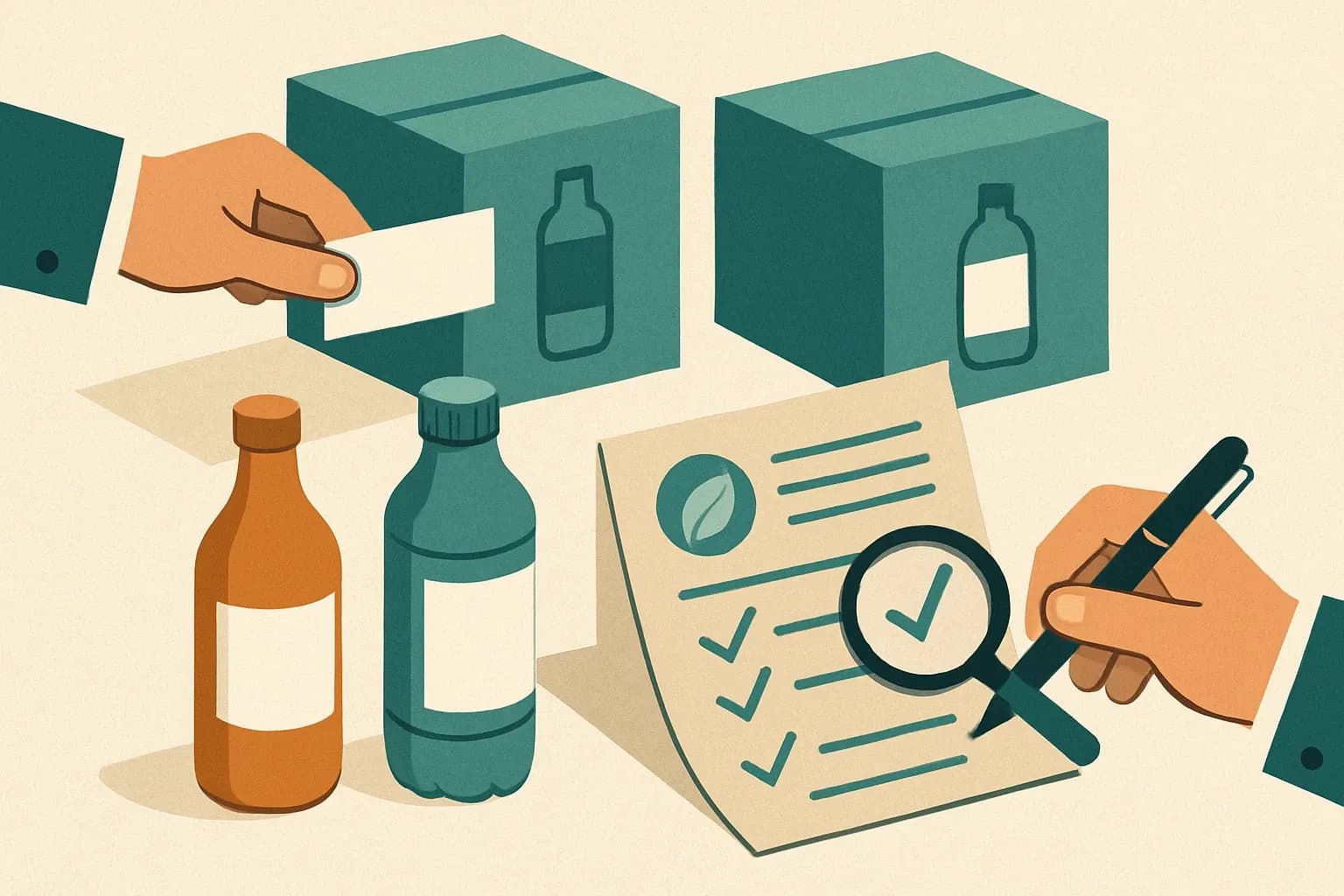
White-label means a manufacturer publishes an EPD that other brands can reuse when the underlying product is technically identical. Private-label means a distributor or brand owner publishes the EPD under their own name while relying on the same verified dataset.
Think of it like a remix album that uses the same master track. New cover art is fine. New instruments are not.
When reuse is actually allowed
Reuse only works when the product definition, declared unit, system boundary, and reference service life are the same under the governing PCR. Program operators also expect the same major A3 process steps and matching background data quality. If branding creates distinct market products or the recipes diverge, you are no longer in white-label territory.
Several operators allow grouping of similar products in a single dataset with very specific constraints, and they prohibit publishing conversion factors to stretch one EPD to unrelated variants. That restriction exists to protect users from misapplied numbers.
Private-label via traders
Modern rules recognize an “EPD published by trader” type, which lets a distributor be the EPD owner when the data and verification tie back to the real manufacturing sites. Ownership comes with duties. The owner must maintain traceability, keep the mapping of SKUs to plants current, and manage renewals on time.
The non‑negotiable prerequisites
- A signed data-sharing and attribution agreement between manufacturer and brand owner
- A product equivalence dossier that shows identical formulation, processes, and bill of materials for the declared unit
- A plant list and production window that match the EPD’s background report
- A SKU alias table so the PDF and XML list the right model numbers for each brand
- A change-control procedure that flags any recipe or plant switch before shipments happen
Verification and validity still rule the clock
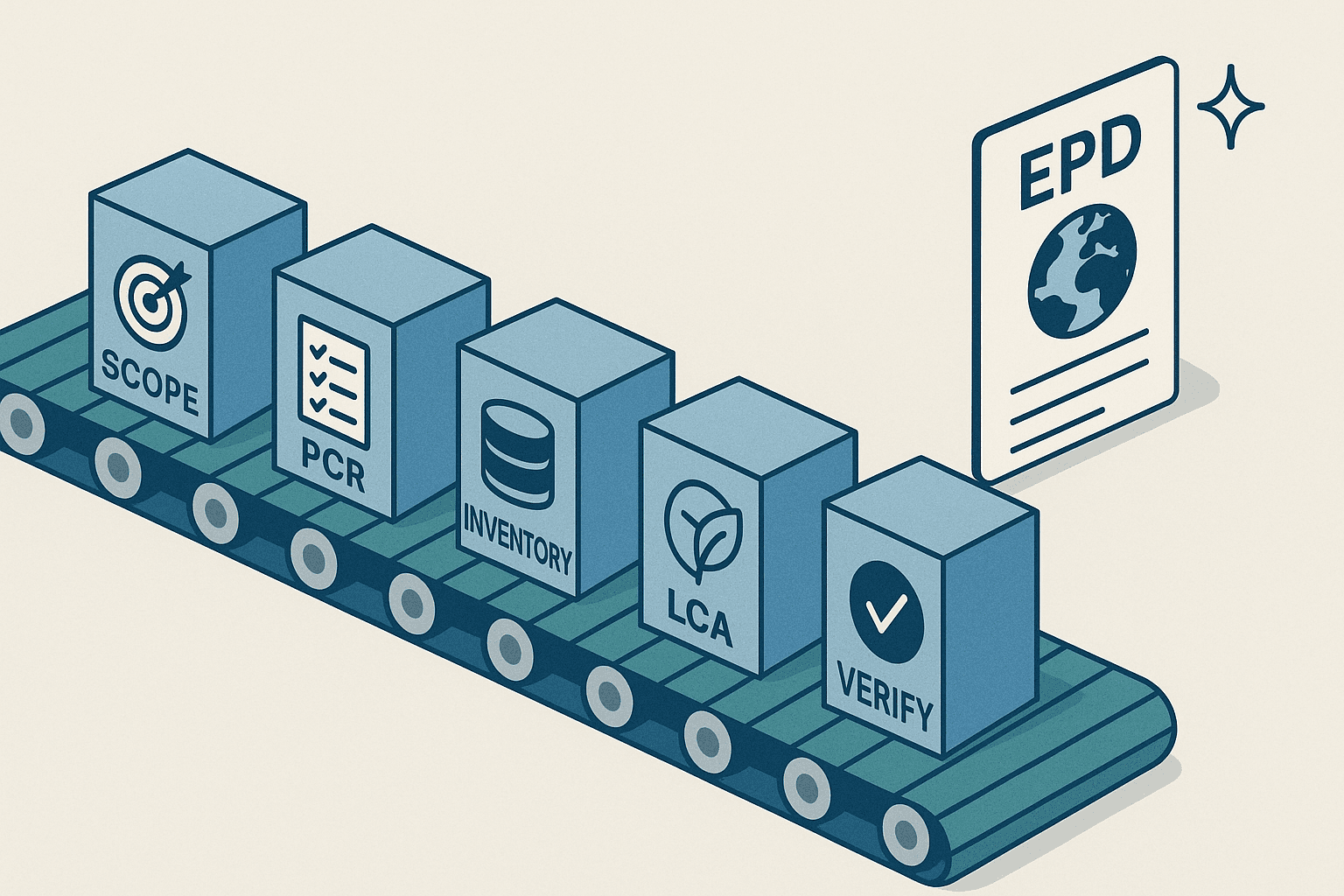
Every path ends in independent third‑party verification against the PCR and standard. Most EPDs remain valid for five years from verification and publication, with the validity date printed on the declaration (EPD International, 2024) (EPD International, 2024). IBU states the same five‑year validity and reminds teams that verification alone usually takes several weeks depending on complexity (IBU, 2025) (IBU, 2025). PCRs themselves typically sit on a five‑year review cycle, which is why renewals often coincide with a PCR refresh (UL Solutions, 2024) (UL Solutions, 2024).
Operators now also require an internal annual follow‑up to confirm nothing material has changed during the validity window, and to trigger updates if it has (EPD International, 2025).
Fees, names, and who is on the cover
Registration and verifier fees are assessed per EPD dataset at the chosen program operator. Some operators require separate registrations if you want distinct PDFs for each brand, even when the dataset is the same. The cover page must make the ownership and scope unambiguous, and plant information is usually visible in the document or XML. Process‑certification routes can streamline ongoing publication, but they still run on five‑year certificates with annual audits under the latest guidance (EPD International, 2025).
Common pitfalls that break white‑label plans
- Quiet recipe drift or supplier swaps that make the branded product no longer equivalent
- Declared units that do not match how the private‑label brand is sold
- One PDF trying to serve two distinguishable products, which breaks grouping rules
- Missing alias SKUs in the XML, so procurement cannot map the EPD to the bid item
- Waiting until renewal month and hitting a PCR sunset, then scrambling for a rework
Set it up once, scale it across brands
Standardize one master background report, then generate clean, brand‑specific PDFs that reference the same dataset. Maintain a living SKU alias table, and keep BOM governance tight so engineering and sourcing changes flow to LCA owners instantly. We prefer a short internal “equivalence audit” checklist before any new label goes live; it catches drift early and saves real time later. Do not skip it, even if the release feels small.
A quick sanity check before you green‑light reuse
- Is the product indistinguishable in composition and performance under the declared unit?
- Do the plants, reference year, and A3 process steps match the original dataset?
- Will the cover page, XML, and SKU list make sense to a procurement reviewer on a deadline?
If any answer is no, publish a seperate EPD for that brand or variant and sleep better at night.