Start with ruthless triage
Not every product deserves a front row seat on day one. Rank SKUs by revenue at risk, bid frequency from sales notes, and policy hotspots where EPDs influence specifications.
Group siblings that share a bill of materials or process. One good model can carry a family if the geometry and inputs match closely and you document the rules. Think of it like compressing a playlist so the chorus does the work.
Phase in waves that fit real labor
Wave 1 is your speed lane. Pick mature, high volume SKUs produced at a stable line, under a well used PCR. Publish for one facility first, then clone thoughtfully to others once the data room is clean.
Wave 2 expands families, adds more plants, and tightens transport or packaging detail. Wave 3 can chase niche SKUs that appear in specs less often but matter strategically.
Right size scope without losing trust
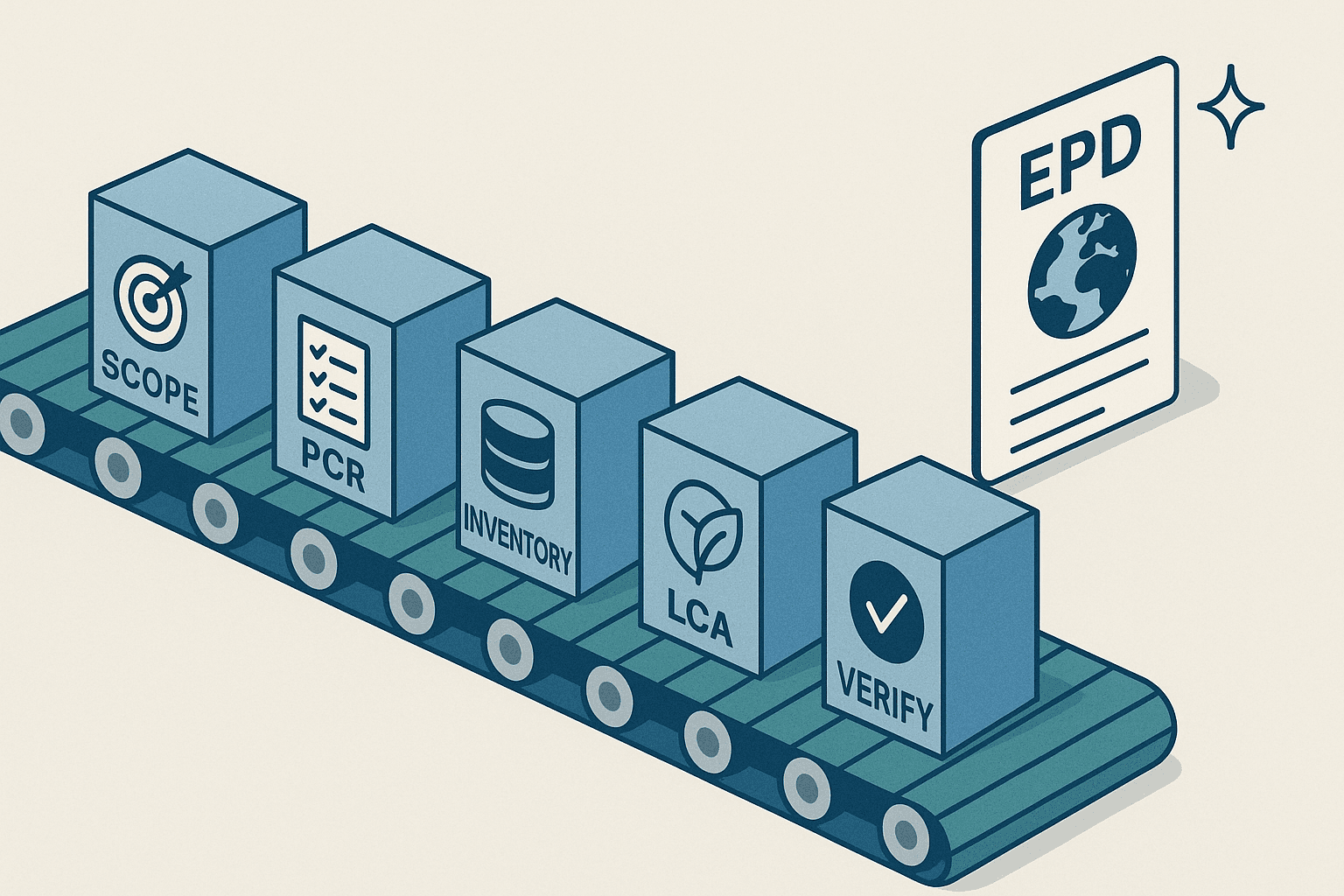
Set a clear goal and scope before anyone touches a spreadsheet. Many first EPDs go cradle to gate with A1 to A3, then extend to A4 or A5 when buyers ask for logistics or site impacts.
Lock a reference year that matches audited utilities and mass balances. EPDs are generally valid for five years, so aligning the cycle with your budgeting calendar prevents last minute scrambles (EPD International, 2024) (EPD International, 2024).
Shortcuts that auditors accept
Use an industry wide EPD as a bridge if it exists for your category. It will not replace a product specific EPD, but it can keep a bid from stalling while your model is verified.
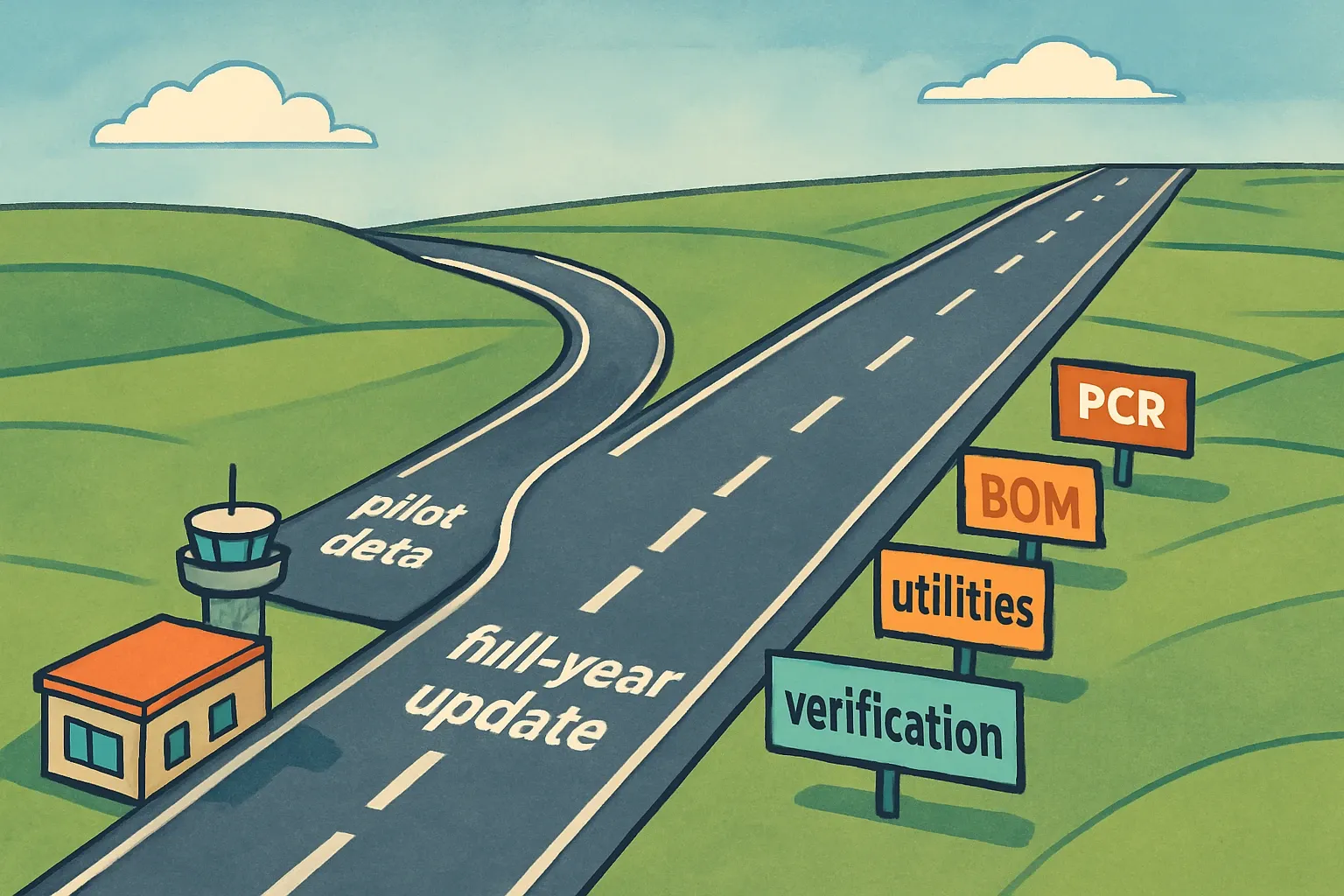
Bundle near identical SKUs under one declaration when the PCR allows it and differences are cosmetic or format related. Reuse background datasets consistently across the portfolio and track versions. For brand new lines, a prospective EPD can start with early production data, then be updated once a full year is available if the program operator permits.
What to outsource vs what to keep
Outsource the repetitive and the specialist. Think data collection sprints across plants, LCI modeling, uncertainty checks, program operator coordination, and document production.
Keep the calls that define risk and reputation. Final goal and scope choices, BOM truth, process change approvals, and the executive sign off should stay in house. This save hours while protecting decisions that shape claims.
- Outsource: cross plant data pulls, LCA modeling, sensitivity runs, verifier Q&A, publishing logistics.
- Keep: product boundaries, plant access, regulatory positions, claim language, release approval.
The 25 minute cadence
Hold a weekly standup that never exceeds 25 minutes. One page checklist, green or red only, and clear owners. It definately beats a multi hour status call.
Nominate a single internal sponsor who can unblock plant contacts and answer accounting questions in one day. Centralize files in a read only data room so verifiers see one source of truth, not five.
Scope choices that buy time
Pick one program operator and one PCR family for the first wave to minimize learning curves. If your footprint is multi plant, publish for the anchor site first, then add facilities by variance.
Model a representative transport scenario that matches your shipping mix. Document the assumptions so sales can localize impacts for a bid without new modeling.
Budget guardrails and ROI sanity
LEED v5 drafts continue to reward product specific EPDs, which means buyers avoid default penalties in embodied carbon accounting when your declaration is in hand. That makes your product easier to keep in spec rather than swapped late in procurement.
Reliable cost averages are hard to pin down because scopes, datasets, and verification routes differ. A simple test still helps. If one mid sized project depends on an EPD to stay in the running, the revenue upside typically outweighs the credentialing effort.
Toolbox: minimum inputs to unlock Wave 1
- One clean reference year for utilities, production, and scrap per plant.
- Current bills of materials with supplier locations and transport modes.
- Packaging specs and typical palletization.
- Shipping mix by region so A4 can be added when needed.
- A short list of competitor EPDs to confirm the PCR path.
Publish, then tune
Get the first declarations live, answer verifier questions once, and reuse the playbook. Add facilities and formats in batches. Tighten data quality where it moves the number, not where it only adds decimals.
Momentum beats perfection. Specs move on calendar time, not lab time.