Start with the commercial outcome
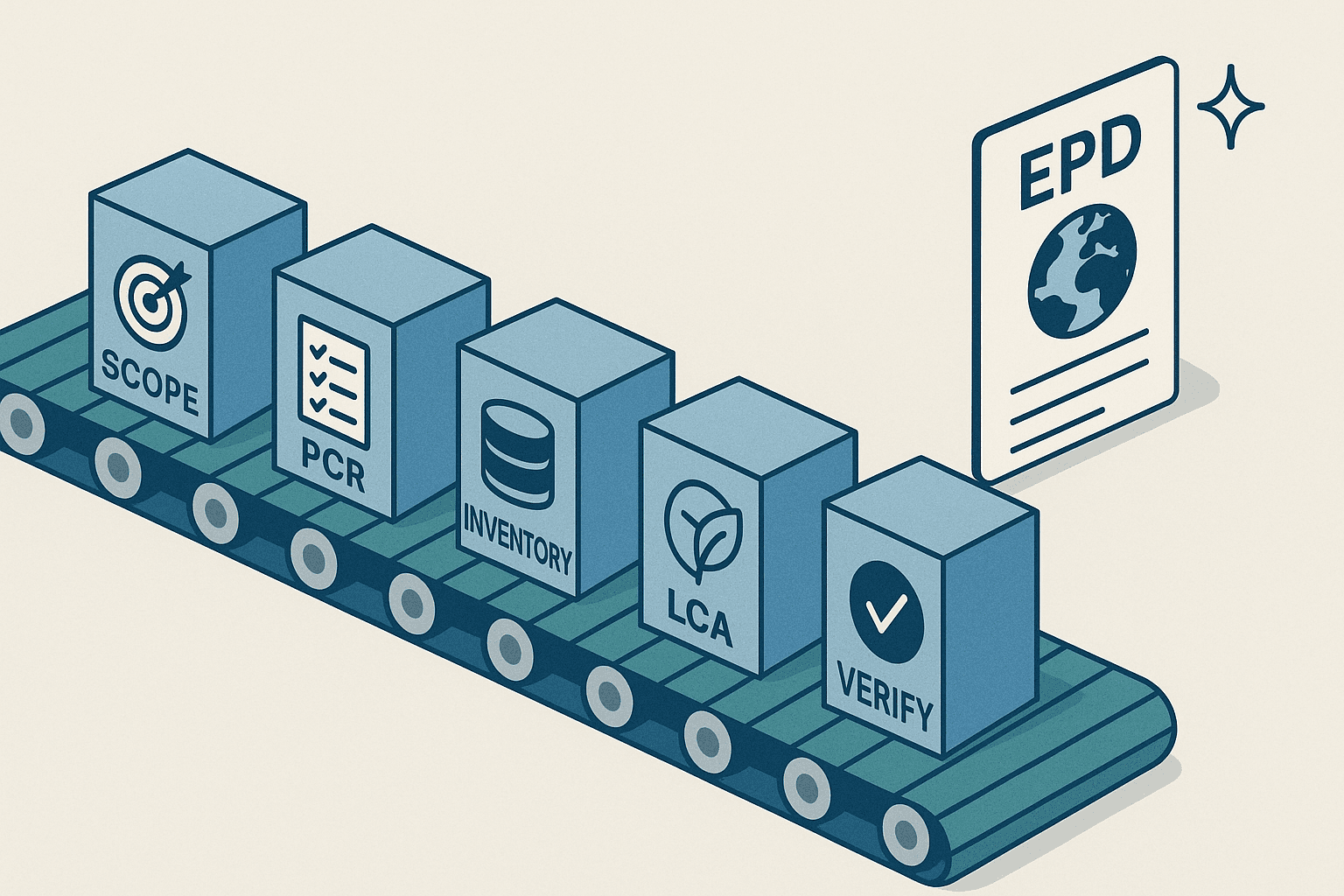
An EPD is a sales permission slip in many project teams. With one in hand, pricing is not the only story and replacement risk drops when carbon accounting tightens. Aim for a partner who talks about win‑rates, not just “compliance.”
Decide your publishing route early
Ask where the EPD will be published and why that operator suits your products. In the US, manufacturers commonly choose Smart EPD. In Europe, IBU is frequent. A good provider is operator‑agnostic and adapts to your market mix without creating parallel workstreams.
Check standards fluency and verification
The non‑negotiables are ISO 14025 and EN 15804. Third‑party verification is mandatory for Type III declarations. Most programs set EPD validity at 5 years, so you want a provider who engineers renewals into the plan from day one (IBU, 2024) (EPD International, 2024).
Data collection without the chaos
Great LCAs are built on clean plant data, not heroics. Probe how the provider gets utility, yield, scrap, and transport data out of your systems. Look for white‑glove collection, named project managers, and templates that match your ERP. The right process protects the time of your most valuable people on the line and in R&D.
PCR navigation that mirrors your market
A PCR is the rulebook of Monopoly. Ignore it and the game falls apart. Expect your provider to map competitor EPDs, propose a fitting PCR, and flag its revision horizon. Many programs state PCRs typically run 3 to 5 years before revision, which affects your renewal math (EPD International, 2024).
Want to navigate EPD creation smoothly?
Follow us on LinkedIn for insights that help you unlock market opportunities and ensure compliance that leads to winning projects.
Timelines that collapse idle time
Speed comes from orchestration, not shortcuts. Ask for a week‑by‑week plan that shows when data is due, when modeling happens, and how verifier comments get closed. The proof you want is fewer back‑and‑forth cycles and clear critical paths. We prefer schedules that reveal slack, so bottlenecks are visible early.
Reference year and representativeness
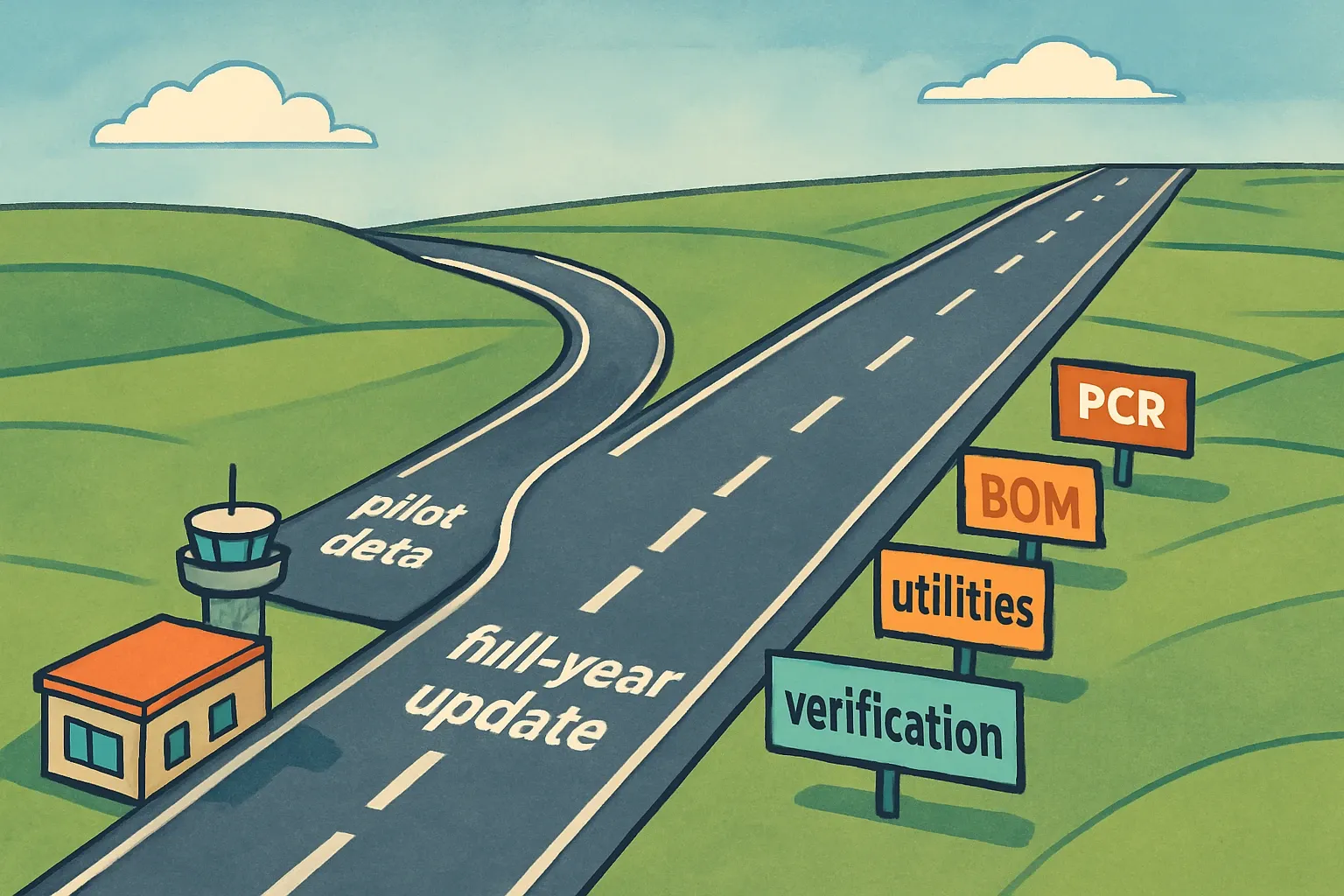
Your LCA should use a defined reference year of operational data, typically 12 consecutive months, so the model reflects real production rather than a stitched collage (EPD International, 2024). For a brand‑new line, confirm whether a prospective EPD is viable and how it will be updated after a full year of data.
Quality assurance you can audit
Request a sample of their internal QA checklist and a redacted verifier comment log. You are looking for disciplined version control, unit checks, and a repeatable approach to sensitivity analysis. If they cannot show this, expect surprises late in review.
Pricing that fits scope, not a menu
EPD work varies by plant, product complexity, and data readiness. Fixed online price lists often hide change orders. Ask for scope‑based pricing with transparent assumptions and a clear process for how changes are handled. Reliable cost averages across manufacturers are scarce, and that’s normal to say out loud.
Digital deliverables that travel well
Insist on machine‑readable files alongside the PDF. Your spec team, customers, and databases increasingly rely on digital EPDs for fast intake. A capable provider will prepare publication‑ready files for the operator and a clean dataset you can reuse without rework.
The shortlist scorecard
Use this quick test when comparing providers:
- Can they explain, in plain English, your product system boundaries and why they chose them
- What is their plan to reduce your internal data burden, with names and tools
- Which PCR and operator do they recommend and what is the expiry timeline
- How do they manage verifier comments and show closure evidence
- What is the renewal plan over the 5‑year validity window, budget‑wise and data‑wise (IBU, 2024)
Make the call with confidence
Choose the team that minimizes your internal lift, meets the letter of the standards, and treats verification like a collaboration. If a provider can’t show a crisp data plan and a publication pathway that fits your markets, keep looking. The right choice pays back in fewer lost specs and a calmer launch calendar, definately.