Why LCA is a small team’s growth lever
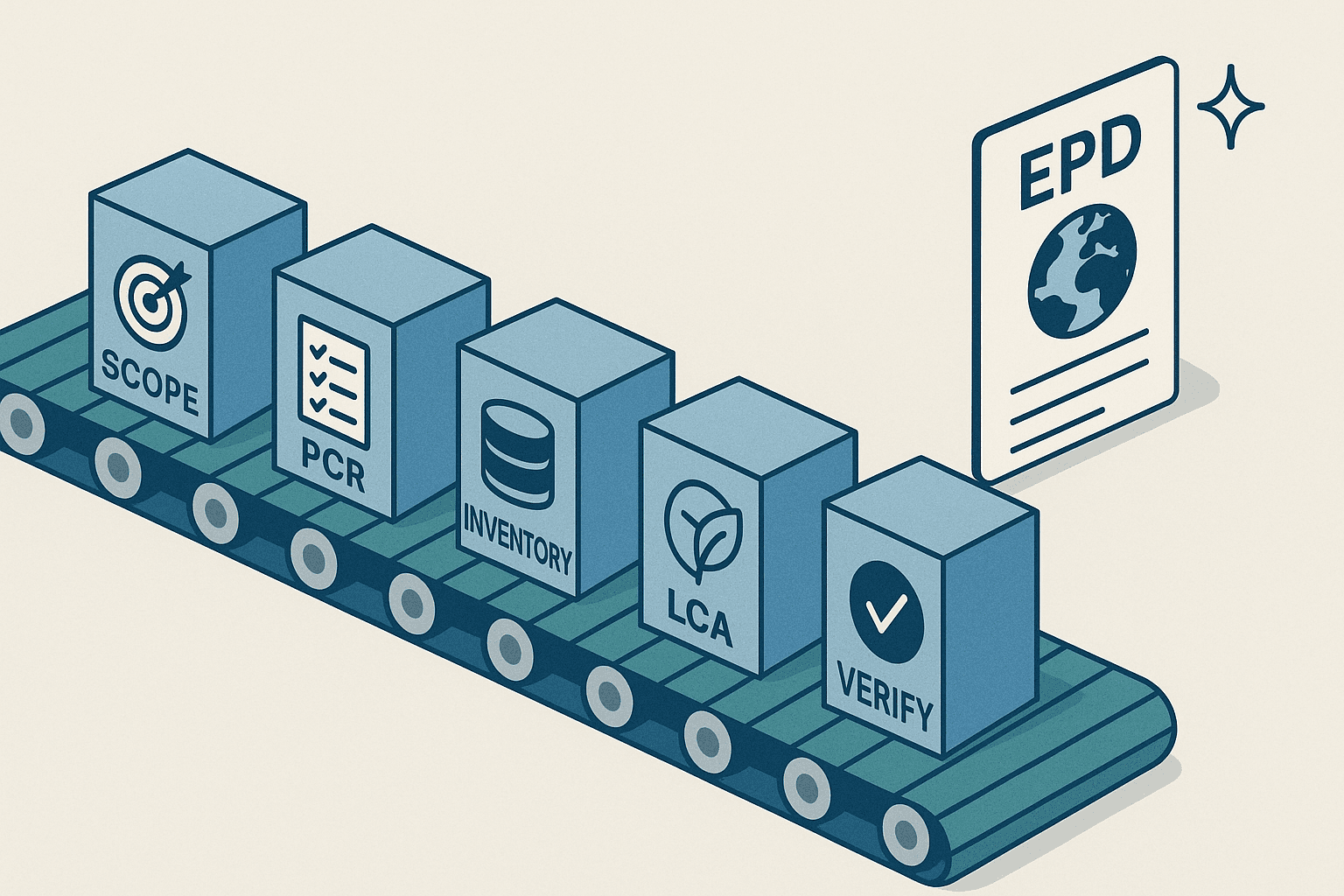
An LCA is not paperwork. It is a map that shows how a product is made, moved, used, and finished. That map becomes an Environmental Product Declaration that buyers trust, since it is third party verified and time bound to five years for most program operators (EPD International GPI, 2024) (EPD International GPI, 2024).
EPDs remove hidden penalties in many specs where a missing declaration forces pessimistic carbon assumptions. With one current EPD, a new entrant competes on performance and availability, not only price.
Choose scope that matches your first spec
Start where your customers evaluate you. For many materials, a cradle to gate study that covers A1 to A3 is the quickest path to a publishable EPD. The modules are defined in EN 15804 and give you apples to apples with peers using the same rulebook (EN 15804+A2, 2019).
If the market expects installation or end of life, plan a staged build. Publish A1 to A3 first. Add A4 to A5 or C modules as the next release.
Data you already have beats data you wish for
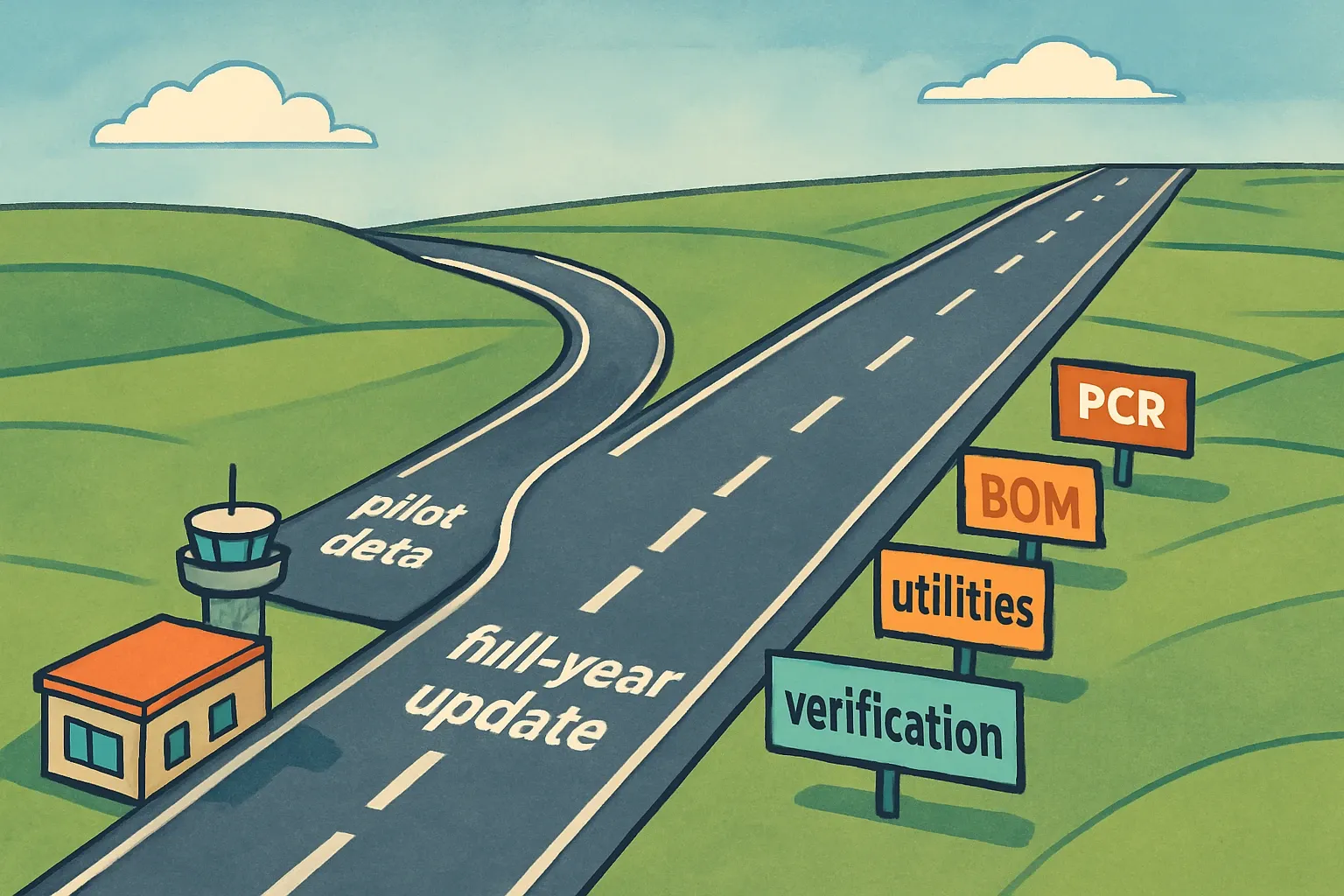
You do not need a perfect digital twin. You need one reference year of production. For brand new lines, a prospective EPD can begin with a few months of data, then update after a full year.
Pull what is already on file and in meters, not estimates.
- Utility invoices and on site meter logs for the reference year.
- Purchase records for key inputs, by supplier and mass.
- Batch, scrap, and yield reports that explain variance.
A good partner handles collection and normalization across plants, then keeps the chain of custody clean so nothing gets stuck in review. Data wrangling is where small teams lose weeks. Do not let it.
Pick the rulebook and the stage
Every EPD follows a Product Category Rule. Think of a PCR as the Monopoly rulebook for your product family. The right PCR avoids rework, allows comparison, and points to the best program operator to publish with. Smart EPD in the United States and IBU in Europe are common choices, yet publication should fit the audience you sell to.
If more than one PCR applies, choose the one your closest competitors use, verify the expiry date, and confirm the reviewer availability. EPDs remain valid even if the PCR later updates, but renewal must use the current PCR version (EPD International GPI, 2024).
Turn hotspots into simple fixes
LCA is a spotlight. Use it to find two moves that cut impact without derailing operations.
Swap a high intensity input for a lower one if performance allows. Optimize transport by consolidating legs or choosing a closer converter. Improve electricity intensity by scheduling energy heavy steps in off peak periods if your grid is dirtier at certain hours, or by contracting a cleaner supply. EN 15804 reporting includes a broad indicator set, so improvements show up across categories, not only climate change (EN 15804+A2, 2019).
Small edits compound across thousands of units. That is real enviromental ROI.
Publish smart, then rinse and scale
Treat your first EPD like a product launch. Prepare a one page summary with the declared unit, plant coverage, verification info, and top three takeaways. Train sales to present the EPD as proof, not poetry. Keep renewal on a five year calendar with a light annual data refresh so nothing sneaks up on the team (EPD International GPI, 2024).
As new products spin up, replicate the play. Prospective EPDs help capture early demand, then convert to full year datasets. A program operator agnostic partner can publish where it matters most without extra admin hops.
What “fast” really means for a startup
Fast is not cutting corners. Fast is ruthless clarity on scope, crisp data requests, and reviewers who see complete files the first time. We aim for that kind of momentum, where engineers stay focused on the line while the LCA engine hums in the background.
When the first EPD is live, pipeline the next two. Successive LCAs get easier because supplier data improves and the model is already built.
A lighter path that still moves
Pick one product. Lock one reference year. Choose the PCR your competitors use. Publish with the operator your market trusts. Then iterate. The business outcome is fewer blocked bids and more specs that hold, which is exactly what a small manufacturer needs when every week and every headcount slot matters.