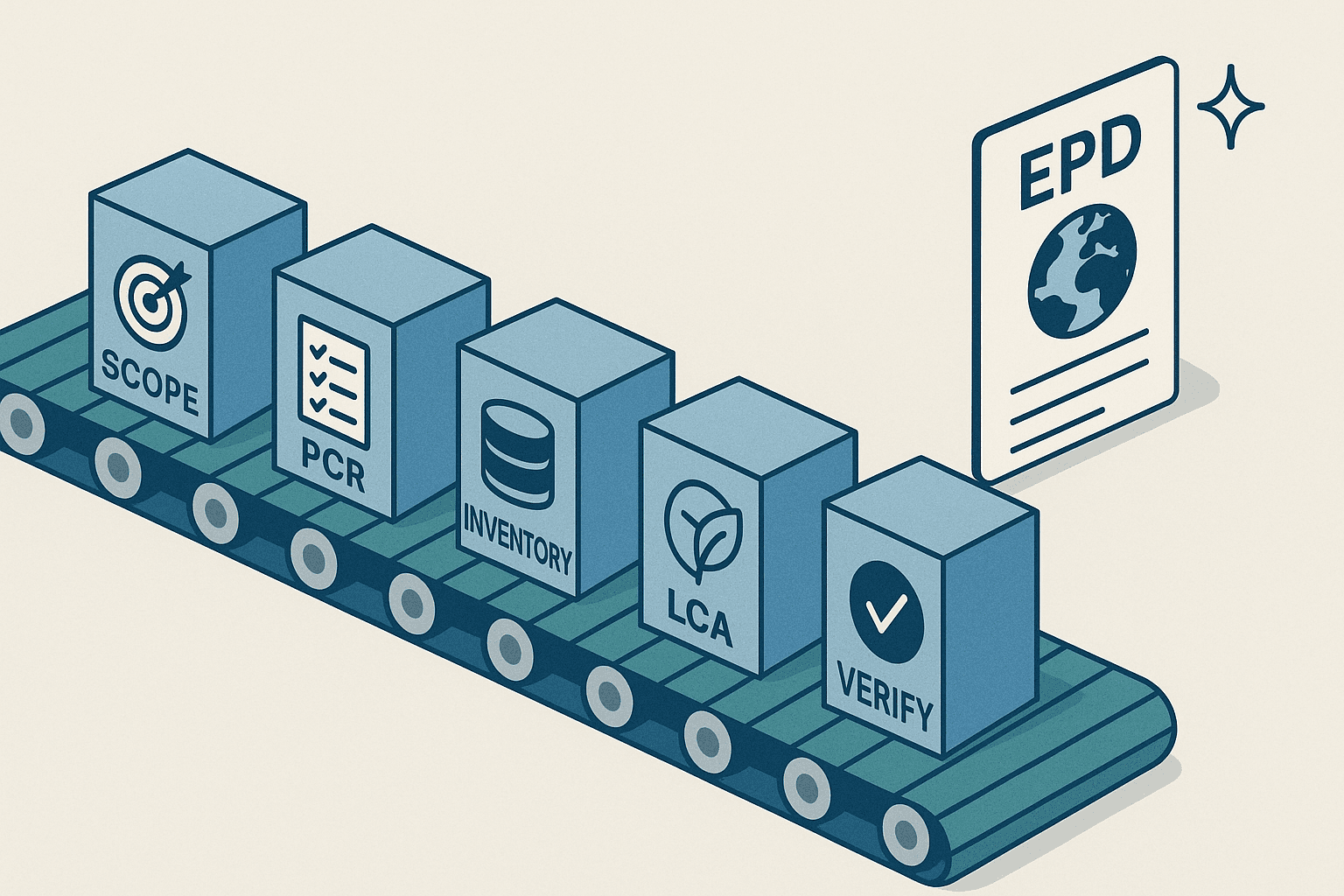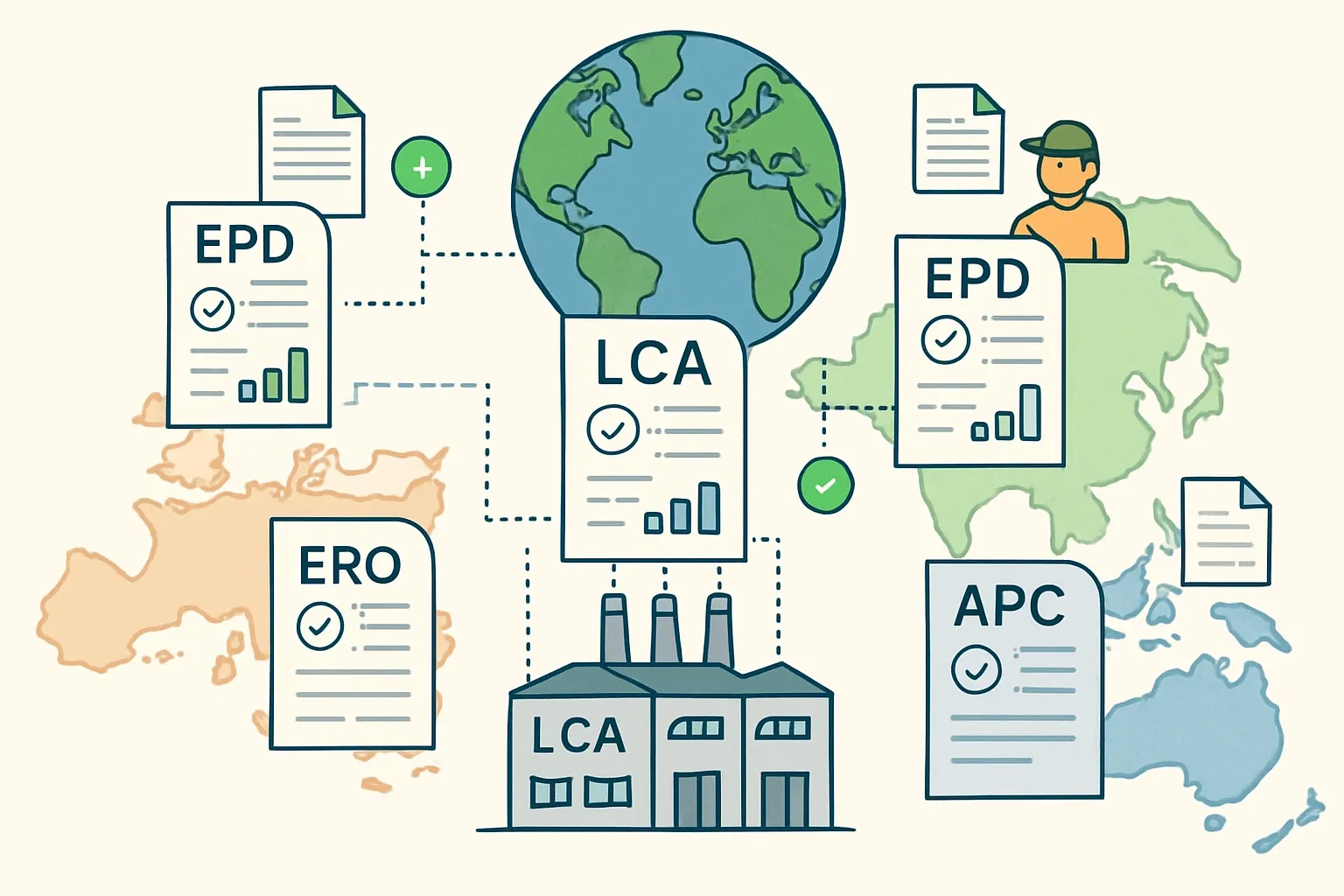
Start with one backbone, then localize
A scalable program begins with a common inventory: site utilities by reference year, bills of materials from ERP, production data from MES, and supplier-specific footprints where available. Build core cradle‑to‑gate LCAs once, then branch them into regional variants using the same model, so updates flow to all children without rework.
Keep data owners close. The most valuable people on your team should spend minutes approving facts, not weeks hunting them. We handle the heavy lifting so they can focus on product and plant priorities.
The rulebooks that actually matter
Europe runs on EN 15804 (A2), published through national program operators. North America leans on ISO 21930 under the umbrella of ISO 14025, with operators like UL, ASTM, and Smart EPD. Many programs set an EPD validity period of five years, which is crucial for renewal planning (IBU General Programme Instructions, 2024) (EPD Australasia Programme Rules, 2024).
Treat EN 15804 and ISO 21930 like two versions of the same playbook. If you structure your model carefully, one LCA can output both, provided PCR choices and declared units align.
Sort markets by requirement level
Tier 1 markets have specific local formats or legal anchors. France’s building assessments commonly rely on nationally aligned EPD data in practice, so local publication and language are expected. Japan and South Korea increasingly expect locally verified documents in public tenders, although details vary by product type.
Tier 2 markets accept dual‑aligned documents. Much of the EU and US private sector will accept an EN 15804 A2 EPD or an ISO 21930 EPD if verification is third‑party and the declared unit matches the buyer’s expectation.
Tier 3 markets are EPD‑curious. A credible product‑specific EPD often unlocks early specification advantages even before strict rules exist. LEED v5 drafts continue to emphasize embodied carbon outcomes that depend on product‑specific EPDs to score credibly (USGBC LEED v5 Public Comment Drafts, 2024) (USGBC, 2024).
When a separate regional EPD is worth it
Issue a region‑specific EPD when the law or a public procurement scheme calls for a local operator, when the declared unit differs materially, when background datasets required by a PCR do not match, or when language requirements and market norms make a translated addendum insufficient. If two or more of those flags pop, a dedicated regional document usually pays back fast in bids and specs.
Make dual‑aligned EPDs pull double duty
Start the LCA with alignment in mind. Pick a PCR in each target region that uses the same declared unit and similar allocation rules. Document country‑specific electricity and end‑of‑life assumptions in annexes so verifiers can sign off for both regions. Publish first where lead times are shortest, then republish with the second operator using the same verified model.
Data plumbing that scales
Collect once, reuse everywhere. Set a clear reference year for utilities, materials, yields, and waste, then lock it. For new products, a prospective EPD based on a shorter initial data window can get sales moving, with a planned update once a full year is available. Supplier EPDs and verified background datasets raise confidence and reduce rework when expanding to new regions.
Turn rules into a portfolio roadmap
Translate requirements into a traffic‑light view by product and region. Green means EPD‑ready today, amber means one or two gaps remain, red means a new LCA branch or local operator is required. Attach estimated commercial upside to each move so sales, sustainability, and product leaders can prioritize together.
A practical roadmap also names the program operator per launch, the verifier, the target PCR, and the translation plan. Keep it live in one place so teams do not chase outdated PDFs.
Renewals and PCR drift without drama
Most programs use a five‑year validity period, so schedule refresh work well before year four. If a PCR updates during that window, plan to adopt it at renewal and socialize any scope shifts to sales early (IBU General Programme Instructions, 2024). Where reliable market averages are missing, say so and document the assumption trail rather than guessing.
The simple test for every region
Ask two questions. Can one verified model satisfy the local rulebook with clear documentation and the right operator. If the answer is yes, publish once and mirror. If not, split the branch and move quickly. That discipline keeps global coverage tight and avoids triple work, which is definately the goal.