The bespoke model stalls progress
Traditional EPD work is episodic. A consultant gathers data, models a product, gets it verified, sends a PDF, then exits. There is no living system to track renewals, product changes, or new PCR versions, so teams scramble every time the spec calls.
Consultants bill by the hour, which incentivizes one‑off scope. Internal experts are pulled into ad hoc data hunts instead of fixing yields or growing the line. The portfolio drifts out of date just when a project bid lands.
The platform shift: managed, measurable, always on
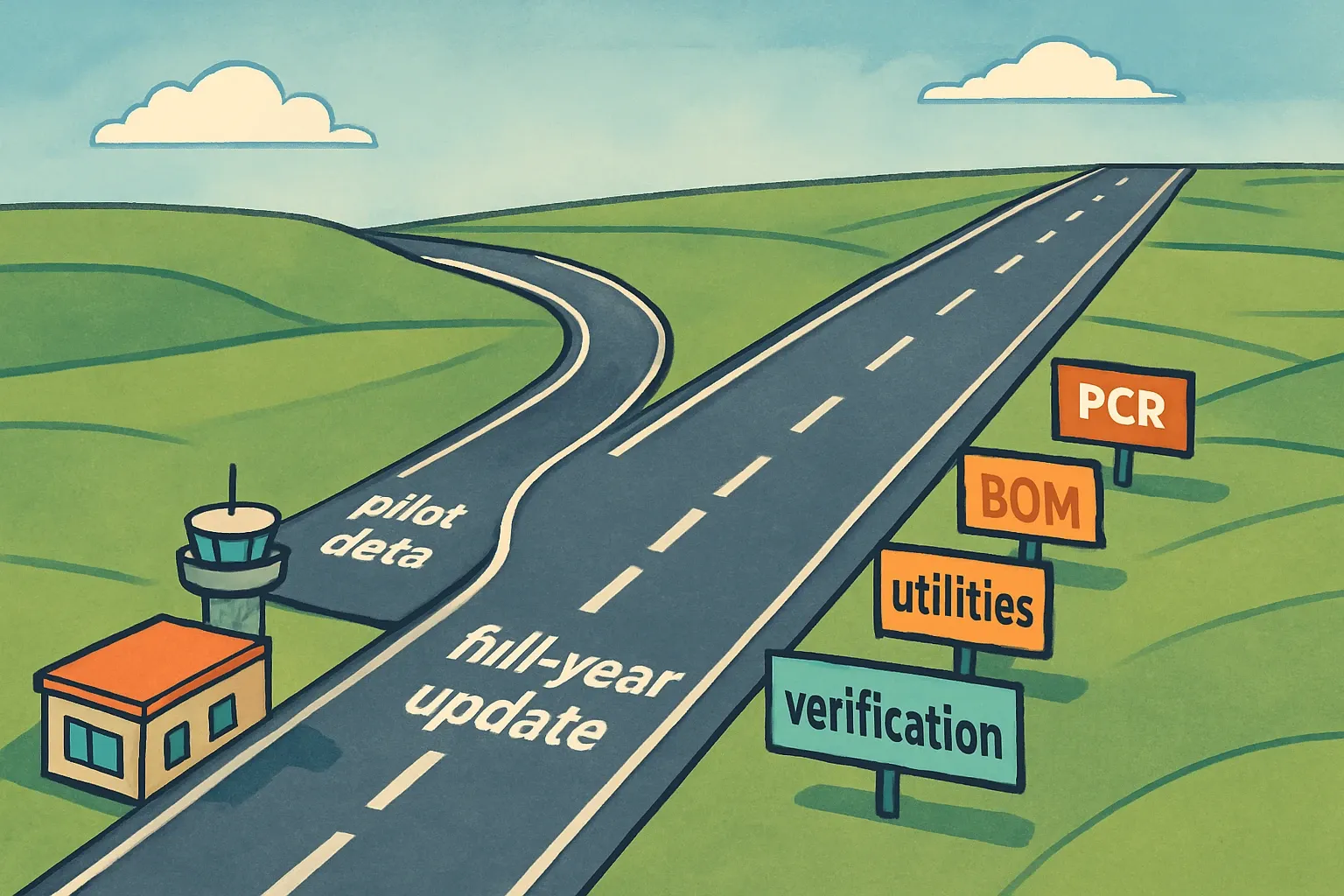
A modern platform replaces projects with a lifecycle. Think flight deck autopilot: takeoff is still critical, yet once cruising, the system monitors instruments continuously. Data feeds in, models update, verification runs, and publishing stays current. We see this approach shrink risk and make results repeatable across hundreds of SKUs.
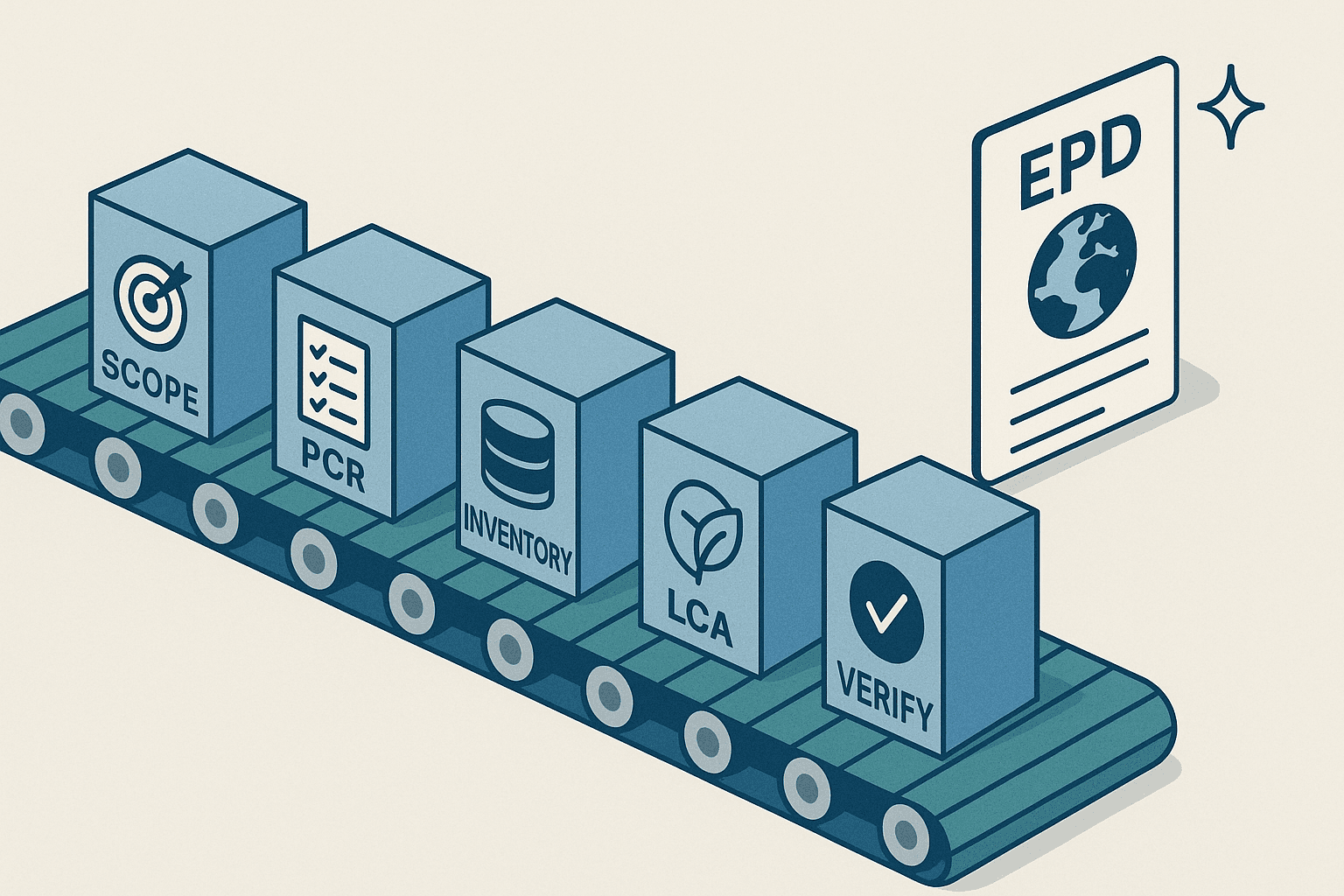
Step 1: Flexible data intake that meets reality
Real plants run on ERPs, MES logs, utility portals, and vendor emails. A good platform ingests all of it: spreadsheets, CSV exports, PDFs for energy bills, even machine data. No heroic reformatting required. When complexity spikes, a white‑glove data team does the chasing and cleansing so engineers and product managers do not have to.
Master data is mapped once, with clear ownership. Bill of materials, formulations, packaging, scrap, transport routes, and energy mixes become reusable building blocks. That foundation unlocks credible speed later.
Step 2: AI-assisted LCA modeling you can audit
Automation should not be a black box. The system uses templates aligned to the chosen PCR, then applies rules to fill data gaps, flag anomalies, and calculate impacts. Analysts can inspect every assumption. When a PCR is not obvious, the platform compares what competitors use and weighs program operator preferences and expiry timing before recommending a fit.
Scenario tools let teams explore changes safely. Swap a resin, tweak transport, or add recycled content, then see carbon impacts before the plant makes a move. The best part is traceability: every input is versioned so results are defensible.
Step 3: Independent verification and publication
Before anything goes live, an accredited verifier reviews the LCA against the PCR and program rules. Independent third‑party verification is a core requirement under leading EPD programs, reflected in their latest guidance (EPD International GPI, 2024) (EPD International, 2024). Many construction programs state a typical EPD validity of five years, which sets the cadence for renewals (IBU, 2024) (IBU, 2024).
Publication happens with the program operator the manufacturer chooses. Common names include Smart EPD in the United States and IBU in Europe. Good platforms package both the human‑readable PDF and a digital file format so product data can feed procurement portals.
Step 4: Continuous portfolio management and automatic renewals
This is where the leap from projects to autopilot becomes real. The platform tracks every declaration, its verifier, its program operator, and the PCR lineage. Timers start the moment an EPD is published. Tasks for data refresh, internal QA, and verifier engagement are scheduled automatically so no one relies on calendar reminders.
PCR updates are watched in the background. When a rule changes, the platform compares scope and modules, then highlights what must be rerun at renewal. Portfolios stay coherent rather than drifting product by product.
Autopilot in practice: four concrete examples
- Product change mid‑cycle: a supplier updates a binder. The system detects a bill‑of‑materials delta, recalculates the model, shows the delta to prior results, and routes a revision for verifier review. Sales receives an updated PDF and digital file without chasing anyone.
- New product launch: a prospective EPD is modeled on the first months of production data, labeled accordingly, then the platform prompts an automatic re‑baseline once a full reference year accrues. No manual checklist needed.
- Catalogs that are always spec‑ready: once verified, EPDs sync to the website, distributor portals, and content libraries. SKUs retire cleanly and successors inherit mapped metadata so architects and GCs do not encounter broken links.
- PCR rollover: when a PCR revision lands, the platform maps changes to indicators and modules, flags any added data needs, and stages a renewal plan. Existing EPDs remain valid until their end date, then renew on the updated rulebook. That avoids unnecessary rework while staying compliant.
Verification and security, baked in by design
Compliance and trust live or die on controls. Look for role‑based access, least‑privilege permissions, detailed audit logs, and multi‑factor authentication. Data in transit and at rest should be encrypted. Verifier collaboration should occur inside the platform with redline history preserved.
Vendors that handle sensitive formulations should support private fields, supplier NDA workflows, and environment segmentation for staging vs production. Independent attestations such as SOC 2 Type II or ISO 27001 are a useful signal of maturity, though buyers should still review data flows and deletion policies. Real security is a practice, not a badge.
Why this matters for revenue and runway
On many bids, a product without a product‑specific, third‑party verified EPD is penalized by conservative default factors, so it quietly loses in carbon‑accounted comparisons even if the tech specs shine. An always‑on platform keeps declarations current, which keeps products in the serious stack of options. Reliable cycle timing also prevents last‑minute scrambles when a high‑value project requests documentation.
Renewals follow a known drumbeat. Because most programs set EPD validity at five years, the system designs a runway that captures fresh utility and production data, queues verifier time, and publishes updates before expiries bite (EPD International, 2024) (EPD International, 2024). Reliable averages for cost savings are hard to quote because scopes vary, but the avoided rework and fewer bid delays are very real.
What to look for when choosing a platform
Pick a provider that pairs software with a white‑glove data team. Ask how they ingest utility bills, ERP exports, and plant logs without forcing a new data warehouse. Confirm AI outputs are explainable and auditable. Verify that third‑party verification runs inside a controlled workspace. Ensure renewals, PCR watchlists, and publishing automations are native features, not custom projects. If a team can show you a portfolio status page that a salesperson understands at a glance, you are close.
The quiet goal: never think about EPDs again
Autopilot is not about skipping accountability. It is about setting up a system where accurate data flows, verification is predictable, and publication happens on time. When that is true, product managers and plant leaders get hours back and sales can promise documentation with confidence. That is the point. So yes, the aim is simple and definately ambitious: keep catalogs spec‑ready, renew on time, and let teams focus on the work that grows the business.