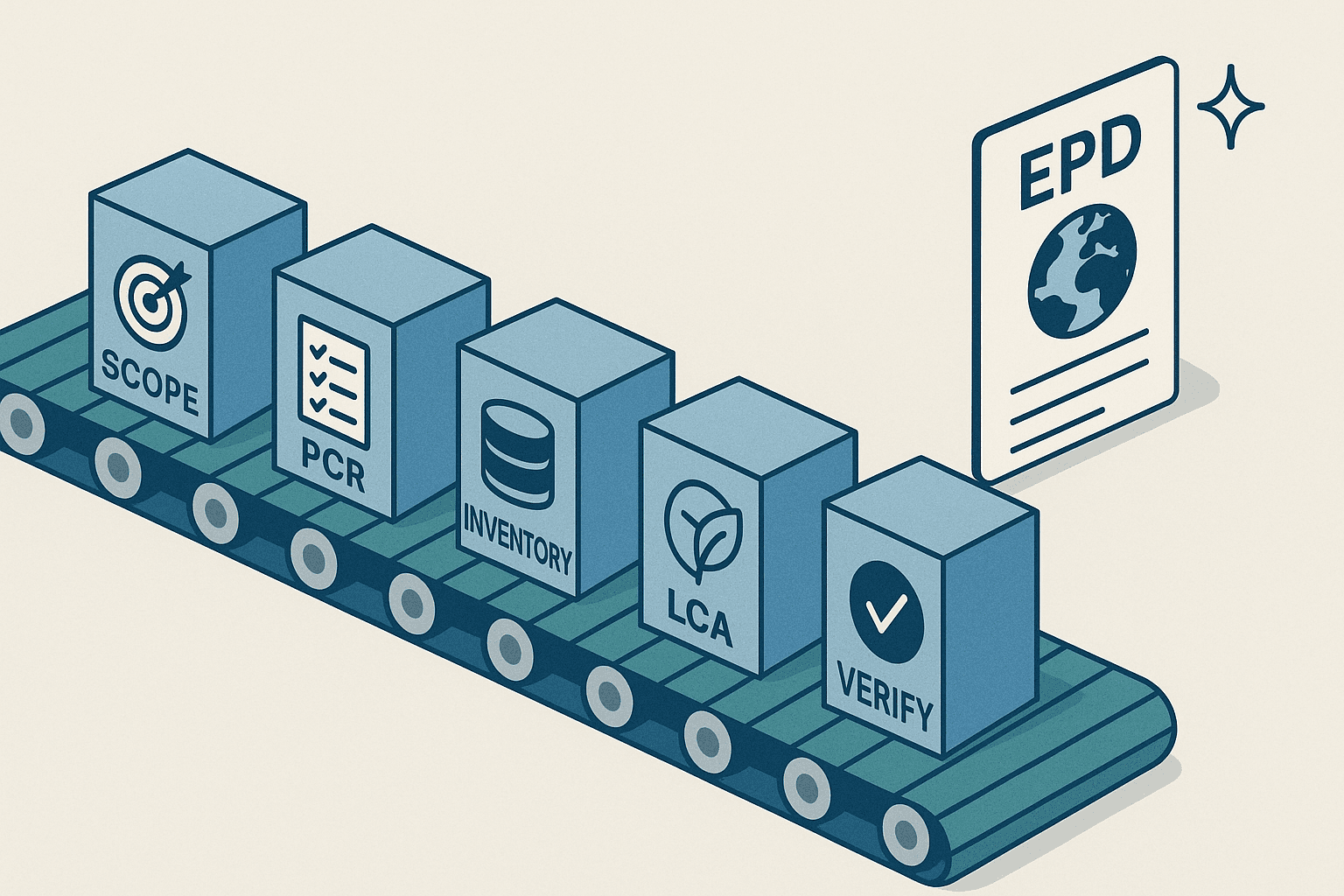
Carbon and health belong in the same folder
Architects care about embodied carbon and material health because both shape performance and liability. People spend about 90 percent of their time indoors, so emissions and ingredients are not side notes, they are central to occupancy risk and comfort (EPA, 2024). Treat the two like a double A side single, same release date, same artwork, zero confusion.
What design teams ask for in 2026
Most submittals now expect a product‑specific, third‑party verified EPD that states the declared unit, system boundary, and global warming potential, alongside an HPD aligned with the latest HPD Open Standard. Many also ask for VOC content limits that comply with regional rules and VOC emissions tested to CDPH Standard Method. If Red List is on the table, expect Declare or a written Red List response with documented exceptions.
The core documentation pack
Build one folder per product and keep it repeatable. A tight pack usually includes:
- Current EPD PDF with program operator logo, impact table, declared unit, and publication plus validity dates.
- HPD PDF with version and disclosure threshold noted, ingredient screening narrative, and any third‑party verification statement.
- VOC content letter that maps to category limits relevant to the project specification and jurisdiction. For architectural coatings, many jurisdictions reference 50 g/L limits for flats, so label your value and test date clearly (SCAQMD Rule 1113, 2024).
- VOC emissions test summary to CDPH, including testing lab, date, and classroom or office scenario.
- Red List status, via Declare label or a concise matrix that lists chemicals of concern and any temporary exceptions.
- A one page product environmental summary that points to the above files, includes FAQs, and names a technical contact.
Gather once, publish many
The bottleneck is not modeling, it is data wrangling. Start with a bill of materials and process map that connect ingredients to suppliers and site utilities. Use durable IDs for materials and production lines so EPD and HPD datasets reference the same source records. That alignment lets teams refresh both declarations together instead of doing two separate scavenger hunts next quarter.
Pick the right rulebooks without the rabbit hole
A PCR is the rulebook of Monopoly, ignore it and the game falls apart. Choose the Product Category Rule that your competitive set uses or the operator recommends for your product type. For HPDs, follow the current HPD Open Standard and its Priority Lists. When in doubt, document the rationale once and keep it in the pack so reviewers see the logic immediately.
Version control that prevents last minute rework
Most EPDs carry a five year validity window under ISO 14025. HPDs are frequently updated when formulas or supplier disclosures change. Maintain a live register that tracks publication dates, validity windows, and planned refresh months for every product. Pair it with a two step review, technical sign off for data accuracy and marketing sign off for naming, so nothing slips. One small typo can trigger a resubmital.
File naming that speeds approvals
Name files so they sort and explain themselves. Use a consistent pattern like ProductName_DocumentType_Version_YYYYMMDD.pdf. Mirror those names inside the cover sheet. Avoid spaces in file names if the GC portal has quirks, underscores travel better. Keep total pack size under common portal limits by optimizing PDFs before zipping.
Submission channels and what they prefer
Owners and GCs increasingly upload through project portals or sustainability hubs. Keep a web friendly zip and a folder tree for email. Some operators host canonical copies of EPDs and Declare labels, link to those source pages when allowed to reduce back and forth. If LEED shows up, align the EPD to the applicable credit language and map the HPD to material ingredients criteria from v4.1 while watching the v5 evolution during 2026 public drafts.
Proof points that land with reviewers
Numbers matter when they are trustworthy. Use lab reports and operator links for primary evidence. Highlight health relevance in plain terms, for example VOC content that meets a 50 g/L limit for flats in regions that adopt that value (SCAQMD Rule 1113, 2024), and indoor exposure relevance since people spend about 90 percent of their time inside buildings (EPA, 2024). Do not oversell, verify.
A 30, 60, 90 day playbook
Day 0 to 30, inventory products, nominate the first three SKUs, lock document owners, and pull utility plus ingredient data. Day 31 to 60, model LCAs, draft HPDs, run any needed VOC tests, and build the folder structure. Day 61 to 90, finalize third party reviews with your chosen program operators, publish, and pilot submittals on two active bids. Roll lessons learned into a standard operating procedure.
Common pitfalls and how to avoid them
Do not treat each request as a new adventure. Do not mix factory averages across products without noting the declared unit. Do not let supplier nondisclosure stall the HPD, use the nested disclosure options and document efforts. Do keep a single source of truth for names and SKUs. Do book refresh windows before expiries create chaos in a live tender.
Make it easy to say yes
The goal is a pack that a junior spec reviewer can trust in five minutes and a senior architect can audit in fifteen. Carbon, health, and VOCs sit side by side, with clear versioning and links back to source records. That clarity shortens review loops, protects margin, and keeps your product in pole position when schedules tighten.