The BOM is the map, not a packing list
A PCR is the rulebook of Monopoly. Ignore it and the game falls apart. The BOM is how you place every token on the board. Each line item anchors a flow in the life‑cycle model, which lets impacts be allocated correctly across materials, processes, and sub‑assemblies. When BOMs are partial, modelers must invent lumped categories that verifiers probe instantly. That is how weeks vanish.
What a PCR‑ready BOM actually contains
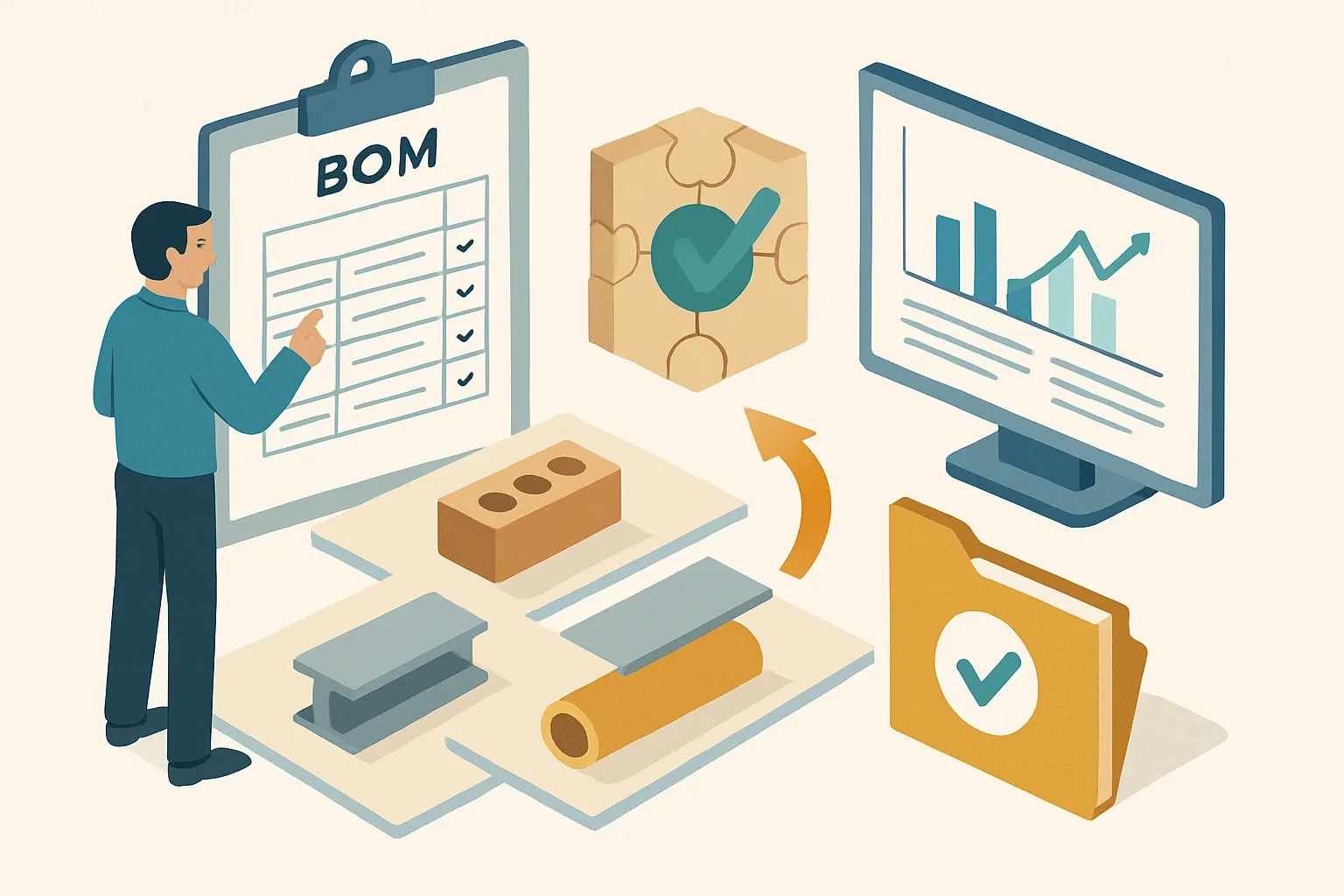
Think like a verifier reading line items cold. Useful BOMs list material names that can be matched to LCI datasets, composition in mass percent that sums to 100 percent, part numbers for traceability, and the declared unit link. For assemblies, include sub‑BOMs or a simple hierarchy. Add coatings, adhesives, and packaging, not just the core material. If a PCR names required additives or ancillary materials, mirror that language so mapping is one step, not five.
Structure beats perfection
You can begin modeling with provisional energy, waste, and transport values so long as the structure is sound. A structured BOM turns placeholders into safe proxies, because each proxy is attached to the right node. Unstructured BOMs force crude roll‑ups that a reviewer rightly flags as non‑representative. We have seen teams chase decimal points for days while the missing field was simply material composition for two adhesives. Annoying.
Why PCRs make the BOM non‑negotiable
Most building product EPDs follow EN 15804. A2 requires reporting across 13 core indicators, which only stays comparable if material mapping is consistent across products (CEN EN 15804+A2, 2019). Without a clear BOM, you risk mixing datasets that break comparability under the same PCR. The rulebook does not bend because a supplier sent a vague datasheet.
Cross‑series exports save whole quarters
If a product family shares a platform, export BOMs for all major series upfront. Small deltas like a different coating mass or fastener alloy do not justify separate fire‑drills later. Modelers can reuse the mapping and only adjust the few fields that change. This is how multi‑SKU portfolios move in parallel rather than one at a time.
The materials everyone forgets
Two categories trip teams up. First, low‑mass, high‑leverage materials like coatings, flame retardants, and curing agents. Second, the stuff that cradles your product, like pallets, films, and corner boards. Many PCRs ask for packaging in A1 to A3. If it touches the product before it leaves your site, assume it belongs somewhere in the model unless the PCR explicitly excludes it.
Supplier quiet periods are predictable
Holidays and shutdowns are not surprises. Build a small questionnaire that suppliers can fill without a meeting. Ask for composition ranges, density, and any recycled content or bio‑based claims with certificates. Store every submission with the part number and the date. When someone goes quiet, you still advance the model.
QA your BOM like a mini‑audit
Run three checks before sending the file. Do mass percents sum to 100 percent at each assembly level. Are material names mappable to an LCI library without guessing. Are there any duplicate rows that hide different materials behind the same part number. Ten minutes here prevents ten verifier comments later.
Renewal and PCR changes love a tidy BOM
EPDs are typically valid for up to 5 years, so every renewal cycle benefits from a BOM that can be refreshed rather than rebuilt (ISO 14025, 2022). When a PCR updates, your clean mapping shortens the rework, because you can see exactly which flows map to rules that changed. Teams that archive BOMs with versions and declared units turn renewals into updates, not do‑overs.
File formats that travel well
Spreadsheets beat PDFs. Use one tab per assembly with consistent column names, or a single flat table with an Assembly column. Include units for every numeric field. If your ERP can export a structured CSV with part number, description, material, mass per declared unit, and supplier ID, you are basically at the starting line of modeling.
A quick playbook to get moving this week
- Pull BOMs for all active series that share a platform, not just the hero SKU.
- Add a Composition Percent column and fill it for every row. If unknown, mark as TBD with a date to chase.
- Tag packaging and consumables. If a PCR might include it, treat it as in‑scope until proven out.
- Attach spec sheets as links next to each line item. Verifiers appreciate direct evidence.
- Export to CSV and lock a version number so the model and the BOM speak the same language.
The takeaway for commercial teams
BOM discipline is not academic. It is how product lines get verified EPDs in time to stay in the spec instead of being swapped for a brand that filed earlier. The cost of doing this right is small compared to the revenue a verified, comparable EPD unlocks in projects that score materials choices. Get the BOM in shape first, and the rest of the process is not just faster, it is calmer and more dependable. That is the real ROI, definately.