How the EPD clock is really set
EPD validity is defined by program operators. The standard pattern is five years counted from verification and publication, with the validity date shown on the declaration itself (EPD International FAQ, 2025). IBU states the same five‑year window for its programme, after which an update is required (IBU, 2025).
Program operators also require basic housekeeping during those five years. The International EPD System expects an internal follow‑up at least once per year to keep data current and to decide if an update is needed based on changes in the product or results (EPD International, 2025).
The trap with contract‑tied maintenance
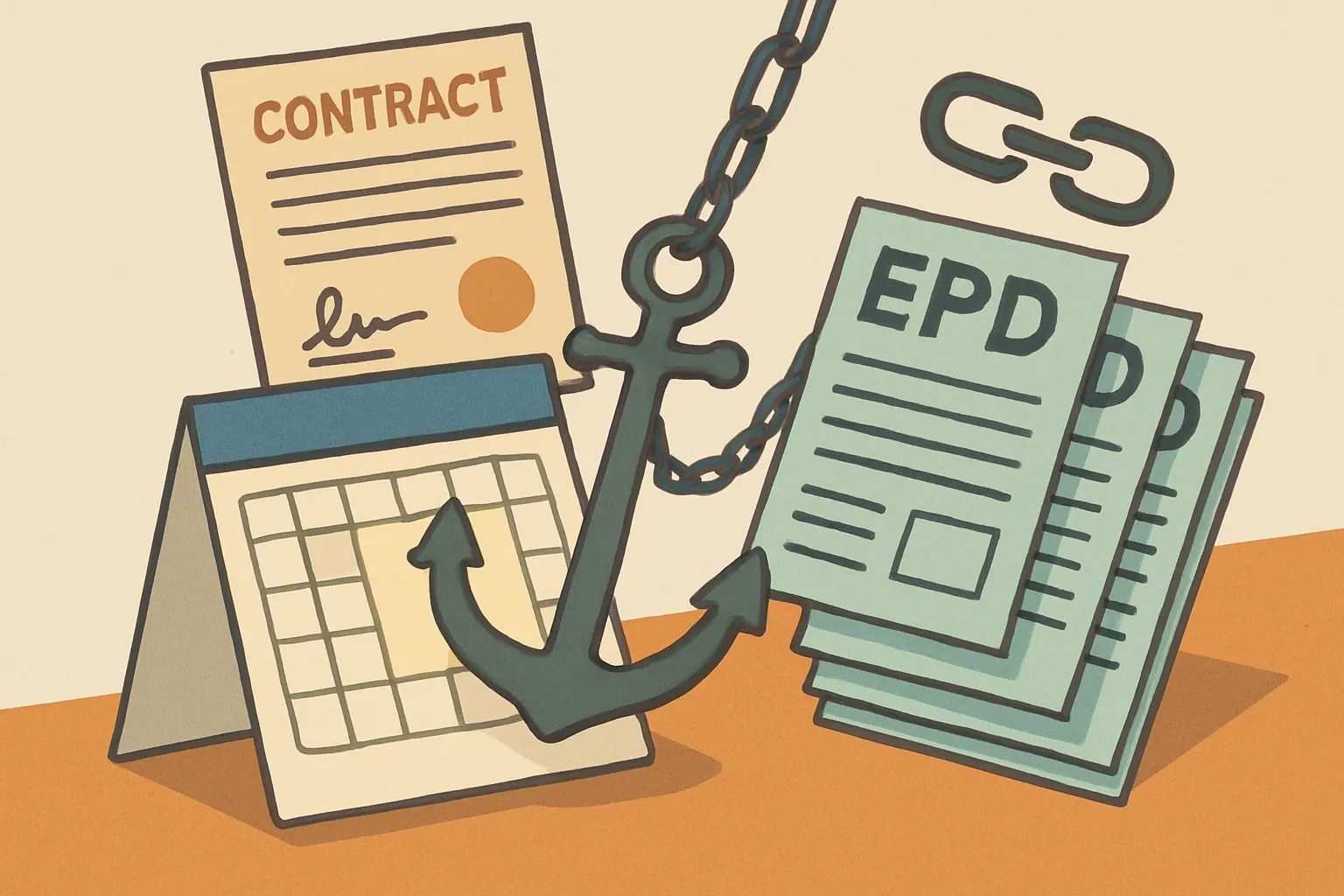
If maintenance coverage ends with the consulting contract instead of the EPD’s publication date, products published near the end of the term lose months of protection. One portfolio winds up with EPDs expiring at random times and a service window that does not match any of them. It is like buying a warranty that starts the day you sign, not the day your car actually leaves the lot.
Structure everything around the publication date
Anchor service windows to the EPD’s “Issued” date. That is the date that governs market validity, registry visibility, and how reviewers check timeliness. When each EPD’s maintenance tracks its own issue date, you can stagger work by quarter, avoid bottlenecks, and align budgets to the real risk points.
Build a simple maintenance map
Create a single register listing product name, publication date, validity end, and the next review month. Set reminders at month 12 for the annual follow‑up, month 36 for a mid‑life check, and month 42 to begin renewal prep. We like calendars over wishlists, and a shared calender keeps everyone honest.
Make SLAs that mirror operator rules
Service levels should reflect how operators judge material changes. Many programs expect an update if declared indicators worsen by a defined margin, commonly around ten percent, during the validity period (EPD International FAQ, 2025). Align SLAs to that threshold and to the EPD’s issue date so reviewers, sales, and sustainability teams all reference the same clock.
Example contract language you can adapt
- Maintenance coverage for each EPD shall run from its publication date through the end of its operator‑defined validity period, regardless of the master services agreement term.
- Minor corrections discovered by the verifier or operator will be addressed within an agreed response time, provided the EPD remains within its validity window.
- Annual internal follow‑up support will be scheduled on or before each EPD’s publication anniversary to confirm data currency and determine whether a re‑verification is required.
Handle PCR changes without panic
PCRs have their own cycle. UL Solutions notes that most PCRs are reviewed or expire on roughly five‑year intervals, which can trigger method updates that affect your next renewal (UL Solutions, 2025). Your current EPD usually stays valid through its printed end date even if the PCR updates midstream. The International EPD System also clarifies that new GPI versions do not shorten the validity of already published EPDs (EPD International GPI, 2024).
Portfolio playbook that actually reduces risk
Group EPDs by publication quarter so you review in tidy waves. Pair the annual follow‑up with sales enablement checks and registry housekeeping. Kick off renewals at month 42 so verification finishes well before the validity date. If a plant change, formulation change, or electricity contract shift moves impacts materially, pull that EPD forward and update on the same publication‑anchored SLA.
Why this saves time and protects revenue
Specifiers care that an EPD is current and verified. Tying maintenance to the publication date keeps every document eligible during the periods that matter most for bids and submittals. It also avoids unnecessary rush fees and last‑minute rescues when an EPD silently lapses.
Quick checklist to operationalize
- Confirm every EPD’s publication and validity dates in one shared register.
- Add annual operator follow‑up tasks on each anniversary.
- Start renewal work at the 42‑month mark.
- Write SLAs so coverage attaches to each EPD’s publication date, not the contracting calendar.
The bottom line
Contracts end. EPD clocks keep ticking. Tie maintenance to the issue date on each declaration and the timing finally matches the rules that auditors and program operators actually use. Your team gets fewer surprises, cleaner renewals, and EPDs that stay market‑ready throughout their five‑year life (EPD International FAQ, 2025).