Resinous flooring is not paint on a slab
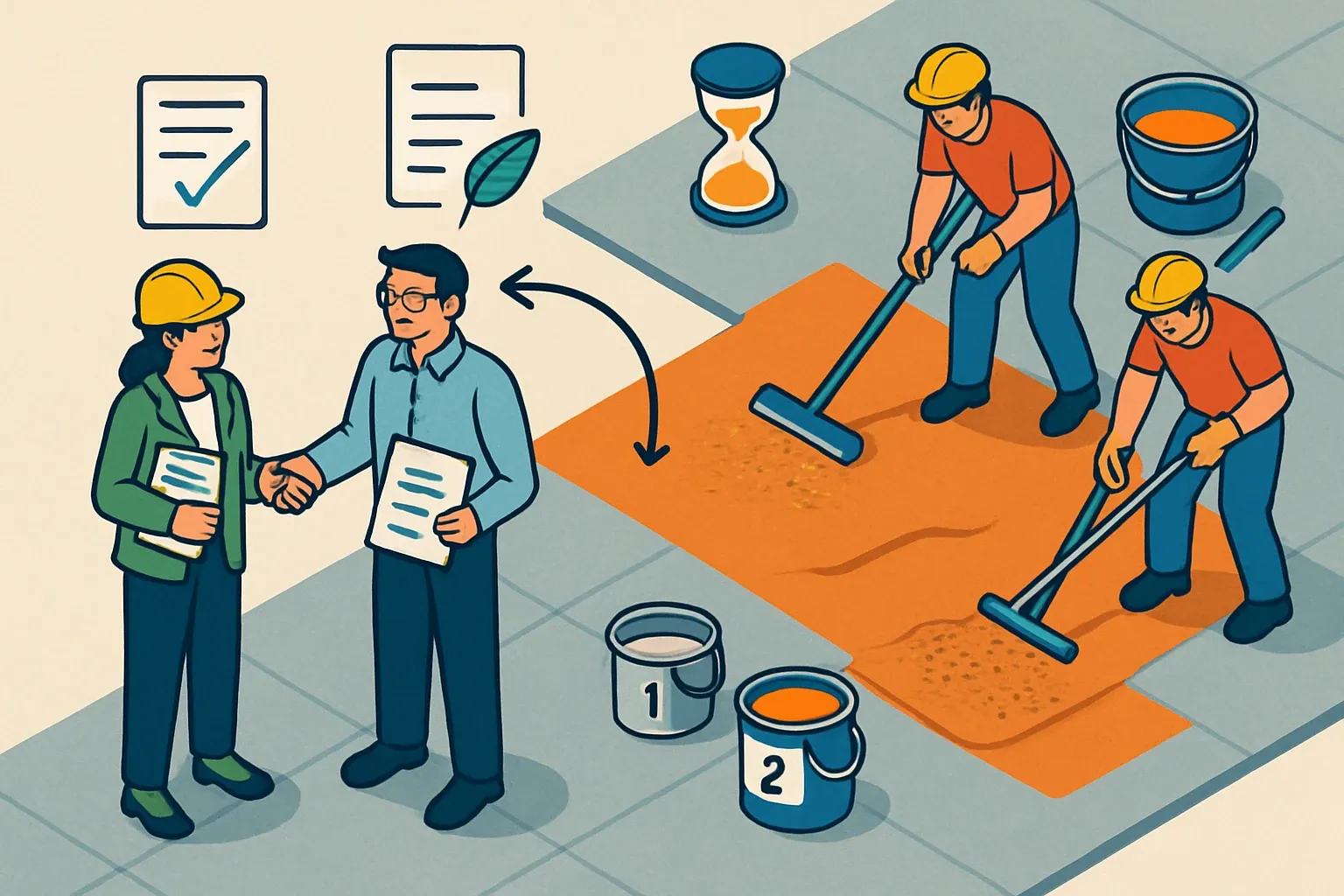
Two‑component epoxies and polyaspartics cure together, not in isolation. Add primers, moisture mitigation, broadcast media, slip‑resistance topcoats, and suddenly the declared unit must reflect a system, not a can. Good partners model the full stack and document typical waste and field loss so the EPD reads like the job actually runs.
What real experience looks like
Experienced teams have multiple resinous EPDs in public registries and can explain why they used a given PCR for a broadcast system versus a self‑leveling floor. They are fluent in EN 15804 conventions and US‑focused expectations, and they know how to align declared unit, thickness, and maintenance intervals for apples‑to‑apples comparisons in specs.
The chemistry fluency test
Ask how they handle varying mix ratios, accelerators, and temperature‑driven cure profiles. Strong providers capture supplier‑specific resin and hardener datasets, then trace them through A1 to A3 with consistent cutoffs. They also know when to model silica or flake loads as additional materials instead of wishful rounding.
Data wrangling wins timelines
Resinous LCAs live or die on plant data quality. The best partners make data collection painless, chase utility invoices and yield logs, and normalize production across batches without stealing months from R&D or ops. If the plan is “send us everything you have” with no structured intake, expect delays and rework.
PCR choice changes the playing field
A PCR is the rulebook of Monopoly. Ignore it and the game falls apart. Savvy teams check what competitors used, what is current, and which operator will verify most efficiently for your markets. When the existing PCR is broad, they document resin‑specific assumptions so reviewers do not guess for you.
Looking for the right EPD partner for resinous flooring?
Follow us on LinkedIn for insights that help you choose the best partners to win tenders and maximize ROI.
Maintenance drives results more than you think
For resinous floors, B2 to B5 assumptions can swing outcomes. Recoat cycles, abrasive exposure, and cleaning chemistry must be realistic, not convenient. Good partners defend maintenance scenarios with facility type benchmarks and give you clear sensitivity ranges so sales can speak to durability without over‑promising.
Verification without the whiplash
Operator preferences matter. If your target is Smart EPD in the US or IBU in Europe, pick a team that already speaks their review language and template structure. That reduces ping‑pong in comments and keeps your publish date predictable.
A quick vendor vetting script
- Show three resinous flooring EPDs they authored in the last few years and name the operators that published them.
- Walk through their data intake plan for a two‑plant scenario with different energy mixes and different waste capture.
- Explain how they will document declared thickness, system build, and field waste for each variant.
- Identify the PCR they recommend now and which revision date could trigger a refresh.
- Describe how they will gather maintenance evidence for B‑modules and who owns that task internally.
Timelines that actually hold
Modeling is rarely the slow part. Data readiness, reviewer cycles, and internal sign‑offs make or break schedules. Partners who create clarity on roles, lock calendars for verification, and pre‑check labels and claims tend to hit dates. Those who “start modeling first” often circle back when data gaps appear.
Red flags worth heeding
If a proposal downplays maintenance impacts, treats broadcast media as negligible, or shrugs at supplier‑specific resin datasets, keep looking. If they cannot point to published resinous work, you are about to fund their learning curve. That is not very strategic, is it.
Make selection about ROI, not novelty
Pick the partner who reduces your team’s hours, anticipates resin‑specific pitfalls, and gets you a credible, publish‑ready EPD that holds up in procurement and LEED v5 conversations. The first project that stays in spec because your EPD is clear and comparable tends to pay for the effort, often fast. Your future self will definately thank you.