The LEED v5 moment in one minute
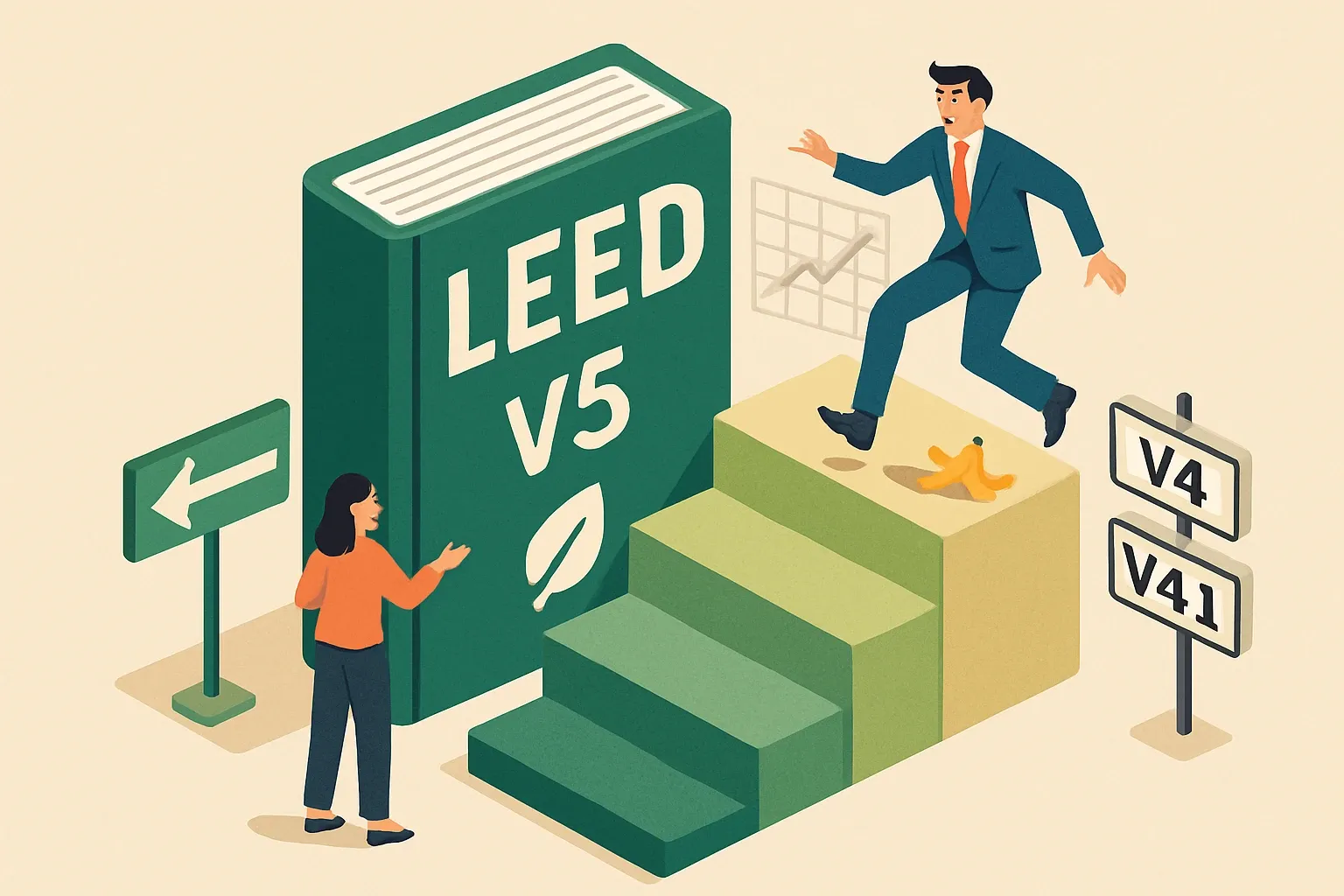
Here is the market reality. Registration for most LEED v4 and v4.1 systems closes June 30, 2026, then new registrations move to LEED v5 on July 1, 2026. Existing v4 and v4.1 projects can still certify until June 30, 2032, so version overlap will live in your pipeline for years (USGBC LEED certification deadlines, 2026).
LEED v5 organizes around three big ideas: decarbonization, quality of life, and resilient, ecosystem‑minded choices. USGBC frames these as impact areas that shape how credits work and how stories are told to owners and design teams (USGBC LEED v5, 2026).
Bad phrases to retire now
These lines sound familiar and get teams into trouble.
- “Our product is LEED certified.” Products do not earn LEED certification. Buildings do.
- “This earns you a point.” Products contribute to credit strategies. Points are awarded at the building level.
- “We meet v4 and v5 the same way.” The credit structure and documentation expectations changed. Assumptions did too.
- “An EPD is all you need.” LEED v5’s Building Product Selection & Procurement (BPSP) looks at multiple attributes, not one.
- “Just send a datasheet.” Teams need verifiable documents that map to BPSP criteria areas.
Version confusion hurts credibility
Architects track versions closely. If a rep quotes a v4.1 pathway to a team registering after June 30, 2026, the response reads out‑of‑date. Say which rating system a claim applies to, and use explicit dates. Example: “For your LEED v5 BD+C project registered in August 2026, this product contributes under MR credit: Building Product Selection & Procurement.” Simple, precise, calm.
The new conversation: selection and procurement, not siloed credits
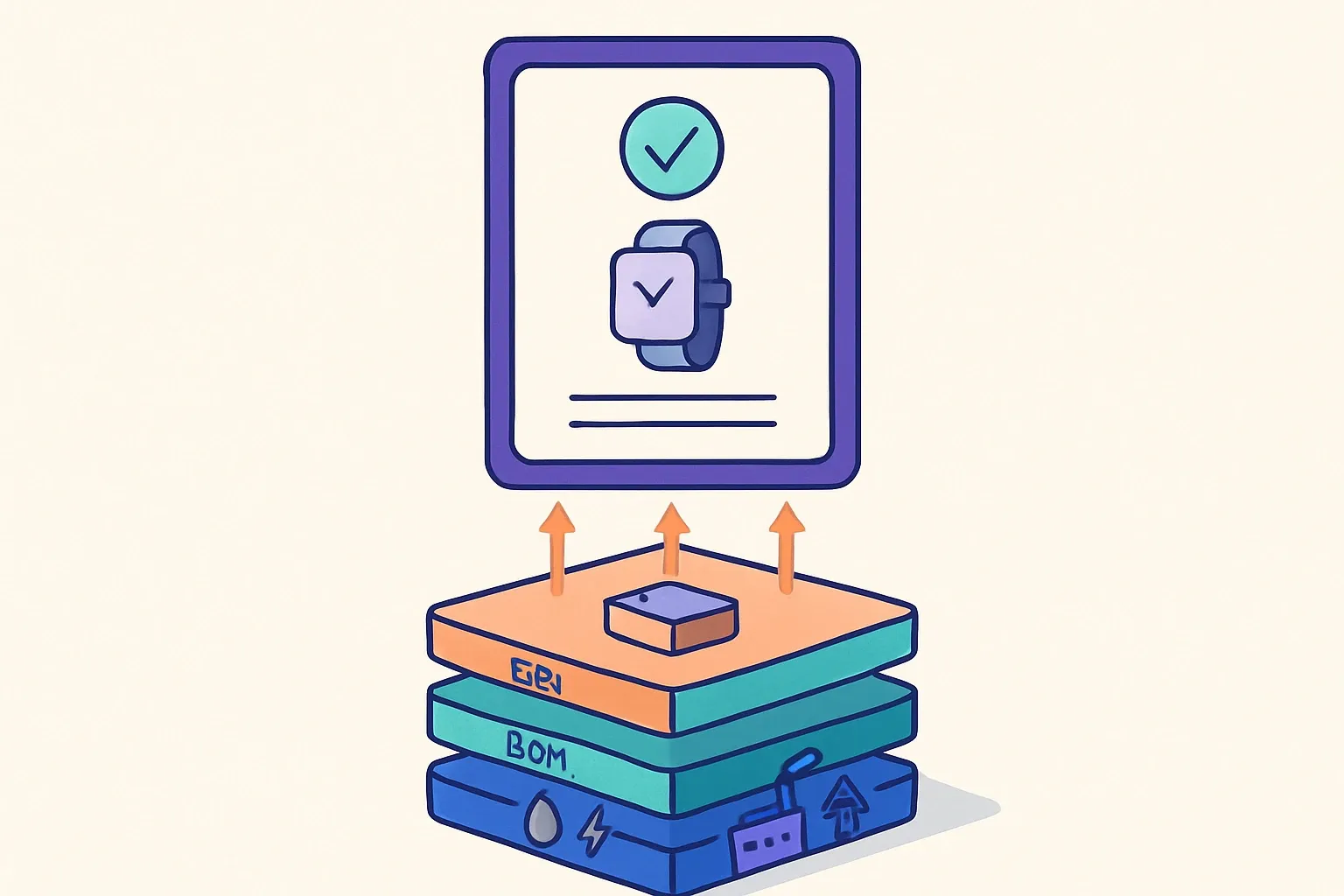
LEED v5 replaces three legacy MR credits with BPSP, a multi‑attribute framework. The credit scores eligible product documents across criteria areas like Climate Health, Human Health, and Circular Economy, producing a combined product score up to 5 using a clear table and a calculator in Arc (USGBC BPSP Criteria Areas and Levels, 2025). This changes positioning. Instead of pushing a single claim, show how documents add up across areas and categories.
What numbers actually matter in BPSP
Two examples your team can memorize.
- Optimized EPD pathways. A product with more than 20% GWP reduction earns a higher Climate Health score than a basic product‑specific EPD. More than 40% GWP reduction plus improvements in three additional impact categories can reach the table’s maximum combined score for that path (USGBC BPSP Criteria Areas and Levels, 2025).
- Multi‑attribute limit. The combined score for one product caps at 5, and only the highest value within each criteria area counts. Doubling up in the same area does not stack (USGBC BPSP Criteria Areas and Levels, 2025).
Join Parq Pulse!
Stay ahead on environmental regulations and LEED v5 updates to secure more projects and maintain compliance.
When a rep should answer directly
Answer on the spot when the ask is document‑level and specific.
- “Do you have a product‑specific, third‑party verified EPD for [Product X] and what standard is it under?” Reply with the document title, program operator, publication year, and a link to the public listing.
- “Is the HPD third‑party verified and at 100 ppm?” Confirm the version and threshold and attach the PDF.
- “Is your wood FSC, PEFC, or SFI with current chain‑of‑custody?” State the certificate number and coverage.
When to escalate to a sustainability lead
Send it up when the discussion moves from documents to modeling or strategy.
- Project‑level embodied carbon targets or WBLCA scope.
- Requests to interpret BPSP scoring across a mixed bill of materials.
- Comparisons that hinge on assumptions, system boundaries, or PCR choices.
- Any claim that would imply a percent reduction you cannot verify from the EPD.
A fast handoff looks like this: “Looping in our sustainability lead. We can share our EPDs and HPD, and confirm BPSP scoring for the categories in your spec by Thursday.”
Clean, accurate replies to the classic question
“What does your product do for LEED?”
Use version, credit, document, and category. Keep it under three sentences.
Example A, enclosure product:
“This project is pursuing LEED v5 BD+C. For MR credit: Building Product Selection & Procurement, [Product X] contributes with a product‑specific, third‑party verified EPD and a third‑party verified HPD 2.3 at 100 ppm. Based on the BPSP table, the EPD maps to Climate Health and the HPD maps to Human Health for a combined multi‑attribute score that the design team can confirm in Arc (USGBC BPSP Criteria Areas and Levels, 2025).”
Example B, interior finish:
“For LEED v5 ID+C, [Product Y] has an optimized EPD showing more than 20% GWP reduction relative to the declared baseline and a Declare label that is third‑party verified. These map to Climate Health and Human Health for BPSP scoring. We can provide the exact document IDs and help populate the calculator.”
Document hygiene for distributors and private‑label lines
Centralize these four items per SKU: EPD PDF and link, HPD PDF and link, any material certifications that map to BPSP, and a one‑pager that states which criteria areas each document supports. Keep filenames stable. Refresh when a document is revised or an addenda update changes the BPSP table. It is boring work and it wins deals.
Messaging tweaks that land with architects
Lead with the framework, not the brand. Tie claims to decarbonization, quality of life, and resilience outcomes the team already tracks in LEED v5 courseware (USGBC LEED v5, 2026). Avoid promising points. Offer to validate BPSP entries in Arc. Close by confirming dates and versions to remove doubt.
A quick training plan for reps and distributors
Run a 45‑minute drill monthly. Ten minutes on version timelines with the two anchor dates above (USGBC LEED certification deadlines, 2026). Fifteen minutes on your three most requested product categories and how their documents map to BPSP. Ten minutes of role‑play using the example replies. Five minutes to log open questions for the sustainability lead. Repeat. Your team will definately sound sharper next call.
Tie it together without the hype
Speak in versions and documents, not vibes. Retire the old one‑credit pitch and use the BPSP lens so products add up across criteria areas. Answer what you can, escalate what you should, and timestamp everything. That is how channel partners talk about LEED v5 without spreading bad information.