What the Digital Product Passport actually is
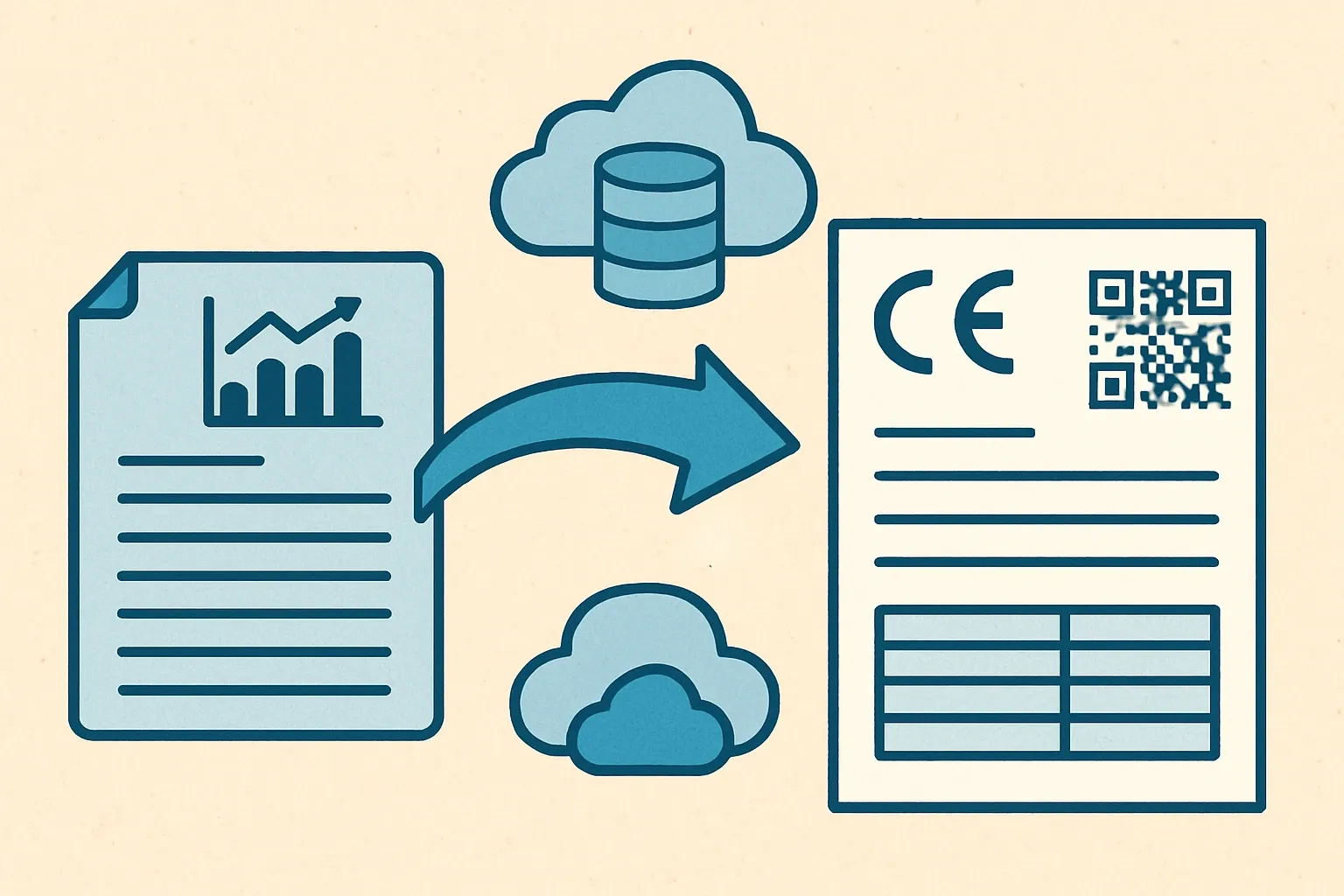
A Digital Product Passport (DPP) is a structured data record tied to a unique product identifier. It travels with the product and exposes verified facts that matter for durability, repair, circularity, and environmental performance. Think boarding pass meets bill of materials.
DPPs do not create new impacts. They surface them. Which means the underlying measurements, like LCA and EPD results, suddenly become everyday data rather than once-a-cycle PDFs.
The rulebook behind DPPs
DPPs live inside the EU Ecodesign for Sustainable Products Regulation, the framework law that entered into force on July 18, 2024 (European Commission, 2025). The Commission sets product rules via delegated acts and manufacturers typically get 18 months to comply after each act is adopted, while the overall regulation applies from 24 months after entry into force (Consilium, 2025).
Translation for ops teams. The framework is live. The detailed playbooks arrive product group by product group.
Who goes first, and when
Batteries are already on a faster track under a separate law. Battery passports become mandatory for EV, LMT, and industrial batteries above 2 kWh from 18 February 2027 (EUR‑Lex, 2023). For the ESPR itself, the Commission published the first Working Plan in April 2025 that prioritizes early product groups and kicks off delegated acts development (European Commission, 2025). A central DPP registry is slated for July 2026, which signals when large scale onboarding starts in practice (IEA, 2025).
If you supply steel, aluminium, textiles, furniture, detergents, paints, or chemicals, expect early attention because they are repeatedly cited as high‑impact categories in EU briefings (European Parliament, 2024).
What data a DPP will likely carry
The ESPR points to product parameters such as material composition, durability, reparability indicators, carbon and environmental footprint metrics, recycled content, and substances of concern. These are not marketing claims. They are data points that need provenance and version control, exposed through a common access model (Taylor Wessing, 2024).
In plain terms, your master data will need to match your factory reality. Bills of materials, supplier declarations, test reports, and LCA results must line up. One orphan spreadsheet can sink trust.
Where EPDs fit in
EPDs become the evidence layer many DPP fields will reference for environmental performance. The passport is the container. The EPD is the verified payload. If you already refresh product‑specific EPDs on a three to five year cycle, you are halfway there. If you rely on outdated generics, the DPP will spotlight that gap in bright lights.
Navigating EU regulations for competitive advantage?
Follow us on LinkedIn for insights that help you stay compliant and win more tenders.
Implications for construction manufacturers
Selling into the EU without a DPP will be like trying to enter a secure site with no badge. Public buyers are encouraged to use ecodesign criteria in tenders, which will nudge DPP‑ready products to the front (Consilium, 2025). Private specifiers will do the same because DPP data cuts their due‑diligence time.
Expect overlap with familiar frameworks. EN 15804 remains the backbone for EPDs. DPP fields will pull from the same measurements and add traceability, serialization, and role‑based access. Good news if your product data is organized. Painful otherwise.
Preparing without chaos
Start with data governance, not a tooling spree. Assign one owner for product identity, one for environmental data, and one for supplier attestations. Map where each DPP field would come from today. If a field traces back to email attachments, fix that first.
Then pressure‑test your LCA and EPD program. Are reference years consistent across sites. Are BOM variants captured. Is recycled content measured the same way by every plant. Small misalignments turn into big reconciliation work once passports go live.
Questions to put to any LCA or EPD partner
- How will our site utility data, scrap, and yield losses flow into product‑level LCAs automatically each year.
- Can you harmonize PCR choices with our competitive set and flag expiries before we renew EPDs.
- What is your plan for supplier data onboarding and validation at scale, not just a handful of safety‑stock inputs.
- Do you support publishing with multiple program operators so our portfolio can live where our customers are.
If a partner cannot show a white‑glove data collection model that removes work from your plant and R&D teams, keep looking. Speed comes from process design, not heroics.
Myths to ignore
A DPP will not replace EPDs. It will reference them. A DPP will not fix bad data. It will expose it. And the EU is not waiting for US policy signals. Even with shifting federal incentives stateside, the ESPR timelines are moving independently in Brussels.
A 12‑month action plan
- Stand up a cross‑functional DPP squad with operations, product, sustainability, and IT. Keep it small and empowered.
- Build an EPD pipeline for your top SKUs, prioritized by EU revenue risk and tender exposure. Treat it like a product launch calendar.
- Normalize supplier inputs. Use common schemas for recycled content, energy mix, and transport distances. Lock versioning.
- Pilot serialization and data access on one product family. Prove you can link a product identifier to its EPD and BOM reliably.
Do this and the shift from PDFs to passports feels methodical, not messy.
The practical takeaway
Digital product passport regulation is a data discipline test. Companies that already measure well will win time in bids and avoid last‑minute scrambles. Companies that wait will pay twice, first in rush work, then in lost specs. The path is clear, and it is definately doable if you start with the data you already own.
Numbers to remember as you plan. ESPR entered into force on July 18, 2024, the Working Plan arrived in April 2025, and delegated acts usually grant 18 months to comply (European Commission, 2025; Consilium, 2025). Battery passports hit on 18 February 2027 for key categories (EUR‑Lex, 2023). A DPP registry is expected by July 2026 to support scale‑up (IEA, 2025).