RE2020 in plain English
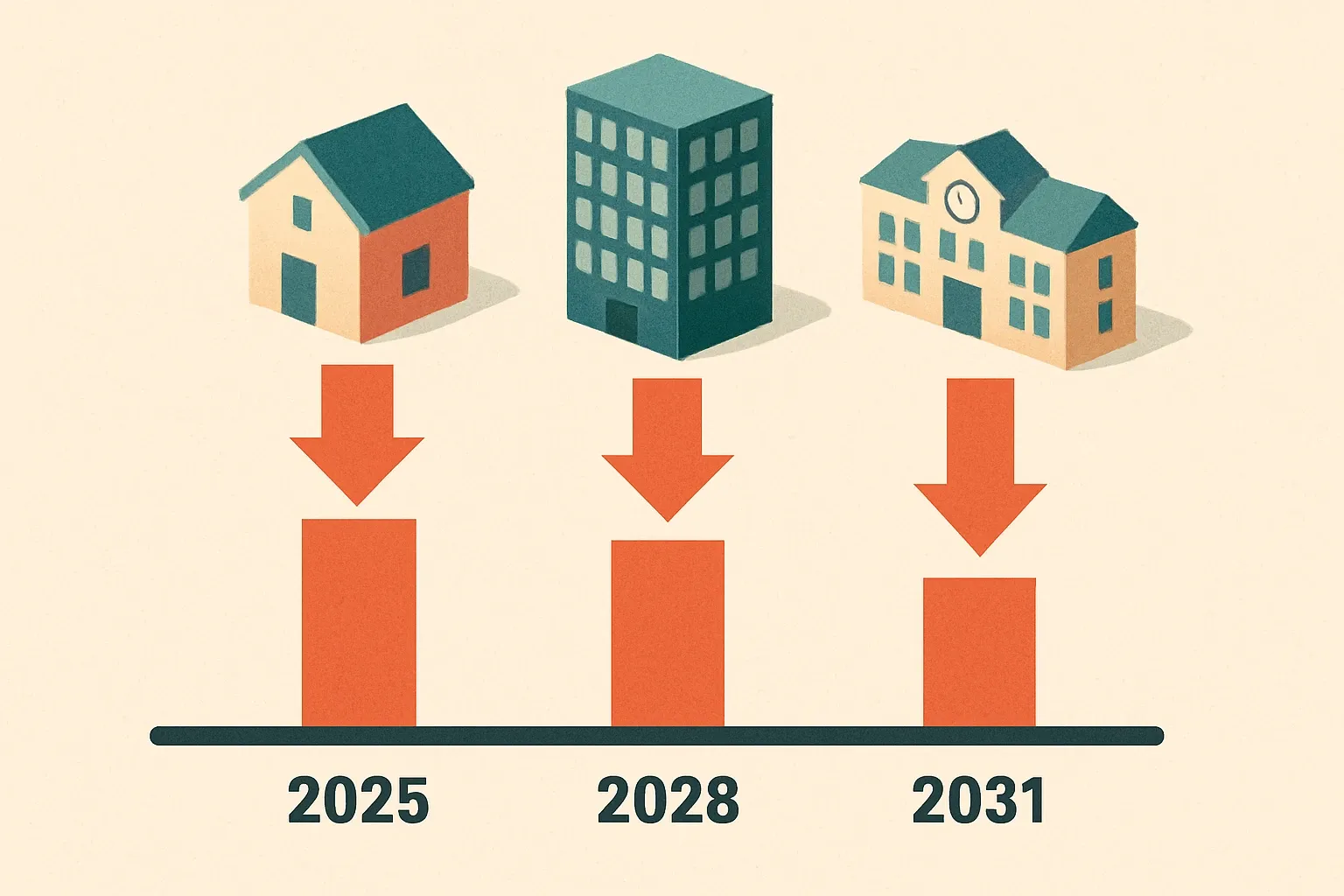
RE2020 is France’s environmental code for new buildings. It measures two things that matter to manufacturers: the embodied carbon of materials and equipment used to build the asset, and the carbon tied to operating energy over 50 years. The results are expressed in kg CO₂e per square meter and compared against caps that tighten in 2025, 2028, and 2031.
The two levers: Ic construction and Ic énergie
Ic construction totals the carbon of products and installation. Think of it as the building’s material footprint. Ic énergie captures the carbon of energy use during operation. Both are mandatory and both are pass‑fail against use‑specific thresholds. For dwellings, 2025 resets especially matter for system choices and envelope‑material mixes (ADEME BâtiZoom, 2025).
The 2025 limits you will be measured against
For housing, the caps are now meaningfully tighter. In 2025, Ic construction is capped at 530 kg CO₂e/m² for single‑family homes and 650 for multifamily, with further steps to 415 and 490 by 2031 (Ordre des architectes, 2025). Ic énergie in multifamily drops to 260 kg CO₂e/m² for most cases and 320 when connected to a district heat network. For offices and schools, the 2025 Ic construction caps are 810 and 770 kg CO₂e/m² respectively, then 710 and 680 in 2028 and 600 and 590 in 2031 (FFB, 2025). Office Ic énergie sits at 200 kg CO₂e/m² in most cases and 200 after a transitional 280 when on district heat (FFB, 2025). These are not suggestions, they are gates you must clear.
Modulators that shift your target
RE2020 applies “modulators” that can raise or lower the cap applied to a specific project. Since permits filed from January 1, 2025, the formula includes Misurf_moy and Misurf_tot for housing size effects and Mipv for the photovoltaic lot, alongside geographic and site‑work terms already in place. The ministry’s 2025 guide reflects these updates and the late‑2024 decree that captured early field feedback (Ministère de la Transition écologique, 2025). Short version: small average dwelling sizes, small total Sref, or PV layouts can change the target applied to the design. Your product data still drives the result line.
Navigating new carbon limits to win French projects?
Follow us on LinkedIn for crucial updates that help you stay compliant and competitive.
Your EPDs are the fuel for compliance math
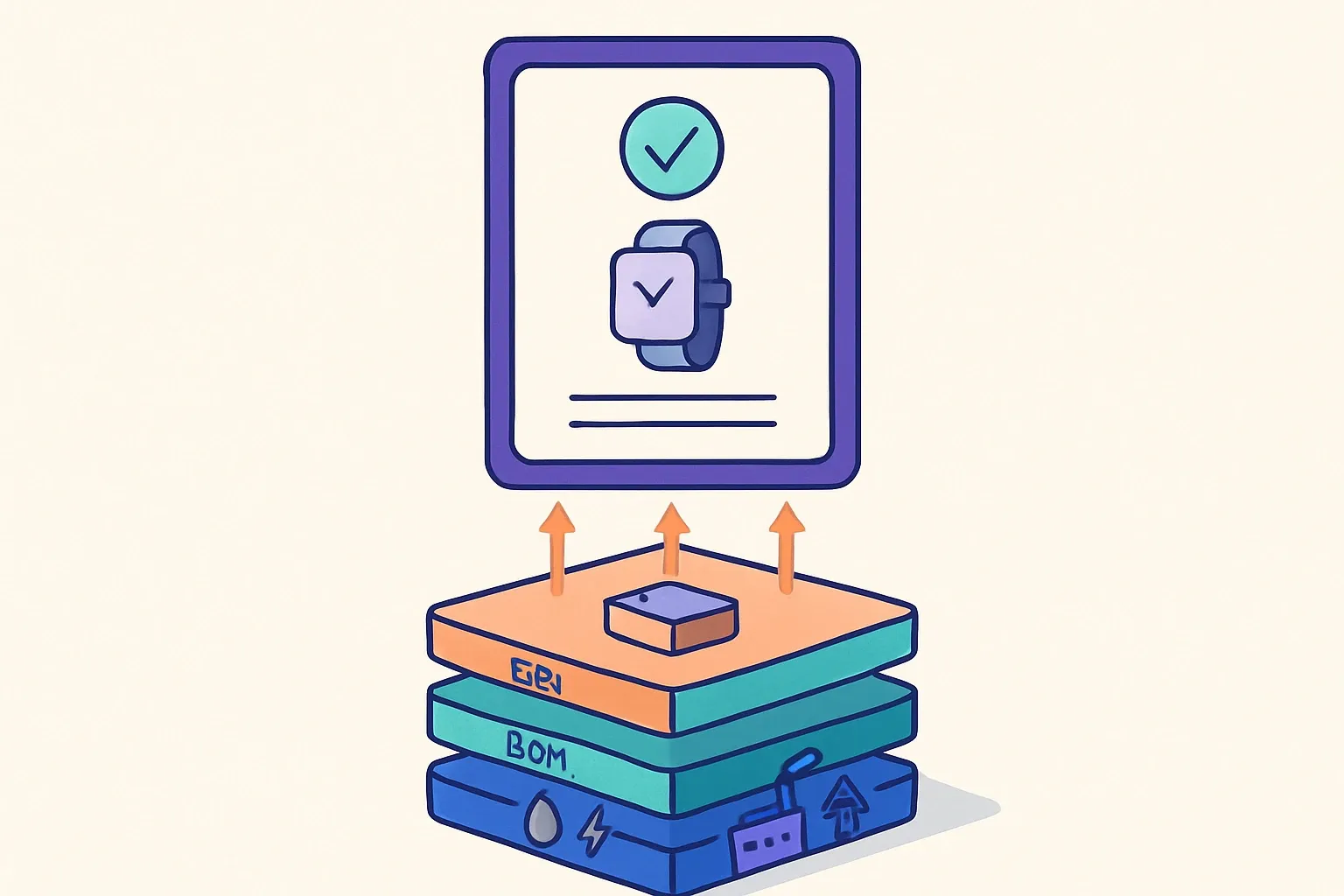
France’s RE2020 model pulls product data from INIES. Use product‑specific FDES for construction materials and PEP for technical equipment. When no specific EPD exists, modelers must use default data that include a safety coefficient, which is deliberately conservative and can push a project over the line (INIES FAQ, 2025). The supply of specific data is growing fast: as of December 31, 2024 INIES reported 4,560 FDES, 1,342 PEP, and 1,691 default datasets, with continued growth through 2025 (INIES Baromètre, 2025).
A1 to A2 updates can move numbers
France’s evaluation report notes that many legacy A1 EPDs are being archived and replaced by A2 versions. In early 2025 more than 350 FDES were created or updated in Q1 alone, and the transition may cause temporary gaps that force teams to use defaults. The report estimates a potential 20 to 30 percent data drop in 2026 before rebounding in 2027, which can raise calculated impacts when substitutions occur (Ministère de la Transition écologique, 2025). If a product family your team sells still shows A1 with no A2 successor, prioritize updating it. That matters a lot, because the 2028 step does not wait.
What this means for manufacturers
Product‑specific EPDs are now table stakes for French projects. Without them, your product is modeled with conservative defaults and risks being engineered out for carbon. With a verified FDES or PEP, you control the narrative with plant‑realistic energy, recycled content, and transport. The commercial payoff is real in competitive bids where “no EPD” forces pessimistic accounting. Reliable cost averages are hard to pin down because each scope differs, but one medium project win often dwarfs the credential effort.
Four moves to get ahead
- Map portfolio to French use cases. Flag SKUs that hit housing, offices, and schools first, since those carry the tightest near‑term limits in 2025.
- Close your data gaps. Gather utility, mix, and transport for the latest reference year and produce FDES or PEP where missing. Avoid relying on DED except as a last resort (INIES FAQ, 2025).
- Publish with a recognized program operator and ensure EN 15804+A2 conformance. That keeps your data current in INIES and aligns with RE2020 software ingestion.
- Choose an LCA partner that can actually do white‑glove data wrangling across plants and ERPs. Speed, completeness, and verification quality get you from “please wait” to “specified”. There is a few easy wins here if the team is aligned.
Looking ahead
Expect Ic énergie to keep phasing out fossil‑only designs in collective housing and to pressure office projects connected to older heat networks. Expect Ic construction to keep rewarding lower‑carbon mixes, design for reuse, and credible, speficic EPDs that mirror your real process. Keep one eye on the 2028 step and another on your data pipeline. The rules are stable enough to plan, the bar is rising fast enough that planning now pays off.