What the Workplan is, in one minute
Portland’s Climate Emergency Workplan (CEW) is the city’s 3‑year action plan tied to its climate emergency declaration. It sets a path to cut communitywide emissions at least 50% by 2030 from 1990 levels, then reach net‑zero by 2050 ([Portland BPS, 2025](https://www.portland.gov/bps/climate-action/climate-emergency/climate-emergency-workplan/progress-report-2025)). Think of it like a metronome that city bureaus and procurement follow, not a glossy brochure.
Why manufacturers should care
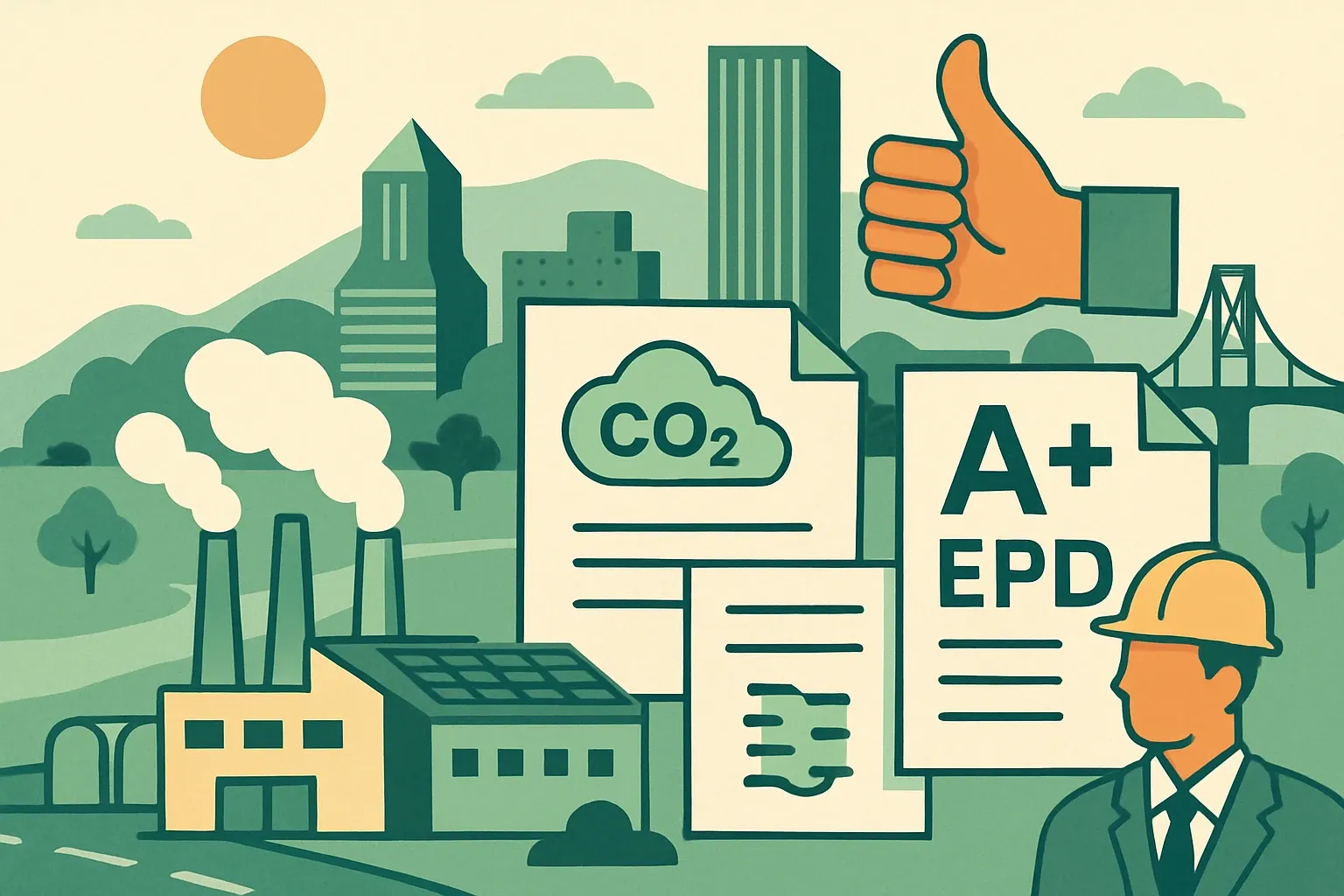
Policies in the CEW flow straight into specs and procurement. When a city buyer asks for an EPD or a low‑carbon mix, it is not optional, it is compliance. Teams that show up with current, product‑specific EPDs avoid penalties in carbon accounting and stay in the consideration set where others get sidelined.
Concrete is the headline act
Since 2020, concrete used on City of Portland projects must have a product‑specific, third‑party verified Type III EPD within its 5‑year validity if the mix is on the preapproved list or if project use exceeds 50 yd³ (City of Portland, 2019). As of January 1, 2023, the city added maximum Global Warming Potential thresholds. Example: a 4,000 psi mix must be at or below 242 kg CO2e per cubic yard to qualify, verified by an EPD ([City of Portland, 2022](https://www.portland.gov/procurement/sustainable-procurement-program/documents/city-portland-concrete-embodied-carbon/download)).
Thresholds without the jargon
Portland’s thresholds are performance limits by strength class. Compliance can be demonstrated per mix or via a project‑average method, both backed by EPDs. The city convenes a committee annually through 2028 to review and progressively lower thresholds, so today’s pass can become tomorrow’s miss if documentation lapses or mixes are not refreshed ([City of Portland, 2022](https://www.portland.gov/procurement/sustainable-procurement-program/documents/city-portland-concrete-embodied-carbon/download)).
Navigating new environmental regulations for successful bids?
Follow us on LinkedIn for updates that keep your materials compliant and competitive.
State backdrop that amplifies demand
Oregon DOT also collects EPDs for covered materials on highway work, with quantity triggers such as ready‑mix concrete at 50 yd³ or more, asphalt at 2,500 tons or more, and steel rebar at 15,000 lb or more. The rule took effect December 5, 2024 ([Oregon Secretary of State, 2024](https://secure.sos.state.or.us/oard/viewSingleRule.action?ruleVrsnRsn=318767)). Separate from the city program, this state signal means producers that serve the metro area feel EPD pressure from two sides.
What this means for sales
Bids move faster when submittals are ready. Product‑specific EPDs add credibility, reduce risk for city engineers, and prevent conservative carbon assumptions from inflating your impact totals. One timely EPD can keep a mix in scope rather than swapped late for a competitor with documentation in hand. The ROI often shows up as fewer blocked specs, not just a single headline project win.
Picking an LCA and EPD partner wisely
Choose a team that organizes data collection across plants and utility bills without stealing time from R&D and production leads. Ask for clear timelines, a single point of contact, and proactive PCR guidance so you match what competing products use. Publishing with a US program operator that buyers recognize is useful, and renewal plans matter so you dont scramble near expiry.
Start here: a quick manufacturer checklist
- Confirm which Portland thresholds apply to your strength classes, then map each plant’s current mix portfolio to those limits.
- Inventory existing Type III EPDs and their expiry dates. Flag anything inside 12 months for renewal planning.
- Align mix optimization and SCM availability with your bidding calendar so submittals land cleanly with verified data.
The practical takeaway
Portland’s CEW is already reshaping material choices on public work. Teams that bring current, verifiable EPDs and mixes that clear the city’s thresholds turn climate policy into a sales edge. Keep the paperwork tight, the data fresh, and your mixes tuned to the limits, and you will stay spec‑strong in Portland and beyond.