Environmental Regulations & Laws Decoded

PAS 2080: Your Ticket to UK Low-Carbon Infrastructure

Walker Ryan
Walker RyanChief Executive Officer
September 15, 20255 min read

Tender documents across the UK now slip a quiet question into the technical specs: “Show evidence you comply with PAS 2080.” Skip it and your bid can vanish before price talks even start. The 2023 revision sharpened rules on embodied carbon, built a bridge to EN 15804-based EPDs, and set a ticking clock—owners can reject data older than two years. Manufacturers that master the paperwork will ride a procurement tailwind; the rest face extra site visits and awkward clarifications.

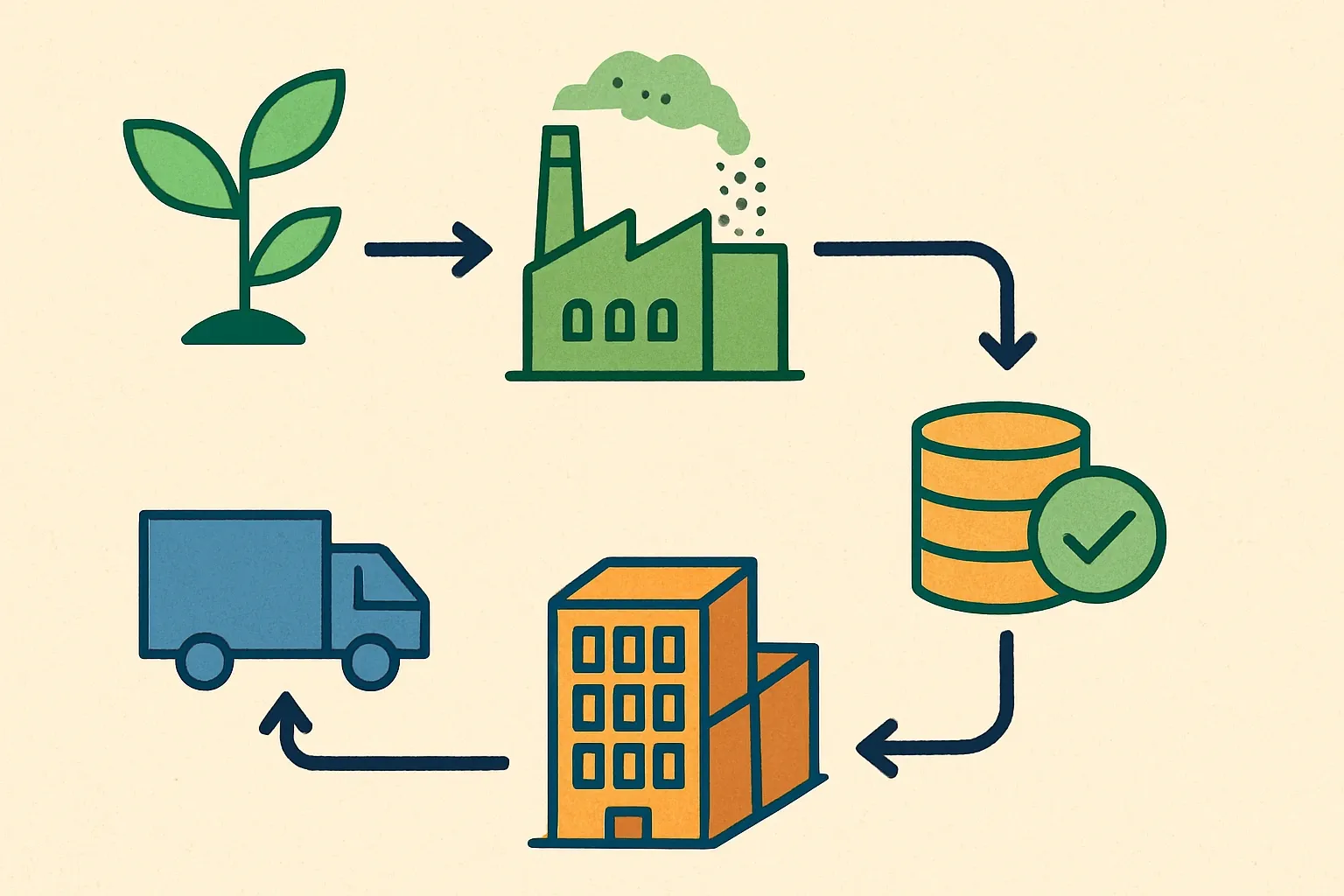
Icons for plant, supplier, EPD database, and BIM model connected by arrows to visualise how verified numbers travel from factory meters to a project carbon budget.

What PAS 2080 Covers in One Minute

PAS 2080:2023 is a British standard for carbon management across the whole infrastructure value chain. It demands quantified baselines, reduction hierarchies, and third-party-checked data to prove progress (BSI, 2023). Think of it as ISO 14001’s focussed cousin that only cares about carbon, but cares a lot.

Why Infra Owners Now Demand Proof, Not Promises

National Highways ties up to 10 % of supplier performance pay to verified carbon savings (National Highways, 2024). Network Rail lists PAS 2080 alongside health-and-safety as a “mandatory competency” for Tier 1 bids. When carbon risk carries real money, spreadsheets alone look flimsy.

Where EPDs Plug Into the Carbon Hierarchy

PAS 2080 pushes teams to “design in” lower embodied carbon before offsetting. An EN 15804-compliant EPD feeds the early-stage carbon model with product-specific numbers instead of generic database averages. The swap can swing results by 20-60 % on steel and concrete packages (ICE, 2025). Credible, recent EPDs become your passport to the shortlist.

Want to master PAS 2080 compliance in your bids?

Follow us on LinkedIn for insights that help you secure tenders and improve your project's bottom line.

Data Hurdles That Sink Bid Teams

  1. Disjoint plant utility meters mean Scope 1 fuels get guessed.
  2. Subcontractors mis-label transport legs, scrambling A4 freight factors.
  3. Legacy LCA files sit in incompatible software, chewing up reviewer hours.

Each gap triggers clarifications, and clarifications cost days—sometimes weeks—during competitive tenders.

Fast-Track Compliance: Three Moves

  1. Align bill-of-materials codes with the upcoming UNIFORMAT 2025 revision so EPD values drop directly into digital twins.
  2. Set a standing quarterly data pull, not an annual scramble; the PAS calls for “timely” updates and two-year freshness.
  3. Commission independent verification at product level. A third-party-checked EPD knocks out the need for duplicate checks later.

Stay Ahead of the 2026 Transition Period

The UK Department for Transport has signalled that from January 1 2026, all central-government-funded infrastructure must evidence PAS 2080 compliance in the main works contract, not just design gateways (DfT, 2025). Suppliers that pilot the process now will avoid rushed retrofits when the rule hardens.

Key Takeaway for Manufacturers

PAS 2080 isn’t another box to tick; it is the new language of low-carbon procurement. Speak it fluently—with up-to-date, third-party-verified EPDs in hand—and your sales team stops firefighting clarifications and starts closing higher-margin work. Miss it and you risk being the last acceptable bidder only when everyone else is out on non-price grounds. Don’t let teh paperwork pick the winner.

Frequently Asked Questions

Does PAS 2080 certification exist for individual products?

No. PAS 2080 certifies an organisation’s carbon-management system or a specific project, not a single product. However, product-level EPDs supply the verified data points that the PAS process relies on.

What counts as “two-year-old” data under PAS 2080?

The standard refers to the period between the last data collection (e.g., utility bills, production volumes) and the decision point. If you collected 2023 data, you have until the end of 2025 before updates are needed.

Do I need a UKAS-accredited verifier for PAS 2080?

PAS 2080:2023 does not mandate UKAS accreditation, but many public clients see it as best practice. Using a UKAS body can shorten client reviews.

Will an EPD prepared for LEED work for PAS 2080?

Usually yes, provided the EPD follows EN 15804 or ISO 21930, includes module A1-A3 data, and is less than five years old. Check that declared unit, system boundaries, and cut-off rules match the project PCR.

Is PAS 2080 recognition limited to the UK?

Primarily yes, but international owners like Ferrovial and Skanska cite PAS 2080 in global project tenders. Expect its influence to spread wherever these players build.

Want to win more bids?

Parq helps construction materials manufacturers get spec'd more often with industry-leading EPDs and LCAs.

Get in Touch

About the Author

Photo of Walker Ryan

Walker Ryan

Chief Executive Officer at Parq

Walker Ryan is a climate-tech entrepreneur focused on driving industrial decarbonization through better data. As the founder and CEO of Parq, he helps manufacturers generate high-quality, third-party–verified carbon disclosures at scale—accelerating a traditionally slow and expensive process. Before starting Parq, Walker led over $200 million in sustainability-focused investments as VP of Strategy & Growth at ReStream Solutions, following earlier experience in investment banking at Deutsche Bank. He brings a rare mix of capital markets expertise and hands-on sustainability knowledge to tackling the infrastructure of industrial emissions.

More in Environmental Regulations & Laws Decoded