What the Framework is and why it matters
Minnesota’s Climate Action Framework sets the state’s direction on climate policy and investment. For building product makers, it explains where specifications are heading, how agencies will evaluate embodied carbon, and which disclosures will be expected on submittals.
Think of it like the season outline before a streaming show drops. You will still see surprises, but the main plot is set.
The targets that influence specs
The state is updating the Framework for early 2026 with goals that include a 50% statewide emissions cut by 2030 and carbon neutrality by 2050 (MPCA, 2025) (MPCA, 2025). Minnesota law also requires 100% carbon‑free electricity by 2040, with interim checkpoints of 80% by 2030 for investor‑owned utilities and 90% by 2035 for all utilities (Minnesota Department of Commerce, 2025) (Minnesota Department of Commerce, 2025).
For materials that are electricity‑intensive, these grid shifts can lower reported A1 to A3 impacts over time. That is another reason to refresh EPDs on a sane cadence rather than waiting until a renewal panic.
Procurement is moving toward EPDs
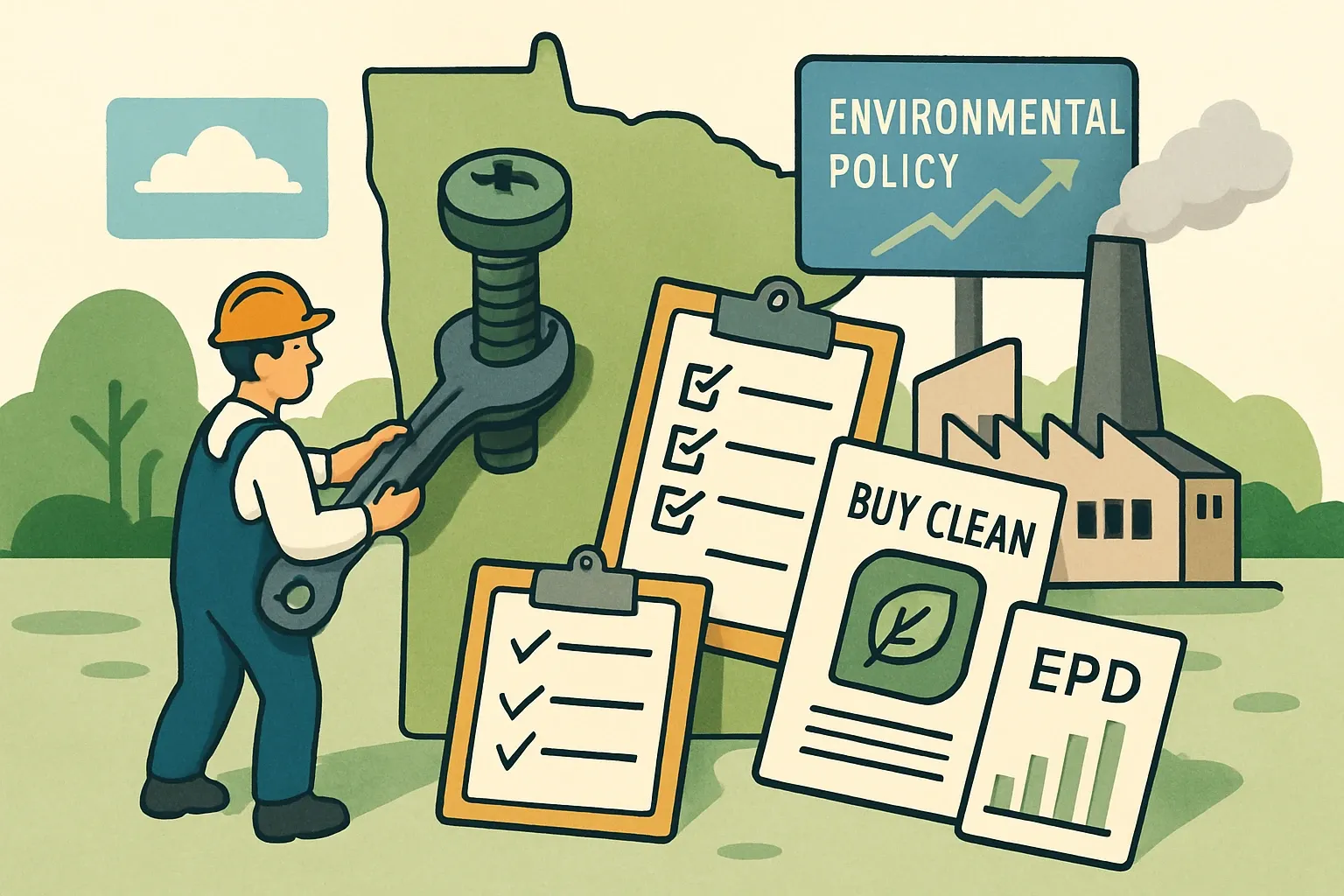
Minnesota established an Environmental Standards Procurement Task Force in 2023 to examine requiring EPD submittals and setting greenhouse gas limits for certain state‑purchased construction materials. The work has been public, with meetings focused on concrete, asphalt, steel, and glass. This is the on‑ramp to Buy Clean style procurement in Minnesota.
Translation for manufacturers. Publish trusted, third‑party verified EPDs now and you will be ready when thresholds turn on.
The state is funding EPD creation
There is real money on the table. The 2025 Buy Clean EPD Grant Program offered up to 49,999 dollars per manufacturer, with total funds of 255,000 dollars from Administration and 310,000 dollars from Transportation. Applications were due February 7, 2025, and eligible categories included steel and rebar, multiple concrete types, asphalt paving mixtures, and flat and insulating glass units (State Buy Clean EPD Grant RFP, 2025) (RFP, 2025).
If the next round opens, have your data room and PCR plan ready. Grants move fast, and so should your submittals.
Navigating new climate regulations in Minnesota?
Follow us on LinkedIn for updates that ensure you're compliant and competitive in the evolving market.
Where EPDs show up in practice
Early state workgroups and pilots have centered on materials that dominate embodied carbon in public projects. Expect specifications and bid forms to call for product‑specific, third‑party verified Type III EPDs first in these categories.
A short list to prioritize:
- Concrete mixes and precast components
- Asphalt paving mixtures
- Steel sections and reinforcing bar
- Flat and insulating glass units
A quick reality check on emissions trends
Minnesota’s 2025 greenhouse gas inventory notes a 6.4% rebound in emissions between the end of 2020 and the end of 2022 as activity returned after the pandemic dip (MPCA, 2025) (MPCA, 2025). Policy is tightening in response, so documentation that was optional yesterday can be decisive tomorrow.
How to prepare without burning out your team
Pick the right PCR by checking what competitors used and when those PCRs expire. That keeps you comparable in EC results and avoids a mid‑project redo.
Choose an LCA partner that runs white‑glove data collection across plants, utilities, and bills of materials. You want fewer internal asks, predictable timelines, and clean audit trails. Publishing should be operator‑agnostic, with US teams often choosing Smart EPD and European teams frequently using IBU.
Build a refresh rhythm. Many buyers do not care if an EPD is one year or three years old while valid, yet expiring declarations create avoidable risk on active bids.
Timelines and sequencing that matter
Minnesota’s 2025 EPD grants required deliverables within one calendar year of grant start, with projects commencing no later than April 3, 2026. That is a helpful model timeline even if you are not grant funded. Set internal gates for data freeze, modeling, third‑party review, and publication to avoid last‑minute surprises (RFP, 2025) (RFP, 2025).
If you sell into transportation, align mix trials and plant QA with EPD development so submittals and performance data land together.
What to watch through 2026
The state plans to publish the updated Framework in early 2026, with an added goal for efficient, resilient buildings. Watch for draft rules or guidance that set embodied carbon limits in state procurement and for another wave of EPD support funding. Also track Clean Electricity 2040 implementation, since grid factors influence the next generation of your EPDs (Minnesota Department of Commerce, 2025).
Federal incentives are in flux, yet Minnesota’s state programs are still moving. That makes the state a dependable place to invest in disclosures that pay back in specs.
Bottom line for Minnesota bids
EPDs are becoming the resume for your materials. Publish credible, comparable declarations in the categories the Task Force is prioritizing, keep a tidy data trail, and refresh at smart intervals. You will clear admin hurdles faster and avoid pessimistic default values that can push you out of contention. It is definately easier to win when your numbers are already on the table.