The plan in one minute
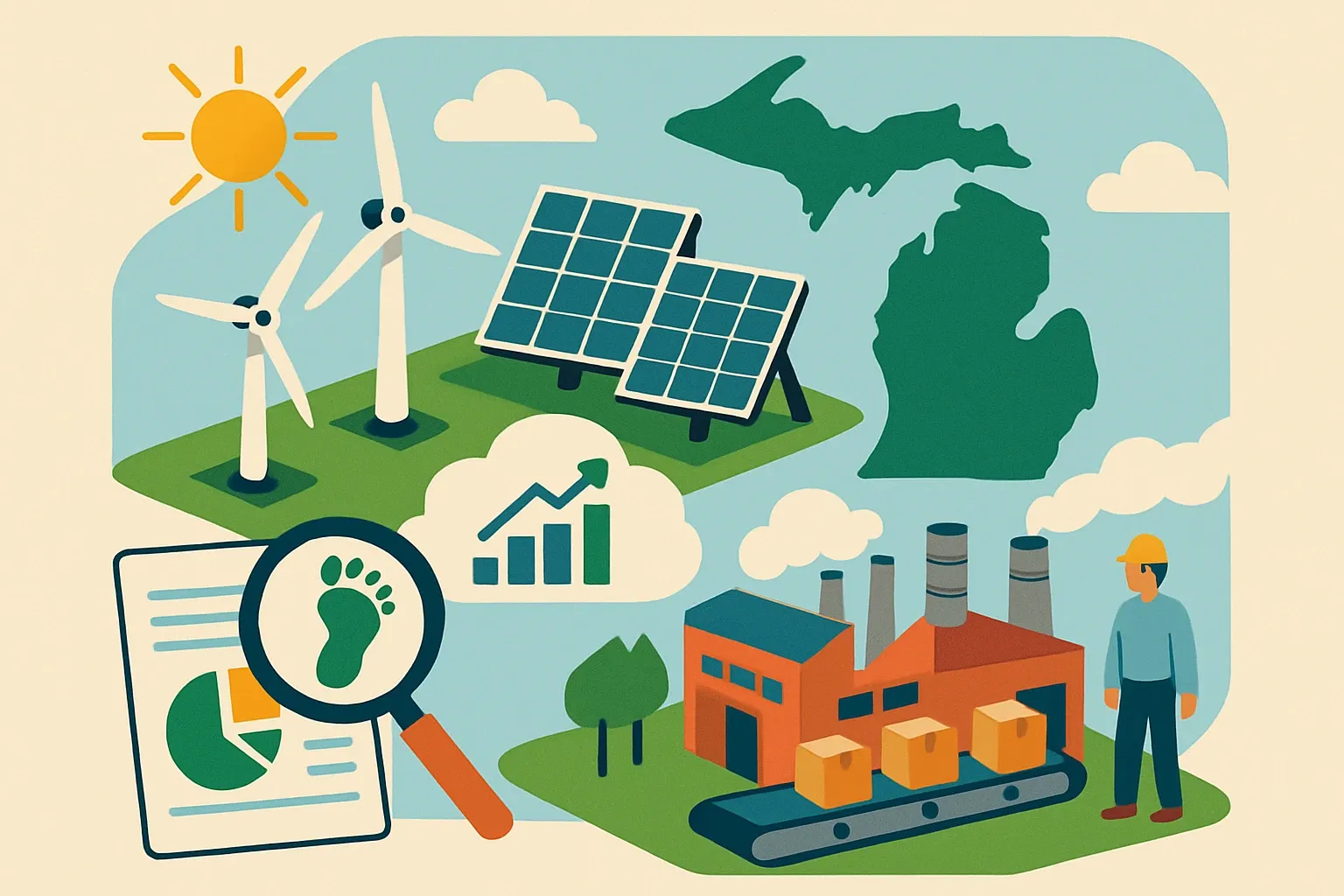
Michigan targets economy‑wide carbon neutrality by 2050 with an interim 52 percent emissions reduction by 2030, backed by annual reporting and new funding lines to execute the roadmap (EGLE, 2024). The state’s energy laws now require utilities to hit 50 percent renewables by 2030, 60 percent by 2035, and reach 100 percent clean energy by 2040 (MPSC, 2024).
Where embodied carbon fits
The plan’s built‑environment pillar focuses agencies and large owners on materials transparency. That means EPDs become the default proof of product‑level greenhouse gas results rather than a nice‑to‑have spec sheet. Think of the PCR as the rulebook and the EPD as the box score that lets buyers compare apples to apples.
Market signals you can bank on
Michigan expanded distributed generation participation from 1 percent to 10 percent and set a 2,500 MW storage target for 2030, enabling more electrified manufacturing and cleaner grids that reward lower‑carbon products (MPSC, 2024). Distributed generation already reached 189 MW in 2023, up 8.5 percent year over year, with more growth on deck as the cap rises (MPSC, 2024). In 2024 the state budgeted over half a billion dollars to accelerate plan implementation, including built‑environment actions that will flow into public procurements (EGLE, 2024).
Is there a statewide Buy Clean rule
Not yet. As of December 29, 2025, Michigan has no single statute that mandates EPD‑based embodied‑carbon thresholds across all state construction. The practical effect still matters. Major public owners and municipalities are moving toward EPDs in submittals, and design teams are writing them into project specs to avoid carbon accounting penalties.
Ready to meet evolving environmental regulations?
Follow us on LinkedIn for insights that help you stay compliant and competitive in your bids.
Why EPDs move Michigan bids
When a project team must report material emissions, products without product‑specific EPDs get modeled with conservative defaults. That can push a product out of contention even if its real footprint is competitive. An EPD lowers uncertainty, shortens back‑and‑forth with engineers, and keeps attention on performance, lead time, and total installed cost.
What to do this quarter
- Build a clean data spine. Pull a full recent reference year of utilities, scrap, yields, and transport. If a product is new, start with a prospective EPD and backfill after a full year of production.
- Pick the right PCR by scanning competitor EPDs and program operator catalogs. Aligning to the common rulebook speeds reviewer acceptance.
- Decide where to publish. Smart EPD, IBU, and other credible program operators are all viable. Choose based on audience and timelines, not brand familiarity.
Speed and sanity in data collection
Most delays come from chasing plant data, not from modeling. A white‑glove LCA partner that actively gathers data from your teams and suppliers will save your R&D and ops leaders dozens of hours they do not have. We prefer ruthless clarity over endless spreadsheets.
Engineering and product teams: avoid scope creep
Lock the product boundary and the bill of materials before modeling. Freeze key assumptions like electricity mix, allocation, and transport distances early. Small tweaks late in the process create big rework. Treat it like a design freeze on a new mold.
Timelines and renewal rhythm
Plan your EPD pipeline around customer launches and public bid calendars, not just lab capacity. Keep a simple dashboard of expiries and PCR revisions so nothing lapses right before a strategic RFP. Many owners do not distinguish between older and newer EPDs inside their validity window, but they do care if one is about to expire.
Federal context without the noise
Several federal Buy Clean levers changed in 2025. Michigan’s trajectory remains intact, and the state’s clean energy targets still ratchet demand for transparent materials. EPA continues to support EPD quality and verification resources, which helps manufacturers standardize credible reporting even as federal incentives shift (EPA updates in 2025).
Bottom line for Michigan manufacturers
The Healthy Climate Plan sets the tempo, and specs are catching up fast. If your top SKUs do not have current, product‑specific EPDs, they are at a scoring disadvantage in public work and sophisticated private projects. Getting one high‑quality EPD over the line this quarter is definately better than drafting a perfect roadmap that never ships.