The framework in one minute
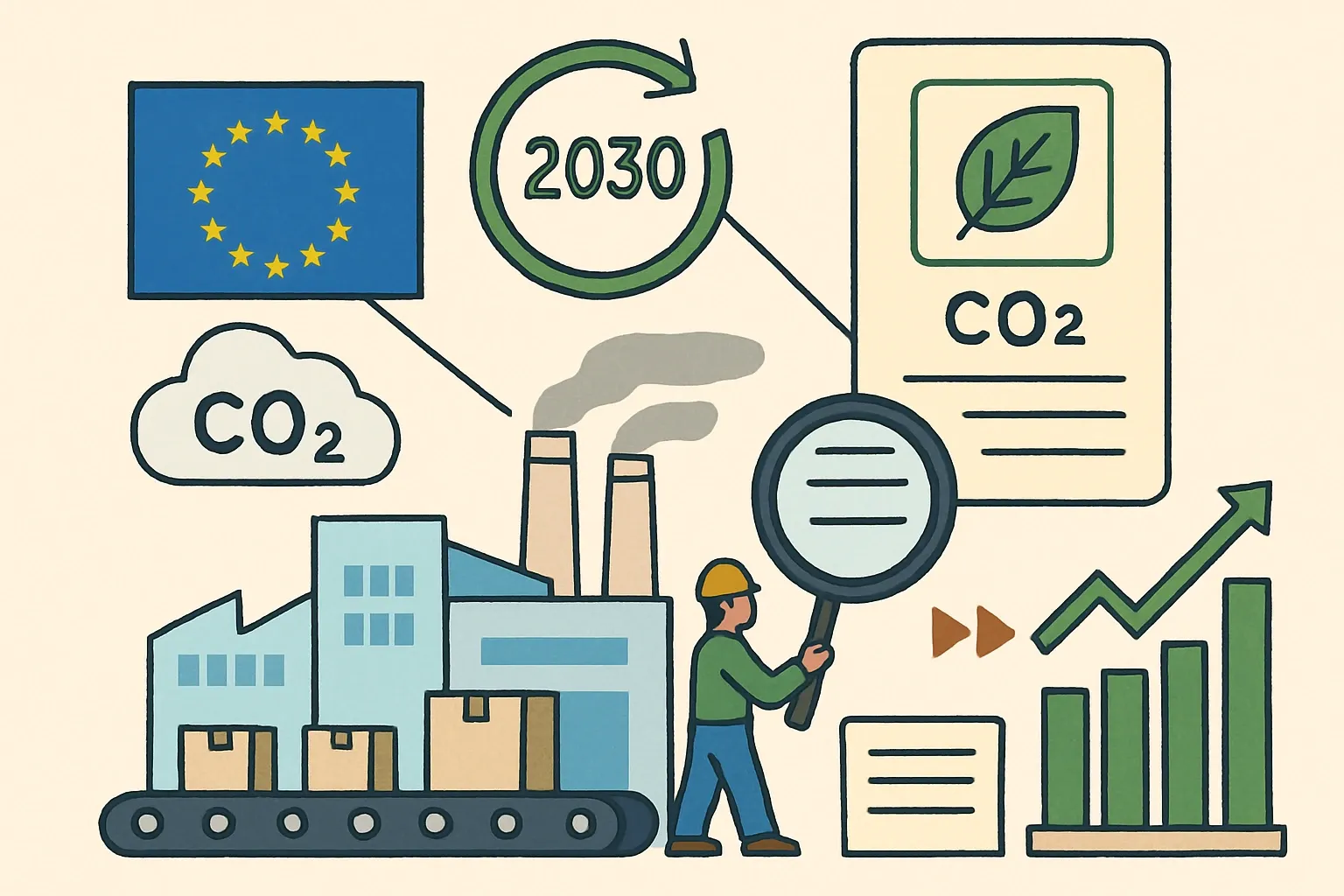
The European Climate Law locks in a net 55% greenhouse gas cut by 2030 versus 1990, delivered through a tighter EU ETS, national targets under the Effort Sharing Regulation, and land use removals. That headline target sets the tempo for every procurement and reporting rule that follows (European Commission, 2025). (commission.europa.eu)
Energy efficiency now bites at the plant
The recast Energy Efficiency Directive sets a binding EU wide goal to reduce final energy use by 11.7% by 2030 compared to 2020 projections, with stepped annual savings rising to 1.9% in 2028 to 2030. Expect audits, energy management systems, and tougher proof on delivered savings to be routine asks in bids (European Commission, 2024). (energy.ec.europa.eu)
More renewables in your meter mix
RED III lifts the binding 2030 renewables share to at least 42.5%, with an EU aim of 45%. Grid averages in LCAs will track that trajectory, which can materially lower A1 to A3 results for electricity intensive products (European Commission, 2025). (energy.ec.europa.eu)
Want to stay ahead of EU climate regulations?
Follow us on LinkedIn for insights on how EPDs can unlock new project opportunities and ensure compliance with the latest standards.
Carbon border pricing changes input math
CBAM covers cement, iron and steel, aluminium, fertilizers, electricity, and hydrogen. It started with reporting in a transitional phase from 1 October 2023 through 31 December 2025, then shifts to paid certificates for embedded emissions from 1 January 2026. If you import covered inputs into the EU, plan for verified data flows from suppliers now (European Commission, 2023–2025). (taxation-customs.ec.europa.eu)
Where EPDs plug into the 2030 story
EPDs built to EN 15804 give buyers a common rulebook, so your cradle to gate numbers are comparable and auditable across programs. Public clients increasingly reference product specific EPDs to align with climate plans and Level(s), and private developers use them to de risk carbon budgets. Teams that show recent, third party verified results face fewer substitution questions and fewer delays.
Your data game plan
Pick a clean reference year, gather plant specific utility and material data per site, and map supplier EPD coverage for top inputs. Lock in how you will evidence reductions, from renewable PPAs to fuel switching, so updates land as improvements rather than rework. A strong LCA partner should investigate which PCR your competitors use, the program operator fit, and renewal timing, then handle the cross functional wrangling that eats your week.
Timeline cheat sheet for materials teams
- 1 Oct 2023 to 31 Dec 2025: CBAM transitional reporting only, quarterly submissions. Financial obligations start 1 Jan 2026 (European Commission, 2023). (taxation-customs.ec.europa.eu)
- By 2030: EU final energy use cut of 11.7% vs 2020 projections, with 1.9% annual savings in 2028 to 2030 per the Energy Efficiency Directive (European Commission, 2024). (energy.ec.europa.eu)
- By 2030: Renewables share reaches at least 42.5% EU wide under RED III (European Commission, 2025). (energy.ec.europa.eu)
Turn regulation into spec advantage
This framework rewards clarity. EPDs that are complete, recent, and grounded in robust data shorten buyer due diligence and ease compliance reporting. The smart move is to reduce the effort on your side while increasing the quality of the evidence. We focus on removing data hunting from engineers and product managers so they dont have to choose between operations and documentation.