Colorado’s Model Green Code in a nutshell
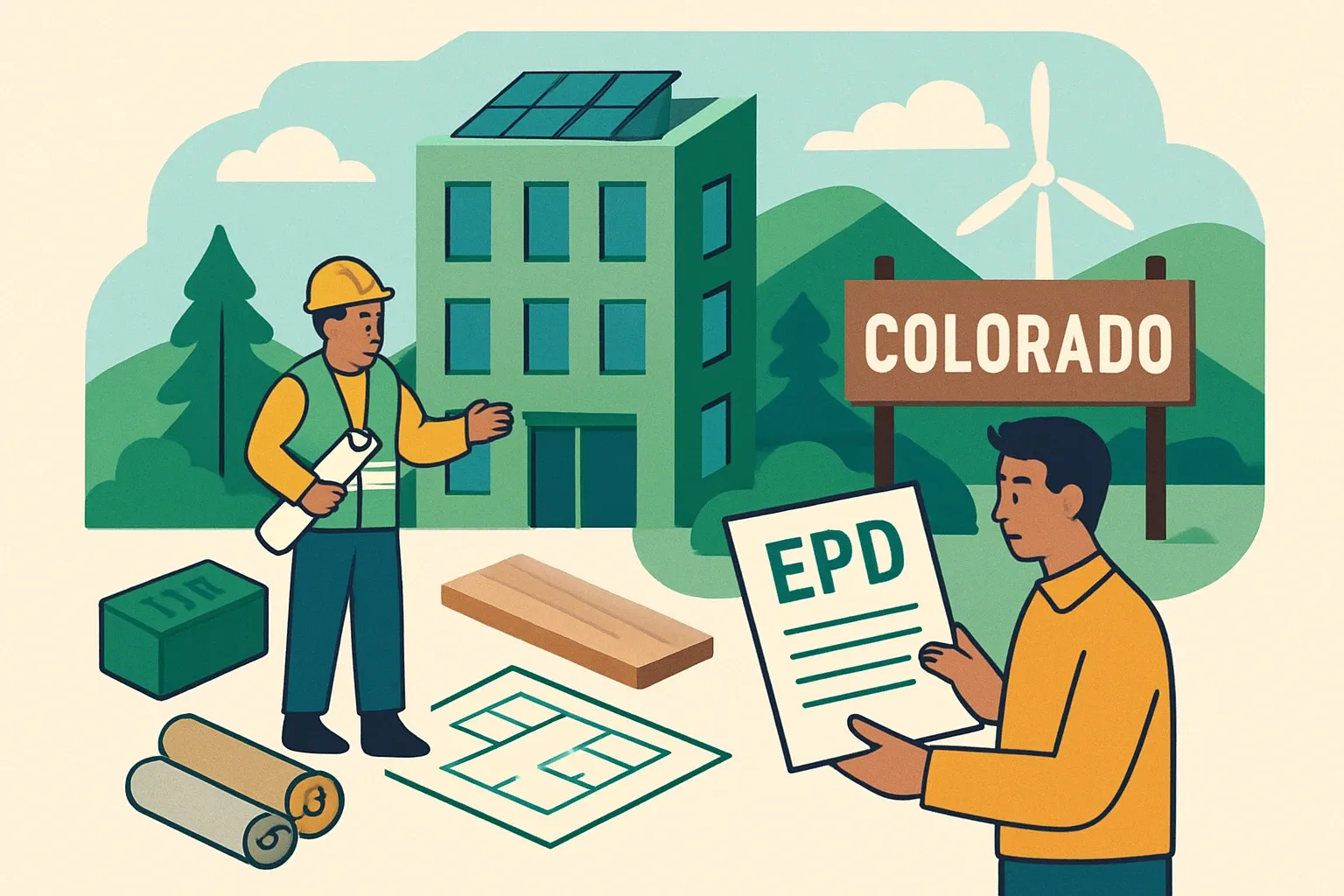
Colorado’s Energy Office published the first statewide Model Green Code on February 23, 2026. It covers energy and water efficiency, electrification, and low‑carbon building materials, and local governments can adopt it voluntarily alongside their energy code (NASEO, 2026) (NASEO, 2026). For manufacturers, the headline is clear: embodied‑carbon choices are now codified, not just coached.
The floor is rising on July 1, 2026
Colorado also finalized a Model Low Energy and Carbon Code that becomes the state’s minimum when jurisdictions update local codes after July 1, 2026. Expect broader alignment on electric‑ready features and higher efficiency across projects statewide (CPR News, 2025) (CPR News, 2025). This creates a stable runway for cities to layer the Model Green Code on top without whiplash.
Where EPDs already bite: state projects
The Buy Clean Colorado policies for buildings require EPDs to be specified in design solicitations that begin on or after January 1, 2024, for eligible materials on state projects of $500,000 or more, with ongoing reviews of GWP limits starting in 2026 (OSA, 2025) (OSA, 2025). Translation for product teams: no current, product‑specific, third‑party verified EPD usually means no placement on these projects.
CDOT’s numbers to beat
On the horizontal side, CDOT’s Buy Clean policy applies GWP limits to projects advertised on or after July 1, 2025. Example 2025 caps include ready‑mix concrete classes around 346 to 365 kg CO2e per m³ and asphalt mixtures near 77 to 90 kg CO2e per metric ton, with EPDs still required even when limits are “TBD” for certain steel categories. Portable plants are currently exempt from limits but still need EPDs as specified (CDOT, 2025) (CDOT, 2025).
Join Parq Pulse!
Stay ahead with weekly insights on environmental regulations shaping construction materials and win more projects.
Private market ripple: financing and credits
Colorado’s 2025 law expanded what qualifies for C‑PACE by recognizing “embodied carbon improvements.” It also set a 15 percent or greater reduction in cradle‑to‑gate embodied emissions as the eligibility threshold for an industrial clean energy tax credit within the act’s scope (Colorado General Assembly, 2025) (Colorado General Assembly, 2025). That means low‑carbon formulations can unlock capital, not just compliance.
What this means for your product strategy
Think of the Model Green Code as a playlist. Jurisdictions can press play on low‑carbon features at any time, and owners will expect material transparency by default. To stay in the spec conversation:
- Target the high‑volume, high‑attention categories first. For buildings, that means concrete, steel, glass, wood structural elements. For transportation, asphalt, concrete, and steel. Bring current, product‑specific EPDs.
- Pick the same PCR families competitors use so results compare apples to apples. A good LCA partner will help validate the choice and track update cycles.
- Build a data trail early. You will be asked for mix ingredients, cement types, SCM rates, energy and fuels, scrap and yield, and transport legs. Expect A1 to A3 by default, and plan for A4 transport reporting where required by owner policy.
- Watch local moves. Cities can adopt the Model Green Code selectively, and some may pilot embodied‑carbon tiers before full adoption. Denver’s green code pathway already spotlights embodied‑carbon electives in concrete and other materials, a signpost for where specs are headed (Denver Green Code, 2023).
How to be easy to specify
Spec writers prize speed, clarity, and trust. Clean EPDs with unambiguous product names, declared units, and plant locations reduce back‑and‑forth. A central folder per product, with the current EPD, mix or bill of materials, and a one‑pager that translates the GWP into plain English, will save days. We prefer teams who make data collection painless and keep the paperwork tidy, because that’s what closes submittals fast. Yes, that’s boring. It also wins.
Timelines and watch‑outs
OSA’s GWP limits are reviewed starting January 1, 2026, and at least every four years, so thresholds will only ratchet in one direction over time (OSA, 2025). CDOT reviews its limits annually, which means 2025 numbers are not a forever pass and suppliers should track updates before bid day (CDOT, 2025). If reliable category limits are missing, say so plainly in proposals and submit the EPD anyway. Jurisdictions appreciate candor over creative math, and so do GCs.
Bottom line for Colorado bids
Colorado’s Model Green Code makes low‑carbon choices visible in code while Buy Clean locks EPDs into day‑to‑day procurement. Manufacturers who can document credible reductions and deliver tidy, current EPDs will be the easy button for design teams. Those who wait will find themselves explaining why paperwork is late, which is not a fun converstation.