CBAM in a nutshell
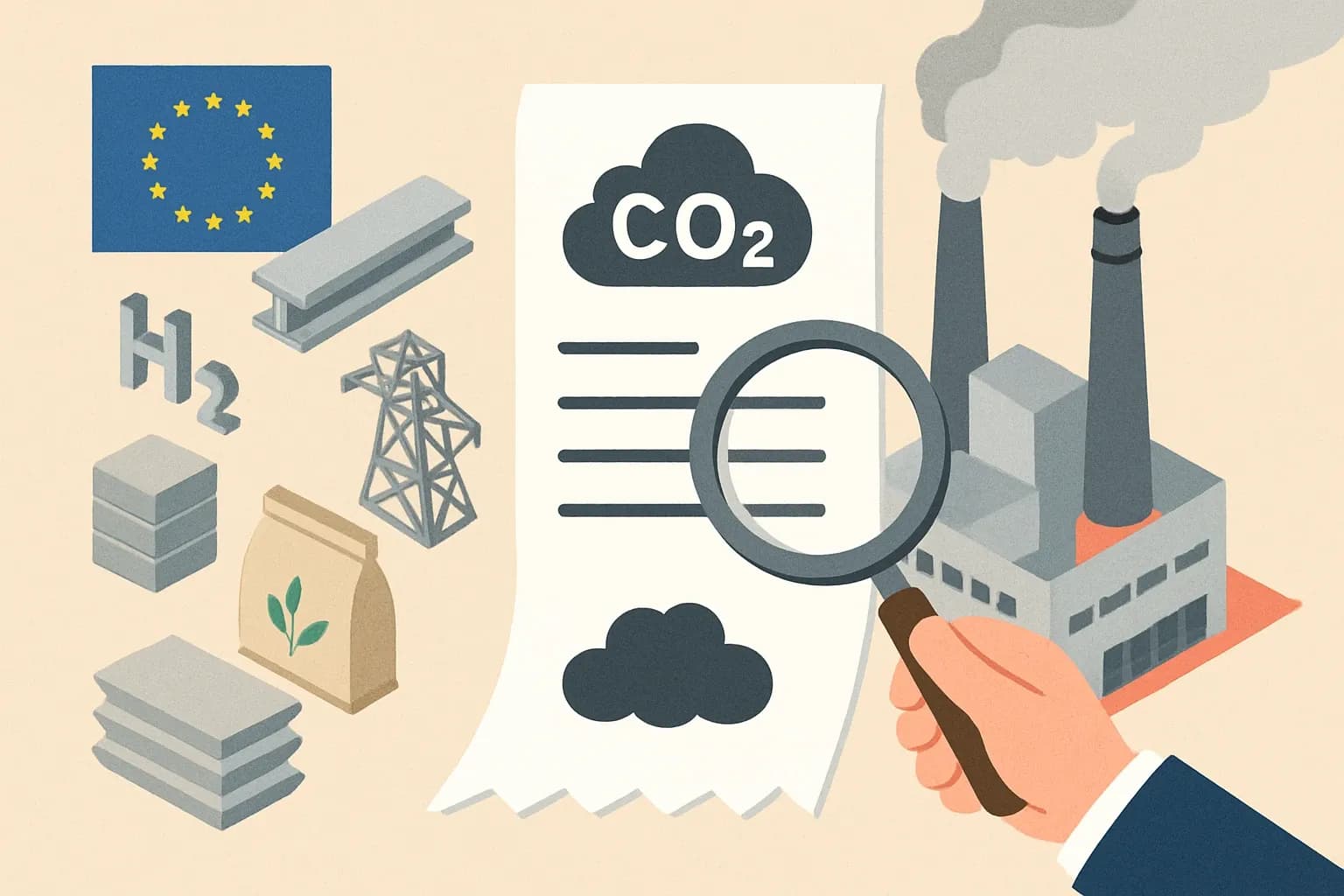
CBAM puts an EU carbon price on certain imports based on their embedded emissions. The charge aligns with the EU Emissions Trading System and ramps while free allowances are phased out through 2034. When fully phased in, CBAM will capture more than 50% of emissions in sectors covered by the EU ETS (European Commission, 2025) (European Commission, 2025).
Who is covered right now
Today CBAM applies to six gateways of embodied carbon: cement, iron and steel, aluminium, fertilisers, hydrogen, and electricity. Many downstream products use these as ingredients, so even if your SKU is not listed, your supply chain may be. Teams that wait for a formal expansion risk last‑minute scrambles when contracts are on the line.
The ramp from 2026 to 2034, translated
The EU is retiring ETS free allowances as CBAM takes over. The glide path is set by law: 2026 at 2.5%, 2027 at 5%, 2028 at 10%, 2029 at 22.5%, 2030 at 48.5%, 2031 at 61%, 2032 at 73.5%, 2033 at 86%, and 2034 at 100% (European Parliament, 2024) (European Parliament Legislative Train, 2024). Those percentages matter for pricing models and budget forecasts.
Small shipments, big coverage
A new de minimis rule exempts up to 50 tonnes per importer per year, yet policymakers say this still covers 99% of CO2 from targeted imports and removes filings for roughly 90% of importers by count (European Parliament, 2025) (European Parliament, 2025). Do not bank on the threshold if your business depends on regular EU deliveries. It is a convenience, not a strategy.
Reporting mechanics that trip teams up
CBAM numbers are product and installation specific. Importers need plant‑level direct emissions, electricity use with location‑based factors, and the embedded emissions of precursors. During the transition, estimations were capped for complex goods at 20% of total embedded emissions from Q3 2024 until end‑2025, then the EU method became mandatory from 2025 data onward (European Commission, 2023). Accurate primary data now decides the bill.
Navigating CBAM compliance in your supply chain?
Follow us on LinkedIn for insights on how EPDs can streamline your reporting and improve your project specs.
How EPDs help, and where they do not
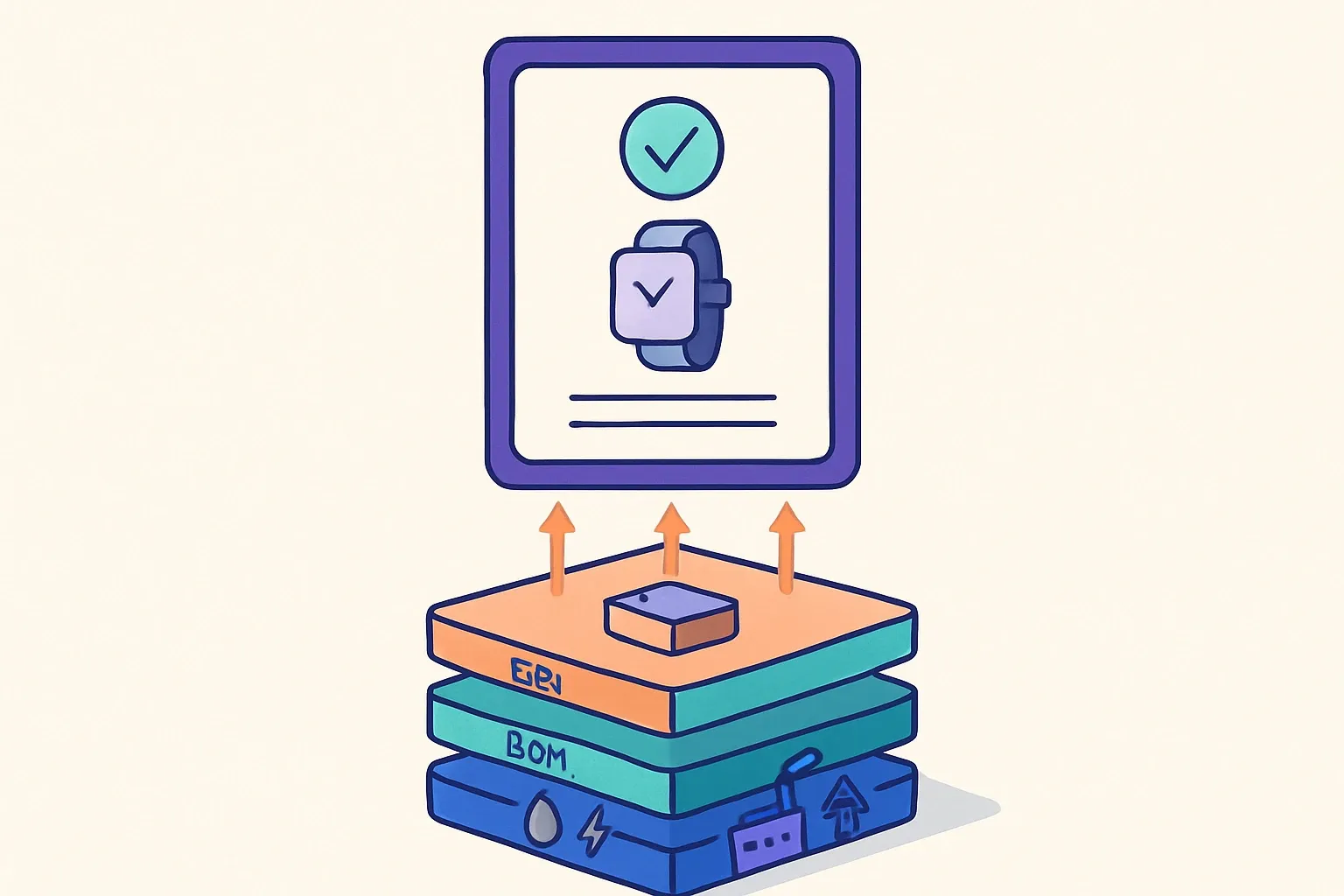
An EN 15804 EPD is not a CBAM compliance document. It is a map. The data trail behind a credible, third‑party verified EPD overlaps heavily with what CBAM asks for, especially metered energy, material inputs, waste, and transport. The difference is scope and math. CBAM wants embedded emissions aligned to its method at the installation level, plus proof trails that customs and competent authorities can review. Treat your EPD work as the backbone, then layer CBAM‑specific calculations and recordkeeping.
A quick playbook for 2026 shipments
- Map covered CN codes across your catalog and identify the exact plants that feed EU orders. Assign an owner per plant.
- Lock a data year, then collect twelve months of utilities, fuels, scrap, and precursors with supplier attestations. Avoid averages unless the method allows it.
- Stand up a CBAM evidence room. Keep meters, invoices, contracts, and calculation workbooks in one place, versioned.
- Contract for verification readiness. Even where third‑party verification is not required yet, a cold review catches gaps early.
- Build the customs stance. Apply for authorised CBAM declarant status and align your broker on document flows.
Pricing the impact without guesswork
The charge tracks the EU ETS carbon price multiplied by embedded emissions, adjusted for any carbon price paid outside the EU. That makes high‑quality primary data a cost lever. Cleaner fuel swaps, grid mix changes, and scrap content all move the number, and the savings are recurring. Reliable industry‑wide averages for total compliance costs are scarce today, so any calculator promising precise totals across sectors is probably over‑confident.
Specs, sales, and the EU buyer’s lens
CBAM is about border entries, yet it spills into commercial conversations. Buyers compare like for like, and a product with a recent, product‑specific EPD plus clear CBAM data feels easier to specify. Teams that arrive with defensible numbers shorten negotiations. Those who arrive with spreadsheets full of gaps lose time and sometimes the slot. This is where white‑glove data collection pays back, not just clever software.
What to watch next
Policy makers continue to tune scope, verification, and anti‑abuse rules. The Commission notes that, once fully phased in, CBAM’s coverage is designed to mirror a large share of ETS emissions, with expansion debates ongoing (European Commission, 2025). Keep your system nimble. The companies who win treat CBAM like tax and trade, not a one‑off sustainability exercise. It is definately here to stay.