What the policy requires
Bath & North East Somerset’s Local Plan Partial Update introduced Policy SCR8, which requires an embodied carbon assessment for new build developments of 50+ homes or 5,000 m² of commercial floor area, verified by a third party (B&NES Embodied Carbon Assessment, 2025). The assessment must demonstrate less than 900 kgCO2e per m² for substructure, superstructure, and finishes (B&NES Embodied Carbon Assessment, 2025).
Where the checklist fits
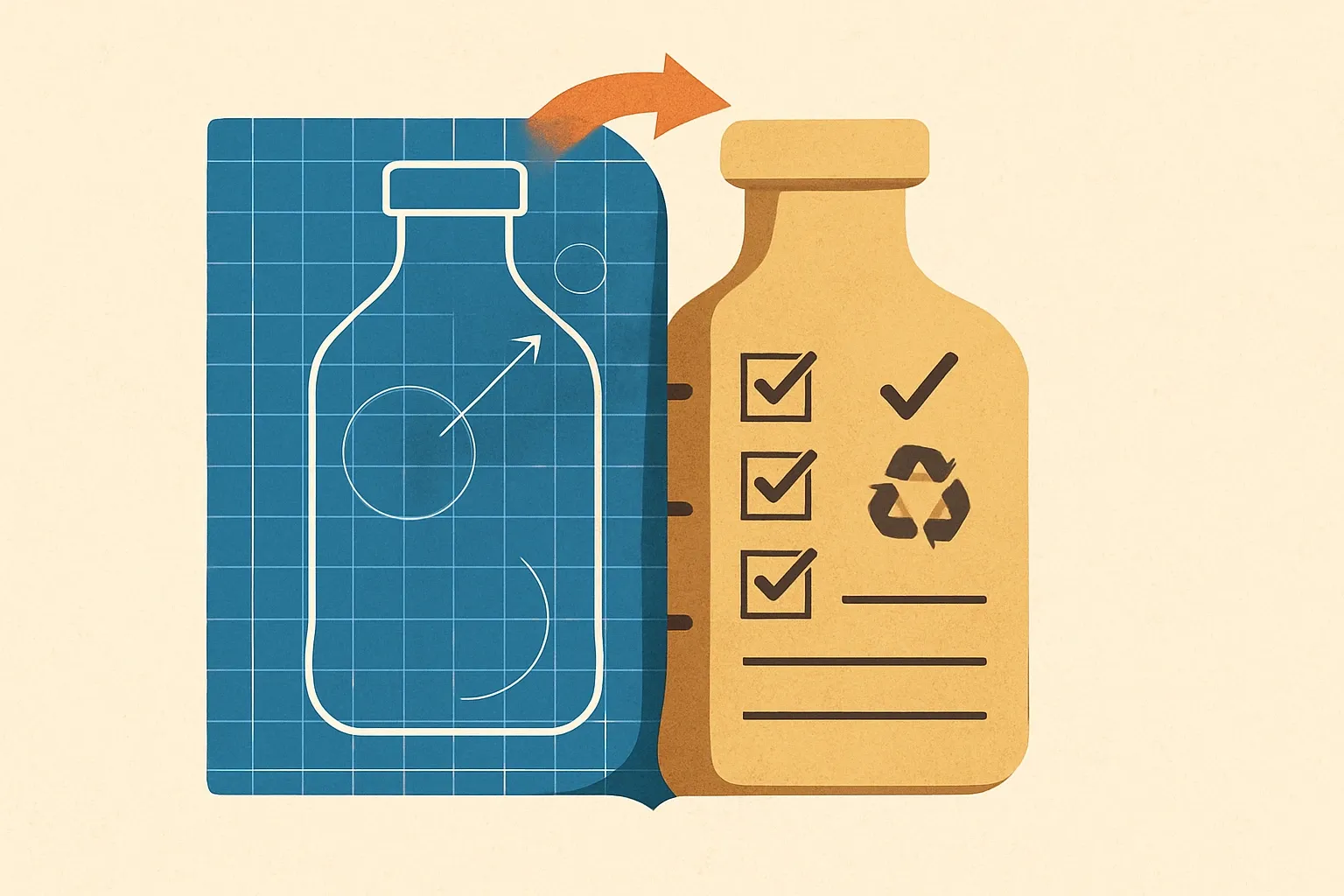
Applicants also submit the Sustainable Construction Checklist SPD, which sets out how to report energy, materials, and verification across project types, including major non‑residential and medium‑scale works on existing buildings (B&NES Sustainable Construction Checklist SPD, 2025). Think of it as the level‑of‑detail blueprint that planners expect alongside your carbon numbers.
Whole life mindset, embodied first
The council encourages PAS 2080 and RICS Whole Life Carbon guidance to frame analysis across the building life cycle. In practice, planners start by looking at upfront and building‑fabric impacts your products drive, then how choices ripple into transport, site works, maintenance, and end‑of‑life. A product‑specific EPD is the shortest bridge between your factory data and a credible submission.
Why this matters commercially
Without an EPD, engineers fill gaps with generic datasets that skew higher. That inflates a scheme’s baseline and can nudge your product out of the spec, even if the price is sharp. An up‑to‑date, third‑party verified EPD lets the design team prove compliance faster, which keeps your line in contention when timelines compress.
Struggling with new carbon policies in your bids?
Follow us on LinkedIn for insights that help you navigate compliance and boost your project specifications.
Make your EPD do real work
A good EPD speaks the council’s language. Ensure the declared unit aligns with how the product is bought and installed on these projects. Map modules clearly so A1 to A3 are transparent and defensible, with optional A4 and A5 methods explained. If substitutions or batch variations matter, include ranges and scenario notes the design team can lift straight into their calculator.
Data designers actually ask for
Expect requests for the PDF EPD, machine‑readable results, verifier statement, declared unit and conversion guidance, transport assumptions, recycled content, and maintenance intervals. Provide a one‑page handover sheet that points to the right EPD tables and clarifies any project‑specific caveats. You will save an architect a day, and win a fan.
Fast track your internal prep
Line up one reference year of utilities, monthly production volumes, scrap and rework, inbound transport modes and distances, packaging specs, and waste destinations. Add supplier EPDs for high‑mass inputs like cement, steel, and glass. Capture typical delivery routes into Bath, Bristol, and the Somer Valley so A4 doesn’t become guess‑work.
Pitfalls we still see
Mismatched declared units torpedo comparability. PCRs on the brink of expiry complicate verification. Missing A4 or site‑waste assumptions trigger rework late in planning. If your product has options, be explicit about what the published EPD covers and what needs a scenario note. It sounds basic, but it’s where submissions stumble.
Reading the tea leaves
The council has refreshed guidance and continues to refine how whole‑life thinking shows up in validation lists and checklists, with the SPD updated in 2025 for clarity on who needs to submit what (B&NES Sustainable Construction Checklist SPD, 2025). Manufacturers that pair clean EPDs with quick responses will feel the least friction as policy practice evolves.
What to prioritise this quarter
Confirm your flagship products have current, EN 15804‑compliant, third‑party verified EPDs. Prepare a short spec pack that translates your EPD into SCR8‑ready inputs. Offer a named contact for verification queries. Doing this now is the easiest way to stay selectable when a Bath scheme goes live and the carbon spreadsheet starts filling. It’s definately less painful than rewrites mid‑tender.