Who issues EPDs here
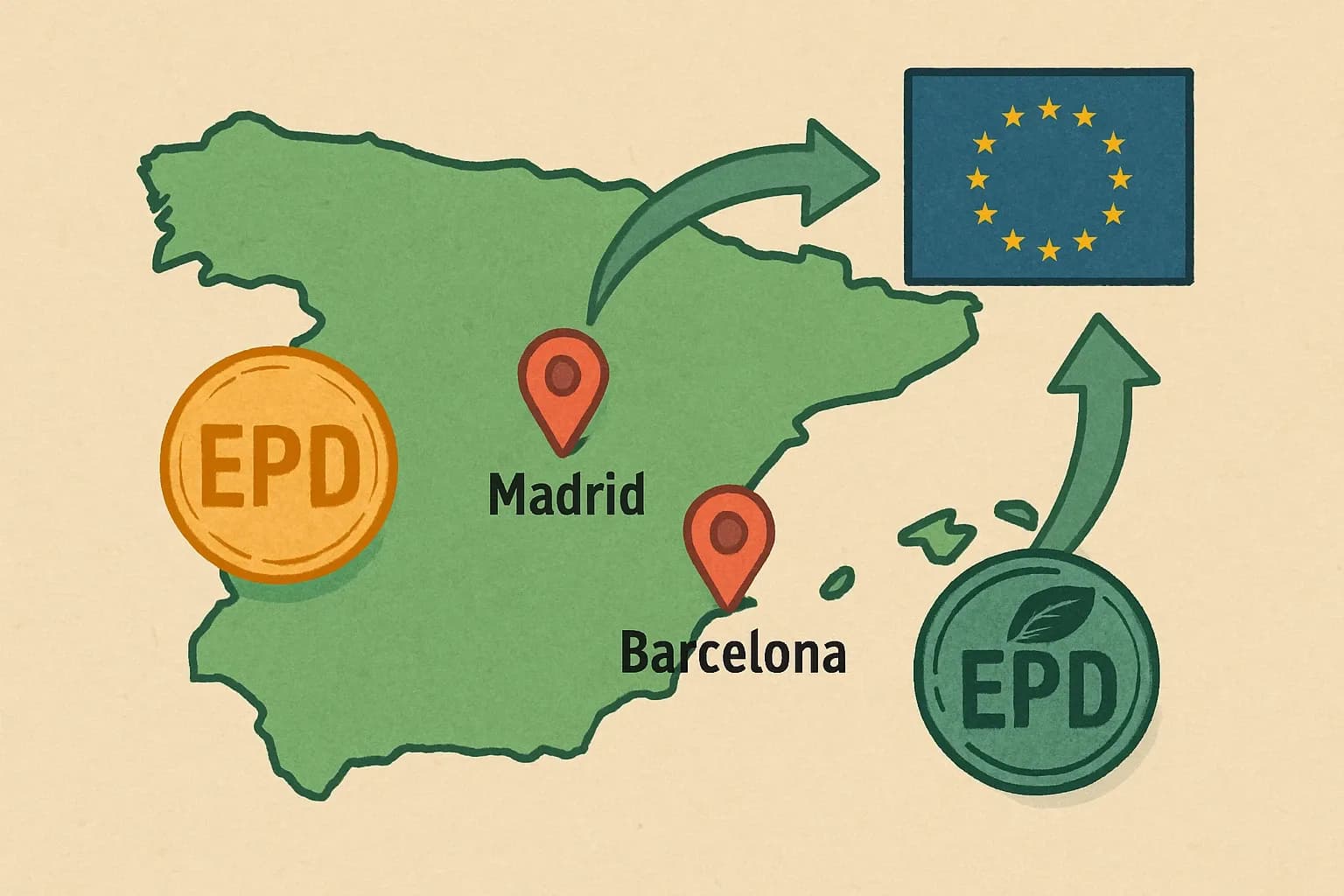
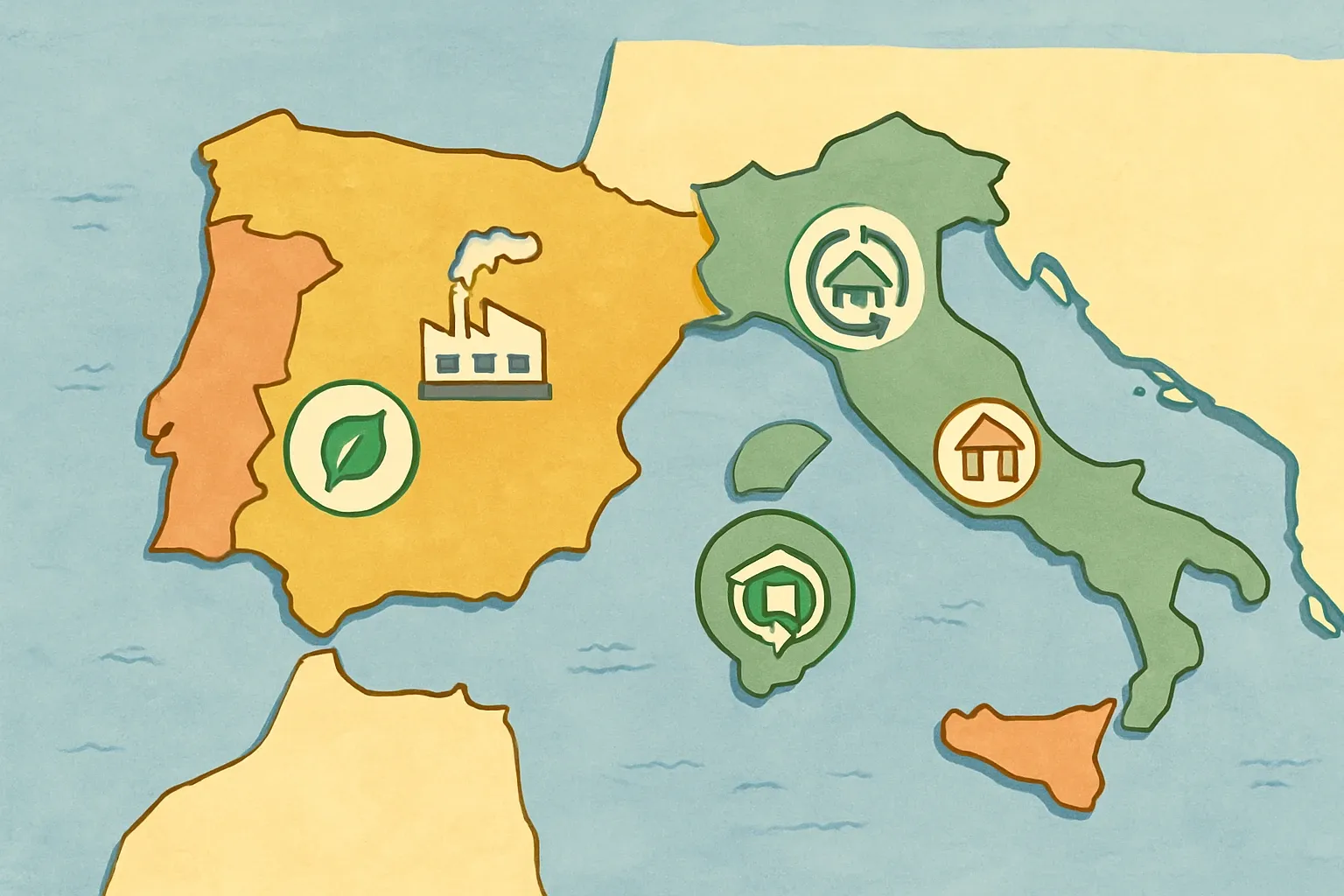
In Southern Europe most construction‑product EPDs are published with AENOR GlobalEPD (Spain), EPDItaly, the Portuguese DAPHabitat System, the International EPD System, and Germany’s IBU for cross‑border visibility. Mutual recognition through ECO Platform helps an EPD published with one operator be accepted across the EU, yet local habits still matter, especially in public works and sector guilds.
Standards that rule the game
The baseline is EN 15804+A2. It expands mandatory reporting to 13 core impact indicators, which is why older A1 EPDs feel out of step on new bids (CEN, 2019). Global warming potential is split into four indicators, so reviewers expect fossil, biogenic, land‑use change, and total to be clearly reported (EPD International, 2024). End‑of‑life modules C1 to C4 and Module D are now standard, which is where many teams lose time if transport and recycling routes are guessed late.
Where EPDs win specs and tenders
Public procurement in the EU represents about €2 trillion per year, around 14 percent of GDP, so aligning with what contracting authorities read and reward is commercially decisive (Council of the EU, 2025). Many public clients in Southern Europe reference EN 15804 and accept ECO‑recognized EPDs, which makes operator choice less about theory and more about practical recognition in your target region.
Country snapshots in brief
Spain. AENOR GlobalEPD is widely used, with bilingual Spanish‑English publications common. International EPD System and IBU also appear on cross‑border products.
Italy. EPDItaly has strong local traction, and public works frequently look for EN 15804 EPDs aligned with national criteria. International EPD System and IBU are familiar to large specifiers.
Portugal. DAPHabitat is the domestic program for construction products. For export, manufacturers often pair DAPHabitat with International EPD System or IBU for wider reach.
Greece. No dedicated national program is prevalent. Manufacturers typically publish with International EPD System, IBU, EPDItaly, or AENOR depending on sector ties and export markets.
Selling in Southern Europe? EPDs are key.
Follow us on LinkedIn to navigate regulations and unlock new opportunities for your products.
Databases and visibility
Make sure the EPD is easy to find in the operator’s registry, visible to ECO Platform users, and available in English. For domestic bids, a local‑language PDF helps even when the official version is English. Some operators also provide machine‑readable outputs, which increasingly feed national building assessment tools.
Smart operator selection for Southern Europe
Pick with the tender in mind, not just the standard.
- Publish where your buyers actually check certificates, then use mutual recognition to widen reach.
- Ensure the verification body is comfortable with your product category and PCR history.
- Confirm bilingual layout early, including product names as they appear in catalogues.
- Ask for a digital output that mirrors EN 15804+A2 indicator names to avoid rework later.
A fast path to a publishable EPD
- Lock the reference year and site list, then pull utility, fuel, water, and wastes straight from meters and weighbridge tickets.
- Map the bill of materials to background datasets once, keep a short log of any substitutions, and freeze versioning before verification.
- Model logistics and end‑of‑life in parallel with A1 to A3, not after, so Module D credits and burdens are consistent.
- Run an internal read‑through focused only on the 13 core indicators and the four GWP splits, since that is where most review comments arise (CEN, 2019; EPD International, 2024).
EPDs, ratings, and market access
LEED v5 proposals tighten expectations for embodied carbon, and Southern Europe’s private developers increasingly apply EN 15804 language in specs. Even when a tender does not mandate an EPD, lacking one can force buyers to use conservative defaults that make your product look heavier than it is. An up‑to‑date, verifiable EPD removes that penalty.
Watchouts unique to the region
Terminology varies by language, yet reviewers expect the same EN 15804+A2 definiton of indicators. Transport fuels, clinker factors, tile body recipes, and aluminum alloying can differ plant to plant, so avoid averaging that hides real variance. If you sell in both Iberia and Italy, align on one PCR where feasible to reduce duplicate work.
The short version
EPD Southern Europe success is about pairing EN 15804+A2 discipline with the operator your buyers already trust. Publish in a registry they actually open, keep the 13 indicators and GWP splits crystal clear, and make the file bilingual. Do not wait on perfect data, use what you have, then tighten. Specifiers loves clarity, and clarity here tends to win bids.