EPDs, in plain Latvian context
An Environmental Product Declaration is a third‑party verified report built on an LCA and aligned with EN 15804 for construction products. In Latvia, specifiers look for EN 15804 conformity and clear A1–A3 results at minimum, with A4 and end‑of‑life data often requested for larger works.
Where EPDs show up in procurement
Green Public Procurement criteria are mandatory for construction works on third‑group buildings in public tenders starting 2024, which puts transparent product data on the table for designers and buyers. EPDs are a clean way to evidence embodied carbon and other indicators within those tenders.
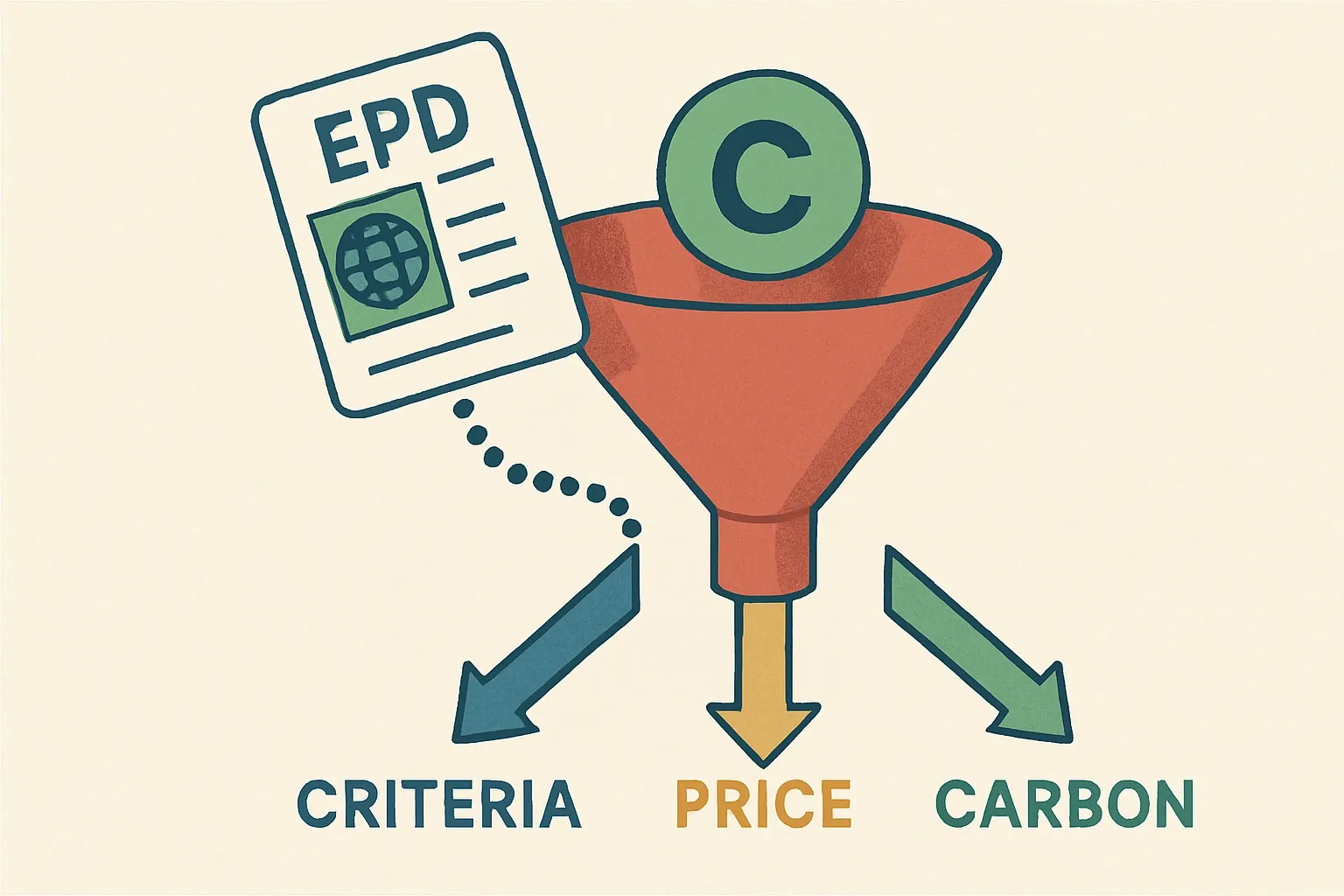
Latvia’s public procurement is a sizable market at roughly 5.4 billion euros in 2023, about 14% of GDP, so showing up with trusted data is commercially material (State Audit Office of Latvia, 2024) (Valsts Kontrole, 2024). Yet tender culture still leans on lowest price. In 2021–2023, 73% of awards were decided solely on price, which means credible environmental data must be easy to compare and quick to verify to avoid being sidelined by price‑only bids (LSM, 2025) (LSM, 2025).
Who publishes EPDs used in Latvia
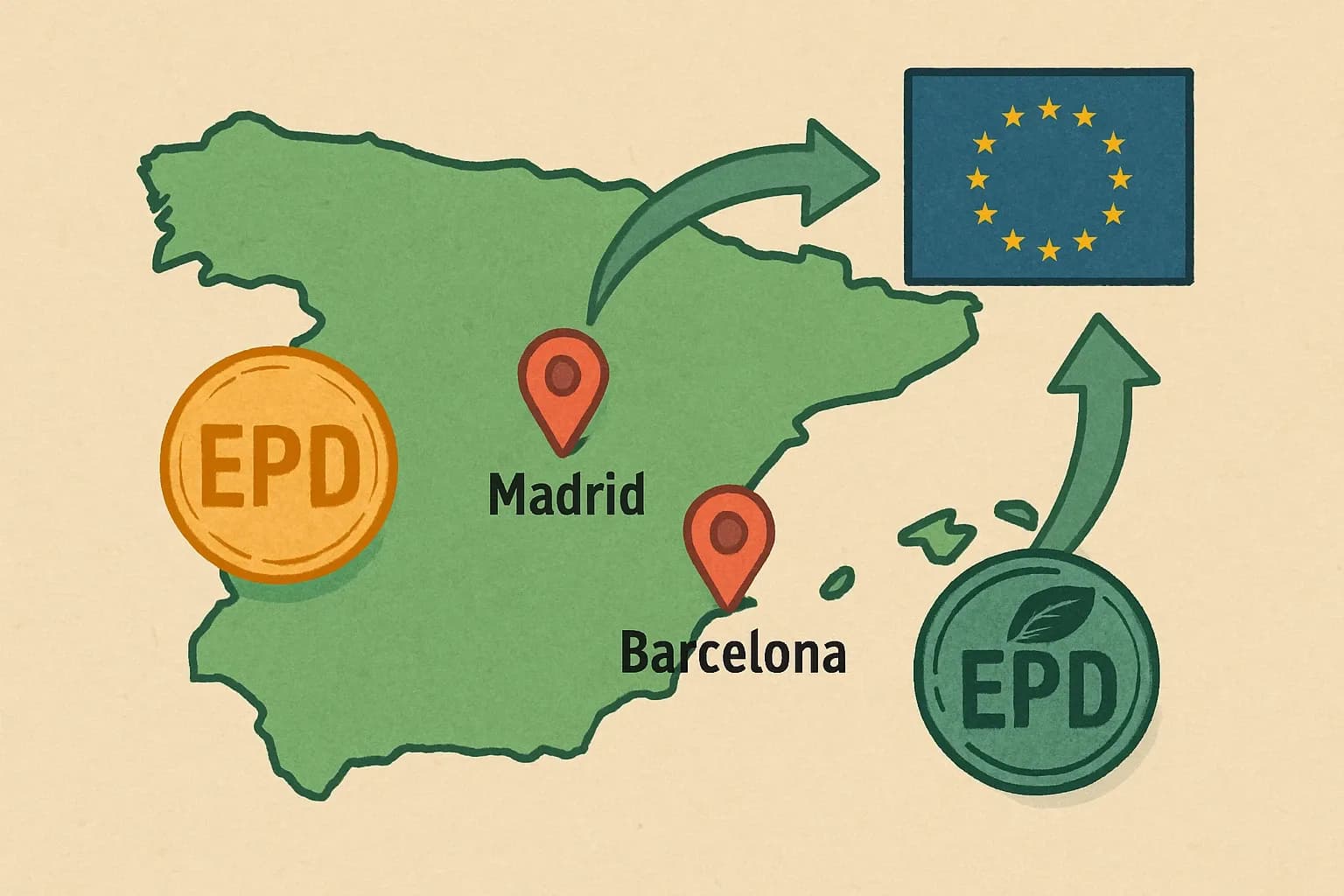
Most EPDs used on Latvian projects are issued by European program operators aligned with EN 15804. Operators such as IBU and The International EPD System are widely recognized, and ECO Platform mutual recognition helps the same EPD travel across borders without redo. The International EPD System alone passed 10,000 valid EPDs in late 2024, with construction products representing the majority (EPD International, 2024) (EPD International, 2024).
Sectors where EPDs pay off first
Wood products, metals, insulation, concrete, and finishes are frequent asks on Latvian and export projects. Timber is a national strength and still growing, with wood and wood product exports up 153 million euros in 2024, a 5.3% increase year on year (CSP, 2025). For mills and fabricators, product‑specific EPDs prevent defaulting to generic or penalized datasets in building LCA models, which often tilt choices away from products without declarations.
Want to win tenders in Latvia's public sector?
Follow us on LinkedIn for insights on leveraging EPDs to unlock market opportunities and streamline your project specifications.
PCRs and choosing your rulebook
Think of a PCR as the rulebook of Monopoly. Ignore it and the game falls apart. The fastest path is to use the same PCR your closest competitors use, unless it is expiring soon or missing your product’s key processes. A good partner will map competitor EPDs, flag the PCRs they used, check expiry, and propose where to publish so your declaration is accepted on day one in Latvia and in export markets.
Data you should have ready before kickoff
- One recent reference year of plant data for the site and product family, including energy, fuels, water, waste, and production volumes.
- Bills of materials with supplier locations and transport.
- Packaging, scrap, and yield assumptions, plus typical shipping lanes into Latvia and to export markets.
- Any on‑site renewables or efficiency projects worth crediting.
Data are collected, then it get modeled against the chosen PCR, verified by an independent reviewer, and published by your selected program operator.
Program operator selection for Latvia
If you mainly sell inside the EU, prioritize EN 15804 compatibility and ECO Platform recognition. If you also sell into the Nordics or DACH, publishing with an operator that is already common in those markets reduces friction. If your buyers ask for digital EPD formats or API access, pick an operator with a live digital library to avoid manual PDF wrangling later.
Selling with an EPD in Latvia’s tender rhythm
In a system that still defaults to price, an EPD can be the tie‑breaker that keeps you from being swapped for a generic line item. It enables accurate embodied‑carbon accounting on projects aiming for client climate targets or rating tools like LEED v5 credits tied to product transparency. The upside is practical. Even one mid‑sized win that required quantified embodied carbon can repay the effort to publish.
What’s changing in 2025 to watch
EU corporate reporting rules remain in flux, but buyer requests for traceable product data are not easing. Locally, authorities are pursuing procurement reforms to simplify processes while retaining sustainability aims. Keep EPDs current against EN 15804+A2, monitor GPP templates used by your contracting authorities, and align your declaration language set with the markets you bid into.
A direct take
For teams googling epd latvia, the move is simple. Pick the right PCR, gather plant‑level data once, publish with a European operator that your buyers already know, and make your EPD effortless to verify in tenders. That is how you convert paperwork into predictable wins.