EPDs in the U.S. at a glance
An Environmental Product Declaration is a third‑party verified label that turns a Life Cycle Assessment into decision‑ready numbers. For U.S. construction products, most credible EPDs follow ISO 14025 and EN 15804, report at least cradle‑to‑gate A1–A3, and are facility‑specific rather than industry‑average.
EPDs are typically valid for five years, after which a renewal or republish is needed if you want to keep using them for bids (EPD International, 2025).
Where EPDs move markets today
LEED v5 was ratified in March 2025 and keeps product EPDs squarely in scope for materials transparency and whole‑life‑carbon tracking, so teams asking “EPD USA” will see more of them in specs (USGBC, 2025).
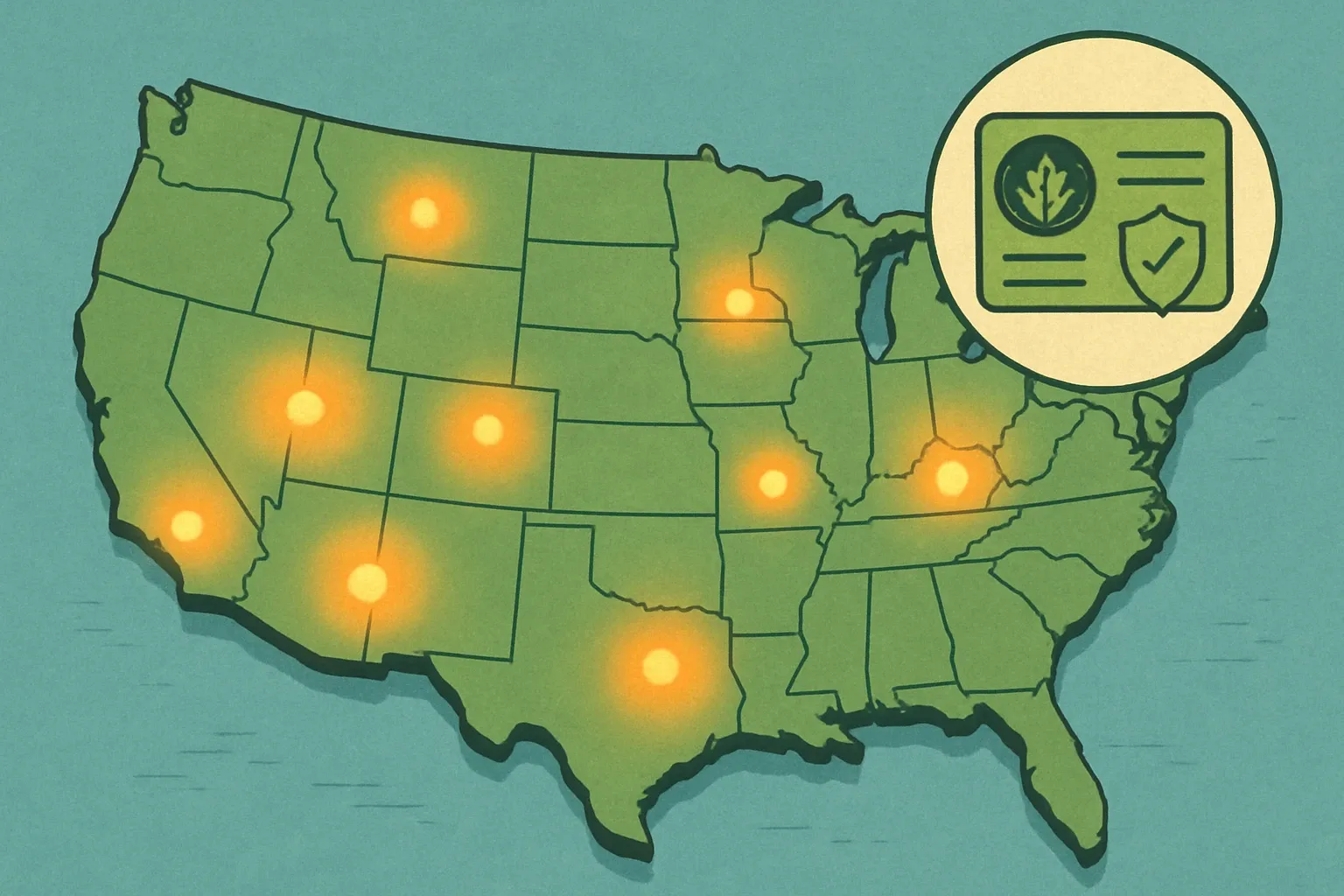
States lead many public‑works requirements. California’s Buy Clean program sets maximum GWP limits and only accepts facility‑specific, independently verified EPDs. For example, hot‑rolled structural steel sections carry a 1,010 kg CO2e per metric ton limit from January 1, 2025 (California DGS, 2025).
Transport agencies are formalizing submittals. Caltrans requires EPDs for certain materials on projects with bid dates starting February 1, 2025 (Caltrans, 2025).
Federal policy is in flux in 2025, with some IRA‑linked disbursements paused or reworked pending agency review. Treat agency pages as the source of truth for current low‑embodied‑carbon procurement and EPD formats (White House OMB Memo M‑25‑11, 2025).
Program operators you will encounter
Common U.S. program operators include UL Solutions, NSF International, SCS Global Services, ASTM International, and Smart EPD. Many global teams also publish through Environdec and IBU. Selection rarely changes the math, but it does shape templates, verifier pools, and registry visibility.
Want to master EPDs in the U.S. market?
Follow us on LinkedIn for insights that help you win bids and unlock new opportunities.
Picking the right PCR, the fast way
Think of the Product Category Rule as the rulebook of Monopoly. Ignore it and the game falls apart. The practical path in the U.S. is to check which PCR your closest competitors use, confirm it aligns with EN 15804 or ISO 21930, then consider operator timelines and revision dates. If no tight match exists, generic construction PCRs from major operators usually cover the gap until a product‑specific PCR emerges.
Data you need, without the scramble
Most projects use a single reference year for utilities, volumes, inputs, and waste. New products can sometimes start with a shorter “prospective” window, then true‑up once a full year exists. Plant‑level energy, batch recipes, packaging, scrap rates, and transport distances are the usual speed bumps. The win is to centralize collection once, not chase spreadsheets for months. One team member spending an hour to unblock a data field is cheaper than an entire bid cycle slipping.
What counts as a usable EPD in U.S. bids
Awarding authorities increasingly ask for product‑specific, facility‑specific Type III EPDs with third‑party verification. California explicitly excludes industry‑average and fabricator EPDs for compliance, and requires the EPD to be valid at installation (California DGS, 2025). Many private owners mirror those rules.
How EPDs influence ROI
When buyers must hit embodied‑carbon targets, submitting without a product EPD often forces them to use conservative default factors that penalize your product. A current EPD removes that handicap so the discussion can return to performance, availability, and price. Sales teams also avoid last‑minute scrambles by referencing one verified document instead of ad‑hoc carbon claims.
Timeline reality, without false promises
Reliable averages for “how long an EPD takes” are hard to pin down because datasets, PCRs, and verification queues vary. What actually saves weeks is disciplined data collection and a partner who does the heavy lifting across plants and ERP systems so your experts stay focused. We favor operator‑agnostic publishing to match owner preferences and speed slots.
Pitfalls that derail U.S. submittals
Expired EPDs get flagged quickly. Mismatched PCRs trigger rework. Using an industry‑wide EPD where a facility‑specific one is required can nullify the submittal. And forgetting to align to LEED v5 definitions or current state rules creates avoidable RFI storms. None of this is rocket science, but it is paperwork heavy and, frankly, kind of annyoing.
Quick check for “EPD USA” readiness
- Is your EPD plant‑level, third‑party verified, and valid for five years from publication (EPD International, 2025)?
- Does it follow the PCR most common in your category and the operator your buyers accept?
- If you sell into California, does your product clear the published GWP limits with a compliant EPD on file (California DGS, 2025)?
- Are your sales and channel teams trained to pull the correct document in under a minute?
Bringing it all together
The U.S. landscape rewards manufacturers who publish once, keep EPDs current, and remove friction for bidders. Choose a partner that streamlines data capture, coordinates verification, and publishes with the operator your buyers expect. Your teams stay on core work, your specs stay live, and your product shows up ready in every shortlist.