What an EPD is called in France
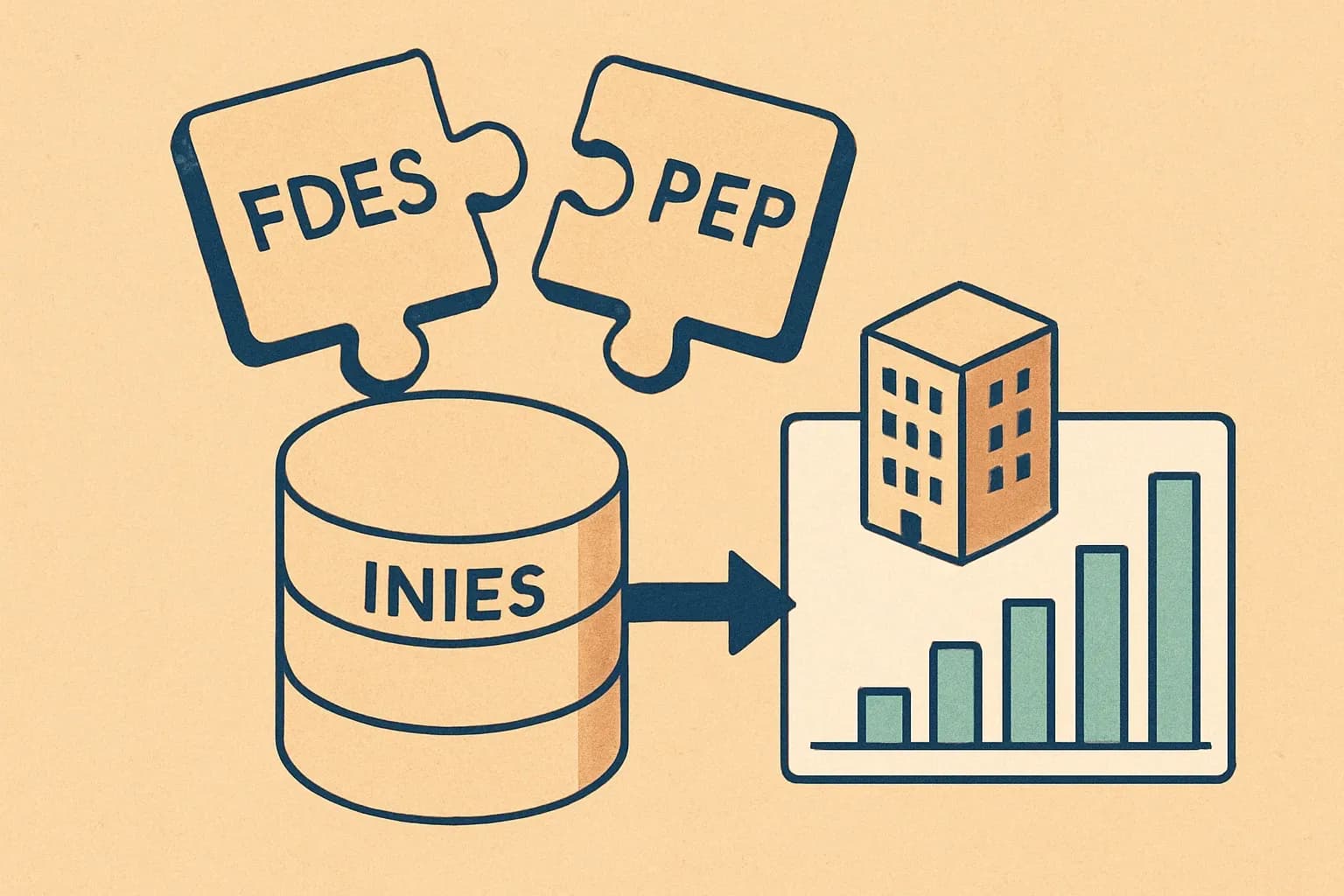
Two names dominate. FDES for construction and decoration products. PEP ecopassport for building equipment. Both are third‑party verified, published in the national INIES database, and valid for five years in the absence of major product change (INIES, 2025). INIES shows live counts of published FDES and PEP and is the default source for building LCA software used on French projects (INIES, 2025).
RE2020 makes specific data pay off
RE2020 sets carbon ceilings for new buildings that tighten in steps. Since January 1, 2025, Ic Construction max is 530 kg CO₂e per m² for houses and 650 kg CO₂e per m² for multifamily. Ic Énergie holds at 160 for houses and drops to 320 or 260 for collectives depending on heat network connection (Ordre des Architectes, 2025). If your product lacks an FDES or PEP, modelers must use Default Environmental Data that carry a safety factor, which usually pushes results upward and risks non‑compliance in tight designs (INIES FAQ, 2024).
Where your declaration must live
For RE2020 workflows, practitioners pull data from INIES. In the absence of product‑specific data, they substitute DED values that are intentionally conservative to encourage specific declarations. That is why an “EPD France” plan almost always means publishing as FDES or PEP in INIES so the object drops seamlessly into the model (Cerema, 2024).
The rulebook to follow
France aligns to EN 15804+A2 with a national complement. Cerema confirms that any FDES verified after November 1, 2022 must be in A2 format, and that from January 1, 2026 INIES will host only A2‑format FDES. Some A1 files will therefore have a shortened validity window as they are archived at 2025 year‑end (Cerema, 2024). Treat A2 as non‑negotiable for new work.
Who checks your file before it goes online
INIES runs a two step gate. AFNOR handles administrative verification. CSTB checks technical consistency against the PDF and nomenclature. If no issues arise, publication typically occurs two to three weeks after submission for posting, which keeps project schedules moving (INIES, 2024).
Navigating EPD regulations in France?
Follow us on LinkedIn for insights that help you comply and win more projects.
How big is INIES right now
The database keeps growing as RE2020 tightens. INIES reported 4,560 FDES and 1,342 PEP as of December 31, 2024, representing about 345,000 total product references, with 567 FDES declarants and 101 PEP declarants. Growth continued in 2025 despite archiving older A1 files, with more than six thousand total data sets cited in public updates (INIES Baromètre 2025, 2025).
Already have a European EPD
Good start, not the finish. To count in French models, the declaration needs to align with EN 15804+A2 and France’s national complement, then be verified and published as FDES or PEP in INIES. Teams that skip this step often discover late that their file cannot be imported into the tools used for RE2020 attestations. That is a costly surprise.
What to prepare so FDES creation runs fast
- One recent full reference year of site data for energy, water, waste, yields, scrap, and by‑products.
- Bill of materials by SKU or recipe, with supplier and transport legs.
- Packaging and end‑of‑life scenarios used in France, including collection or take‑back if relevant.
- Evidence for any claimed recycled or biosourced content.
Think of the PCR as the rulebook of Monopoly. Ignore it and the game falls apart. A strong partner will also benchmark which PCR competitors use so you pick the common path that specifiers expect.
A watch‑out for 2026 and beyond
The new EU Construction Products Regulation was published on December 18, 2024 and entered into force January 7, 2025. Most provisions start applying from January 8, 2026, including steps toward digital product passports that will touch environmental information flows across Europe (Council of the EU, 2024). Expect more structured data requests. Build your datasets so they can travel.
Picking help without losing months
Speed hinges on data wrangling inside your plants, not on the LCA equations. Favor teams that take the collection burden off engineering and operations, who are operator‑agnostic, and who can publish with INIES or PEP ecopassport as needed. That is how you get to market before the next bid cycle and protect margin when RE2020 ceilings tighten again.
The practical bottom line
If France is on your roadmap, prioritize an A2‑compliant FDES or PEP in INIES. It reduces risk on Ic Construction and Ic Énergie checks, keeps your product in the model rather than swapped for a penalizing default, and supports sales without price‑only fights. Done right, the work pays back quickly on even a mid‑sized project. It’s definately worth getting ahead of.