Why Class‑A Is Chasing Health Performance
Tenants want spaces that help people do their best work. WELL v2 leans into measured outcomes for air, light, water, movement, and materials, which is why adoption keeps surging across portfolios and geographies. WELL now covers 6 billion square feet and nearly 100,000 locations in 137 countries, signaling that health is table stakes in top‑tier assets (IWBI, 2025).
HPD: The Ingredient Label That Powers WELL Materials
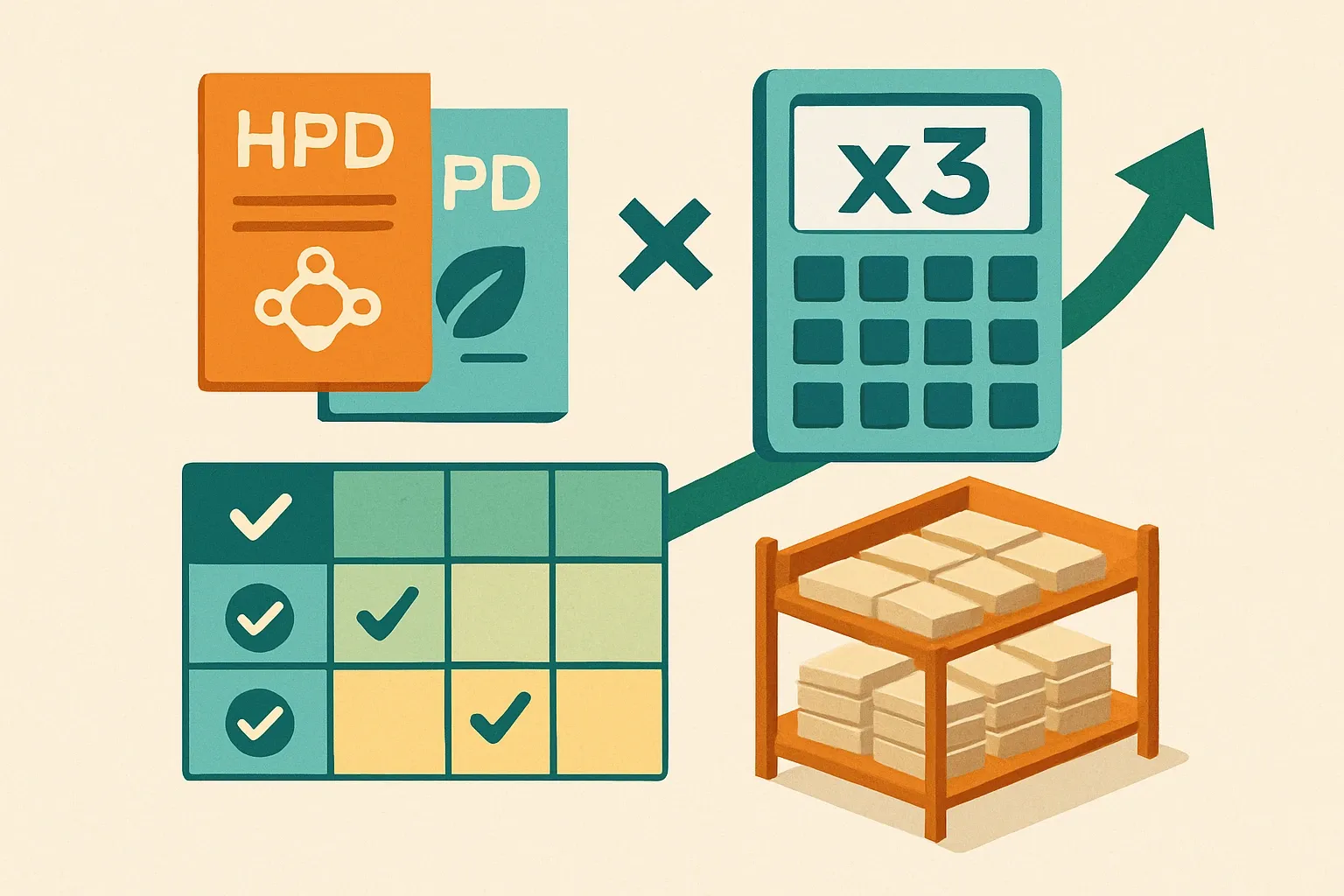
Think of an HPD as a nutrition label for products. It inventories ingredients and flags hazards so design teams can prove material transparency quickly. In WELL v2, accepted ingredient disclosures like HPDs form the backbone of Materials transparency, which turns a manufacturer’s data into points on a scorecard rather than nice‑to‑have PDFs. That is how a commodity SKU becomes a wellness building block.
Air Starts With What You Bring Indoors
Air quality performance depends on filtration and operations, yet it also begins with the chemistry of installed products. An HPD gives reviewers confidence that adhesives, coatings, sealants, textiles, and fixtures are free of red‑flag ingredients at the disclosure thresholds teams expect. Pairing HPDs with emissions testing closes the loop on both content and offgassing, which speeds submittal approvals and cuts RFIs.
The Wellness Premium, Quantified
Healthy, third‑party certified spaces transact at a rent premium. A multi‑city analysis found 4.4% to 7.7% higher effective rents for spaces with health certifications like WELL, independent of LEED, age, and submarket effects (MIT Real Estate Innovation Lab, 2020). Owners notice. Leasing teams notice. If your product helps a building secure those credits faster, it rides the upside.
Why HPDs Are Now Table Stakes
Market signals are clear. The HPD Public Repository hosts 14,000 plus HPDs from almost 1,000 manufacturers, and more than 6,000 project teams use material health disclosures to pursue LEED material credits, which normalizes ingredient transparency across specs (HPDC, 2025). When a project is also pursuing WELL, verified HPDs are often the fastest way to tick the material transparency box without guesswork.
Join Parq Pulse!
Stay ahead in construction materials with weekly insights on wellness standards, HPDs, and market opportunities.
What WELL Actually Asks For On Materials
WELL v2 includes a material transparency pathway that recognizes third‑party ingredient disclosures. Current documentation shows teams can meet the requirement by disclosing ingredients for a defined set of permanently installed products using accepted programs that include HPDs [IWBI, 2025]. The upshot for manufacturers is simple. Publish high‑quality HPDs to the public repository, and your SKUs become low‑friction picks for WELL pursuers.
From Supplier To Strategic Wellness Partner
Most vendors sell a product. Wellness partners de‑risk selection. Provide HPDs that align variants, document residuals clearly, and map to common submittal bundles that include emissions reports and low‑VOC declarations. Offer a short, readable materials playbook so A&D teams can assemble WELL and LEED evidence in minutes, not days. This moves your brand out of a price shoot‑out and into a spec‑secure position.
The Fortune‑Level Demand Signal
WELL adoption now includes companies from the Fortune and Global 500 in meaningful numbers, and prior IWBI reporting confirms that more than 150 Fortune 500 companies are using WELL as part of their health strategy [IWBI, 2024]. That corporate gravity shapes what gets specified in their workplaces and their landlords’ portfolios. HPDs are the proof points that let your products plug into that roadmap.
Do This Next To Capture The Wellness Premium
- Prioritize top movers. Pick the SKUs most often asked for on office interiors and create verified HPDs first.
- Clean your data. Confirm CAS numbers, impurities, and residuals logic to the HPD Open Standard so reviewers do not kick it back.
- Publish and package. Post to the HPD Public Repository, then assemble a one‑click WELL submittal packet with emissions reports and low‑VOC attestations.
- Train the field. Give sales a 2‑page cheat sheet that ties your HPDs to WELL Materials and Air talking points. No fluff, just submittal‑ready facts.
Choosing The Right Documentation Partner
Look for a team that makes data collection ruthlessly efficient, coordinates supplier outreach, and carries the project management load so your engineers are not stuck wrangling spreadsheets. Insist on third‑party quality checks, quick iteration cycles, and the flexibility to publish with the program operator your market prefers in the U.S. or Europe. That playbook gets HPDs out the door faster and keeps momentum when owners are definately watching schedules.
Wrap‑Up Without The Hand‑Waving
WELL v2 rewards real performance, and HPDs provide the material health signal that unlocks those credits cleanly. Publish them well, bundle them smartly, and your products stop competing on price alone. They start compounding value in places where people and balance sheets both matter.