CMF in plain English
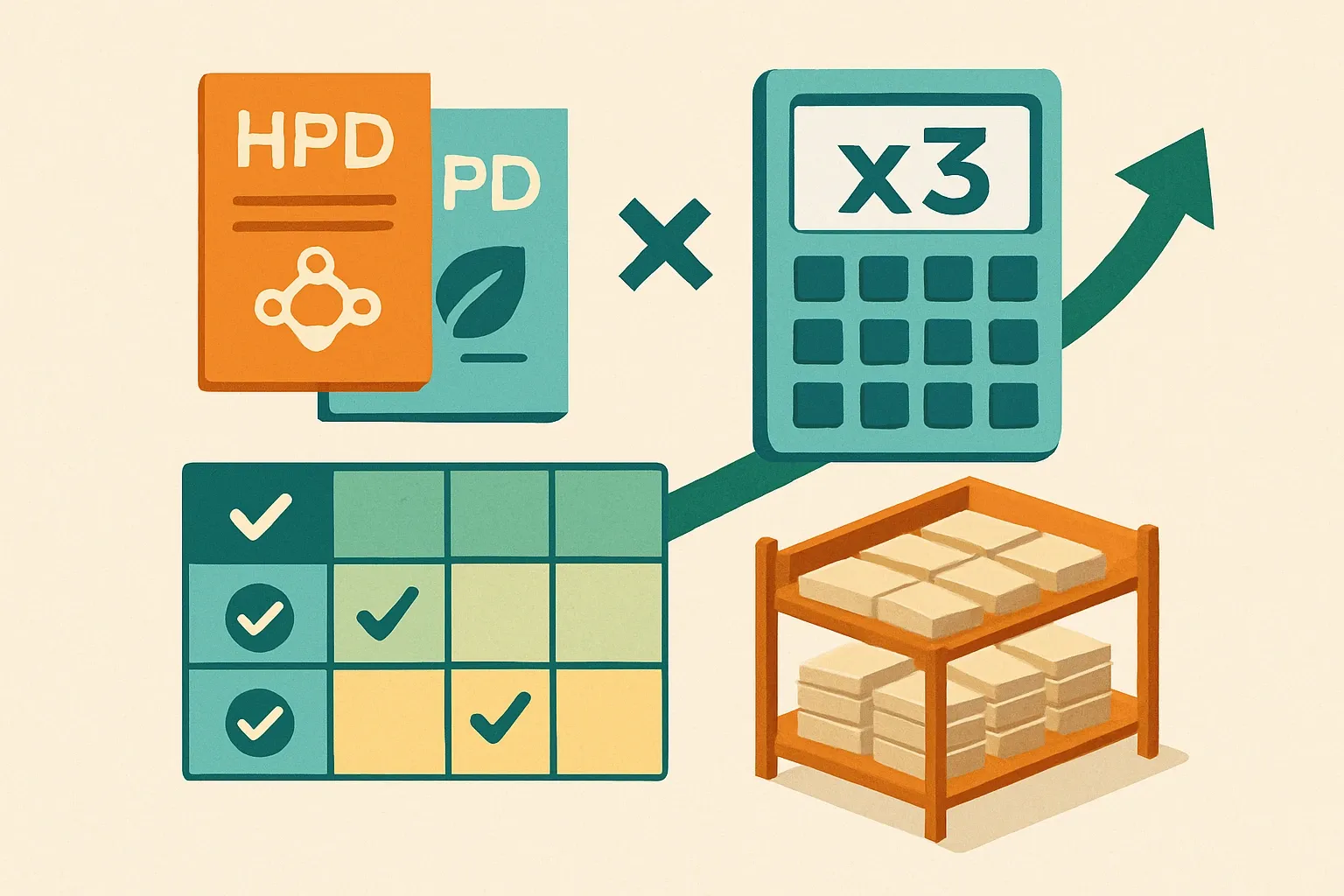
The Common Materials Framework is a shared language for product sustainability. It organizes material data into five impact areas that rating systems and product libraries understand the same way. Think of it like USB for material health, you plug in once, it fits everywhere.
Share once, flow everywhere
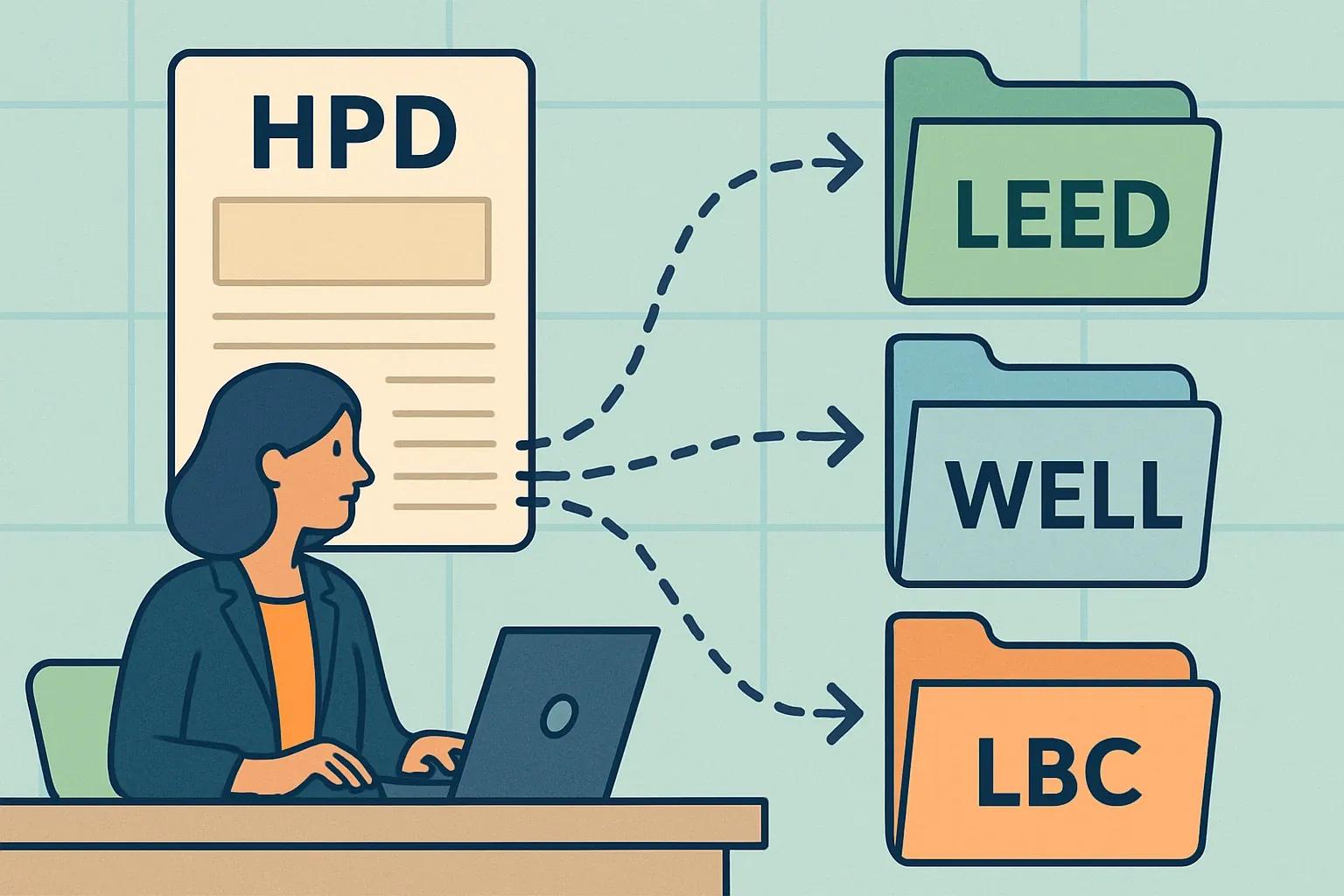
When HPD data is structured to CMF levels and terms, the same fields map to LEED v5 material ingredients, WELL v2 transparency features, and LBC Red List screening. No reformatting marathons, no parallel spreadsheets. Program owners and platforms have already aligned their mappings to CMF, so your data can travel without translation.
Why this matters to sales
Specification is a speed game. Every extra questionnaire is a speed bump that gives a rival with ready data the inside track. CMF alignment removes those bumps. Your reps can answer submittal requests with a single, consistent package that satisfies multiple pathways, which keeps the conversation on performance and availability rather than paperwork.
Proof that demand is real
Healthy materials are not a niche request. WELL is now applied across more than 6 billion square feet at tens of thousands of locations worldwide, which signals mainstream buyer expectations for health data (IWBI, 2025) (IWBI, 2025). LEED’s residential momentum alone counted 16,239 certified and registered multifamily projects totaling about 2.7 billion square feet by December 2025, a large and growing pool of specs that reward standardized disclosures (USGBC, 2025) (USGBC, 2025). On the supply side, the HPD Public Repository now represents more than 40,000 products, which means design teams can and will compare your data with a competitor’s in seconds (HPDC, 2025) (HPDC, 2025).
What changes in your workflow
Old way, you customize the same HPD facts for each certification or client library. New way, you author the HPD to the current Open Standard, make sure fields match CMF terminology, then let connected platforms read it directly. The work shifts to quality control, not copy and paste. That is where time is actually saved.
Join Parq Pulse!
Stay ahead with weekly insights on product transparency, environmental data, and high-performance project wins.
The nuts and bolts of alignment
HPDs already carry the ingredient, threshold, and hazard fields programs expect. CMF gives those fields a canonical slot. Use the open standard’s latest version, verify thresholds are explicit, and ensure substances are mapped to recognized identifiers. If a supplier report is thin, flag it and plan a targeted refresh rather than holding the entire submittal hostage.
Faster routes into AEC libraries
Large design firms maintain curated product libraries that feed specs. Many now sync from source repositories that are CMF aware. If your HPD is structured cleanly once, it can appear in multiple firm tools without additional forms. That earns you earlier visibility in basis of design lists and fewer detours through custom questionnaires.
Where the ROI shows up
- Less internal rework as teams stop rekeying identical data into different forms.
- Shorter submittal cycles because rating systems accept the same HPD package.
- Higher hit rates in projects that require disclosure, since penalties for missing data fall away.
We will not pretend there is a universal percentage saving, because teams, ERPs, and product portfolios vary widely. What is consistent is the reduction of non value add hours that creep into launches and refreshes.
How to activate CMF with minimal fuss
- Map your current HPD fields to CMF impact and sub impact levels, then fill any gaps you find before publication.
- Verify the HPD against LEED v5 and WELL v2 checklists inside your authoring workflow, so issues are fixed pre release rather than in a submittal.
- Publish to a repository that major platforms read, then test discoverability inside at least two AEC library tools.
Partner selection, without the headache
Choose a team that leads the data chase inside your organization, not one that emails templates and waits. Look for proven vendor engagement at the bill of materials and purchasing system level, robust QA on ingredient thresholds, and experience publishing with multiple program operators. That combination keeps your scientists and operations leaders focused on making product while the paperwork gets done quickly and properly.
Bring it together
CMF is not another hoop, it is the common map. Align your HPD once, and it can fuel LEED v5, WELL v2, and LBC submittals, plus firm libraries that drive day to day selection. The result is less duplication, fewer delays, and a tighter path from transparency to specification. Do this right and you will see the admin burden drop immediately. It is definately worth the effort.