Insurance is pricing climate risk harder
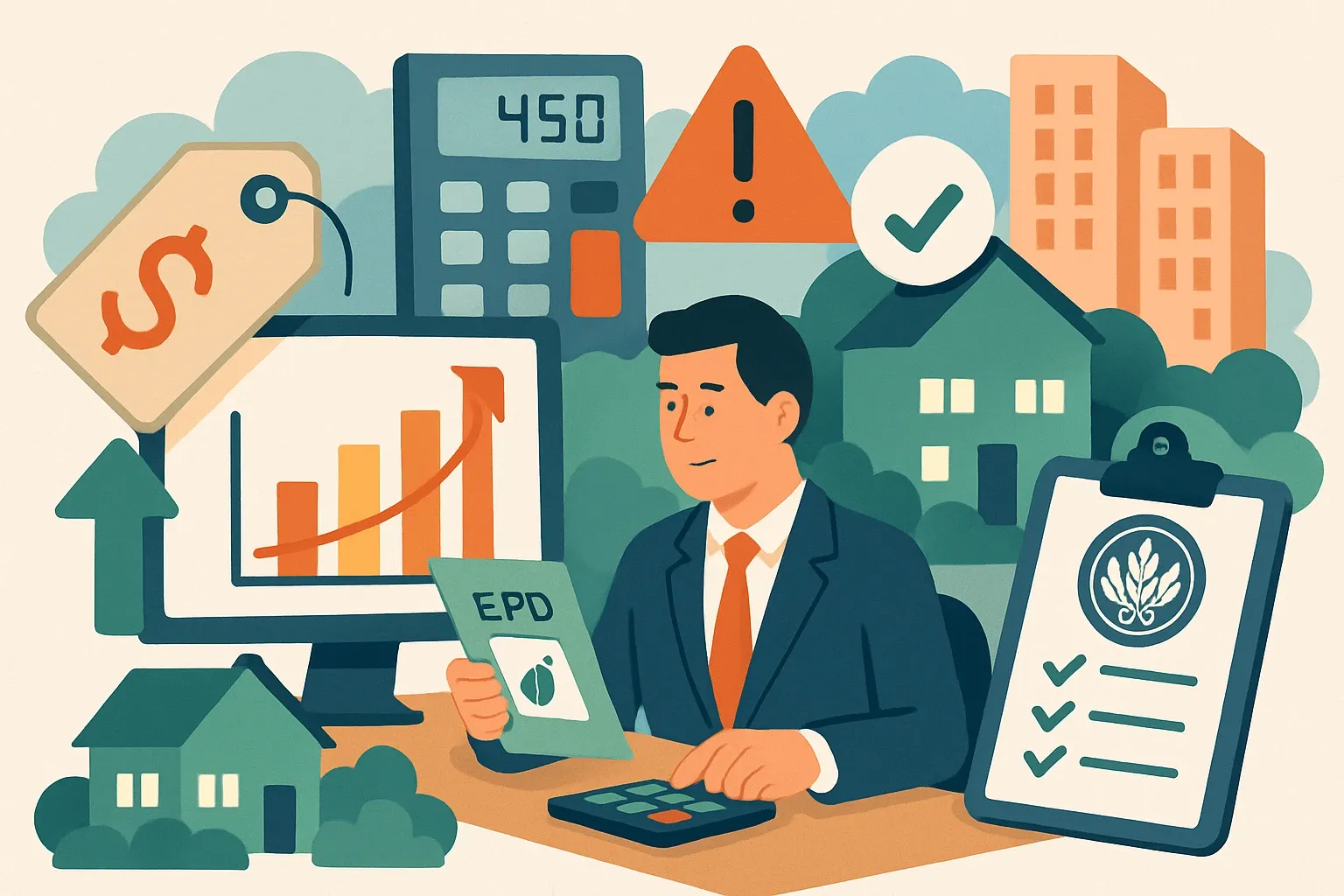
Insurers are paying closer attention to physical climate exposure because losses keep stacking up. NOAA tallied 27 U.S. billion‑dollar disasters in 2024 with an estimated cost of 182.7 billion dollars, a near‑term high that keeps pressure on underwriting models (CRS on NOAA Billion‑Dollar Disasters, 2025). When catastrophe volatility rises, documentation that proves risk reduction becomes a differentiator.
What underwriters actually reward
Property carriers score facilities on fundamentals like construction, occupancy, protection, and exposure. They also look for third‑party evidence of risk controls. One clear signal is direct premium incentives tied to resilience upgrades, such as a resilience credit applied as a premium offset for policyholders that complete specific improvements (FM Global Resilience Credit, 2025). Public, comparable figures on premium differentials by green building certification are still scarce, yet the pattern is visible in risk engineering visits and renewal questionnaires.
LEED v5 puts embodied carbon and EPD analysis on center stage
LEED v5 adds a new embodied‑carbon prerequisite and folds EPDs into a revamped materials credit with an explicit EPD Analysis option. Platinum projects must show a 20% embodied‑carbon reduction, and projects can earn points for analyzing and optimizing products using verified EPD data (USGBC, LEED v5 Summary of Changes, 2025). Translation for manufacturers: product‑specific EPDs are no longer nice‑to‑have artifacts, they are inputs to the scorecard calculus.
BREEAM continues to value product‑specific EPDs
BREEAM awards up to 1.5 credits when at least 20 installed products carry their own product‑specific EPDs that meet ISO 14025 and EN 15804 requirements (BRE BREEAM EPD guidance, 2024). Local adaptations vary, so project teams still check the scheme version in play, yet the directional push is consistent. Verified product data shortens the path to Materials credits.
Join Parq Pulse!
Stay ahead with weekly insights on environmental data and product transparency that help you win more projects and manage insurance risks.
The commercial math that links specs and risk
Even as markets stabilized, the U.S. insurance sector still grew direct premiums written to roughly 561 billion dollars in the first half of 2025, up 6.1% year over year, which reflects elevated loss costs and continued risk tightening (NAIC Mid‑Year Property & Casualty Analysis, 2025). If a building owner can point to robust certifications and transparent materials, underwriters have fewer unknowns to load for. That makes your product a safer procurement choice when buyers are juggling both project points and portfolio insurance spend.
What this means for manufacturers right now
The insurance conversation is shifting from promises to proof. EPDs are proof. They quantify impacts with third‑party verification and align with the embodied‑carbon accounting architects need. When those same documents help owners defend total cost of risk, the value story lands in two rooms at once: sustainability and finance. That is exactly where specs are decided.
A fast, low‑stress plan to ride the wave
- Map demand. List top SKUs that appear most often in LEED v5 and BREEAM project types. Prioritize high‑volume, frequently specified products.
- Close the PCR gap. Confirm the correct PCRs competitors use and lock alignment early to avoid rework at verification.
- Collect once, use everywhere. Set a single reference year for data, pull site utilities, material inputs, yields, waste, and transport, then structure it so it feeds both EPDs and customer takeoffs.
- Publish where buyers look. Choose a program operator your customers already reference and make download paths obvious in submittals and library pages.
Timing matters more than perfection
Most buyers care that an EPD is valid and accessible, not that it is the absolute newest. Aim to avoid gaps near key bid seasons, and plan internal refresh windows around production changes and PCR updates. If your first declaration is prospective, note the assumptions and book the update once you have a full year of data. Speed to credible transparency beats waiting for a perfect dataset, everytime.
The takeaway for 2026
Insurance risk scoring is getting sharper. Certification frameworks are putting more points on embodied carbon and product transparency. Put those together and EPDs become a procurement hinge. Manufacturers who deliver clean, verifiable EPDs will help project teams win ratings and help owners manage insurance friction. That combo is a spec magnet, and it will definately accelerate this year.