Global snapshot
The International EPD System crossed 20,000 published EPDs and 3,000 clients worldwide in Q1 2026, a clear signal that transparent data is becoming the default, not the exception (EPD International, 2026). (environdec.com)
Americas
LEED v5 is live, and USGBC extended LEED v4 and v4.1 commercial registration to June 30, 2027. If your sell cycle runs through 2027, plan your EPD and HPD updates to align with the v5 credit structure, not just v4.1 forms (USGBC, 2026). (usgbc.org)
Asphalt producers saw a mid‑cycle Product Category Rule update. NAPA’s Asphalt Mixture PCR version 2.1 took effect April 1, 2026, tightening methods and documentation expectations for new EPDs [NAPA, 2026]. (napanow.org)
State buyers kept tuning requirements. Caltrans’ EPD page refreshed on May 26 and highlights PCR currency in steel categories, including Smart EPD Part B for designated steel products listed as valid through April 3, 2030 [Caltrans, 2026]. For suppliers, that means fewer spec hiccups when your declarations reference an up‑to‑date rule set. (dot.ca.gov)
Europe
Brussels set a clearer playing field. The EU adopted Delegated Regulation 2026/52 on May 6, establishing a common framework for calculating life‑cycle GWP for new buildings. Expect more consistent requests for product‑specific EPDs that slot neatly into whole‑building carbon models. (build-up.ec.europa.eu)
France’s INIES database continues to scale. As of June 1, it lists 5,862 FDES and 1,746 PEP, representing 331,502 product references, which tells you what owners and designers are actually pulling into RE2020 calculations (INIES, 2026). (inies.fr)
Join Parq Pulse!
Stay ahead with weekly insights on product and environmental data to boost your competitiveness in construction materials.
Asia Pacific
Export‑minded manufacturers kept moving. Taiwan’s Yusco announced portfolio‑level EPD certifications on May 21, a sign that APAC steel suppliers are aligning disclosures to win access in carbon‑sensitive markets. Spec teams will notice when comparative data is finally apples to apples. (yieh.com)
LEED v5 adoption showed up in operations too. USGBC spotlighted early O+M certifications in the region, including Taipei 101 and ICC Hong Kong, which nudges owner expectations toward continuous performance data and current product EPDs. (usgbc.org)
Middle East & Africa
Developers and councils are elevating embodied‑carbon literacy, with EmiratesGBC pushing resources that point manufacturers toward verified, product‑specific data. Reliable numbers are sparse for May, and agencies publish at different cadences, but procurement conversations are getting more granular about declared units, system boundaries, and verification. (emiratesgbc.org)
Data watch to guide specs
Two numbers to anchor planning. The International EPD System’s 20,000 EPD threshold sets a global baseline for accessible comparators (EPD International, 2026). France’s INIES volume shows how quickly product data enters day‑to‑day design work, with 5,862 FDES and 1,746 PEP active at the start of June (INIES, 2026). (environdec.com)
Quick moves for manufacturers
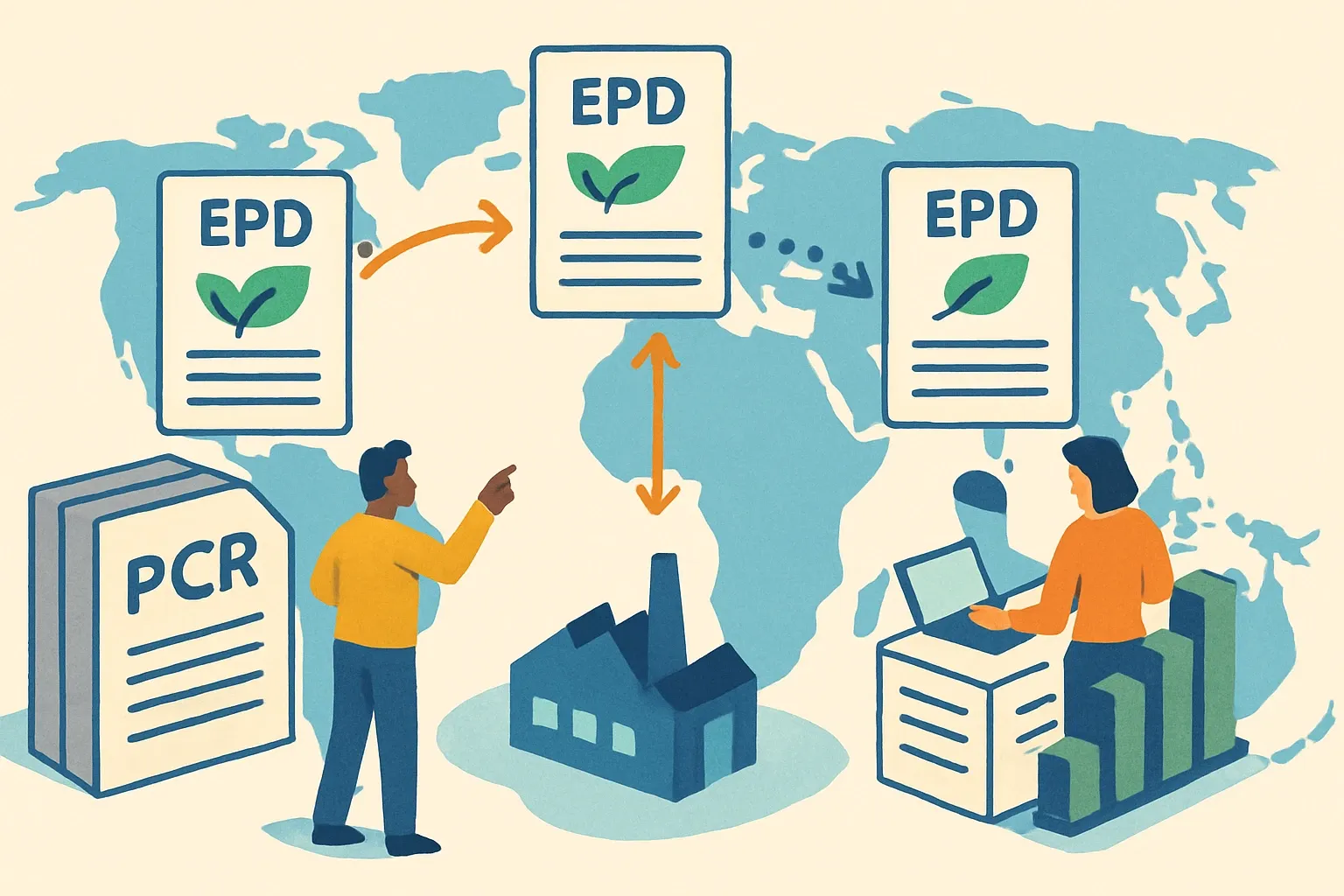
- Map current EPDs to each target region’s preferred operator and database so specifiers actually find them.
- Confirm your governing PCRs and their renewal windows before scoping new LCAs, then lock the rulebook for the project.
- Prep plant data early. Utilities, material inputs, scrap, yields, and transport are the long poles in the tent.
- Treat verification logistics as a schedule item, not an afterthought, so nothing stalls at publication.
Why May matters for your next bid
The through‑line this month is comparability. Regulators are standardizing how whole‑building carbon gets tallied, and buyers are checking whether product EPDs plug cleanly into those models. The commercial upside is simple. Teams that streamline data collection and keep declarations current move faster through submittals and avoid price‑only fights. Get your internal pipeline humming now, and June will be quieter in the best way. It’s definately worth it.