Why March 2026 kicked portfolio thinking into gear
A fresh implementation case from a Netherlands‑based LCA provider landed this month and the headline was simple: stop treating EPDs like artisanal one‑offs and start producing them like a series. That mirrors what we see in the market. Teams that standardize data collection and verification across families publish faster and avoid the last‑minute scramble when tenders ask for verified, product‑specific data.
CPR timeline in plain English
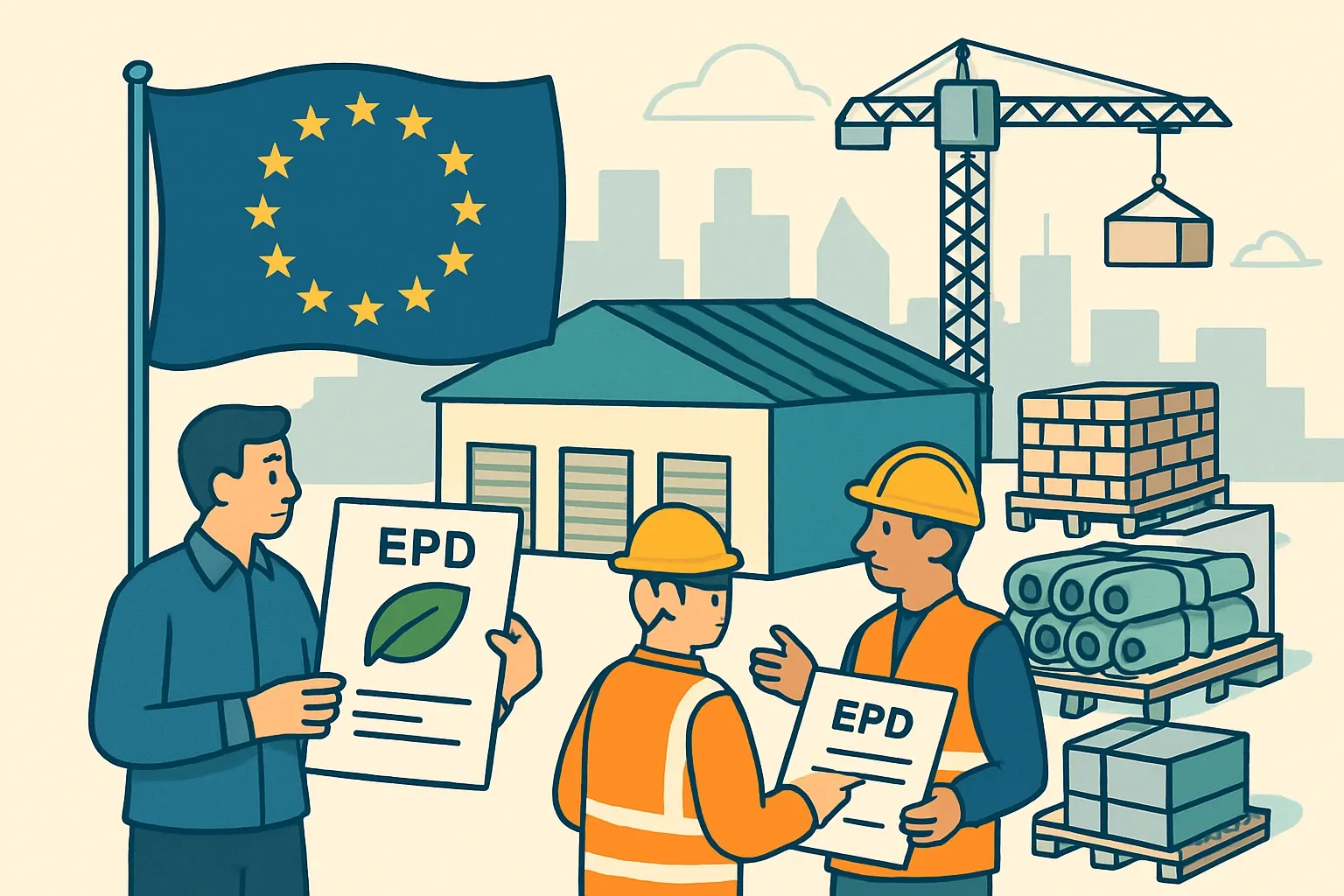
The revised EU Construction Products Regulation was adopted in late 2024, entered into force on January 7, 2025, and starts applying from January 8, 2026 for most provisions (Council of the EU, 2024) (Council of the EU, 2024). Standardizers have since confirmed the direction of travel. EPDs will become mandatory gradually across construction product groups over roughly the next 15 years, with complementary PCRs developed per family (CEN‑CENELEC, 2025) (CEN‑CENELEC, 2025).
Verification capacity is the chokepoint
Europe’s EPD ecosystem runs on qualified third‑party verifiers. Programme operators warned in 2025 that only about 400 validators are available globally, and that demand could surge as CPR‑aligned declarations ramp up (ECO Platform, 2025) (ECO Platform, 2025). This is why manufacturers are batching verifications by product family and site, not by individual SKU in isolation. Treat verification like a production schedule, not a ticket queue.
Netherlands specifics: build to the NMD rulebook
In the Netherlands, whole‑building assessments use the National Environmental Database, so product data needs to map cleanly to NMD formats and scenarios to win in bids. NMD flagged that A1 datasets become optional from early 2026 as A2‑aligned modelling rolls forward, a small change with big data plumbing implications (NMD, 2025). Keep templates consistent with EN 15804 A2 indicators and the Dutch Assessment Method so entries qualify as Category 1 or 2 where possible.
The new PCR reality shortens learning curves
Program operators have updated core PCRs and templates for construction products. The International EPD System released PCR 2019:14 version 2.0.0 in April 2025 and aligned verification templates with EN 15941:2024 and ECO Platform digital data requirements. Teams that adopt these templates reduce reviewer ping‑pong and speed time to publication (EPD International, 2025).
Join Parq Pulse!
Stay ahead with weekly insights on environmental and product data trends shaping construction materials.
From one‑off to portfolio: a simple operating model
Think of your EPDs like a streaming series instead of a blockbuster movie. Same set, different episodes, recurring cast.
- Pick a reference year and lock system boundaries that work across families. Reuse them aggressively.
- Normalize site data pulls and supplier asks so every plant speaks the same data language.
- Group SKUs by shared bills of materials and processes, then model variants by parameter, not from scratch.
- Pre‑agree the verification plan with your chosen operator so reviewers see consistent layouts and evidence.
Digital readiness beats the paper chase
CPR is steering toward digitised declarations and structured data exchange. That means tidy metadata, BOMs that resolve cleanly, and cradle‑to‑grave scenarios that line up with c‑PCRs. The payoff shows up in sales. When a tender requests specific indicators, your team answers in minutes, not days, and keeps the conversation on performance and availability instead of price alone.
What to demand from your EPD partner
- Hands‑on data collection that reaches your plants and suppliers, not just templates emailed and hoped for.
- A library of PCR‑aligned modelling patterns that covers your top product families.
- Verifier relationships that scale across multiple SKUs in one window, with predictable review cycles.
- Operator‑agnostic publishing so you can go IBU, EPD International, or others based on market fit.
- Dont accept a tool‑only approach that leaves your engineers doing after‑hours data wrangling.
Mind the renewal wave
Most NMD entries and many programme rules expect updates on a five‑year cadence, so a 2026 surge implies a 2031 renewal echo. Stagger portfolios where you can to avoid colliding with the next regulatory step‑ups and to keep sales pipelines smooth (NMD, 2026).
The takeaway for commercial teams
CPR‑ready does not mean one perfect EPD. It means a reliable factory for EPDs that feeds your bids on time, aligns with NMD in the Netherlands, and scales third‑party verification before reviewer queues lengthen. Set that factory up now and the next request for a verified, digitised declaration feels like pressing play, not starting from zero.