The snapshot that matters
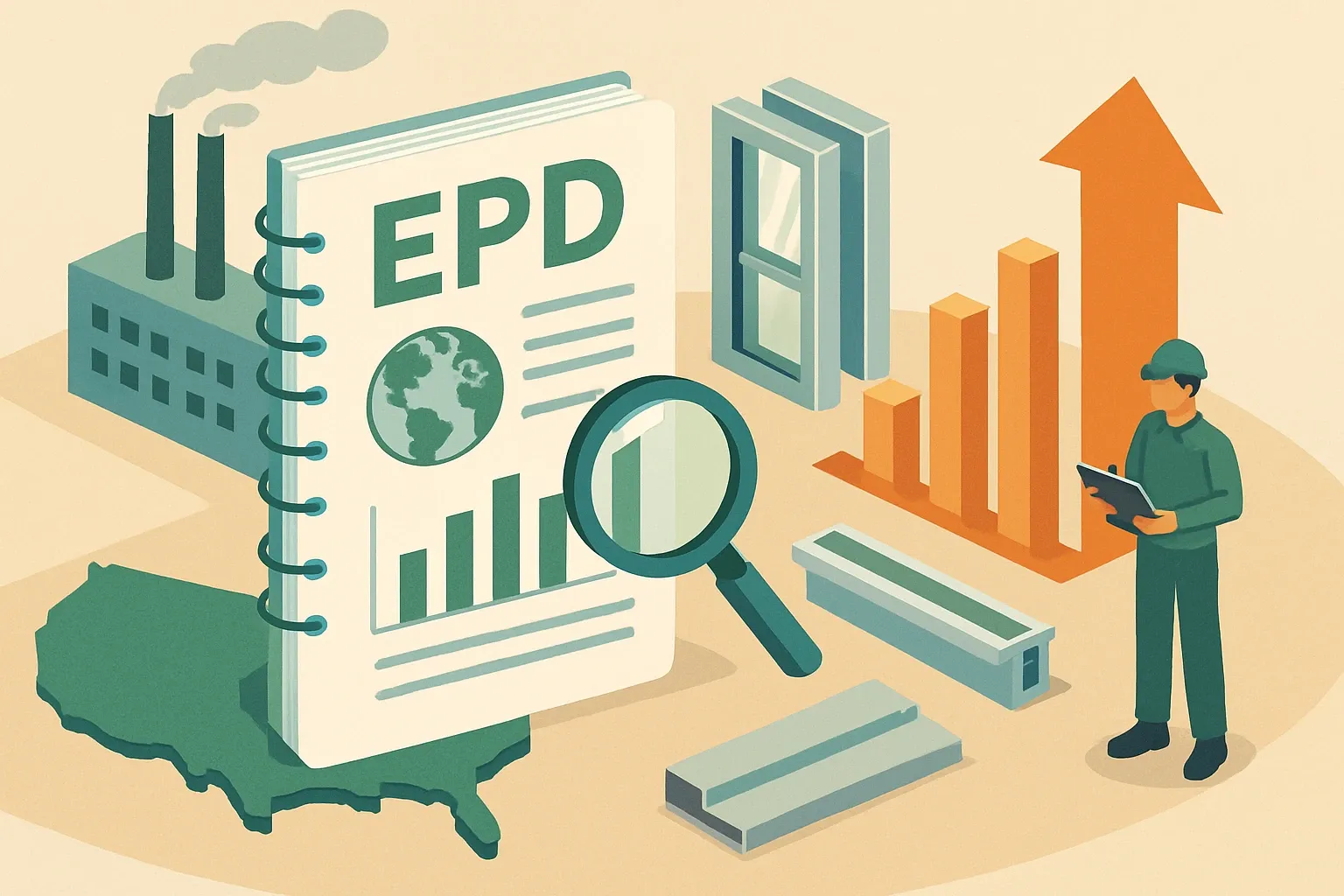
Here is the aluminum EPD picture for the United States over the last five years. We count 12 currently valid EPDs from 6 manufacturers, handled by 3 program operators and built on 4 distinct PCRs. The most recent issue landed on Dec 18, 2023 for “S-P-11445 Hydro Recycled Aluminium Lüdenscheid Casthouse” with EPD International AB under PCR 2019:14 version 1.3.3, expiring on Dec 17, 2028. That is a useful signal that recycled-content casthouse declarations are active and accepted in specs.
| Year | EPDs issued |
|---|---|
| 2021 | 1 |
| 2022 | 5 |
| 2023 | 6 |
| 2024 | 0 |
| 2025 | 0 |
Volume dipped after 2023, yet renewal timing means 2026 to 2028 will be busy again for aluminum producers that want to keep bids frictionless.
Who is publishing, and where the center of gravity sits
Program operators show a clear split. EPD International AB accounts for 6 EPDs across 3 different manufacturers, which signals cross‑manufacturer trust without concentration risk. UL carries 3 EPDs that are concentrated with a single manufacturer. SPHERA Sustainability Consulting appears once as operator for one manufacturer. Two EPDs list no operator, which usually means the registry entry is incomplete and should be corrected before submittals.
This spread tells a practical story. If you want broad acceptance in multi‑national project teams, EPD International AB and UL continue to be familiar names to reviewers. Choice should still follow your product category and PCR fit first.
Manufacturers to watch in the category
Hydro Aluminum leads with 4 EPDs. Alcoa holds 3. Niche or application‑specific entries include Armstrong World Industries, ATENA S.p.A., Specialty Sign Co., and two entries labeled SPOT that likely reflect UL’s listing pathway rather than a true manufacturer name.
The latest declaration in this set is Hydro’s recycled aluminum casthouse EPD from Dec 18, 2023. If your portfolio includes recycled billet, slab, coil, or extrusions, that is the competitive benchmark to study.
Want to boost your aluminum EPD strategy for 2026?
Follow us on LinkedIn for insights that help you unlock project specifications and maximize ROI.
The rulebooks in play, and why they matter
A PCR is the rulebook of Monopoly. Ignore it and the game falls apart. The dominant references here are:
- PCR 2019:14 Construction products (EN 15804+A2) version 1.3.3, used in 5 EPDs, with expiries stretching to Dec 17, 2028.
- Part B: Requirements on the EPD for Products of Aluminum and Aluminum Alloys, used in 3 EPDs, expiring on Jun 1, 2028.
- Two single‑EPD paths appear: Core Product Category Rules and NPCR 013 Part B for Steel and Aluminum Construction Products. Two EPDs list unknown PCRs, which should be fixed at renewal.
Renewal timing matters because EPDs generally have a five‑year validity, so renewals must align with updated PCRs to stay credible in bids (Environdec General Programme Instructions, 2024) (Environdec GPI, 2024).
Watch the renewal calendar like a hawk
Here is the five‑year expiry outlook for today’s aluminum EPDs in the United States:
- 2026: 1 EPD expires on Mar 19.
- 2027: 4 EPDs expire; one each under Core Product Category Rules and NPCR 013, plus one under PCR 2019:14 and one with unknown PCR. Earliest is Mar 2, latest is Sep 27.
- 2028: 6 EPDs expire; three under PCR 2019:14 between Sep 19 and Dec 17, and three under the Aluminum and Aluminum Alloys Part B on Jun 1.
If your key product line sits on a 2027 or 2028 clock, plan the data pull now so the renewal publishes without a gap. Gaps slow quotes and can put you on the wrong side of conservative carbon accounting in owner specs.
EPD consultants are the default path
Ten of the 12 EPDs were built with an EPD service provider. That is roughly 83 percent, which mirrors what we see across other materials where internal teams prefer to focus on production and product roadmap while experts do the data wrangling. If you want a partner, EPD service providers like Parq can manage data collection, modeling, and operator publication so your product team stays on core work.
Absent, or simply published under another category
Some large names do not show current aluminum EPDs in this exact category view. Kaiser Aluminum (kaiseraluminum.com) and C. R. Laurence, often seen as CRL (crlaurence.com), do not appear in this aluminum set as of Jan 17, 2026. By contrast, YKK AP America and Kawneer have active declarations, although many are classified under curtain walls or glazing rather than a generic “aluminum” label. Classification quirks can hide relevant declarations, so check adjacent categories before assuming a competitor is dark on transparency.
Operator choice, simplified
Operator selection should follow three checks. First, which operator is already common for your PCR and product type in the United States. Second, how familiar the operator is to your top specifier audience. Third, speed to publish given your internal data readiness. EPD International AB and UL both meet mainstream expectations for building products, and both support the EN 15804+A2 framework that reviewers expect to see in 2026. If you need a neutral sounding board, we are operator‑agnostic and focus on the cleanest path to an on‑time declaration.
Strategy for 2026 bids and submittals
- If you hold a 2026 or 2027 expiry, plan a consolidated renewal across related SKUs so you can reuse data collection and shorten review cycles. That reduces the number of internal interviews by half or more in many cases.
- Align PCR selection with the competitive set your sales team faces most often. Matching the prevailing PCR avoids apples to oranges comparisons in A1 to A3. Where appropriate, consider adding a parallel EPD under a more product‑specific Part B once volumes justify it.
- LEED v5 continues to reward product‑specific EPDs in material credits, which keeps them valuable in U.S. project work even as federal Buy Clean momentum has shifted to state and private owners (USGBC LEED v5, 2025) (USGBC LEED v5, 2025).
What this means if you are starting from zero
Do not let the small count fool you. Aluminum shows up everywhere in building shells and interiors, from curtain wall profiles to metal ceilings and signage. One credible, third‑party verified EPD can unlock projects where without it your product is tagged with a penalty factor that hurts competitiveness. The price of a solid EPD is frequently earned back with a single mid‑sized project win. We see that pattern repeat across categories.
Data notes and a friendly offer
This analysis draws on the global public registry commonly used by architects and specifiers. Due to occasional loading delays, some EPDs issued in the second half of 2025 may not yet appear. If you want the full dataset that underpins this article, connect with me on LinkedIn and send a note. I am happy to share the latest extract, talk through the best‑fit PCR for your products, and even hop on a quick call to review renewal timing or operator options. I dont gatekeep.