Blanket insulation, defined without the jargon
Blanket insulation covers fiberglass and mineral wool products sold as batts or rolls for walls, floors, ceilings, and cavity applications. If your product page says batt insulation, cavity batt, stone wool batts, or fiberglass blanket, you are in the right place.
2026 snapshot at a glance
In the United States blanket category, 94 product‑specific EPDs are currently valid across the last five years. They come from 9 manufacturers, published through 5 program operators under 5 distinct PCRs. The newest entry landed on Jan 9, 2026 for TimberBatt High‑Performance Thermal and Acoustic Cavity Batt Insulation from TimberHP under EPD Hub, expiring Jan 8, 2031.
Who is publishing the most EPDs
Owens Corning leads with 43 EPDs across its blanket portfolio. Knauf Insulation North America follows with 29, then Johns Manville with 9, and CertainTeed Saint‑Gobain with 4. Additional issuers include Manson Insulation and TimberHP, plus single entries from NAIMA, Thermafiber, and Saint‑Gobain GLASS.
This concentration means specifiers often see the same brands when projects require product‑specific EPDs. If you compete in these channels, a current declaration keeps your SKUs in the consideration set instead of forcing price‑only comparisons.
Program operators in the U.S. blanket space
UL accounts for 46 EPDs spread across 3 manufacturers. Sustainable Minds hosts 34 EPDs for 2 manufacturers. SCS Global Services lists 8 EPDs across 2 manufacturers and Smart EPD LLC carries 5 across 2 manufacturers. EPD Hub appears with a fresh TimberHP record.
Operator diversity is moderate, but several portfolios are heavily clustered with a single operator. That is a signal to align your choice with where competitors publish to support apples‑to‑apples comparisons for specifiers.
The PCRs that actually get used
One PCR dominates activity. Part B: Building Envelope Thermal Insulation Products underpins 82 EPDs, with latest expiries reported as Jul 3, 2029. A smaller set uses Building Envelope Thermal Insulation with expiries reaching Dec 12, 2028. Two EPDs reference Part B: Mechanical, Specialty, Thermal, and Acoustic Insulation Products with expiries to Dec 8, 2029.
Watch the new edition trend. Product Category Rules Guidance Part B Standard 10010‑1 Edition 3 has 3 EPDs already, including the Jan 9 TimberHP record, and stretches out to Jan 8, 2031. That far‑future date reduces near‑term renewal noise for teams that rebase to the newer rulebook.
At Owens Corning or competing with them?
Follow us for product-by-product EPD insights to see which blanket insulation SKUs get specified and how to avoid being VE'd out.
EPDs issued per year
Here is the cadence for the last five complete calendar years.
| Year | EPDs issued |
|---|---|
| 2021 | 36 |
| 2022 | 14 |
| 2023 | 32 |
| 2024 | 11 |
| 2025 | 0 |
A new 2026 declaration is already live as of Jan 9 and signals the category is active early this year.
Expiry watchlist and timing moves
There is a 2026 expiration bulge with 36 EPDs set to lapse, many clustering on Oct 1. A further 14 expire in 2027, 32 in 2028, and 11 in 2029. Because EPDs are typically valid for five years, plan backward from your expiry date and lock a data‑collection window early to avoid any publication gap.
If your expiry falls near the 2026 wave, begin scoping now. Treat PCR selection plus operator selection as a paired decision so your renewed declaration aligns with how your competitors will read in submittals.
How much work do teams do themselves
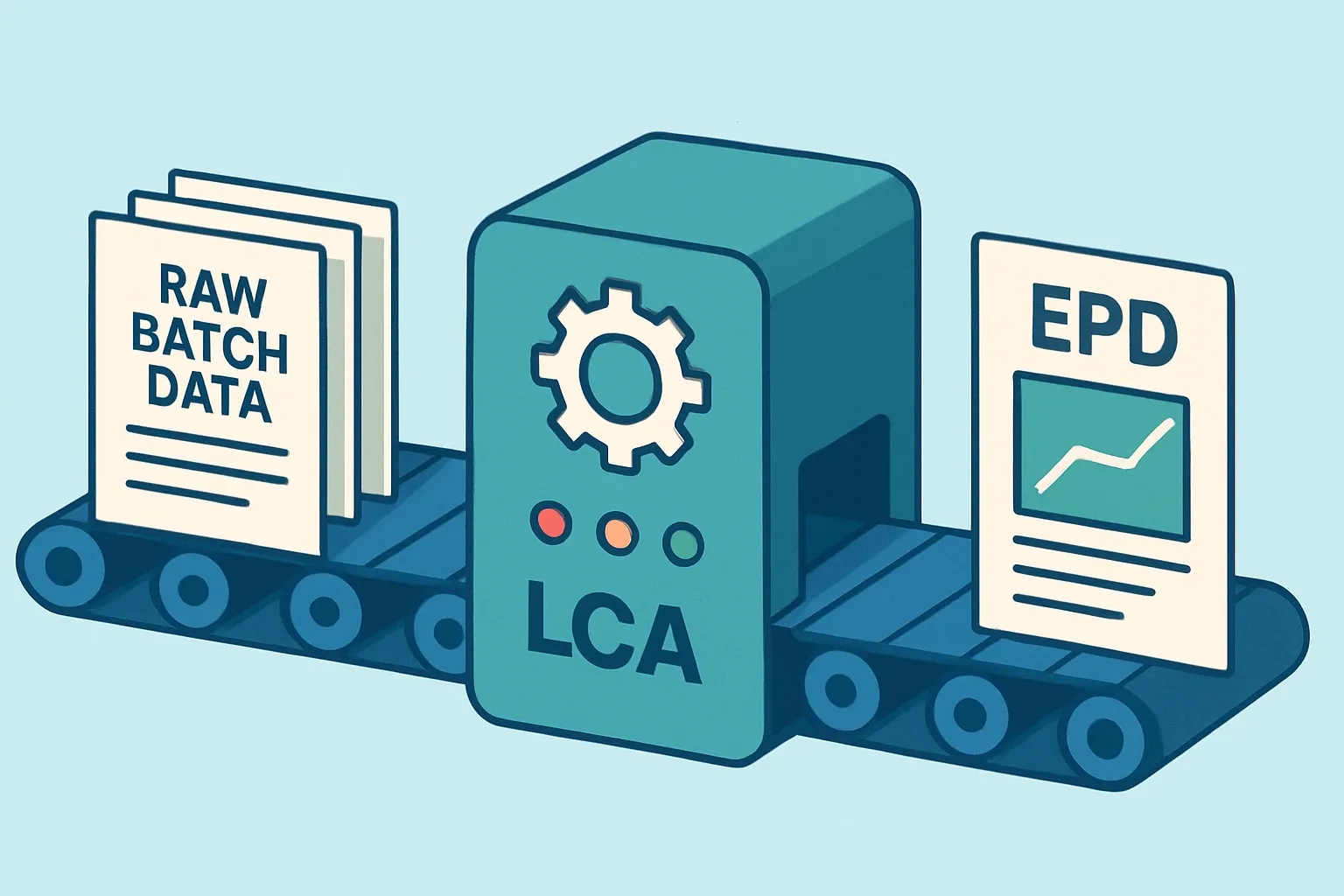
Of the 94 current blanket EPDs, 61 were delivered with an external EPD consultant or service provider involved. That reflects how much time manufacturers save by outsourcing data wrangling and LCA builds to an EPD service provider like Parq. The right partner handles collection workflows across plants and SKUs so your engineers do not lose weeks rebuilding utility and waste logs.
Picking the operator and PCR without spinning wheels
Aim where buyers will compare you. If most competitor batts sit under UL or Sustainable Minds, that is a strong default unless there is a clearer path to publication elsewhere. For PCRs, choose the common rule set in your competitive pool, then consider renewal runway. A newer PCR with 2029 or 2031 expiries limits rework risk and gives your sales team a long runway.
Practical playbook to get to draft fast
Anchor one recent production year, including energy, materials, yields, scrap, and packaging. Confirm plant boundaries and co‑products, decide which SKUs merit their own declarations versus family grouping, then pull transport and end‑of‑life assumptions. We prefer ruthless simplicity in data collection because it keeps momentum and avoids rework. It also helps a ton with multi‑plant harmonization where differences creep in alot.
What this means for manufacturers in 2026
If you do not have a current EPD for a popular batt SKU, you are leaving bids on the table in projects that require third‑party verified declarations. If you are within 12 months of expiry, use the 2026 renewal wave as a forcing function and refresh against the PCR that buyers will see in competitor PDFs.
If you want the full data set behind this guide, connect with me on LinkedIn and message me. I am happy to send the latest cut and hop on a quick call to map the best‑fit PCR and operator for your next declaration.
A final housekeeping note
This guide relies on the global public registry most architects and specifiers use. Due to posting lags, some EPDs from the last half of 2025 may not appear yet. If you published late last year and do not see it reflected here, ping me on LinkedIn and I will cross‑check and update you right away.